Category: Non-Toxic Living

  • DIY Natural Cleaning Products for Every Room (What We Actually Use in Our Non-Toxic Home)

    DIY Natural Cleaning Products for Every Room (What We Actually Use in Our Non-Toxic Home)

    DIY Natural Cleaning Products for Every Room (What We Actually Use in Our Non-Toxic Home)

    🌿 The Short Version: You don’t need a cabinet full of harsh chemicals to have a genuinely clean home. This post walks you through the simple, affordable DIY natural cleaning products our family uses room by room β€” with real recipes and honest results.

    This post contains affiliate links. I may earn a small commission at no extra cost to you.

    Okay, can I just be real with you for a second? There was a point in our house where I had a different spray bottle under every sink, and half of them had warning labels that made me nervous just reading them. We had kids crawling on those floors. Chickens wandering in from the backyard (don’t judge me). A mini labradoodle who licks everything. I kept thinking β€” there has to be a better way.

    Turns out, there absolutely is. And it’s cheaper. And it smells better. And once you make the switch, you’ll wonder why you waited so long.

    I’m not here to lecture you about toxins or scare you into anything. I’ve already done a deep dive over in How to Detox Your Home from Toxins Room by Room (A Real Family’s Guide) if you want the bigger picture. Today we’re just getting practical β€” room by room, recipe by recipe. Let’s go.


    The Basics You’ll Need on Hand

    Before we get into rooms, let me tell you what we keep stocked so we can make almost anything at a moment’s notice:

    • White distilled vinegar β€” the workhorse of natural cleaning
    • Baking soda β€” gentle abrasive and deodorizer
    • Castile soap (Dr. Bronner’s is our go-to)
    • Hydrogen peroxide β€” great disinfectant
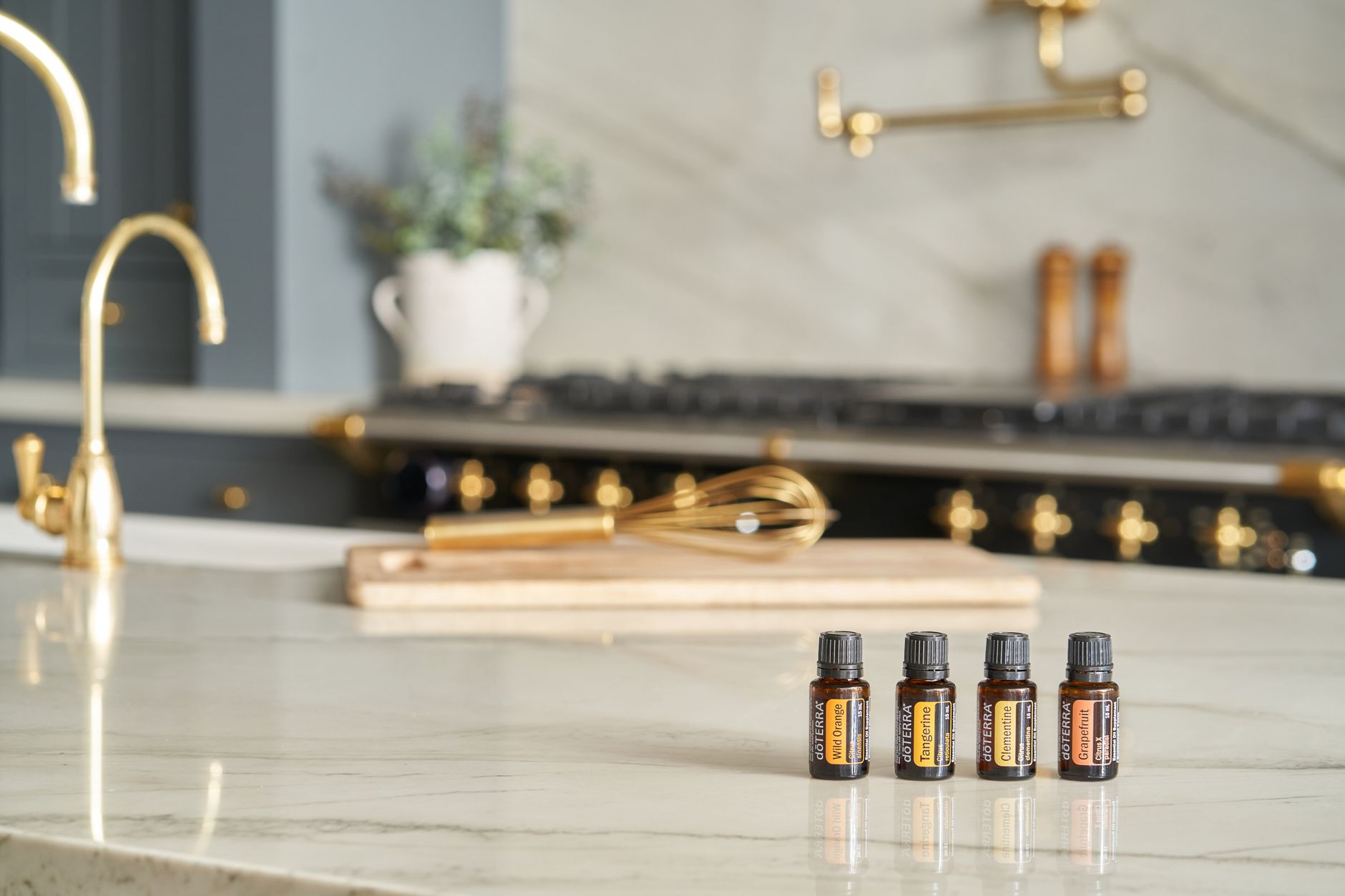
    • Essential oils β€” lavender, tea tree, lemon, and eucalyptus are our most-used
    • Spray bottles β€” glass if you can swing it

    That’s genuinely it. Everything below is built from those five ingredients in different combinations. We also love ordering our non-toxic household basics through Grove Collaborative β€” it’s where we get our castile soap and refillable supplies without trekking to three different stores.


    Kitchen

    All-Purpose Counter Spray

    This is the one I make most often. I probably go through a bottle a week with all the cooking and kid chaos happening in our kitchen.

    What you need:

    • 1 cup water
    • 1 cup white vinegar
    • 15 drops lemon essential oil
    • 10 drops tea tree essential oil

    Mix in a spray bottle, shake before use, and wipe down with a cloth. It cuts grease, handles sticky mystery substances, and smells clean without being chemical-y.

    Note: Skip the vinegar spray on natural stone counters β€” it can etch them over time. Use straight castile soap diluted in water instead.

    Sink Scrub

    Mix baking soda with just enough castile soap to make a paste. Scrub the sink, rinse. That’s it. Works beautifully on stainless steel and gets into the corners.

    I also keep a kitchen compost bin on the counter now, which means less food waste sitting around creating smells in the first place β€” the chickens get the scraps, the rest goes to the compost pile, and the kitchen stays way fresher overall. (If you’re curious about composting with kids, I wrote a whole guide: Composting at Home with Kids: A Real Beginner’s Guide That Actually Gets Done)


    Bathrooms

    Toilet Bowl Cleaner

    Spray hydrogen peroxide around the inside of the bowl, let it sit for five minutes, then sprinkle in some baking soda and scrub. Rinse. It does the job without turning your bathroom into a hazmat zone.

    Tub and Tile Spray

    What you need:

    • 1 cup water
    • Β½ cup white vinegar
    • Β½ cup hydrogen peroxide
    • 1 tablespoon castile soap
    • 10 drops eucalyptus essential oil

    Mix, spray, let sit for a few minutes, scrub, rinse. This cuts through soap scum and mildew β€” which, if you live in Florida, you know is basically a full-time battle. Humidity is no joke down here.

    Mirror and Glass Cleaner

    • 1 cup water
    • 1 cup white vinegar
    • 10 drops lemon essential oil

    Wipe with a microfiber cloth or old newspaper (the 1990s were onto something with that one). Streak-free, I promise.

    πŸ“Œ Love this? Save it to Pinterest so you can find it later!


    Living Areas and Floors

    All-Purpose Floor Cleaner

    For our tile floors (which is basically the whole house β€” Florida homes, you know), I add a few tablespoons of castile soap and 10-15 drops of lavender essential oil to a bucket of hot water. Mop away. The lavender is calming, which feels very Charlotte Mason of me, and it leaves the floors clean without any residue or toxic film the dog is going to lick up later.

    Fabric Refresher Spray

    For couches, rugs, curtains β€” the things you can’t easily wash:

    • 1 cup water
    • 2 tablespoons baking soda (dissolved fully first)
    • 10 drops lavender essential oil

    Shake well and mist lightly. Let it dry. Neutralizes odors without masking them with synthetic fragrance.

    Dusting Spray

    A little olive oil and white vinegar on a soft cloth works beautifully on wood furniture. It cleans and conditions at the same time. Our bookshelves full of Charlotte Mason living books and nature field guides look lovely after a good wipe down.


    Laundry Room

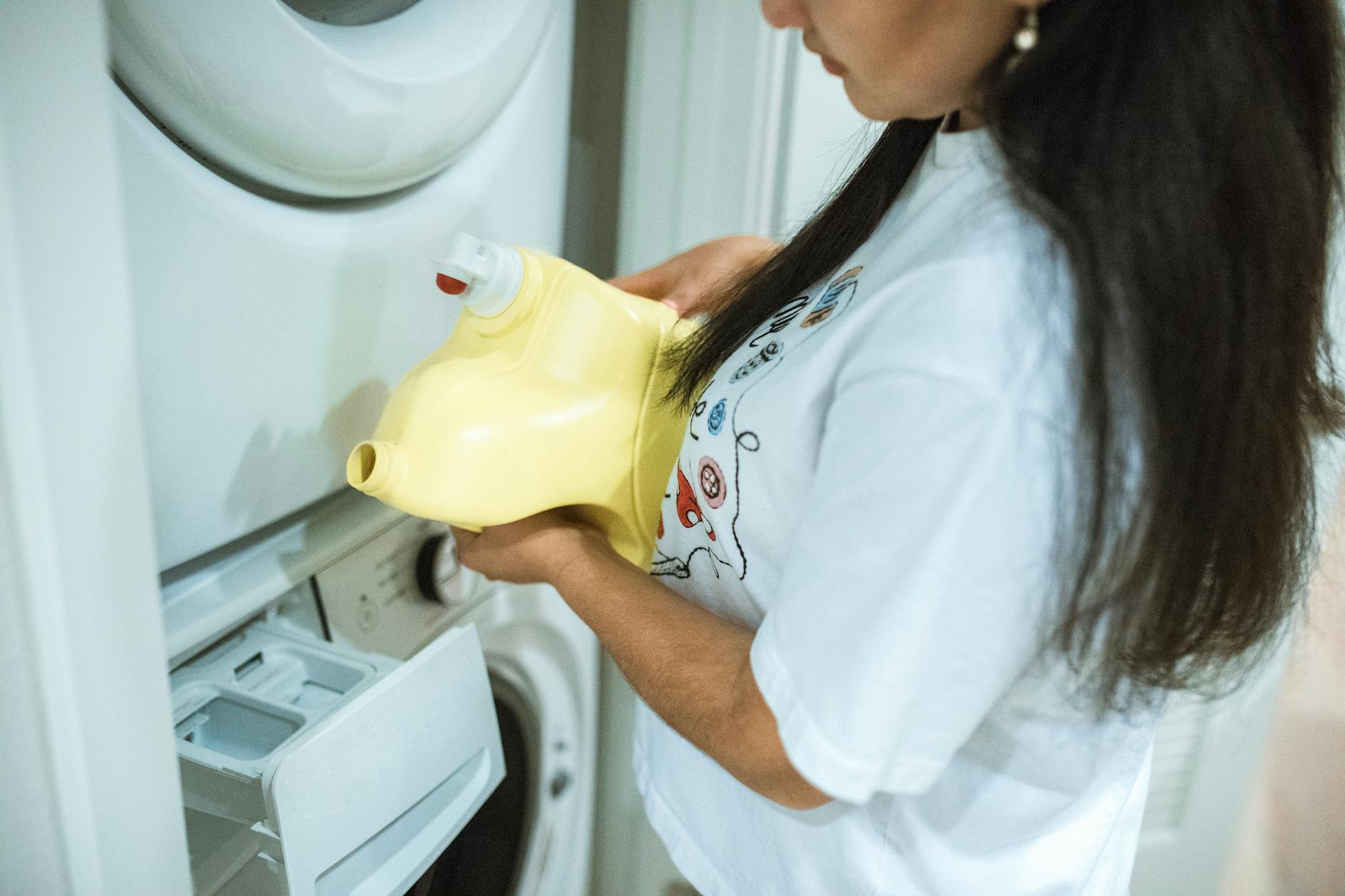
    I have a whole post on this because it deserves its own space β€” How to Make Homemade Laundry Detergent That’s Actually Non-Toxic (And Works in Florida Heat) β€” but the short version is that homemade powder detergent with washing soda, borax, and grated castile soap bar works incredibly well even in our hard water.

    We also switched to wool dryer balls years ago and never looked back. No dryer sheets, no synthetic fragrance, clothes actually dry faster. Drop a few lavender essential oil drops on them if you want that fresh-laundry smell.


    The Coop and Backyard (Because That Counts Too)

    Look, when you have backyard chickens, cleaning isn’t just an indoor activity. We use a diluted white vinegar solution to wipe down waterers, feeders, and surfaces in the coop between deep cleans. Diatomaceous earth goes in the nesting boxes and on the coop floor to naturally control mites and moisture β€” it’s one of those things that sounds weird but genuinely works.

    For pest control around the yard and home exterior without reaching for something toxic, we’ve been using Wondercide for a while now. It’s family and pet-safe, and here in the Pensacola area where bugs are basically a season of their own, we need something that actually works. I have a full coop cleaning routine outlined in Natural Chicken Coop Deodorizer and Cleaning Routine That Actually Works if you want all the details.


    Making Cleaning a Homeschool Moment

    One thing I love about this whole DIY cleaning approach is that it naturally becomes part of our homeschool day. When we mix up a new batch of all-purpose spray, we’re doing basic chemistry β€” measuring, mixing, talking about why vinegar reacts with baking soda. My kids can identify the plants that certain essential oils come from. My older one looked up eucalyptus trees for her nature journal last spring after smelling our bathroom cleaner. That’s the beautiful thing about a Charlotte Mason, nature-rooted approach β€” learning really does happen everywhere.

    If you’re looking for more of those connected learning moments at home, our Morning Basket Ideas for Charlotte Mason Homeschool (What Ours Actually Looks Like) is a good place to start.


    A Few Honest Notes Before You Dive In

    • Label your bottles. Write what’s in them and when you made them. Future-you will thank present-you.
    • Vinegar and hydrogen peroxide should not be pre-mixed in the same bottle β€” they form peracetic acid, which is irritating. Use them separately or one after the other.
    • Start with one room. You don’t have to overhaul everything today. Pick the room that bothers you most and start there.
    • Smell matters more than you think. If you hate the scent of something, you won’t use it. Play with your essential oil combinations until you find what you love.

    Here’s the thing β€” this doesn’t have to be complicated or Pinterest-perfect. We’re just trying to make good choices for our families, one bottle at a time. Our home isn’t spotless (there is literally chicken feed tracked across my laundry room floor as I type this), but it’s clean in a way that feels safe. And that matters.

    If you’ve been meaning to make this switch and just haven’t known where to start, this is your nudge. Pick one recipe, make it today, and see how it feels. I think you’ll be surprised how easy it actually is.


    πŸ“– You Might Also Like:

    Frequently Asked Questions

    Is vinegar really effective as a natural cleaner?

    Yes β€” white distilled vinegar is genuinely effective at cutting grease, removing mineral deposits, and killing some bacteria. It’s not a hospital-grade disinfectant, but for everyday household cleaning it works well and is completely non-toxic. Just avoid using it on natural stone surfaces like granite or marble, as it can etch them over time.

    Are DIY natural cleaners safe around kids and pets?

    The recipes in this post use ingredients like white vinegar, baking soda, castile soap, and diluted essential oils β€” which are all significantly safer than most commercial cleaners for kids and pets. That said, always keep spray bottles out of reach of small children, and note that some essential oils (like tea tree) can be harmful to cats in concentrated amounts. Use diluted formulas and ensure good ventilation.

    How long do homemade natural cleaning products last?

    Most DIY cleaning sprays last 1-2 months at room temperature. Those containing hydrogen peroxide are best used within a week or two of mixing since it degrades when exposed to light. Store your bottles in a cool, dark cabinet and label them with the date you made them. Make smaller batches more frequently for the freshest results.

    Can I mix vinegar and baking soda together for cleaning?

    You can use them in sequence β€” sprinkle baking soda first, then spray vinegar on top for a fizzing scrub action β€” but pre-mixing them in a bottle is not recommended. When combined, they neutralize each other and lose most of their cleaning power. They work better separately or used one right after the other on a surface.

    What essential oils are best for DIY natural cleaning products?

    The most useful essential oils for cleaning are lemon (cuts grease, smells fresh), tea tree (natural antimicrobial properties), lavender (deodorizing, calming scent), and eucalyptus (great for bathrooms and mold-prone areas). These are versatile enough to cover most rooms and work well in Florida’s humid climate where mold and mildew are common concerns.
  • How to Make Homemade Laundry Detergent That’s Actually Non-Toxic (And Works in Florida Heat)

    How to Make Homemade Laundry Detergent That’s Actually Non-Toxic (And Works in Florida Heat)

    How to Make Homemade Laundry Detergent That’s Actually Non-Toxic (And Works in Florida Heat)

    🌿 The Short Version: This post walks you through a simple, non-toxic homemade laundry detergent recipe using just a few real ingredients β€” no synthetic fragrance, no mystery chemicals, no jug of blue liquid you can’t pronounce. It’s what our family actually uses, it works on muddy kid clothes and chicken-coop-smelling everything, and it costs a fraction of what you’d spend at the store.

    This post contains affiliate links. I may earn a small commission at no extra cost to you.

    If you’ve got kids who play outside like it’s their job β€” and at our house, it genuinely is β€” then you already know what laundry looks like around here. We’re talking grass-stained knees, sandy cuffs from the creek, and shirts that somehow always find the chicken coop right before dinner. My kids are out there the way we grew up in the ’90s: barefoot, unsupervised-ish, and completely filthy by 4pm. And I love every bit of it.

    What I don’t love? Pouring a jug of synthetic, fragrance-loaded, who-knows-what-else detergent onto all those clothes that go right back onto my kids’ skin. We’ve been on a slow, steady journey to detox our home room by room, and laundry was one of the easiest places to make a swap that actually stuck.

    This recipe is the one we’ve landed on after trying a few different versions. It works. It’s simple. And you probably have most of the ingredients already.


    Why I Stopped Buying Store-Bought Detergent

    I’m not here to scare you. But once I started reading labels and realized that most conventional detergents are full of synthetic fragrances, optical brighteners, and surfactants that don’t fully rinse out? I couldn’t un-know it.

    Down here in Florida, our kids are sweating through their clothes, swimming, rolling in dirt, and spending long hours outside. Their skin is their largest organ, and it’s in contact with whatever is left in those fibers all day long. That matters to me.

    Switching to a homemade version also ended up being way cheaper β€” we’re talking pennies per load versus dollars. And when you’re washing three or four loads a day because someone thought it was a great idea to let the chickens into the mudroom again… that adds up fast.


    What You’ll Need

    This recipe is a dry powder detergent, which is what I prefer because it stores well in our Florida humidity (just keep it in an airtight container), mixes easily, and doesn’t have the gloppy, hard-to-measure issues of a liquid version.

    Ingredients:

    • 1 bar of pure castile soap or Fels-Naptha (grated)
    • 1 cup washing soda (sodium carbonate β€” NOT baking soda)
    • 1 cup borax
    • Optional: 20-30 drops of essential oil if you want a light scent (we skip it most of the time)

    That’s genuinely it. Three ingredients.

    Tools:

    • Box grater or food processor
    • Large mixing bowl
    • Airtight container for storage

    How to Make It β€” Step by Step

    Step 1: Grate the Soap

    This is the most “labor intensive” part, and I use that term loosely. Grab your box grater and grate the bar of soap like you’re grating cheese. If you have older kids (mine are in the K-5 range and my older ones can definitely handle this), let them do it β€” it’s a great fine motor activity and they think it’s hilarious that soap looks like Parmesan.

    If you have a food processor, you can pulse the soap into a fine crumble instead. That actually gives you a finer powder that dissolves better in cold water.

    Step 2: Mix Everything Together

    Combine the grated soap, washing soda, and borax in your large bowl. Stir it well until it’s evenly mixed. If you’re adding essential oils, drizzle them in now and stir again.

    Step 3: Store It Properly

    Transfer to an airtight container β€” this is important in Florida because humidity is not our friend. I use a glass jar with a tight lid and keep a small wooden scoop in it. Label it clearly, especially if you have little ones around.

    To use: 1–2 tablespoons per load. Use 2 tablespoons for heavily soiled loads (hi, every load at our house).


    πŸ“Œ Love this? Save it to Pinterest so you can find it later!


    Does It Actually Work on Real Kid Messes?

    Yes. And I say that as someone whose kids come in smelling like sunscreen, dirt, and chicken on a regular basis. (Sidenote: if you’re dealing with coop smell on clothes or work gear, check out our post on natural chicken coop deodorizer and cleaning routines β€” same philosophy, different application.)

    For tough stains, I’ll spray the spot with a little undiluted white vinegar or dab with a paste of washing soda and water before tossing the item in. Works on grass, dirt, food, and most of what our days involve.

    One note: this detergent is NOT sudsy. If you’re used to a big foamy wash, this will feel weird at first. But suds don’t actually clean β€” that’s mostly a marketing thing. Your clothes are getting clean, I promise.

    A Note on Borax

    I know some people have concerns about borax, and I want to be honest with you: it is a naturally occurring mineral, and at the levels used in laundry detergent, it has a long safety record. That said, you should store it out of reach of children, avoid inhaling the powder when mixing, and make your own call about whether it fits your family’s standards. If you’d rather skip it, you can double the washing soda and the detergent still works β€” just slightly less so on hard stains.

    For our family, this sits comfortably within our non-toxic goals. We also pair it with wool dryer balls instead of dryer sheets (which are loaded with fragrance and chemicals) and use beeswax wrap in the kitchen β€” same idea of swapping synthetic for simple wherever we can.

    Making It a Learning Moment

    This is one of those kitchen-table activities that fits right into our Charlotte Mason days. We’ve talked about what soap actually does at a molecular level (simplified, obviously), why washing soda is different from baking soda, and how people washed clothes before detergent even existed. My kids were genuinely fascinated.

    If you want to extend it further, you could do a simple science experiment: test how different soaps interact with water using a pocket microscope to look at soap bubbles up close, or have them sketch and label the ingredients in their nature journal as a household science entry. Charlotte Mason believed that learning happened in the context of real life β€” and making the family’s laundry detergent is about as real-life as it gets.

    For more ideas on how we weave learning into our everyday rhythms, you might enjoy our post on Morning Basket ideas for Charlotte Mason homeschool.

    Keeping the Rest of Your Laundry Routine Clean

    Once you’ve made the switch on detergent, here are a few other easy swaps we’ve made:

    • Dryer sheets β†’ Wool dryer balls: They reduce static, speed up drying time, and last for years.
    • Fabric softener β†’ White vinegar in the rinse cycle: A quarter cup softens clothes naturally and neutralizes any detergent residue.
    • Plastic detergent jugs β†’ Glass or stainless storage: Better for the environment, better for your shelves.

    We also love ordering some of our non-toxic household supplies through Grove Collaborative β€” they carry a lot of clean-ingredient brands and make it easy to stay consistent without spending hours reading labels at the store.


    The Bottom Line

    Making your own laundry detergent isn’t a huge time commitment. Honestly, the whole batch takes maybe fifteen minutes, lasts us a couple of months, and costs somewhere around three to five dollars total. That’s a win for our budget, a win for our kids’ skin, and a win for our overall goal of keeping our home a little cleaner in every sense of the word.

    If you’re just starting out on the non-toxic home journey, this is genuinely one of the easiest places to begin. You don’t need a perfectly curated pantry or a big investment. Just a few simple ingredients and a willingness to try something your grandma probably would’ve recognized.

    Around here, that’s usually a good sign.


    πŸ“– You Might Also Like:

    Frequently Asked Questions

    Is homemade laundry detergent actually effective on heavily soiled clothes?

    Yes β€” especially this powder version with washing soda and borax. For really tough stains like grass, mud, or food, pre-treat the spot with a paste of washing soda and water or a spritz of white vinegar before washing. It handles kid messes and farm smells just fine.

    Is borax safe to use in homemade laundry detergent for kids’ clothes?

    Borax is a naturally occurring mineral with a long history of use in laundry. At the small amounts used per load, it rinses out and is generally considered safe for most families. That said, you should store it away from children and avoid inhaling it when mixing. If you prefer to skip it, double the washing soda instead.

    Can I use homemade laundry detergent in a high-efficiency (HE) washing machine?

    Yes! This dry powder recipe is low-sudsing, which actually makes it better suited for HE machines than many commercial detergents. Use 1 tablespoon for a regular load and 2 tablespoons for heavily soiled loads. The low-foam formula won’t interfere with your machine’s sensors.

    How long does a batch of homemade laundry detergent last?

    One batch made with a single bar of soap, 1 cup washing soda, and 1 cup borax typically yields around 30–40 tablespoons of detergent, which translates to roughly 20–40 loads depending on how much you use per load. Most families find one batch lasts 4–8 weeks.

    What’s the difference between washing soda and baking soda in laundry recipes?

    They’re chemically different β€” washing soda (sodium carbonate) is much more alkaline than baking soda (sodium bicarbonate), which makes it a stronger cleaner and better at cutting grease and lifting stains. You can find washing soda in the laundry aisle of most grocery stores or order it online. Don’t substitute baking soda β€” it won’t clean as well.

  • How to Detox Your Home from Toxins Room by Room (A Real Family’s Guide)

    How to Detox Your Home from Toxins Room by Room (A Real Family’s Guide)

    How to Detox Your Home from Toxins Room by Room (A Real Family’s Guide)

    🌿 The Short Version: Detoxing your home doesn’t mean overhauling everything at once β€” it means making smarter swaps, room by room, over time. This guide walks you through exactly what our family changed and why, starting with the spots that matter most for little ones.

    This post contains affiliate links. I may earn a small commission at no extra cost to you.

    I remember standing in my laundry room a few years back, staring at a shelf full of brightly labeled bottles and thinking β€” I genuinely don’t know what half of this stuff is. And if I can’t pronounce it, what exactly am I spraying on my kids’ school table every morning?

    That was kind of a turning point for our family. Not a dramatic, throw-everything-out moment β€” more like a slow, steady shift toward asking better questions. What’s actually in this? Does it need to be? Is there something simpler?

    If you’re here, you’re probably asking those same questions. And I want you to know: you don’t have to do this all at once. We didn’t. We still haven’t replaced everything. But room by room, swap by swap, our home genuinely feels lighter β€” less chemical smell, less worry, more in line with the kind of intentional life we’re trying to build for our kids.

    Let’s walk through it together.


    Why Detoxing Your Home Actually Matters (Especially With Kids Around)

    Kids spend a huge amount of time indoors β€” especially homeschool kids, honestly. Between our nature time, our read-alouds, our Charlotte Mason-style nature journaling, and just living life, our home is the environment our kids breathe, touch, and absorb constantly.

    Children’s bodies are still developing, and they’re more vulnerable to chemical exposure than adults β€” smaller bodies, faster metabolisms, more time on the floor where dust and residues settle. Here in Florida, we’ve also got the added fun of heat and humidity, which means windows are often closed, the AC is running, and indoor air quality actually becomes a real concern.

    The goal isn’t perfection. The goal is just doing better, one room at a time.


    The Kitchen: Start Here First

    The kitchen is the heart of most homes, and it’s where a lot of sneaky toxins hide β€” in cookware, cleaning sprays, plastic containers, and even the dish soap.

    Cookware: Non-stick pans with PTFE or PFOA coatings can off-gas when heated. We swapped ours out for a good cast iron skillet years ago and haven’t looked back. Cast iron is practically indestructible, naturally non-stick once seasoned, and it’ll outlive all of us.

    Food storage: Ditch the plastic wrap and go with beeswax wrap for covering bowls and wrapping snacks. It’s reusable, it works great, and the kids think it’s kind of cool.

    Cleaning products: This is the big one. Most conventional kitchen sprays are full of fragrance chemicals, surfactants, and things nobody needs near food prep surfaces. We order through Grove Collaborative for our non-toxic cleaning supplies β€” it’s made keeping a cleaner home genuinely easy without me having to hunt down every product individually.

    Composting: While you’re in the kitchen β€” a kitchen compost bin is such an easy win. Scraps go to the compost pile (or straight to our chickens, honestly), which means less waste and healthier soil in our garden.


    The Laundry Room: The Sneakiest Offender

    Conventional laundry detergent and fabric softeners are loaded with synthetic fragrance β€” which is often a cocktail of dozens of undisclosed chemicals. “Fresh linen scent” sounds innocent but it’s one of the biggest sources of indoor air pollution in most homes.

    We switched to a plant-based detergent from Grove and added wool dryer balls in place of dryer sheets. Wool dryer balls cut drying time, reduce static, and you can add a drop of essential oil if you want a little scent. (If you’re curious about safe essential oils for your home, I’ve got a whole post on the ones that are actually safe for kids that’s worth a read.)

    Simple swap. Big difference.


    The Bathroom: Small Space, Big Impact

    Bathrooms are full of products that go directly on skin β€” shampoos, lotions, soaps, sunscreen. And since our kids’ skin absorbs what we put on it, this room matters a lot.

    Sunscreen is a big one, especially down here in Northwest Florida where we’re outside basically year-round. Conventional sunscreens with oxybenzone and other chemical UV filters are worth avoiding for kids. We use a mineral-based non-toxic kids sunscreen β€” zinc oxide-based, reef-safe, no weird chemicals.

    Pest control in the bathroom β€” if you’re dealing with ants or other bugs (and in Florida, you always are), swap chemical sprays for something like Wondercide. We use it around the whole house perimeter. It’s plant-based, safe around kids and pets, and it actually works.


    The Kids’ Rooms and School Space: Where They Spend the Most Time

    Our homeschool space is also where our kids sleep, play, and learn β€” so this is where I’ve been the most intentional.

    Air quality: Open windows when you can (yes, even in Florida β€” there are about four perfect months where this is glorious). Houseplants help too. Avoid plug-in air fresheners and synthetic candles β€” they’re some of the worst offenders for indoor air quality.

    Craft supplies: We do a lot of Charlotte Mason-style nature journaling and watercolor work. I love that Faber-Castell watercolors are non-toxic and genuinely good quality β€” my kids use these almost daily in their nature journals. It’s worth spending a little more on art supplies that don’t have mystery ingredients.

    Water bottles: Make sure your kids aren’t drinking out of plastic bottles all day. We use stainless steel kids water bottles β€” they’re durable, don’t leach anything, and they hold up to being dropped, thrown, and left in the Florida sun.


    The Backyard and Outdoor Spaces: Don’t Forget Out Here

    If your kids are anything like mine, the backyard is basically their second classroom. We’ve got chickens, a garden, a labradoodle tearing through the yard β€” outdoor spaces need attention too.

    Pest and bug control: Skip the chemical bug sprays and lawn treatments, especially if you have pets and kids running barefoot. Wondercide works for outdoor spaces as well. For our chicken coop, we use food-grade diatomaceous earth to manage mites and insects naturally β€” it’s safe for the birds and for curious kids who are always in that coop with us. (If you’re just getting started with backyard chickens, our post on raising meat chickens at home has a lot of practical info.)

    Garden: If your kids are helping in the garden β€” and they should be, honestly, it’s one of the best things we do together β€” make sure they’ve got their own kids’ garden gloves and that you’re not using synthetic pesticides on anything they’re touching or eating. Organic methods, compost, companion planting β€” it’s all doable and it keeps the learning real.


    A Note on Not Doing It All at Once

    I want to be really clear here: we did not detox our entire house in a weekend. This happened over two or three years of gradual swaps. When a cleaning product ran out, we replaced it with something better. When a pan got too scratched up, we went cast iron. When I learned more about sunscreen, we changed sunscreen.

    That kind of slow, intentional shift is way more sustainable than a dramatic overhaul β€” and it’s honestly more in line with how we try to approach most things in this family. Less overwhelming. More lasting.

    If you’re also thinking about the kinds of remedies you keep on hand when sickness hits, you might love our post on natural remedies for kids’ cough and cold β€” it fits right in with this whole mindset.

    Start with one room. Make one swap this week. That’s enough.

    Your home doesn’t have to be perfect to be healthier. It just has to be moving in the right direction β€” and the fact that you’re reading this means you’re already there.


    πŸ“– You Might Also Like:

    Frequently Asked Questions

    Where do I start when detoxing my home from toxins?

    Start with the rooms where your kids spend the most time β€” typically the kitchen and their bedroom or school space. Focus on the products used most often, like cleaning sprays, cookware, and personal care items. Swap one thing at a time as products run out rather than throwing everything away at once.

    What are the most toxic items in a typical home?

    Some of the biggest offenders are synthetic fragrance products (air fresheners, dryer sheets, scented candles), conventional cleaning sprays, non-stick cookware with PTFE/PFOA coatings, plastic food storage containers, and chemical pesticides used indoors or in the yard. These are the highest-priority swaps for most families.

    Are non-toxic cleaning products actually effective?

    Yes β€” plant-based and non-toxic cleaners have come a long way and work really well for everyday household cleaning. Brands available through services like Grove Collaborative offer effective alternatives for kitchen, bathroom, and multi-surface cleaning without harsh chemical ingredients.

    How do I detox my home without spending a lot of money?

    The key is to replace products gradually as they run out rather than doing a big overhaul. Start with free or low-cost swaps β€” like opening windows for air circulation, making a simple vinegar-based cleaner, or switching to wool dryer balls β€” and work up to larger items over time. It doesn’t have to be expensive to make a real difference.

    Is indoor air quality really a concern for families?

    It really is, especially in climates like Florida where windows are often closed and AC runs most of the year. Synthetic fragrances, off-gassing from certain furniture and flooring, and chemical cleaning residues all contribute to poor indoor air quality. Simple steps like switching to non-toxic cleaners, avoiding plug-in air fresheners, and adding houseplants can make a noticeable difference.

  • Best Essential Oils for Your Family Home That Are Actually Safe for Kids

    Best Essential Oils for Your Family Home That Are Actually Safe for Kids

    Best Essential Oils for Your Family Home That Are Actually Safe for Kids

    🌿 The Short Version: Not all essential oils are safe for little ones, and the marketing around this stuff can be seriously confusing. This post breaks down which oils our family actually uses, how we use them safely with kids in the house, and which ones we avoid entirely.

    This post contains affiliate links. I may earn a small commission at no extra cost to you.

    Okay, so here’s how I got into essential oils: it wasn’t through a MLM party or a fancy Instagram reel. It was a sweaty Florida summer afternoon, my kids were outside catching bugs with their bug collection kit, and I was desperately trying to figure out a non-toxic way to deal with the mosquitoes, the funky coop smell drifting over from the backyard, and whatever mystery thing my youngest had tracked across the kitchen floor. I wanted something that smelled good, worked, and wasn’t going to wreck my kids’ health.

    What I found was… a lot of conflicting information. Some people act like essential oils are a cure-all miracle. Others act like they’re basically poison. The truth, as usual, is somewhere in the middle β€” and it really comes down to which oils, how you use them, and how old your kids are.

    So let me share what I’ve learned after a few years of using essential oils in our intentional, nature-based home here in Northwest Florida. This isn’t medical advice β€” just one mama talking to another.

    Why I’m Particular About What Goes in Our Home

    If you’ve followed along here for a while, you know we try hard to keep our home low-tox. We use Grove Collaborative for a lot of our cleaning products, we skip synthetic fragrances, and we’re pretty intentional about what our kids are breathing in and touching all day. Essential oils fit naturally into that philosophy β€” when used correctly.

    But here’s the thing: essential oils are potent. They’re not benign just because they come from plants. Some oils that are totally fine for adults can be genuinely problematic for young children, especially babies and toddlers. So let’s break this down practically.

    The Golden Rules for Using Essential Oils Around Kids

    Before we get into the specific oils, here are the basics I follow:

    • Always dilute. Never apply essential oils directly to a child’s skin without a carrier oil (like fractionated coconut oil or jojoba). For kids, I dilute much more than I would for myself.
    • Age matters a lot. Some oils are fine for school-age kids but not for babies or toddlers.
    • Diffuse with fresh air. I never run a diffuser in a closed room for hours. We live in Florida β€” windows and ceiling fans are our friends.
    • When in doubt, leave it out. Especially with the little ones.

    Essential Oils We Actually Use in Our Home

    Lavender β€” Our Most-Reached-For Oil

    Lavender is gentle, widely studied, and genuinely calming. We use it in our bedtime diffuser blend, diluted in a rollerball for skin irritations (hello, Florida fire ant encounters), and occasionally in a warm bath. It’s generally considered safe for kids over 2 when properly diluted. If you’re looking for a starting place, lavender is it.

    Lemon and Other Citrus Oils

    We love diffusing lemon oil in the morning β€” it smells clean and bright, which is helpful when you’re trying to get four kids motivated for a nature journaling session. Citrus oils are generally mild and great for freshening up the home. Just know they’re photosensitive, so don’t put them on skin before heading out into that Florida sun.

    Frankincense

    This one’s in our diffuser pretty regularly during our quiet morning time. It has a grounding, almost meditative quality β€” great for a Charlotte Mason-style slow morning. It’s also one of the more gentle oils and is considered safe for kids when diffused or properly diluted.

    Tea Tree (Melaleuca)

    Tea tree is our cleaning powerhouse. I add it to DIY cleaning sprays, use it in the laundry occasionally, and diffuse it during cold season. Important caveat: tea tree should never be ingested, and while it’s fine diffused or on skin when diluted for kids over 2, keep it away from babies and never apply it to their faces. If you want to read more about what we reach for during sick season, I talk about it over in Natural Remedies for Kids’ Cough and Cold: What Our Florida Family Actually Uses This Winter.

    Cedarwood

    Oh, this one is underrated. Cedarwood is earthy, calming, and we diffuse it in the kids’ room at night. It’s also a mild natural insect deterrent β€” handy when you’re a family that spends a lot of time outside and in the garden. We pair it with lavender in the evening diffuser blend pretty regularly.

    Eucalyptus β€” Use with Caution

    This is where I want to slow down and be really clear: eucalyptus (especially eucalyptus globulus) is NOT safe for children under 10. This one surprises a lot of people because it smells like something you’d find in a kids’ vapor rub, but the 1,8-cineole content can cause serious respiratory issues in young children. If you want a similar effect in a diffuser blend, try a small amount of spearmint instead β€” it’s much gentler. Save the eucalyptus for your own personal diffuser in your bedroom.

    Peppermint β€” Also Needs a Warning

    Same goes for peppermint. It’s often listed as a natural bug repellent and headache remedy, and I do use it β€” but only for myself. Peppermint is not recommended for children under 6 (some sources say under 10), because menthol can cause breathing issues in little ones. We use Wondercide for kid-safe bug spray instead β€” it’s plant-based, it actually works in the Florida humidity, and I don’t have to second-guess it.

    How We Actually Use Oils Day-to-Day

    We’re not fancy about this. Our essential oil setup is pretty simple:

    • A quality diffuser in the main living area and one in the kids’ room
    • Rollerballs pre-diluted with a carrier oil for easy application
    • A few drops in cleaning sprays (lemon + tea tree + water in a glass spray bottle is our go-to)
    • Added to wool dryer balls instead of dryer sheets β€” a couple drops of lavender and our laundry smells amazing without any synthetic fragrance

    We also sometimes use a drop of lavender or cedarwood on a cotton ball tucked into a corner of the chicken coop area β€” helps with the flies a little. If you’re managing backyard chickens and looking for more low-tox coop strategies, I’ve got a lot more on that in Raising Meat Chickens at Home: A Beginner’s Guide for Real Families.

    Oils to Skip When You Have Young Kids

    Just a quick list of oils I personally avoid using around my elementary-age kids (and definitely would not use around babies or toddlers):

    • Eucalyptus globulus
    • Peppermint (in any topical or direct application for under 6)
    • Clove and cinnamon bark (very hot oils, can cause skin reactions)
    • Wintergreen (contains methyl salicylate β€” genuinely dangerous for kids)
    • Rosemary (not recommended for children with seizure history or under 4)

    The marketing around essential oils doesn’t always make these warnings obvious. Do your own research and cross-reference with sources like the National Association for Holistic Aromatherapy (NAHA) β€” they have solid safety guidelines.

    Quality Matters More Than You Think

    Not all essential oils are created equal. The industry is poorly regulated, and a lot of bottles on store shelves are adulterated with synthetics or fillers. I look for companies that provide GC/MS testing results, clearly state their country of origin, and don’t make outrageous medical claims. You don’t have to spend a fortune, but you do want to know what’s actually in the bottle.

    The Bottom Line

    Essential oils can absolutely be part of a safe, intentional family home β€” but they need a little more respect than the wellness industry sometimes gives them. Start simple. Lavender, lemon, frankincense, and cedarwood will get you really far. Dilute everything, keep the room ventilated, and know your kids’ ages and sensitivities.

    We’ve been using oils in our home for years now, alongside our low-tox cleaning routine and time outside in the dirt and sunshine β€” which, honestly, does more for my kids’ wellbeing than any oil ever could. But for freshening up our home, supporting sleep, and keeping things smelling like something other than eau de labradoodle, essential oils earn their spot in our routine.

    If you’re working on building a more intentional home environment overall, I also really love what Grove Collaborative offers for non-toxic household products β€” it’s where I stock up on a lot of our basics.

    Hope this helps you sort through the noise. You don’t need 40 oils. You need maybe five good ones and the knowledge to use them safely. That’s it.


    πŸ“– You Might Also Like:

    Frequently Asked Questions

    What essential oils are safe to diffuse around young children?

    Lavender, cedarwood, frankincense, and diluted citrus oils like lemon are generally considered safe to diffuse around children over 2 when the room is well-ventilated and diffusion time is limited. Always avoid eucalyptus and peppermint around young kids β€” both can cause respiratory issues in children under 6-10 years old.

    Can I use essential oils around my baby?

    You should be very cautious with essential oils around babies under 3 months β€” most aromatherapists recommend avoiding them entirely in that window. For infants and toddlers, always consult your pediatrician first, keep any diffusion very brief in a large, ventilated space, and never apply oils topically to a baby’s skin without medical guidance.

    What essential oils should I never use around kids?

    The most important ones to avoid with young children are eucalyptus globulus, peppermint (topically for under 6), wintergreen, clove, cinnamon bark, and rosemary (especially for children with seizure disorders or under age 4). These oils are potent and can cause serious reactions in little ones even in small amounts.

    How do I dilute essential oils for kids?

    For children ages 2-12, a general guideline is a 0.5% to 1% dilution β€” that’s about 1-2 drops of essential oil per teaspoon of carrier oil (like fractionated coconut oil or sweet almond oil). This is much more diluted than adult use. Always do a small patch test first and avoid applying near the face, especially nose and mouth.

    Are essential oil diffusers safe for kids’ bedrooms?

    Yes, with some precautions. Use a kid-safe oil (like lavender or cedarwood), run the diffuser for 30-60 minutes rather than all night, make sure the room has some airflow, and keep the diffuser out of reach of children. Never diffuse eucalyptus or peppermint in a child’s room, and if your child has asthma or respiratory sensitivities, check with your doctor first.

  • Best Non-Toxic Sunscreen for Kids in Florida (What a Dermatologist Actually Recommends β€” and What We Use)

    Best Non-Toxic Sunscreen for Kids in Florida (What a Dermatologist Actually Recommends β€” and What We Use)

    Best Non-Toxic Sunscreen for Kids in Florida (What a Dermatologist Actually Recommends β€” and What We Use)

    🌿 The Short Version: Most conventional kids’ sunscreens contain hormone-disrupting chemicals that dermatologists are increasingly flagging as concerning β€” especially for young children in the Florida sun. This post breaks down exactly what to look for, what to avoid, and which mineral-based options our family actually loves and uses every single day.

    This post contains affiliate links. I may earn a small commission at no extra cost to you.

    If you’re a Florida mama, you already know the drill. Sunscreen is not optional here. It’s not a “maybe on beach days” kind of thing β€” it’s a daily, year-round, slather-it-on-before-we-even-think-about-going-outside kind of thing. We’re in Pensacola, which means we’re outside a lot. Like, a lot a lot. Checking on the chickens, doing nature study in the yard, catching bugs, sketching leaves β€” my kids are in the sun from morning till the mosquitoes run us back inside.

    For years I grabbed whatever was on the Target shelf without thinking twice. SPF 50, spray it on, done. But once I started really digging into what’s actually in conventional sunscreen, I couldn’t unsee it. And when I started asking our dermatologist more pointed questions, her answers surprised me.

    So let’s talk about it β€” honestly and practically, because we don’t have time for anything else.


    Why Your Kids’ Sunscreen Might Be a Problem

    Here’s the thing: the FDA has only classified two sunscreen ingredients as Generally Recognized as Safe and Effective (GRASE) β€” zinc oxide and titanium dioxide. These are the mineral filters. Everything else β€” oxybenzone, avobenzone, octocrylene, homosalate β€” is still under review because studies have shown these chemicals are absorbed through the skin and into the bloodstream at levels that concern researchers.

    Oxybenzone in particular has been flagged multiple times for its potential to act as an endocrine disruptor. The Environmental Working Group (EWG) has been sounding this alarm for years, and more recently dermatologists are catching up. Our own dermatologist here in the Pensacola area told me she recommends mineral-only sunscreens for young children β€” full stop.

    For kids spending hours outside in the Florida sun every day? That daily exposure adds up fast.


    Mineral vs. Chemical Sunscreen: What’s the Real Difference?

    Chemical sunscreens work by absorbing UV rays and converting them to heat. The active ingredients (like oxybenzone or avobenzone) penetrate the skin to do their job. That’s the problem β€” they don’t just sit on the surface.

    Mineral sunscreens (zinc oxide and titanium dioxide) sit on top of the skin and physically block and reflect UV rays. They don’t absorb into the bloodstream the same way. They’re the ones dermatologists consistently recommend for babies, young children, and anyone with sensitive skin.

    The tradeoff used to be that mineral sunscreens went on thick and left a white cast. And honestly, some still do. But the formulations have gotten so much better in recent years. Our kids barely notice the difference now.


    What to Look For on the Label

    When you’re standing in the sunscreen aisle (or scrolling at 11pm, which is when I do most of my shopping), here’s your quick checklist:

    βœ… Look for:

    • Zinc oxide and/or titanium dioxide as the only active ingredients
    • SPF 30–50 (higher isn’t necessarily better and can give a false sense of security)
    • Water-resistant formula if your kids are sweating or swimming
    • EWG Verified seal when possible
    • Fragrance-free if your kids have sensitive skin

    🚫 Avoid:

    • Oxybenzone
    • Avobenzone
    • Octocrylene
    • Homosalate
    • Octinoxate
    • Added fragrance or “parfum”
    • Spray aerosols (easy to inhale, hard to apply evenly)

    Our Favorite Non-Toxic Sunscreens for Kids

    I’ve tried a lot of them at this point. Here’s what’s actually survived life with elementary-age kids, Florida summers, and a mama who refuses to fight a 10-minute sunscreen battle before chicken chores.

    Best Overall: Badger Kids Sunscreen

    This is our go-to. Zinc oxide only, SPF 40, water resistant, certified organic ingredients. It goes on thick but rubs in reasonably well. The kids smell like chamomile, which I’ll take any day over synthetic fragrance. You can find non-toxic kids sunscreen options here β€” Badger is usually at the top of the EWG ratings.

    Best for Face: Thinkbaby or Thinksport

    Lighter texture, great for faces and easier to rub in without the white cast fight. My daughter who complains about everything hasn’t complained about this one, which is basically a five-star review in my house.

    Best Stick for On-the-Go: All Good Kids Sunscreen Stick

    For quick touch-ups at the park or before we head out for a nature walk, a stick sunscreen is a game changer. Easy for the kids to apply themselves once they’re old enough β€” and teaching kids to be responsible for their own sun protection is a skill, not a shortcut.

    Worth Checking Out: Raw Elements

    This one is a cult favorite among the non-toxic community and has excellent EWG scores. Tin packaging, reef-safe, very water-resistant. Great for beach days at Pensacola Beach or Fort Pickens.


    Making Sunscreen Part of Our Daily Rhythm

    One thing I’ve learned is that the best sunscreen is the one your kids will actually wear β€” consistently. We’ve built it into our morning rhythm the same way we built in nature journaling and morning outside time.

    Before we go out to check on our chickens in the morning, everyone gets sunscreen on their face and arms. It’s just part of getting dressed. No drama, no negotiating. It took a few weeks to make it automatic but now the kids will remind me if I forget.

    We also keep a stick in our bag for reapplication when we’re out longer. If we’re doing a real beach day, I bring the bigger tube and reapply every 90 minutes or after swimming. Florida sun is not playing around.

    If you’re also trying to cut down on other chemical exposures while you’re outside, I have a post on Natural Mosquito Repellent That’s Actually Safe for Kids in Florida that pairs really well with this one β€” because in Northwest Florida, sunscreen and bug protection go hand in hand most of the year.


    A Note About Vitamin D

    I want to be real here β€” this is something I’ve thought about a lot. There’s a growing conversation about whether we’re over-blocking the sun and contributing to widespread vitamin D deficiency in kids. I don’t think the answer is to skip sunscreen in Florida. But I do think there’s wisdom in letting kids get some unprotected morning sun before SPF goes on, especially in the cooler months.

    Our family tries to get outside early β€” before 10am β€” for our outdoor nature time, and we don’t always rush to apply sunscreen in those first 15-20 minutes of early morning light. That’s a personal call and I’d encourage you to talk to your own pediatrician about what makes sense for your kids.


    One More Thing: What You’re Putting ON Your Kids Matters as Much as What Goes In Their Environment

    We’ve spent a lot of time and energy making our home less toxic β€” switching to safer cleaning products, being thoughtful about what goes in the laundry, what we cook in. (If you haven’t started yet and feel overwhelmed, I’d start with Switching to a Non-Toxic Home But Don’t Know Where to Start? Read This First.)

    Sunscreen is the same category of thinking. It goes on your child’s skin every single day. The cumulative effect of daily chemical exposure is exactly what researchers are studying β€” and why mineral-based sunscreen is such an easy, effective swap.

    It doesn’t have to be complicated or expensive. Pick one mineral option, try it for a month, see how your family does with it. That’s how we made every switch β€” one thing at a time.


    We’re raising kids who spend more time outside than most. That’s a beautiful thing and I wouldn’t trade it for anything. The goal isn’t to be fearful of the sun β€” it’s to protect our kids wisely so they can keep being outside, barefoot in the grass, chasing chickens, pressing flowers into their nature journals, living the slow, real childhood we all dreamed about for them. A good non-toxic sunscreen is just part of making that sustainable.

    You’ve got this, mama. 🌞


    πŸ“– You Might Also Like:

    Frequently Asked Questions

    What sunscreen do dermatologists recommend for kids in Florida?

    Most dermatologists recommend mineral-based sunscreens using zinc oxide or titanium dioxide as the only active ingredients. These sit on top of the skin rather than absorbing into the bloodstream and are considered the safest option for young children. Brands like Badger, Thinkbaby, and Raw Elements are frequently recommended and rate highly with the Environmental Working Group (EWG).

    Is oxybenzone in sunscreen really dangerous for kids?

    The FDA has flagged oxybenzone as a chemical sunscreen ingredient that requires more safety data before it can be classified as safe for widespread use. Studies have shown it absorbs into the bloodstream through the skin at concerning levels, and it has been identified as a potential endocrine disruptor. For children who use sunscreen daily β€” especially in a sunny state like Florida β€” many parents and pediatric dermatologists prefer to avoid it entirely and choose mineral options instead.

    What SPF should kids wear in Florida?

    An SPF of 30 to 50 is generally recommended for kids in Florida. SPF 30 blocks about 97% of UVB rays, and going higher than 50 offers only marginal additional protection while sometimes giving families a false sense of security. More important than a high SPF number is consistent application, reapplying every 90 minutes and immediately after swimming or heavy sweating.

    Can kids get enough vitamin D if they wear sunscreen every day?

    This is a real conversation worth having with your pediatrician. Some families allow a short window of unprotected morning sun exposure (typically 10–20 minutes before 10am) to support natural vitamin D production, then apply sunscreen before extended outdoor time. Florida’s year-round sun means kids can still get meaningful sun exposure even with regular sunscreen use. If you’re concerned about vitamin D levels, ask your doctor about testing.

    What’s the best non-toxic sunscreen for kids that doesn’t leave a white cast?

    Mineral sunscreens have improved significantly in recent years. For the least white cast, look for formulas that use non-nano zinc oxide and are specifically designed for the face or marketed as tinted. Thinkbaby, Thinksport, and Sun Bum Mineral are popular options that blend in more easily than older mineral formulas. Applying a small amount and working it in thoroughly in sections also helps reduce the white cast significantly.

  • Non-Toxic Mattress Guide for Kids’ Beds: What We Actually Chose (and Why It Matters More Than You Think)

    Non-Toxic Mattress Guide for Kids’ Beds: What We Actually Chose (and Why It Matters More Than You Think)

    Non-Toxic Mattress Guide for Kids’ Beds: What We Actually Chose (and Why It Matters More Than You Think)

    🌿 The Short Version: Most conventional kids’ mattresses are made with synthetic foams and chemical flame retardants that off-gas directly into the air your child breathes for 10+ hours a night. This guide breaks down what certifications to look for, what materials to avoid, and how to find a genuinely non-toxic mattress without spending a fortune.

    This post contains affiliate links. I may earn a small commission at no extra cost to you.

    I still remember the moment it clicked for me. I had just spent a Saturday morning doing a deep dive into our cleaning products β€” swapping out the last of the synthetic sprays for something safer, feeling really proud of myself β€” and then I walked past my daughter’s room and it hit me. She spends ten hours a night with her face six inches from a mattress I’d never once thought to research.

    We’d been so careful about what came into our kitchen, our laundry room, our yard. We use Wondercide for pest control around the kids and chickens. We switched our cleaning products over a couple of years ago (I wrote about that whole process in Switching to a Non-Toxic Home But Don’t Know Where to Start? Read This First). But the mattress? I had completely skipped over it.

    If you’re in that same boat β€” intentional about most things but realizing the beds might have slipped through β€” this post is for you.


    Why Kids’ Mattresses Actually Matter

    Here’s the thing that nobody really talks about in normal conversation: conventional mattresses β€” especially the affordable polyurethane foam ones β€” are made with a whole list of chemicals that off-gas over time. We’re talking volatile organic compounds (VOCs), synthetic flame retardants like PBDE (which have been linked to hormone disruption), and formaldehyde-based adhesives.

    Adults spend maybe 7-8 hours a night in bed. Kids? Especially little ones? They’re sleeping 10-12 hours, plus naps. And because their bodies are still developing, they’re more vulnerable to environmental exposures than we are.

    Down here in Florida, we also deal with heat and humidity that can make off-gassing worse. A foam mattress sitting in a warm, humid bedroom is going to off-gas more than the same mattress in a cool, dry climate. It’s just chemistry.

    This isn’t meant to scare you β€” it’s meant to give you a real reason to care about this one, even if mattresses feel like a big, overwhelming purchase.


    What to Actually Look For (Certifications That Mean Something)

    The tricky part about mattress shopping is that the word “natural” means absolutely nothing on a mattress label. Companies can say “natural” and still use synthetic foam with a thin cotton cover sewn on top. So instead of trusting marketing language, look for actual third-party certifications.

    GOTS (Global Organic Textile Standard)

    This is one of the gold standards. If the fabric or wool used in a mattress is GOTS certified, it means the entire production chain β€” from farming to processing β€” has been verified. No toxic dyes, no synthetic finishing chemicals.

    GOLS (Global Organic Latex Standard)

    Similar concept, but specifically for latex. If a mattress uses latex (which is a great natural material for kids β€” supportive, breathable, naturally antimicrobial), look for GOLS certification to make sure it’s actually from organic rubber trees and not blended with synthetic latex.

    GREENGUARD Gold

    This certification specifically tests for chemical emissions β€” meaning they put the mattress in a chamber and measure what comes off it. GREENGUARD Gold has stricter standards than regular GREENGUARD and is specifically designed for environments where children and sensitive individuals spend time. It’s not the same as organic certification, but it’s meaningful for off-gassing concerns.

    OEKO-TEX Standard 100

    This one tests for harmful substances in textiles. It won’t tell you the mattress is organic, but it does mean the materials have been screened for a long list of nasty chemicals.

    Look for mattresses that carry at least two of these. The brands that are serious about this stuff usually make their certifications easy to find on their website.


    Materials: What to Look For vs. What to Avoid

    Look for:

    • Natural latex (GOLS certified when possible)
    • Organic wool (acts as a natural flame barrier β€” no chemical flame retardants needed)
    • Organic cotton covers (GOTS certified)
    • Coconut coir layers (sometimes used in firmer kids’ mattresses β€” totally natural)
    • Individually wrapped coils in hybrid styles (steel is inert, not a concern)

    Avoid:

    • Polyurethane or memory foam (synthetic, off-gasses VOCs)
    • Chemical flame retardants β€” especially if they just say “meets flammability standards” without specifying how
    • Fiberglass fire barriers (this has become a real issue with certain budget mattress brands β€” you do not want this in a kids’ mattress)
    • Unknown synthetic blends marketed as “cooling foam” or “gel foam”

    One note on flame retardants specifically: federal law requires mattresses to meet certain flammability standards, but that doesn’t mean chemical flame retardants are the only option. Organic wool is a naturally flame-resistant material, and companies that use it as a fire barrier can legally meet the standards without adding chemicals. That’s what you’re looking for.


    Our Honest Take on Price

    Okay, let’s just say it: genuinely non-toxic, certified organic mattresses cost more. A GOTS/GOLS certified latex mattress for a twin bed is typically going to run $400-$900+, depending on brand and thickness. That’s real money, especially if you’re outfitting multiple kids’ rooms.

    Here’s how we’ve thought about it in our family: we didn’t replace everything at once. When a mattress legitimately needed replacing β€” because it was old, worn out, or we were setting up a new sleeping space β€” that’s when we upgraded to a certified option. We didn’t throw out perfectly functional mattresses to make a swap.

    If budget is a real constraint, prioritize the youngest child’s mattress first (babies and toddlers sleep the most and are the most vulnerable), look for GREENGUARD Gold certified options if full organic certification is out of reach, and add a GOTS certified organic mattress cover as an interim layer of protection on existing mattresses.

    We also think about this in the same category as other intentional home investments β€” like our cast iron skillet instead of nonstick, or our stainless steel water bottles instead of plastic. It’s a buy-once-buy-better mentality, not a spend-more-to-feel-better mentality.


    A Few Brands Worth Researching

    I’m not going to tell you exactly which brand to buy, because inventory, pricing, and certifications change. But here are the names that consistently come up when I’m digging into this, and that have real certification documentation (not just pretty green marketing):

    • Naturepedic β€” probably the most well-known name in certified organic kids’ mattresses. They make crib, toddler, twin, and full sizes. GOTS and GREENGUARD Gold certified.
    • Avocado Green Mattress β€” GOLS, GOTS, and GREENGUARD Gold certified. They offer a kids’ line with good thickness options.
    • My Green Mattress β€” a smaller company with solid certifications, often at a slightly lower price point than the bigger names.
    • Birch by Helix β€” GREENGUARD Gold, uses organic wool and cotton. Good option if you want something more mainstream with solid certification.

    Always verify certifications directly on the brand’s website before purchasing, not just from a third-party retailer listing.


    Don’t Forget the Bedding Layer

    Once you have the mattress situation sorted, it’s worth thinking about what’s going on top of it too. Conventional mattress pads and pillowcases can undo some of your hard work if they’re made from synthetic materials or treated with wrinkle-resistant finishes (which often contain formaldehyde).

    Look for GOTS certified organic cotton sheets and mattress protectors. Wool mattress pads are also a beautiful, breathable option that works especially well in Florida β€” natural wool wicks moisture, which matters a lot here in the summer.

    And while we’re talking about reducing what kids are exposed to during sleep β€” if you haven’t already looked at what’s in your laundry detergent, that matters too. We did a full breakdown in our Best Non-Toxic Laundry Detergent for Families post that’s worth a read. And we order most of our household staples through Grove Collaborative β€” you can read our honest take on it in our Grove Collaborative Honest Review.


    The Big Picture

    I think about this the way I think about most things in our intentional home: you can’t do everything at once, and you shouldn’t burn yourself out trying. But sleep is foundational. It’s when our kids’ bodies repair, grow, and process everything from the day. If there’s one place we want the air to be clean and the materials to be safe, it’s where they’re sleeping.

    Our kids spend their days outside in the Florida sun, digging in the dirt, collecting bugs with their bug collection kit, checking on the chickens, and doing nature journals with their watercolors. We want their nights to be just as clean and restorative as their days are full and alive. That’s really what this is all about.

    If you’re just starting to think about detoxing your home environment, don’t overwhelm yourself. Start with How to Detox Your Home Room by Room β€” it’s the most practical place to get a handle on the big picture without spinning out.

    You’re doing good work, mama. Keep going.


    πŸ“– You Might Also Like:

    Frequently Asked Questions

    What makes a mattress non-toxic for kids?

    A truly non-toxic kids’ mattress avoids synthetic polyurethane foam, chemical flame retardants, fiberglass fire barriers, and formaldehyde-based adhesives. Instead, look for mattresses made with certified organic latex (GOLS), organic wool as a natural flame barrier, and organic cotton covers (GOTS certified). Third-party certifications like GREENGUARD Gold, GOTS, and GOLS are the most reliable way to verify that a mattress meets meaningful safety standards β€” not just marketing language.

    Are non-toxic mattresses worth the extra cost for children?

    For most intentional families, yes β€” especially for young children. Kids sleep 10-12 hours a night (plus naps for little ones), meaning they spend more time in contact with their mattress than anywhere else in the home. Because their bodies are still developing, they’re more vulnerable to chemical exposures from off-gassing foams and flame retardants. If budget is a concern, prioritize the youngest child’s mattress first and look for GREENGUARD Gold certified options as a more affordable middle ground.

    What certifications should I look for on a non-toxic kids’ mattress?

    The most meaningful certifications to look for are GOTS (Global Organic Textile Standard) for fabrics and covers, GOLS (Global Organic Latex Standard) for latex materials, GREENGUARD Gold for low chemical emissions, and OEKO-TEX Standard 100 for harmful substance testing in textiles. Look for mattresses that carry at least two of these certifications, and always verify them directly on the brand’s website rather than relying solely on retailer listings.

    Do I also need to worry about sheets and mattress protectors?

    Yes β€” the bedding layer matters too. Conventional mattress pads and sheets made from synthetic materials or treated with wrinkle-resistant finishes (which often contain formaldehyde) can reintroduce chemical exposure even if the mattress itself is certified clean. Look for GOTS certified organic cotton sheets and mattress protectors. Wool mattress pads are also a great breathable option, especially in warm, humid climates like Florida.

    What are the safest non-toxic mattress brands for kids?

    Some consistently well-regarded brands with documented third-party certifications include Naturepedic, Avocado Green Mattress (kids’ line), My Green Mattress, and Birch by Helix. All of these carry multiple certifications including GREENGUARD Gold and/or GOTS/GOLS. Prices and product lines change over time, so always verify current certifications directly on each brand’s website before purchasing.

  • Switching to a Non-Toxic Home But Don’t Know Where to Start? Read This First

    Switching to a Non-Toxic Home But Don’t Know Where to Start? Read This First

    Switching to a Non-Toxic Home But Don’t Know Where to Start? Read This First

    🌿 The Short Version: Switching to a non-toxic home doesn’t have to happen all at once β€” in fact, it shouldn’t. This post walks you through exactly where our family started, what made the biggest difference first, and how to make real progress without burning out or blowing your budget.

    This post contains affiliate links. I may earn a small commission at no extra cost to you.

    I remember standing in my kitchen a few years back, reading an ingredient label on my dish soap and genuinely not recognizing a single word on it. I’d just fallen down the rabbit hole of learning what was actually in our cleaning products, our candles, our kids’ shampoo β€” and I felt like I needed to throw everything in the house away and start over by Tuesday.

    If that’s where you are right now, I just want to say: I see you. And I want you to take a breath, because switching to a non-toxic home is absolutely doable. It just doesn’t happen in a weekend, and it doesn’t have to.

    Our family has been on this journey for a few years now. We homeschool our kids using a Charlotte Mason approach here in the Florida Panhandle, we have backyard chickens, a goofy labradoodle, and a deep belief that our kids are better off playing in the dirt than sitting in front of a screen. A non-toxic home just fits that same philosophy β€” we want what’s in our house to support life, not quietly work against it.

    Here’s where I’d tell any overwhelmed mama to actually start.


    Start With What You Touch and Breathe Every Single Day

    The biggest impact for the least effort comes from what your family is exposed to constantly. That means your cleaning products and your indoor air quality.

    Conventional cleaners β€” sprays, wipes, floor cleaners, air fresheners β€” are some of the most chemical-laden things in the average home. And when you’re in a warm, closed-up house (hello, Florida summer with the AC running), you’re breathing that stuff in all day long.

    This is the first place we actually swapped things out. We started ordering through Grove Collaborative, which made it easy to replace our usual stuff with cleaner options without having to hunt through store aisles reading every label. I’ve got a whole breakdown of what we actually use in Best Non-Toxic Cleaning Products for Families in 2026 (What We Actually Use) if you want the full list.

    The other quick win? Ditch the plug-in air fresheners and synthetic candles. I know they smell good. But they’re pumping fragrance chemicals into your air nonstop. Swap for beeswax candles or just open the windows when the weather cooperates (which in Pensacola is actually pretty often outside of the heat of summer).


    Next: The Kitchen

    After cleaning products, the kitchen is where we focused next β€” because food touches everything in there.

    If you’re still cooking on nonstick Teflon-coated pans, that’s a pretty easy swap with a big payoff. We use cast iron and stainless steel almost exclusively now. A good cast iron skillet lasts generations, cooks beautifully, and has zero questionable coatings to worry about. I wrote more about this in Best Non-Toxic Cookware: What We Actually Use in Our Florida Kitchen.

    A few other kitchen swaps that made a difference for us:

    • Plastic food storage β†’ glass or stainless (especially for anything warm or acidic)
    • Plastic wrap β†’ beeswax wrap β€” our kids actually think these are fun to use
    • Plastic water bottles β†’ stainless steel water bottles for everyone, including the kids

    And if you haven’t looked into your tap water yet β€” especially here in Florida where water quality can be genuinely rough β€” that’s worth doing sooner rather than later. We wrote about exactly that in Best Water Filter for a Family Home in Florida (What We Actually Use and Why).


    The Laundry Room Is Easier Than You Think

    Conventional laundry detergent is one of those things that seems harmless because, hey, you’re washing it out, right? Except residue stays in fabric. Your kids are wearing it against their skin all day. Our labradoodle is sleeping on it. The chickens aren’t wearing laundry, thank goodness, but you get the idea.

    We tested a bunch of non-toxic laundry options and wrote about it honestly in Best Non-Toxic Laundry Detergent for Families: An Honest Review of What We’ve Actually Tried.

    One easy add-on swap: toss your dryer sheets and replace them with wool dryer balls. They work just as well, last for years, and have nothing synthetic in them. You can add a few drops of an essential oil if you want a light scent. We’ve been using ours for a couple of years now.


    Don’t Try to Do It All at Once

    This is the thing I wish someone had told me at the beginning: you do not have to replace everything overnight. In fact, the families I’ve seen burn out on this whole journey are the ones who tried to do a total home overhaul in one month.

    Here’s a more realistic approach:

    The “Use It Up” Method

    When something runs out, replace it with a better option. Don’t throw away a full bottle of dish soap just because you’ve decided to switch. Finish it, then order the cleaner version. This keeps the cost manageable and doesn’t create waste.

    Focus on High-Touch, High-Exposure First

    Cleaners and cookware, as I mentioned. Then body care products β€” especially for kids. Sunscreen is a big one if you live in Florida (and you do). We use non-toxic sunscreen now exclusively because our kids are outside basically every day β€” running barefoot, doing nature study, checking on the chickens.

    Let Go of Perfection

    We are not a perfectly non-toxic household. We travel. We visit grandparents. We eat fast food occasionally. The goal isn’t a 100% pristine environment β€” it’s reducing the daily, chronic load of synthetic chemicals your family is exposed to. Every swap helps. You don’t have to be perfect to make a real difference.


    A Word About the Whole Home Detox

    If you want a really thorough, room-by-room roadmap, I’ve already done that work for you. Go read How to Detox Your Home Room by Room: A Real Family’s Checklist. It’s not overwhelming β€” I wrote it specifically so it wouldn’t be β€” and it gives you a clear path forward without making you feel like you have to do everything simultaneously.

    Also worth bookmarking if you’re dealing with Florida-specific issues: Natural Ways to Keep Ants Out of Your House in Florida (What Actually Works for Our Family) and Non-Toxic Pest Control for Florida Homes: What’s Actually Safe for Kids, Chickens, and Pets. Because pest control is a real conversation down here, and the conventional options are not something I want sprayed around my kids or my flock.


    The 1990s Parallel I Keep Coming Back To

    Here’s the thing about the non-toxic home journey that I find genuinely encouraging: a lot of it is just going back to basics. Cast iron pans. Soap that’s actually soap. Kids playing outside in the dirt instead of sitting under recirculated chemical-scented air.

    There’s something very 1990s-childhood about it, honestly. Our moms weren’t buying color-changing shower gel with twelve synthetic fragrance ingredients. They were using Ivory soap and Crisco and hanging laundry on the line. A lot of the “new” non-toxic products are really just throwbacks to simpler things.

    We are raising our kids to live rooted β€” in nature, in real food, in a home that supports their bodies. The non-toxic piece is just part of that same foundation. You don’t have to be perfect at it. You just have to start.

    Pick one thing this week. Just one. And go from there.


    πŸ“– You Might Also Like:

    Frequently Asked Questions

    Where do I start when switching to a non-toxic home?

    Start with what your family is exposed to every single day β€” cleaning products and indoor air quality first, then cookware and food storage, then body care products. Tackle one category at a time rather than trying to overhaul everything at once. The ‘use it up’ method (replacing items with cleaner versions as they run out) keeps costs manageable and reduces waste.

    How do I switch to non-toxic without spending a ton of money?

    The key is to avoid replacing everything at once. Use the ‘use it up’ method β€” finish what you have, then replace it with a cleaner option. Many non-toxic swaps actually save money in the long run: cast iron pans last decades, wool dryer balls replace disposable dryer sheets, and concentrated cleaning products stretch further. Focus your budget on the highest-exposure items first.

    What are the most important non-toxic swaps for a family with kids?

    For families with young kids, the highest-priority swaps are typically: conventional cleaning sprays and air fresheners (replaced with plant-based cleaners or simple DIY options), non-stick cookware (replaced with cast iron or stainless steel), plastic food storage (replaced with glass or stainless), conventional laundry detergent, and conventional sunscreen β€” especially important for kids who spend a lot of time outdoors.

    Is it really necessary to switch to non-toxic cleaning products?

    The research on indoor air quality shows that conventional cleaning products, synthetic fragrances, and chemical-based sprays contribute meaningfully to indoor air pollution β€” sometimes more than outdoor air. For families in warm climates like Florida where windows are often closed and AC is running, that exposure adds up daily. Switching to cleaner options reduces the chronic chemical load your family breathes in every day.

    How long does it take to fully switch to a non-toxic home?

    Realistically, a gradual transition over 6-18 months is much more sustainable than trying to do everything at once. Most families who stick with it long-term made changes incrementally β€” one room or one product category at a time. The goal isn’t a perfectly toxin-free home (which isn’t really achievable anyway) but a meaningful reduction in daily chemical exposure, and that can start immediately with just a few simple swaps.

  • How to Detox Your Home Room by Room: A Real Family’s Checklist

    How to Detox Your Home Room by Room: A Real Family’s Checklist

    How to Detox Your Home Room by Room: A Real Family’s Checklist

    🌿 The Short Version: Detoxing your home doesn’t have to happen all at once β€” this room-by-room checklist breaks it down into manageable swaps so you can reduce your family’s toxic load without losing your mind or your budget. Start where it matters most and go at your own pace.

    This post contains affiliate links. I may earn a small commission at no extra cost to you.

    I remember standing in the cleaning products aisle at Walmart about four years ago, completely overwhelmed. I’d just gone down a rabbit hole about endocrine disruptors and synthetic fragrance, and suddenly I was staring at every bottle under our sink like it was a crime scene. I didn’t know where to start. Throw it all out at once? Replace things one at a time? Just… pretend I didn’t read any of it?

    If that sounds familiar, this post is for you.

    We didn’t detox our home overnight. We did it room by room, swap by swap, over the course of about two years. And honestly? That’s the only way it actually sticks. This is the checklist I wish I’d had β€” practical, not perfect, and designed for a real family with kids who track in mud, chickens who occasionally wander where they shouldn’t, and a budget that doesn’t have room for buying everything new all at once.


    Why a Room-by-Room Approach Actually Works

    The all-or-nothing method is how people burn out and give up. When you try to replace your entire home in one weekend, you either spend a fortune or you get decision fatigue and do nothing. Going room by room means you can focus your energy, research what matters most in each space, and make intentional choices instead of reactive ones.

    We started with the kitchen and the kids’ rooms β€” the places where our family spends the most time and where little bodies are most vulnerable. Then we worked outward from there.


    Kitchen: Where Food and Chemicals Shouldn’t Mix

    The kitchen is a great place to start because so many swaps here are simple and budget-friendly.

    Checklist:

    • Swap plastic food storage for glass or stainless steel
    • Replace plastic wrap with beeswax wrap β€” our kids think it’s the coolest thing
    • Ditch the non-stick pans with scratched coatings and start building a cast iron skillet collection (Lodge is our go-to, and they last forever)
    • Replace synthetic dish soap and counter sprays with non-toxic alternatives β€” we order most of ours through Grove Collaborative, which makes it easy to stock up without hunting through labels at the store
    • Start a kitchen compost bin β€” less waste, better soil for the garden, and our chickens love the scraps
    • Swap out plastic water bottles for stainless steel kids water bottles

    The goal in the kitchen isn’t perfection β€” it’s reducing daily exposure. You’re touching these surfaces, cooking food on them, drinking from them every single day.


    Laundry Room: The Hidden Fragrance Problem

    This one surprised me. I used to think “clean” smelled like fabric softener. Now I know that synthetic fragrance is one of the worst offenders when it comes to indoor air quality and skin irritation β€” especially for kids.

    Checklist:

    • Swap conventional detergent for a fragrance-free, non-toxic formula (I’ve written a whole post breaking down what we’ve actually tried: Best Non-Toxic Laundry Detergent for Families)
    • Replace dryer sheets with wool dryer balls β€” we’ve been using the same set for three years
    • Ditch the dryer sheets entirely β€” they coat your clothes (and your kids’ pajamas) in fragrance chemicals with every load
    • Wash new clothes before wearing β€” especially kids’ clothing that comes with that chemical “new” smell

    Bathrooms: Personal Care Is Personal Exposure

    Your skin absorbs what you put on it. That’s the whole premise behind every lotion and sunscreen ever made β€” and it’s also why the products we use on our kids daily actually matter.

    Checklist:

    • Audit shampoo, conditioner, body wash, and lotion β€” look for anything with parabens, phthalates, or “fragrance” listed as an ingredient
    • Replace conventional kids’ sunscreen with a non-toxic mineral sunscreen β€” this is a big one for us as a Florida family that’s outside pretty much year-round
    • Swap out synthetic air fresheners (plug-ins, sprays) for an essential oil diffuser or just open the window
    • Replace conventional cleaning sprays with non-toxic versions β€” I’ve got a full breakdown in our Best Non-Toxic Cleaning Products post
    • Look at your toothpaste β€” many kids’ versions have artificial dyes and sweeteners that aren’t necessary

    Kids’ Rooms: Prioritize This One

    Kids spend more hours in their bedrooms than almost anywhere else. They’re sleeping, playing on the floor, breathing air in an often poorly ventilated space. This room is worth prioritizing.

    Checklist:

    • Wash all bedding with non-toxic detergent regularly
    • Avoid synthetic-fragrance plug-ins or air fresheners in bedrooms
    • Reduce plastic toys where possible β€” wooden, fabric, and natural materials are better choices
    • Open windows daily for fresh air circulation, even here in Florida where it’s hot β€” mornings are perfect
    • If you’re dealing with bugs (and in Florida, you are), check out our post on Non-Toxic Pest Control for Florida Homes before you reach for the bug spray

    Outdoor Spaces and the Yard

    If you’ve got a backyard, a garden, or chickens β€” like we do β€” your outdoor spaces matter too. What you spray on your lawn or garden ends up on little bare feet, in your soil, and in your flock.

    Checklist:

    • Replace conventional pesticides and herbicides with non-toxic alternatives β€” Wondercide is what we use for yard pest control and it’s safe around our chickens and our dog
    • For the chicken coop specifically, food-grade diatomaceous earth is our go-to for mites and pests without chemicals
    • Avoid chemical fertilizers on areas where kids play barefoot
    • Grab kids’ garden gloves so your little ones can actually help in the garden without hesitation
    • Don’t forget non-toxic mosquito repellent β€” this is non-negotiable if you’re outside in Florida from about April through October

    A Note on Doing This the Slow Way

    I want to be real with you: we did not do all of this at once. We started with the things that felt most urgent β€” cleaning products we used every day, what we were putting on our kids’ skin, what was going into their food. Then we kept going, slowly, as products ran out and needed replacing.

    You don’t have to throw everything away tomorrow. In fact, please don’t β€” that’s wasteful and expensive. Use what you have, and replace it with something better when it’s gone. That’s the 1990s-mom approach to this, honestly. Intentional. Not frantic. Not trend-chasing. Just making better choices, one at a time.

    This kind of home β€” a little slower, a little simpler, a little less synthetic β€” is also just a better environment for the kind of childhood we’re trying to give our kids. The same house where we don’t want chemical sprays is the same house where we crack the windows, let the kids run outside with bare feet, keep nature journals on the table, and don’t stress too much about a little dirt. It all fits together.

    Start with one room. Do what you can. And don’t let perfect be the enemy of better.


    πŸ“– You Might Also Like:

    Frequently Asked Questions

    What does it mean to detox your home?

    Detoxing your home means identifying and replacing products that contain harmful or potentially toxic chemicals β€” things like synthetic fragrances, parabens, phthalates, harsh pesticides, and non-stick coatings β€” with safer, non-toxic alternatives. It’s not about having a sterile or perfect home. It’s about reducing your family’s daily exposure to chemicals that may affect hormones, skin, air quality, and overall health over time.

    Where should I start when detoxing my home?

    Start with the areas where your family spends the most time and has the most direct contact with products β€” usually the kitchen and the kids’ bedrooms. Swapping out daily-use cleaning products and personal care items gives you the biggest reduction in exposure for the least amount of effort. From there, work room by room at a pace that fits your budget.

    Do I have to throw everything away at once?

    No β€” and honestly, that approach tends to backfire. Use what you have, then replace products with non-toxic alternatives when they run out. This approach is both budget-friendly and sustainable. The goal is gradual, intentional change β€” not a one-weekend overhaul that leaves you overwhelmed and broke.

    What are the most important toxic products to replace first?

    Most experts point to these as high-priority swaps: synthetic-fragrance cleaning products and laundry detergent, conventional pesticides and lawn sprays, non-stick cookware with scratched coatings, plastic food storage (especially for hot foods), and conventional personal care products used daily on kids β€” like sunscreen, shampoo, and lotion. These are daily-use items with cumulative exposure, so swapping them out makes the biggest difference fastest.

    Is a non-toxic home more expensive to maintain?

    It can cost more upfront for some items, but over time many non-toxic swaps actually save money. Wool dryer balls replace dryer sheets indefinitely. Cast iron pans last decades. Beeswax wraps replace plastic wrap over and over. Concentrated non-toxic cleaners often cost less per use than conventional ones. The key is swapping strategically as things run out, rather than replacing everything at once.

  • Best Non-Toxic Laundry Detergent for Families: An Honest Review of What We’ve Actually Tried

    Best Non-Toxic Laundry Detergent for Families: An Honest Review of What We’ve Actually Tried

    Best Non-Toxic Laundry Detergent for Families: An Honest Review of What We’ve Actually Tried

    🌿 The Short Version: We’ve tested a lot of non-toxic laundry detergents over the years β€” some smelled amazing and did nothing, some worked great but weren’t as clean as I thought. This post breaks down what we actually use, what flopped, and what’s genuinely worth your money for a real family with real dirt.

    This post contains affiliate links. I may earn a small commission at no extra cost to you.

    If your kids are anything like mine, laundry isn’t just laundry. It’s mud from the backyard. It’s chicken coop shavings somehow embedded in a sock. It’s grass stains from a morning spent belly-down in the yard watching a caterpillar inch across a leaf. It’s sunscreen and sweat and whatever that mystery smear is on the knee of every single pair of pants we own.

    We live in Northwest Florida β€” which means we’re also dealing with that humid, sweaty, sandy layer that settles on everything from May through October. The laundry situation in a Florida homeschool family is real.

    When I started cleaning up our home a few years ago β€” swapping out products one at a time β€” laundry detergent was one of the first things I looked at. And honestly, it took me longer than I expected to find something that actually worked without making me feel like I was compromising my family’s health to get a clean shirt.

    So here’s what I’ve learned. The real version.


    Why I Care About What’s in Our Laundry Detergent

    I know it can sound like a lot β€” worrying about laundry soap. But here’s the thing: clothes sit against your kids’ skin all day long. Whatever residue is left in that fabric goes with them. For little ones especially, that matters.

    Conventional detergents often contain:

    • Optical brighteners (they make clothes look whiter but leave a chemical coating on fabric)
    • Synthetic fragrances (one of the top skin irritants and endocrine disruptors)
    • 1,4-dioxane (a likely carcinogen that shows up as a byproduct in many foaming agents)
    • Phosphates and surfactants that aren’t great for waterways β€” or your septic system if you’re on one

    We also have a mini labradoodle who sleeps in our bed on washed sheets, and chickens whose bedding I sometimes toss in with barn clothes. I want to know what we’re washing with.

    If you’re already doing the work of cleaning up other areas of your home, check out our Best Non-Toxic Cleaning Products for Families in 2026 (What We Actually Use) β€” it’s a good companion to this post.


    What I Look for in a Non-Toxic Laundry Detergent

    Before I get into what we use, here’s my simple criteria:

    1. EWG Verified or an A/B rating on the Environmental Working Group database
    2. No synthetic fragrance (or clearly labeled essential oil scent)
    3. Actually gets things clean β€” including Florida-summer sweat and chicken coop clothes
    4. Reasonably priced for a family doing daily laundry
    5. Septic-safe (we’re on city water, but I still prefer this)

    The Detergents We’ve Actually Tried

    🌿 Molly’s Suds β€” Our Current Favorite

    This is the one we keep coming back to. Molly’s Suds is EWG Verified, uses peppermint essential oil for scent (which I actually love β€” our laundry room smells like a spa), and it works. Like, actually works on the grimy stuff.

    I use the powder formula for most loads and it holds up to our life β€” which includes nature study mornings in the backyard, afternoon chicken chores, and a dog who thinks mud puddles are swimming pools.

    The only thing: you need slightly more for heavily soiled loads. I just add a scoop and a half and we’re good.

    Where to buy: I order ours through Grove Collaborative, which is where I source most of our non-toxic home staples. Their bundles and auto-ship options make it easy to stay stocked without thinking about it.


    🌿 Branch Basics β€” Worth It If You’re Ready to Invest

    Branch Basics is a concentrate system β€” you buy one bottle of concentrate and dilute it for different uses: laundry, all-purpose spray, bathroom cleaner. It’s genuinely brilliant from a reduce-waste standpoint.

    The laundry formula cleans well. Really well. And their ingredients list is about as clean as it gets.

    The catch is the upfront cost. The starter kit isn’t cheap. But if you’re committed to non-toxic living and want one system for your whole house, it’s one of the best investments I’ve seen. We used it for about a year before switching to Molly’s Suds mostly for budget reasons.


    🌿 ECOS β€” Budget-Friendly and Widely Available

    ECOS is what I recommend to people who are just starting to transition and don’t want to spend a lot. It’s available at most grocery stores, it’s plant-based, and it gets the job done for everyday loads.

    Is it as clean as Molly’s Suds or Branch Basics ingredient-wise? It’s pretty good β€” EWG gives most of their formulas an A or B. It uses a few more ingredients I’d rather avoid, but compared to Tide or All? Not even close.

    For families just starting out, ECOS is a great first swap.


    ❌ What Didn’t Work for Us

    Seventh Generation β€” I know, I know. It’s everywhere and it markets itself so well. But it consistently left our clothes smelling a little stale after a day of wear, and some of their fragrance blends use ingredients I wasn’t thrilled about. It’s not a terrible option, but it’s not our pick.

    DIY laundry powder with washing soda and Fels-Naptha β€” I tried this when we first went non-toxic and read every homesteading blog I could find. The problem: Fels-Naptha contains some ingredients that aren’t as clean as they seem, and the soap scum buildup in our HE washer was real. I gave it a solid six months before moving on.


    A Note on Boosters and Extras

    A few things we add to loads depending on what we’re washing:

    • Wool dryer balls instead of dryer sheets β€” no synthetic fragrance, reduces static, and cuts dry time. We’ve had the same set for three years.
    • White vinegar in the fabric softener slot β€” especially for chicken coop clothes. It neutralizes odors without any chemicals.
    • Diatomaceous earth occasionally in the wash for barn clothes β€” I’ve seen other chicken keepers swear by this and it does seem to help with deep odors. Food-grade only.

    Speaking of chicken stuff β€” if you’re washing coop clothes regularly and wondering about what you’re tracking into the house, our post on Non-Toxic Pest Control for Florida Homes talks about how we handle that whole ecosystem.


    What About Sensitive Skin?

    If you have a kiddo with eczema or reactive skin (we’ve had our seasons with this), I’d go straight to Molly’s Suds fragrance-free or Branch Basics. Both are genuinely formulated with sensitive skin in mind, not just marketing that way.

    And don’t overlook your dryer sheets and fabric softeners β€” those are often a bigger culprit than the detergent itself. Switching to wool dryer balls was one of the best things we did for our youngest’s skin.


    The Bottom Line for Our Family

    If you’re just getting started: ECOS. Easy, affordable, available locally.

    If you’re ready to commit: Molly’s Suds through Grove Collaborative. This is where we’ve landed and I genuinely don’t think we’ll switch again.

    If budget isn’t a concern and you want the cleanest option available: Branch Basics all the way.

    The goal isn’t perfection β€” it’s progress. Swapping your laundry detergent is one of the easiest, highest-impact changes you can make because it touches every piece of clothing, every set of sheets, every kitchen towel in your home. It’s worth getting right.

    Our kids run through life full-tilt β€” muddy boots, chicken feathers, bug catchers, watercolor-stained sleeves. I want their clothes washed in something I feel good about. That’s really it.

    If you’re in the middle of cleaning up your home product by product, you might also love what we shared in our Natural Mosquito Repellent That’s Actually Safe for Kids in Florida post β€” same philosophy, different product category.

    Hope this helps you cut through the noise and find something that actually works for your people. 🌿


    πŸ“– You Might Also Like:

    Frequently Asked Questions

    What is the safest laundry detergent for young children?

    The safest options for young children are EWG Verified detergents with no synthetic fragrance, like Molly’s Suds fragrance-free or Branch Basics. Both are formulated without optical brighteners, dyes, or hormone-disrupting chemicals that can irritate sensitive skin or linger in fabric.

    Is ECOS laundry detergent truly non-toxic?

    ECOS is one of the cleaner mainstream options available and earns mostly A and B ratings from the Environmental Working Group. It’s plant-based and free of phosphates, but some formulas include ingredients that more rigorous non-toxic shoppers may want to avoid. It’s a solid starter swap, especially compared to conventional detergents.

    Can I use non-toxic laundry detergent in an HE washing machine?

    Yes β€” most non-toxic detergents like Molly’s Suds and Branch Basics are safe for HE machines. In fact, they often produce less suds than conventional detergents, which is exactly what HE machines need. Just follow the dosing instructions since you generally need less than you’d think.

    What can I use instead of dryer sheets that’s non-toxic?

    Wool dryer balls are the best swap for dryer sheets. They reduce static, soften clothes naturally, cut down drying time, and last for years. You can add a few drops of essential oil to them for light scent if you miss that freshness. No synthetic fragrance, no coating left on your clothes.

    How do I get really dirty or smelly laundry clean with non-toxic detergent?

    For heavily soiled loads β€” think farm clothes, sweaty Florida summer gear, or anything that’s been near a chicken coop β€” use a slightly larger scoop of powder detergent, add a cup of white vinegar to the fabric softener slot, and wash on warm or hot if the fabric allows. Pre-soaking stubborn items for 30 minutes before washing also helps significantly.

  • Best Non-Toxic Cleaning Products for Families in 2026 (What We Actually Use)

    Best Non-Toxic Cleaning Products for Families in 2026 (What We Actually Use)

    Best Non-Toxic Cleaning Products for Families in 2026 (What We Actually Use)

    🌿 The Short Version: Switching to non-toxic cleaners doesn’t have to be overwhelming or expensive β€” a handful of reliable products covers almost everything. This post shares what our family actually uses in 2026 to keep a real, lived-in home clean without harsh chemicals around our kids, animals, or homeschool space.

    This post contains affiliate links. I may earn a small commission at no extra cost to you.

    Here’s the thing about non-toxic cleaning: it doesn’t have to be complicated, and it doesn’t have to cost a fortune. But when you first start looking into it β€” reading ingredient labels, Googling what “fragrance” actually means, falling down an EWG rabbit hole at 10pm β€” it can feel completely overwhelming.

    I’ve been there. A few years back, I started paying more attention to what we were spraying on our countertops, our floors, and the surfaces my kids eat on and roll around on every single day. We have chickens in the backyard, a fluffy labradoodle who tracks in half of Northwest Florida on his paws, and a house full of kids who are constantly touching everything. I needed things that actually worked β€” not just felt virtuous.

    So I did the trial and error so you don’t have to. Here’s what we actually use, love, and keep stocked in 2026.


    Why Non-Toxic Cleaning Actually Matters (Especially for Kids)

    Kids are low to the ground. They touch floors, lick hands, press faces into couch cushions. Their bodies are still developing, and they’re more vulnerable to the VOCs and synthetic fragrances that show up in conventional cleaners. Add in the fact that we spend a lot of time at home β€” homeschooling, doing nature study at the kitchen table, building stuff in the living room β€” and air quality and surface safety feel more important than ever.

    That’s not me being dramatic. That’s just being a mama who’s paying attention.

    And honestly? The 1990s version of cleaning was a lot simpler. Vinegar, baking soda, some elbow grease. We’ve overcomplicated it by a mile.


    Our Everyday Non-Toxic Cleaning Routine

    All-Purpose Spray: Grove Collaborative Concentrates

    This is the one I recommend to literally everyone who asks. Grove Collaborative carries a really solid line of plant-based concentrates that you mix with water in a reusable glass bottle. You’re not paying to ship water across the country, the bottles are cute and functional, and the formulas are EWG-verified. Their multi-surface spray smells like something a real human would enjoy, not a synthetic lemon factory.

    I use the all-purpose version on kitchen counters, the bathroom sink, the homeschool table after art projects, and literally anything the dog has breathed on.

    Floor Cleaning: Castile Soap + Hot Water

    Our floors get dirty. Between the kids, the dog, and whoever tracked what in from the chicken yard, I mop more than I’d like to admit. A few squirts of unscented castile soap in hot water handles it every time β€” no residue, no fumes, no worries about the dog licking the floor five minutes later (which he will do).

    Laundry: Wool Dryer Balls + Clean Detergent

    We ditched dryer sheets years ago β€” the fragrance alone is one of the biggest sources of indoor air pollution most families don’t think about. We switched to wool dryer balls and honestly they work just as well. Clothes dry faster, static is minimal, and there’s nothing sketchy touching our kids’ clothes all day.

    For detergent, I look for fragrance-free, plant-derived formulas. Grove carries a few good ones, and Molly’s Suds is another solid brand if you can find it.

    Food Storage: Beeswax Wrap Instead of Plastic Wrap

    Okay, this isn’t cleaning exactly β€” but it reduces what you have to clean around and what leaches into your food. We’ve been using beeswax wrap to cover leftovers and wrap snacks for years now. The kids think it’s kind of magical that it seals with just the heat of your hands. It’s one of those small swaps that just sticks.


    Pest and Bug Control (Florida-Specific, Y’all)

    If you live in Northwest Florida, you know. The bugs here are not playing around. Palmetto bugs, fire ants, mosquitoes, and whatever that thing was that flew into my kitchen last June β€” it’s a lot.

    Conventional pesticide sprays stress me out, especially with kids and animals underfoot. We’ve found two things that actually work:

    Wondercide is our ride-or-die for the yard perimeter and around the coop. Wondercide is plant-based, safe around chickens and pets, and effective against fleas, ticks, and mosquitoes. We spray the yard before the kids go out in the evenings during mosquito season, and it makes a real difference without me worrying about what they’re running through.

    Diatomaceous Earth is what we use inside the chicken coop for mites and in the garden beds. Food-grade diatomaceous earth is one of those old-school solutions that just works β€” and it’s about as non-toxic as it gets. I also dust a little around baseboards in the house during peak bug season. If you have backyard chickens, check out our full post on Common Chicken Health Problems in Florida Humidity β€” and How We Actually Fix Them for more on keeping your flock healthy without harsh chemicals.


    The Kitchen: Cooking + Cleaning the Non-Toxic Way

    Cast Iron Instead of Nonstick

    Conventional nonstick pans release fumes when overheated β€” fumes that are actually toxic to birds (which, yes, matters when you have a chicken yard nearby and windows open in the Florida breeze). We made the switch to a cast iron skillet a couple years ago and haven’t looked back. It cleans up with hot water and a stiff brush β€” no soap needed, nothing to worry about.

    Compost for Food Scraps

    A kitchen compost bin on the counter keeps us from sending vegetable scraps to the trash where they rot and smell. Ours goes out to the compost pile (and sometimes the chickens, depending on what it is). Less waste, less smell, less cleaning. Win.


    What We Skip and Why

    Just as important as what we use is what we’ve stopped buying:

    • Bleach-based sprays β€” we don’t need them for everyday cleaning, and the fumes linger in a closed Florida house
    • Anything with “fragrance” listed as an ingredient β€” that word can hide hundreds of undisclosed chemicals
    • Antibacterial hand soaps with triclosan β€” regular soap and water does the job just fine, and the research on triclosan is not great
    • Dryer sheets β€” already covered, but worth repeating

    Non-Toxic Sunscreen, Because That’s a Form of Self-Care Too

    This one falls a little outside “cleaning” but fits right into the non-toxic home conversation: if you’re in Florida, sunscreen is basically a cleaning product β€” you apply it constantly and it goes directly on your kids’ skin. We use non-toxic kids sunscreen β€” mineral-based, zinc oxide, no oxybenzone. The EWG Guide to Sunscreens is a great free resource for checking your current brand.


    Keeping It Simple Is the Point

    The whole philosophy here is the same one we bring to our homeschool and our backyard: you don’t need more stuff, you need the right stuff. A clean home doesn’t require twenty different products with ingredient lists longer than a chapter book. It requires a few reliable things you actually use.

    We’re raising our kids in a home where they’re close to the ground, close to the chickens, close to the garden, and close to nature. I want what we clean with to match that life β€” not work against it.

    If you’re just starting out on this swap, don’t do it all at once. Start with your all-purpose spray and your laundry detergent. Those two changes alone make a big difference. Then keep going as your current products run out. Slow and steady, friend.

    You’ve got this.


    πŸ“– You Might Also Like:

    Frequently Asked Questions

    What are the best non-toxic cleaning products for families with young kids?

    For families with young kids, the best non-toxic cleaners are plant-based, fragrance-free, and EWG-verified. Grove Collaborative concentrates, castile soap, and baking soda cover most household needs safely. Avoid anything listing “fragrance” as an ingredient, as it can hide hundreds of undisclosed chemicals.

    Is Grove Collaborative actually non-toxic?

    Grove Collaborative carries many EWG-verified products and is transparent about ingredients. Their concentrated cleaning line is plant-based, free from synthetic fragrances, and designed to be safer for kids and pets. Always check the individual product rating on the EWG database if you want to be thorough.

    What non-toxic options work for pest control in Florida?

    In Florida’s humid climate, Wondercide is a popular plant-based option for yard and perimeter pest control β€” it’s safe around kids, chickens, and pets. Food-grade diatomaceous earth works well for indoor baseboards and inside chicken coops. These two together cover most Florida bug situations without harsh chemicals.

    Are wool dryer balls really a good replacement for dryer sheets?

    Yes β€” wool dryer balls reduce drying time, soften clothes naturally, and cut static without the synthetic fragrance and chemicals found in conventional dryer sheets. They’re reusable for hundreds of loads, which also makes them more economical over time.

    How do I start switching to non-toxic cleaning products without getting overwhelmed?

    Start with just two swaps: your all-purpose spray and your laundry detergent. Those two products touch the most surfaces and fabrics in your home. Then, as your other products run out, replace them one at a time with cleaner alternatives. You don’t have to do it all at once β€” slow and steady works just fine.