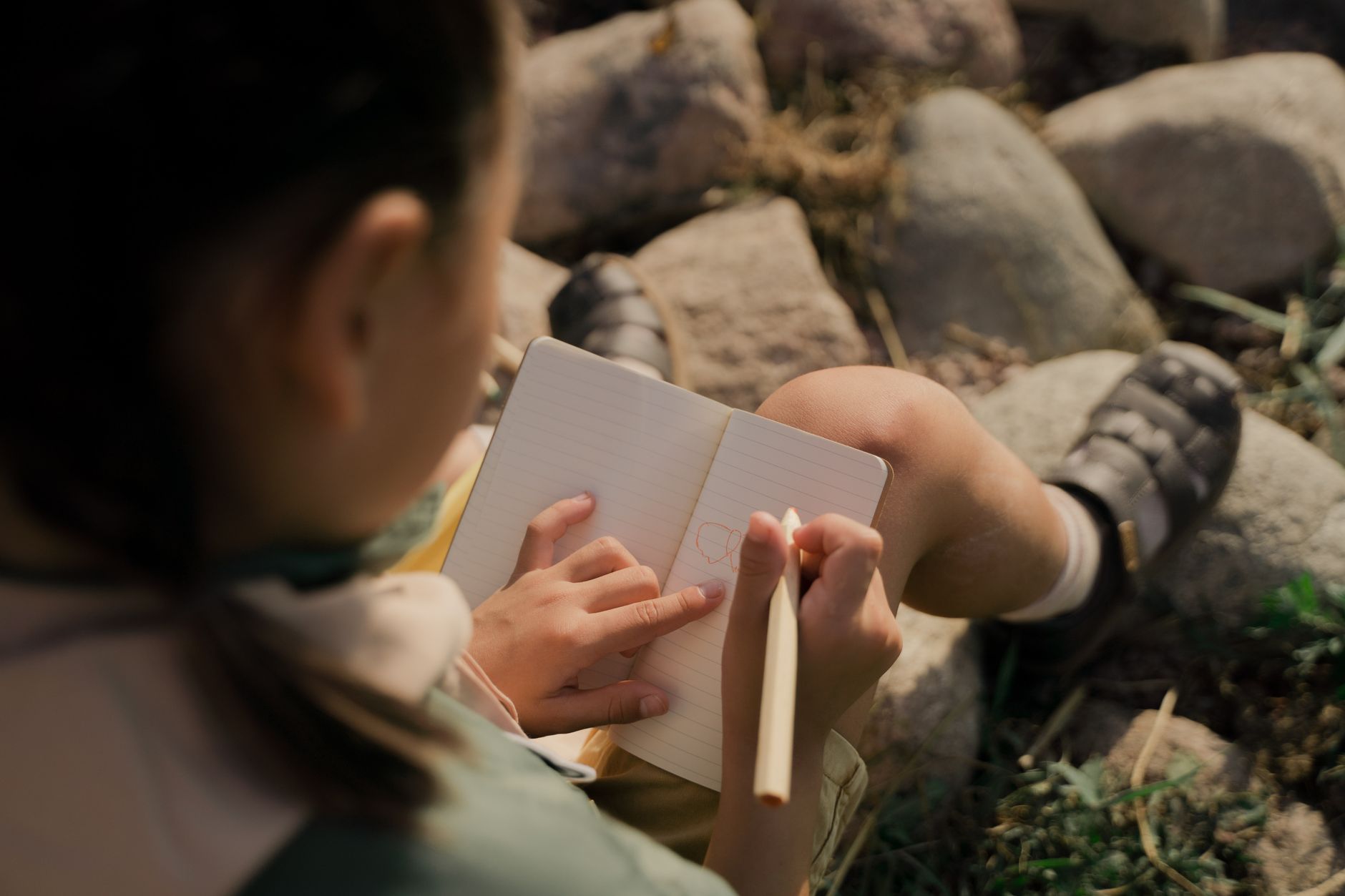
Charlotte Mason Nature Journal Ideas for Kids (That Actually Get Used)
This post contains affiliate links. I may earn a small commission at no extra cost to you.
If you’ve ever handed your kid a blank journal, pointed to the backyard, and said “go draw something” — only to watch them stare blankly at the page for ten minutes before wandering off — you are not alone. I have been that mama. Multiple times.
Nature journaling is supposed to feel magical, right? Slow mornings, sketching little birds, pressing wildflowers. And it can be that. But it takes a little more scaffolding than Charlotte Mason’s books might make it seem, especially with young kids.
We’ve been doing nature-based homeschool here in Northwest Florida for a few years now, and I finally feel like we’ve hit a rhythm with our nature journals that actually sticks. Not because I figured out the perfect system — but because I stopped overthinking it and let the kids lead a little more.
Here’s what’s been working for us.
What Charlotte Mason Actually Said About Nature Journals
Charlotte Mason called it a “nature notebook,” and her vision was pretty simple: kids go outside, observe something closely, and record what they see through drawings, written observations, or both. No worksheets. No fill-in-the-blanks. Just a child and a living thing and a blank page.
The whole point is attention — slowing down enough to really see something. A feather. A spider web. The way a caterpillar moves. That kind of focused observation is a skill, and the journal is just the tool that makes it tangible.
For Charlotte Mason, this wasn’t an art project or a science assignment. It was both — and neither. It was just life.
Setting Up a Nature Journal Your Kids Will Actually Use
Before we get into the ideas themselves, let’s talk setup — because the journal itself matters more than you’d think.
We use a simple nature journal with blank pages and a slightly heavier paper weight so it can handle watercolor without buckling too badly. If the pages are too thin, kids get frustrated fast. I learned that the hard way.
For supplies, we keep it simple:
- Pencils for sketching (always pencil first)
- Faber-Castell watercolor pencils for adding color — these are my favorite for kids because they’re forgiving and non-toxic
- A small cup of water and a brush
- That’s genuinely it
We don’t do fancy kits or elaborate setups. The simpler the supplies, the more likely they are to just use them without it becoming a whole production.
Charlotte Mason Nature Journal Ideas That Actually Work for Kids
1. Start With What They Already Love
My youngest was obsessed with our backyard chickens for the better part of two years. So we started there. She sketched their combs, their feet, the color of their eggs. She recorded which hen laid which color that week. That little chicken-obsessed journal was the best nature study we ever did — and it came from her, not me.
If your kid is into bugs, bugs it is. If they can’t stop talking about the giant oak in the front yard, start there. You can check out Storey’s Guide to Raising Chickens if you want more to talk about with your chicken-loving kids — it’s surprisingly readable for older elementary kids too.
2. Seasonal Observation Pages
One of our favorite ongoing journal habits is a simple seasonal check-in. Every few weeks, we go to the same spot in our yard — usually near the big azalea bush or the garden bed — and sketch what we see. Same spot, different time.
This is so simple but it teaches kids about change over time in a way no textbook can. Here in Florida, the seasonal shifts are subtle, so this kind of repeated observation actually trains them to notice things like which birds are around in January versus June, or when the muhly grass blooms again.
We use our Sibley Birds guide for any birds we can’t identify, and the kids love being the ones to flip through and find the right species.
3. The “One Thing” Sketch
When kids feel pressure to fill a whole page, they shut down. So we switched to what we call the “one thing” sketch — just pick one object and draw it as carefully as you can.
One pinecone. One feather from the chicken run. One snail shell. One palmetto bug (brave soul). The whole goal is close looking, not a finished masterpiece.
Pair this with a pocket microscope and you’ll blow their minds — suddenly that feather has structure they’ve never seen before, and now they want to draw it.
4. Pressed and Taped Nature Finds
Not every page needs to be a drawing. We tape in leaves, stick small feathers with washi tape, press flowers between book pages first and then tape them in later. My kids love the collecting part as much as the recording, and letting them include actual specimens in the journal makes it feel like a real naturalist’s notebook.
For the collecting trips, kids rain boots are non-negotiable here in Florida — whether it rained yesterday or not, the ground is probably wet somewhere.
5. Bug and Insect Study Pages
Florida has bugs. A lot of bugs. And instead of running from that, we lean into it. We use a bug collection kit for close-up observation before releasing whatever we catch, and then the kids sketch and label what they found.
We’ve journaled lubber grasshoppers, love bugs (they think this is hilarious), walking sticks, and a truly alarming variety of beetles. Every single one ends up being more interesting up close than it looked from a distance.
If you want to pair this with a nature scavenger hunt, I’ve got a free Florida-specific one that works great alongside journal time.
6. Weather and Moon Journals
This is one of those habits that sounds small but builds something big over time. We have a little section at the top of each week’s journal pages for weather notes and moon phase sketches. My son has gotten genuinely good at moon observation — he can tell me what phase we’re in without looking it up most of the time now.
For nature-based unit studies that pair beautifully with this kind of observation work, you might love what I put together in my Homeschool Spring Florida Nature Study Ideas post.
7. Garden Journal Pages
If you have any kind of garden going — even just a few containers on the porch — that is gold for nature journaling. Kids can sketch seedlings as they sprout, track bloom times, draw the pollinators they spot visiting.
We tie our garden journal pages directly into our science and even some math work. How tall is the tomato plant this week? How many eggs did the hens lay compared to last month? It’s all living, real data — which is basically what Charlotte Mason was going for all along.
For getting kids involved in the garden itself, I love these kids garden gloves — they actually stay on and the kids feel like real gardeners.
A Few Things I’ve Learned the Hard Way
Don’t grade it. The minute it feels like a test, it’s over. Nature journals are not graded in our house. They’re not even corrected. Misspelled labels are fine. Wobbly drawings are beautiful.
Go outside with them. At least sometimes. Kids journal better when you’re sitting next to them scribbling in your own notebook. It normalizes the whole thing.
Let it be messy. Some journal pages are gorgeous. Some are three chicken scratches and a smeared watercolor blob. Both count. Both are real.
If you’re looking for more ways to bring this kind of slow, attentive learning into your whole school year, my post on Delight-Directed Learning in Homeschool talks a lot about how we follow interest without throwing out all structure.
You Don’t Need to Be an Artist. Neither Do They.
I want to say this clearly because I think it stops a lot of mamas: you do not have to be able to draw to guide your kids through nature journaling. I cannot draw. My sketches look like a kindergartner did them. My kids don’t care. They see me try, and that’s the whole thing.
Charlotte Mason wasn’t creating artists. She was creating children who pay attention to the world. Kids who notice things. Kids who go outside and actually see what’s there instead of scrolling past it.
That’s the whole goal. And a beat-up journal full of wobbly bird sketches and taped-in feathers and smudged watercolor? That’s exactly what it should look like.
Get outside, friend. The Florida sun is waiting, the chickens are probably doing something journal-worthy right now, and your kids are going to love this more than you expect.
📖 You Might Also Like:
- Florida Food Forest Beginner Guide: What to Plant (and How to Actually Get Started)
- Free Florida Nature Scavenger Hunt Printable for Kids (Charlotte Mason-Friendly and Actually Fun)
- How to Raise Free-Range Kids in the Modern World (A Real Family’s Guide)
Frequently Asked Questions
What age should kids start a nature journal?
Kids can start nature journaling as young as 4 or 5 with very simple prompts — draw what you see, paste a leaf, copy a shape. For Charlotte Mason-style journaling, most kids really hit their stride around ages 6-8 when they can hold a pencil comfortably and sit for a few focused minutes. The key is to keep it low-pressure and let them lead with what interests them most.
What should a Charlotte Mason nature journal include?
A Charlotte Mason nature journal typically includes detailed sketches of plants, animals, insects, or other natural objects the child observes directly. Kids might also add written notes, labels, pressed specimens, weather observations, or watercolor paintings. The emphasis is always on direct observation — drawing from life, not from pictures — and on the child’s own attention and curiosity rather than a set curriculum.
Do kids need to be good at drawing to keep a nature journal?
Not at all! Charlotte Mason’s approach to nature journaling is about training careful observation, not producing perfect artwork. The act of trying to sketch something closely — really looking at it — is the whole point. Wobbly drawings, misspelled labels, and smudged watercolor are all perfectly valid. Encouraging your kids by journaling alongside them (even badly) goes a long way.
What supplies do you need for a Charlotte Mason nature journal?
You really don’t need much. A blank journal with reasonably thick paper, pencils for sketching, and a simple set of watercolor pencils or paints are enough to get started. Some families add a field guide (like a bird or tree guide for their region), a hand lens or pocket microscope for close observation, and washi tape or glue for attaching pressed specimens. Keep it simple — too many supplies can actually get in the way.
How often should kids do nature journaling?
Charlotte Mason recommended daily nature time, but even a few times a week is meaningful and builds the habit of observation over time. Many families find that short, consistent sessions work better than long, occasional ones. Even 10-15 minutes of focused outdoor observation followed by a quick sketch can be deeply valuable. In Florida especially, getting outside in the cooler morning hours makes nature journaling feel natural and enjoyable rather than like a chore.
Leave a Reply