How to Raise Free-Range Kids in the Modern World (A Real Family’s Guide)
This post contains affiliate links. I may earn a small commission at no extra cost to you.
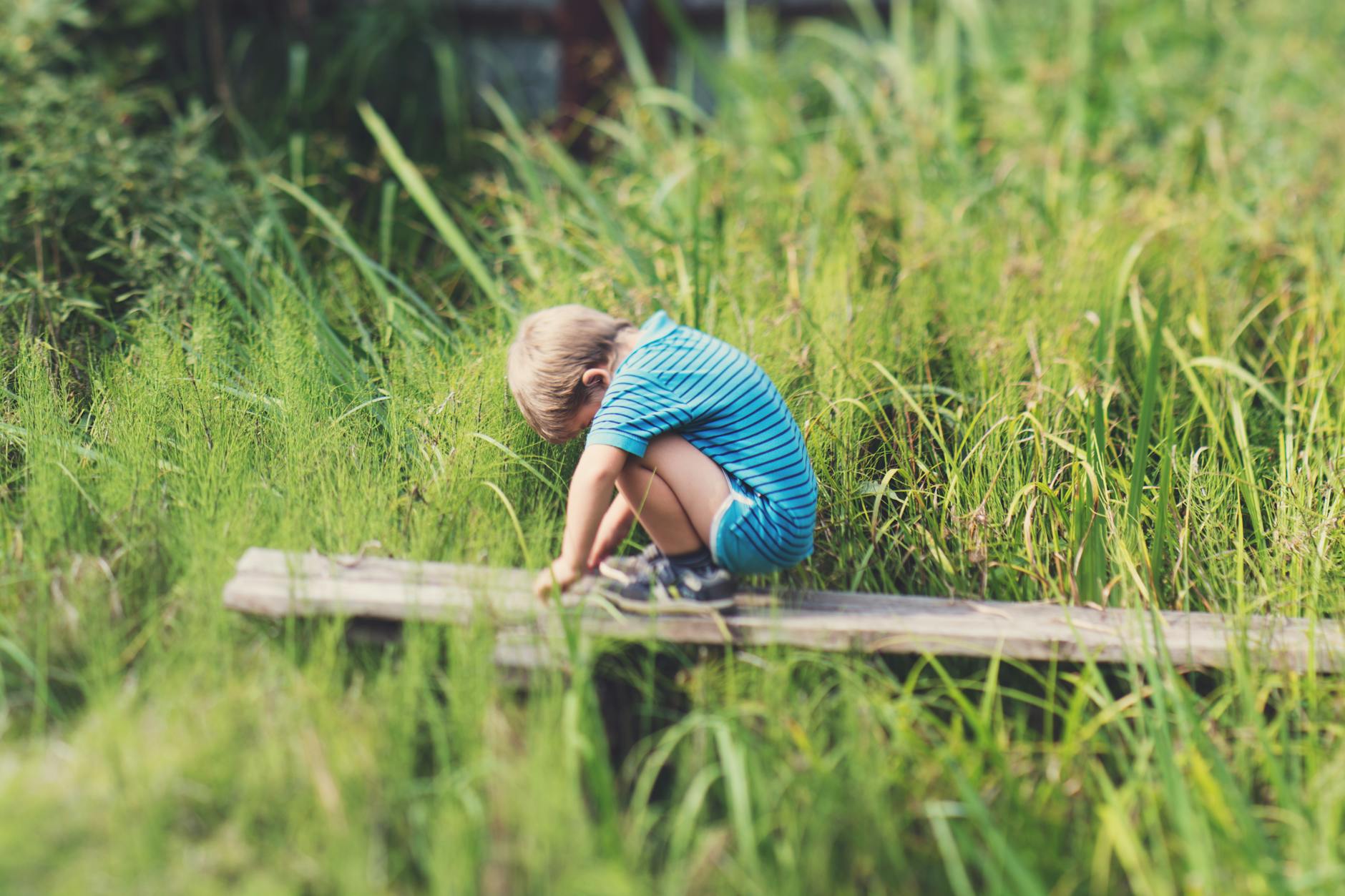
Somebody’s mama once told me that kids are like little plants — they need room to grow, or they just get leggy and pale and sad. I think about that a lot when I watch my kids tear across the backyard barefoot, chasing lizards and arguing over who gets to collect eggs from the coop first. There’s something happening out there that no curriculum, no structured activity, no app can replicate. And I think deep down, most of us parents already know that.
But here’s the thing — raising free-range kids in today’s world feels genuinely hard. Not because our kids can’t handle it. Because we can. We’ve been conditioned to worry. To hover. To schedule. And the world around us — the culture, the neighborhood, sometimes even the other parents — doesn’t always make it easy to just let kids be kids.
This isn’t a post about being a reckless parent or ignoring real safety. It’s about raising capable, curious, resilient humans on purpose. Here’s how our family does it, practically speaking.
What “Free-Range” Actually Means (And What It Doesn’t)
Let’s get this out of the way: free-range parenting doesn’t mean hands-off parenting. It doesn’t mean leaving your six-year-old to figure out dinner or ignoring genuine dangers.
What it does mean is giving kids age-appropriate independence — the freedom to explore, fail, problem-solve, get dirty, get bored, and figure things out without an adult narrating and managing every single moment. It’s what childhood looked like for most of us who grew up in the 80s and 90s, and the research backs up what our grandmothers already knew: kids need unstructured time and real-world experience to develop into confident, capable people.
For our family, it looks like kids who roam our yard without constant supervision, handle the chickens, help in the garden, and — yes — occasionally fall out of a tree. It’s the 1990s Childhood Activities We’re Bringing Back (And Why Our Kids Are Thriving Because of It) approach, just applied to the world we actually live in today.
Start With Your Own Mindset (This Is the Hardest Part)
Honestly? The biggest barrier to raising free-range kids isn’t the neighborhood or the news cycle. It’s the anxiety that lives inside most modern parents — me included.
I had to actively decide to tolerate discomfort when my oldest first started walking to the mailbox alone, or when my younger one wanted to use a real knife to cut fruit. Not because those things aren’t slightly nerve-wracking, but because I knew the cost of never letting them try was higher.
Some things that helped me shift:
- Reminding myself that risk is not the same as danger
- Remembering my own childhood and what I survived just fine
- Reading about the actual data on child safety (spoiler: by most measures, kids today are statistically safer than we were)
- Watching what happened when I backed off — my kids rose to meet the moment, every single time
Practical Ways to Give Kids More Freedom Today
Let Them Own Real Responsibilities
This is where backyard chickens have been genuinely transformative for our family. Our kids feed, water, and check on the flock every single day. They know which hen is laying, when someone seems off, and how to handle a bird that doesn’t want to be caught. That kind of real-world responsibility — where something living actually depends on you — does something to a child’s confidence that you just can’t manufacture.
If you’re thinking about getting chickens, Storey’s Guide to Raising Chickens is the one we started with, and Chick Days: Raising Chickens from Hatchlings to Laying Hens is great for getting the kids involved too.
Make Outside the Default
We have a simple rule in our house: outside first, inside second. Before screens, before structured activities, before asking for something to do — go outside. Even if it’s hot (and y’all, it is hot here in Pensacola from May through October). They adapt. They find shade. They slow down. And they always, always find something to do eventually.
Having the right gear makes it easier to say yes to outdoor time. Good kids’ rain boots mean a puddle is an invitation, not a problem. A bug catcher kit turns the backyard into a science lab. And when kids have tools like a nature journal and watercolor paints waiting on the porch, they start reaching for them naturally.
Embrace Boredom — It’s Doing Its Job
I know it feels wrong when your kid dramatically announces that there is literally nothing to do. But boredom is where creativity is born. That complaint is actually a beginning.
Our job isn’t to solve it. Our job is to resist solving it. Give it twenty minutes and watch what happens. They’ll build something, invent a game, start an argument that somehow becomes collaborative — something. We have some walkie talkies and outdoor lawn games around, but I try not to point them out. The best play is the kind the kids invent themselves.
If you want more ideas, I’ve got a whole post on Screen-Free Summer Activities for Florida Kids (When They Say They’re Bored) that’s full of things that have actually worked for us.
Build in Real Nature Study
Charlotte Mason had it right: time in nature isn’t a break from learning. It is learning. We do formal nature study as part of our homeschool, but most of it happens naturally just because we’re outside so much.
We use the Sibley Birds guide to identify what’s visiting our yard (and there’s a lot — we’ve spotted painted buntings right here in our backyard, which never gets old). We’ve catalogued bugs with a pocket microscope. The kids sketch what they find. This kind of learning sticks in a way that worksheets just don’t.
For more on this, check out our Florida Backyard Wildlife Identification Guide for Families — it’s a great starting point if your kids are just getting curious about what’s living in your yard.
Say Yes More Than You Think You Should
This one is simple but it’s not easy. Can I climb that? Can I use the hose by myself? Can I walk over to the neighbor’s? Can I try to cook breakfast?
My default answer now is yes, unless there’s a specific reason it’s no. Not a vague, anxious reason. An actual reason. This has required me to get comfortable with a little mess, a little chaos, and a skinned knee here and there. But the alternative — kids who are always waiting for permission, who don’t trust themselves — that’s so much harder to undo later.
A Word on Screens
You can’t really talk about free-range childhood without talking about screens, because they are the number one competition for everything on this list. We’re not a zero-screen household, but we are an intentional one. Screens come after outside. They don’t come in the morning. They don’t come during meals. And they don’t substitute for boredom.
If you want to dig into the practical side of this, I wrote a whole post on Raising Kids Without Constant Screens: Practical Tips That Actually Work for Real Families that gets into the weeds of how we actually manage it day to day.
It Doesn’t Have to Be All-or-Nothing
I want to say this clearly: you don’t have to overhaul everything at once. Free-range parenting isn’t a certification program. It’s a direction.
Start with one thing. Let them play in the backyard without you watching out the window. Let them carry in the groceries. Let them be the ones to check on the chickens in the morning. Let them be bored for thirty minutes and see what happens.
Every small step toward giving your kids more freedom and more real-world experience is a step in the right direction. You don’t have to be perfect. You just have to be willing.
Our kids are growing up in a complicated world, but they’re also growing up with their hands in the dirt, their faces in the sun, and the kind of confidence that only comes from actually doing things. That’s the goal. That’s what we’re working toward — one barefoot afternoon at a time.
📖 You Might Also Like:
- Best Non-Toxic Cookware: What We Actually Use in Our Florida Kitchen
- Natural Remedies for Kids’ Common Colds: What Actually Works (From a Real Mama Who’s Tried It All)
- 1990s Childhood Activities We’re Bringing Back (And Why Our Kids Are Thriving Because of It)
Frequently Asked Questions
Is free-range parenting legal in Florida?
Yes — Florida actually passed the Reasonable Childhood Independence law in 2023, which explicitly allows children to play outside, walk to school, or be home alone for reasonable periods of time without parents facing neglect charges. It’s one of the more progressive states when it comes to supporting childhood independence.
What age can kids start having more independence?
It really depends on the child and the situation, but most experts agree that small steps toward independence can begin as early as 4-5 years old — things like playing in a fenced backyard unsupervised, helping with real chores, or walking to a neighbor’s house. The key is gradually increasing responsibility as the child demonstrates readiness, not holding back until a specific age.
How do I start giving my kids more freedom if I’m anxious about it?
Start small and specific. Pick one low-stakes situation — like letting your child play in the backyard while you’re inside, or letting them walk to the mailbox alone — and practice tolerating the discomfort. Each time it goes fine (and it usually does), your confidence builds alongside theirs. It’s a muscle you develop gradually, not a switch you flip.
How do free-range kids do academically?
Research consistently shows that kids who have unstructured outdoor time, physical play, and real-world responsibilities actually perform better academically — not worse. They develop stronger executive function, creativity, problem-solving skills, and resilience, all of which support learning. For homeschool families especially, integrating nature study and hands-on experience into the school day tends to produce deeply engaged learners.
What if my neighborhood or community isn’t set up for kids to roam freely?
You don’t need a wide-open neighborhood to raise a free-range kid. A fenced backyard, a nearby park, homeschool co-ops, nature preserves, and even your own porch can be starting points. The mindset matters more than the square footage. Focus on giving kids real responsibilities, unstructured time outside, and freedom to problem-solve within whatever space you have access to.
Leave a Reply