Natural Ways to Keep Ants Out of Your House in Florida (What Actually Works for Our Family)
This post contains affiliate links. I may earn a small commission at no extra cost to you.
If you live in Florida, you already know. You set a single crumb on the counter and within twenty minutes there’s a whole ant highway running across your kitchen. It doesn’t matter how clean your house is. It doesn’t matter what season it is. Down here in Northwest Florida, ants are just… a fact of life. Especially in summer when the rain drives them inside looking for dry ground.
For a long time I just dealt with it — or I’d grab whatever was under the sink and spray, not really thinking about what was in it. Then I started paying more attention to what we were bringing into our home, and I realized I didn’t want to use harsh chemical pesticides around my kids, our mini labradoodle, or especially our backyard chickens who free range near the house. So I started researching and testing. Some things flopped. Some things actually worked.
Here’s what we’ve landed on.
Why Florida Ants Are Especially Stubborn
We’re not dealing with one species here. Florida has fire ants, ghost ants, carpenter ants, Argentine ants, and the infamous crazy ants — and they all behave a little differently. Ghost ants are the tiny ones that swarm your kitchen counters. Fire ants build those sandy mounds in the yard that your kids inevitably step in barefoot. Carpenter ants go after wood (which is very much not what you want in a Florida home).
The other thing working against us is our climate. The heat and humidity that Florida is famous for creates the perfect environment for ants to thrive year-round. After heavy rains — which we get plenty of from May through October — colonies move to higher, drier ground. That often means inside your walls or under your floors.
All of that to say: this isn’t a one-and-done situation. It’s an ongoing habit of small, consistent actions. But they genuinely work.
The Natural Methods We Actually Use
Diatomaceous Earth — Our Biggest Win
This is hands-down our most-used tool. Food-grade diatomaceous earth is a fine powder made from fossilized algae, and it works mechanically — not chemically. It damages the exoskeleton of insects so they dry out and die. It’s completely safe around kids, dogs, and importantly for us, our chickens. We actually use it in the coop too for pest control.
We apply a thin line of it along baseboards, around door frames, under appliances, and anywhere we see ant trails starting. Outside, we dust it around the foundation of the house after dry weather. (It loses effectiveness when wet, so reapply after rain.)
If you’re curious about how we use it in the chicken yard too, check out Non-Toxic Pest Control for Florida Homes: What’s Actually Safe for Kids, Chickens, and Pets — I go into a lot more detail there.
Peppermint Oil and Other Essential Oil Barriers
Ants navigate by scent trails. Disrupting those trails with strong smells throws them off. We mix about 15-20 drops of peppermint essential oil with water in a spray bottle and wipe down counters, window sills, and door thresholds regularly. It actually smells really good in the kitchen, which is a bonus.
Other oils that work similarly: tea tree, clove, and cinnamon. I rotate them so the ants don’t adapt. Cinnamon powder itself sprinkled along entry points also acts as a physical deterrent — they won’t cross it.
White Vinegar for Counters and Trails
When I see an active trail, I spray undiluted white vinegar directly on it. This destroys the pheromone trail so other ants can’t follow. Then I wipe it clean. It smells strong for a minute but dissipates quickly and leaves no residue I’m worried about on food prep surfaces.
For ongoing cleaning, we use Grove Collaborative products for our everyday counters — their concentrates are non-toxic and we’ve found the clean surfaces genuinely reduce ant interest in the kitchen.
Wondercide for the Perimeter
Wondercide is something I recommend to every Florida mama in our homeschool co-op. It’s a plant-based pest spray that’s safe to use around kids, pets, and chickens. We spray it around the foundation of our house, on the porch, and along the fence line every few weeks — especially heading into rainy season. It handles ants but also mosquitoes and other pests, which is a huge deal down here in Pensacola where the bugs come in waves.
I actually wrote more about how we handle bugs outside in Natural Mosquito Repellent That’s Actually Safe for Kids in Florida if you want the full outdoor pest picture.
Borax Bait for Serious Infestations
Okay, this one requires a little more care because borax shouldn’t be left where toddlers or pets can get into it directly. But in the right spots — inside a bait station, tucked under the fridge or behind the stove — it’s incredibly effective and still far safer than commercial ant killers.
The recipe is simple: mix 1/2 teaspoon of borax with 8 teaspoons of sugar and enough warm water to dissolve it. Soak a cotton ball and place it inside a small lidded container with tiny holes poked in the sides. Worker ants carry the bait back to the colony and it kills it from the inside out. This works especially well for ghost ants, which are the ones most likely to be all over your kitchen.
Seal Everything — Seriously, Everything
This sounds obvious but it made a huge difference for us. We went around the house with clear caulk and sealed every gap we could find around baseboards, pipe entry points, window frames, and door sweeps. Florida homes have a lot of tiny entry points because of how they’re built and how much the wood expands and contracts with our humidity.
Pair that with keeping food in sealed containers (we use glass jars for pantry staples) and making sure the trash has a tight lid, and you remove a lot of the reason ants want to come inside in the first place.
Keeping Ants Away From the Chicken Coop Area
Fire ants are a real problem near chicken coops. They’ll get into feed, swarm chicks, and can actually harm young birds. We keep the area around our coop dry and clean, remove spilled feed promptly, and use diatomaceous earth around the perimeter of the run. We’ve had good luck with it.
If you’re newer to keeping chickens and want the bigger picture on coop setup and keeping things healthy, our Backyard Chicken Starter Guide covers a lot of this.
Making It a Learning Moment
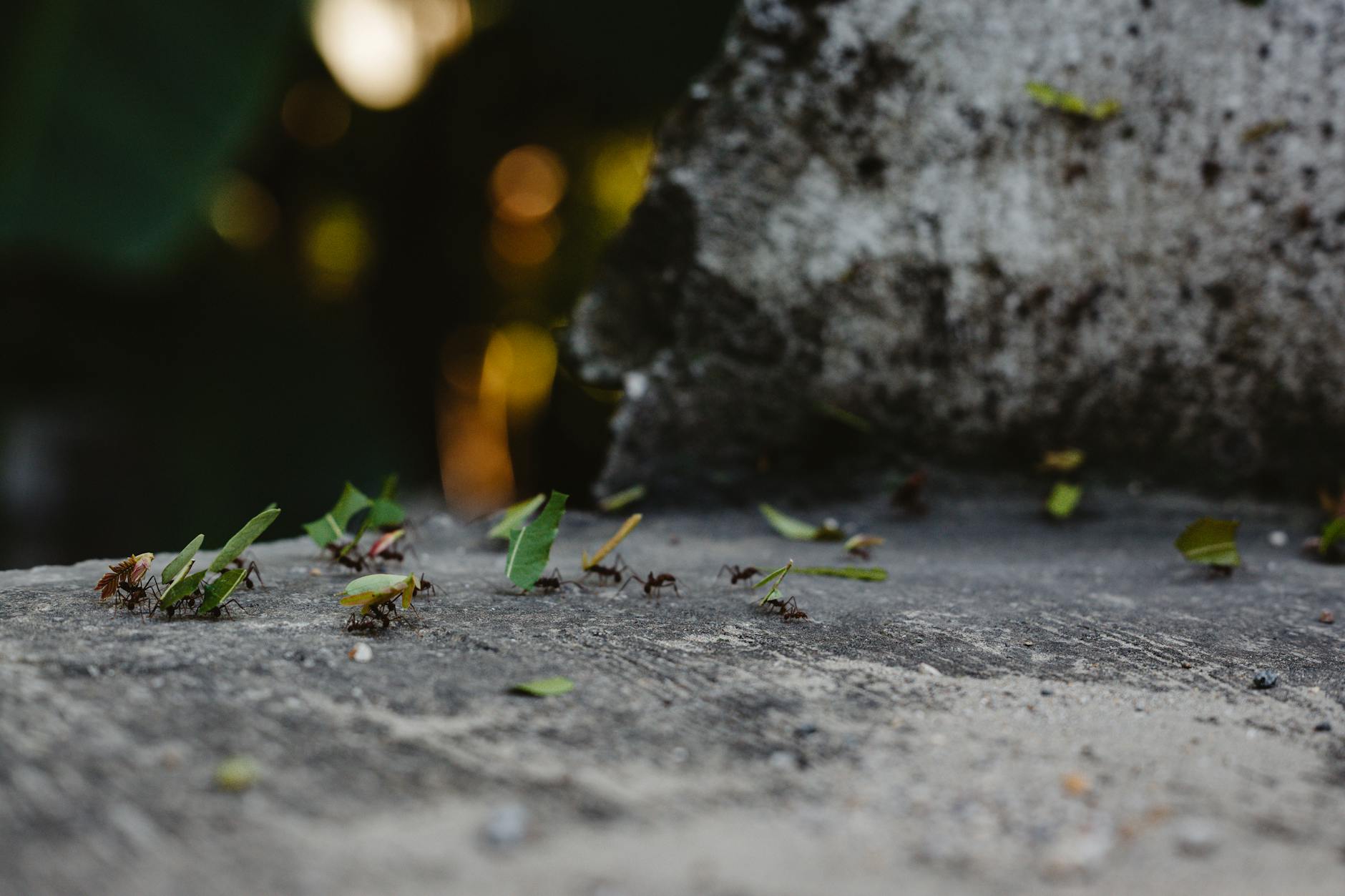
One thing I love about this whole natural pest control approach is that it turns into actual nature study. My kids are fascinated by ants — we’ve spent more than one morning watching a trail with a pocket microscope and sketching what we see in their nature journals. We’ve talked about why ants come inside after rain, how they communicate through pheromones, and why diatomaceous earth works the way it does.
That’s the thing about living intentionally — even the annoying stuff, like a line of ants across your counter, becomes an opportunity to slow down and actually look. My kids now know more about ant biology than most adults, and we learned it in our kitchen while making breakfast.
Very 1990s of us, honestly. No app required.
A Few Quick Reminders
- Reapply diatomaceous earth after every rain
- Rotate your essential oils so ants don’t habituate
- Borax bait is effective but keep it away from very young children and pets
- Consistency matters more than any single product — make these habits, not one-time fixes
- Address moisture issues inside and outside your home — ants follow water
We’re not a pest-free house — this is Florida and that’s probably not realistic. But we’ve gone from full-on ant invasions to occasional scouts that don’t find anything worth reporting back about. And we’ve done it without a single can of chemical spray. That feels really good.
If you’re just starting to move toward a less-toxic home and feel a little overwhelmed by where to start, my How to Detox Your Home Room by Room checklist is a great first step. Small changes add up faster than you’d think.
You’ve got this, mama. Even with the ants.
📖 You Might Also Like:
- Non-Toxic Pest Control for Florida Homes: What’s Actually Safe for Kids, Chickens, and Pets
- How to Detox Your Home Room by Room: A Real Family’s Checklist
- Common Chicken Health Problems in Florida Humidity — and How We Actually Fix Them
Frequently Asked Questions
What is the most effective natural way to keep ants out of the house in Florida?
A combination approach works best in Florida’s climate. Food-grade diatomaceous earth applied along baseboards and entry points, peppermint oil sprays on surfaces, and Wondercide around the home’s exterior perimeter together form a strong, non-toxic barrier. Sealing entry points with caulk and keeping food in sealed containers removes the reason ants want to come inside in the first place.
Is diatomaceous earth safe to use around kids and chickens?
Yes — food-grade diatomaceous earth is considered safe around children, dogs, cats, and backyard chickens. It works mechanically rather than chemically, damaging insect exoskeletons without leaving toxic residue. Just avoid applying it in a way that creates a large dust cloud that could irritate lungs. A light, targeted application is all you need.
Why are there so many ants in Florida homes after rain?
Florida’s heavy rains — especially common from May through October — flood ant colonies in the ground, forcing them to relocate to higher, drier spaces. Your home’s foundation, walls, and kitchen are prime targets. This is why ant pressure increases noticeably after summer storms in Northwest Florida and throughout the state.
Does peppermint oil actually repel ants?
Yes, and fairly reliably. Ants navigate using pheromone scent trails, and strong essential oils like peppermint disrupt those trails and deter scouts from marking new paths. Spraying a diluted peppermint oil mixture along windowsills, countertops, and door thresholds is a genuinely effective deterrent, though it needs to be reapplied regularly — especially in Florida’s humidity.
How do I get rid of fire ants in my yard naturally without harming my chickens?
For fire ant mounds in the yard, diatomaceous earth dusted directly into and around the mound is a chicken-safe option. Boiling water poured directly into the mound is also effective and leaves no residue. Some families use beneficial nematodes applied to the lawn as a longer-term biological control. Avoid boric acid or chemical fire ant baits in areas where chickens free range.
Leave a Reply