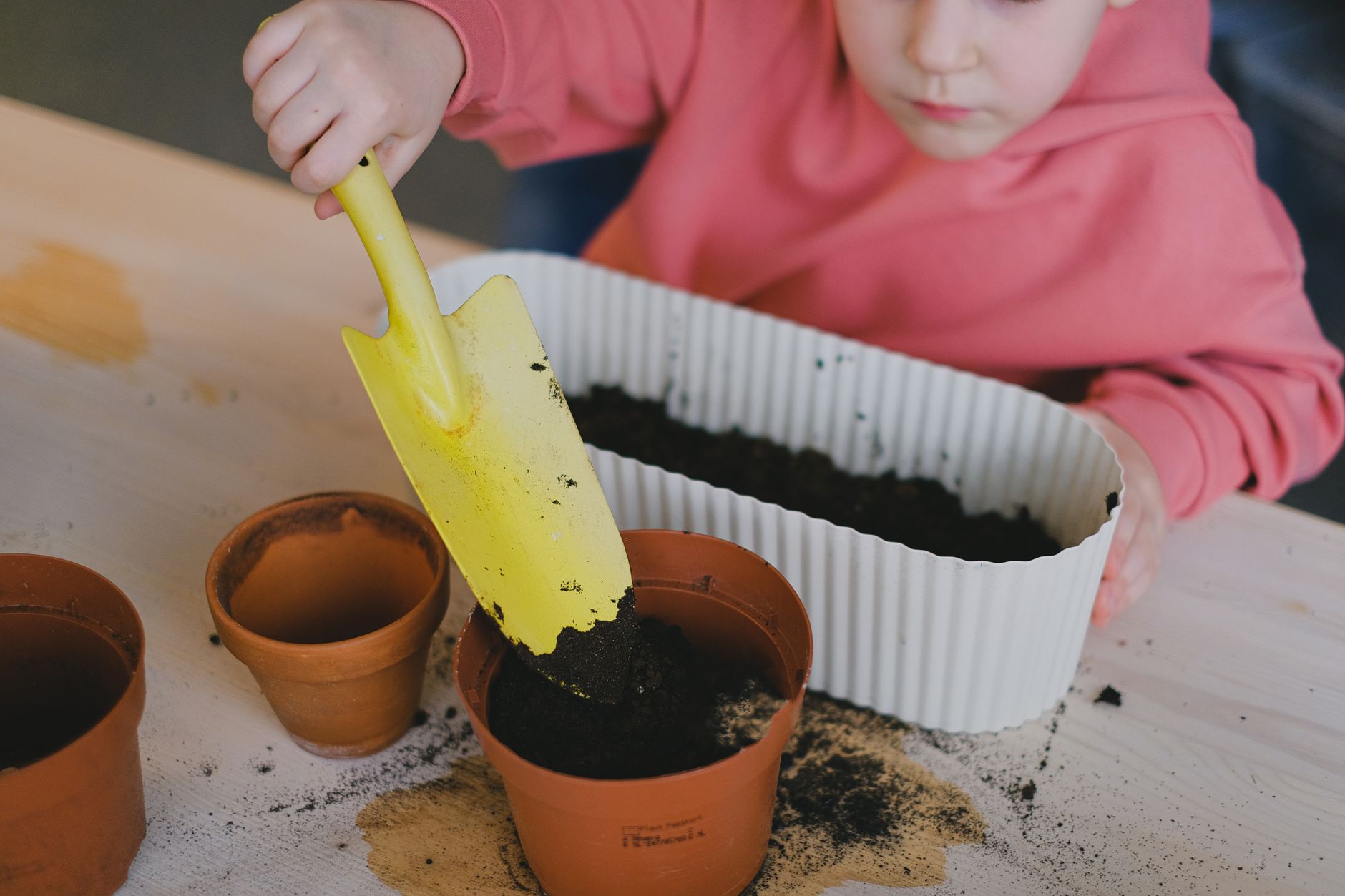
Composting at Home with Kids: A Real Beginner’s Guide That Actually Gets Done
This post contains affiliate links. I may earn a small commission at no extra cost to you.
I’m going to be honest with you — the first time I tried composting, I did it completely wrong. I threw a bunch of watermelon rinds in a pile in the back corner of our yard, forgot about it for three weeks, and came back to something that smelled like a Florida swamp in August. Not exactly what the Pinterest boards had promised me.
But here’s the thing: I didn’t give up on it, I just got smarter about it. And now? Composting is one of those quiet, steady rhythms in our home that the kids actually look forward to. My seven-year-old calls herself the “compost manager.” My youngest drags the kitchen bin out to the pile like it’s his most important job of the day. And honestly, it kind of is.
If you’ve been wanting to start composting at home but feel like it’s one more complicated thing to figure out, this post is for you. We’re going to keep it simple, real, and totally doable — even in the middle of a full homeschool day.
Why Composting Is Such a Good Fit for Homeschool Families
Composting is basically a living science experiment sitting in your backyard. For those of us using a Charlotte Mason or nature-based approach, it checks so many boxes — biology, earth science, stewardship, real-world math (yes, really), and observation skills.
We talk about decomposers, the food chain, nutrient cycles. My kids have watched a banana peel disappear completely over the course of a few weeks and thought it was genuinely magical. That kind of hands-on learning sticks in a way that no worksheet ever will.
If you’re building out a nature study practice with your kids, composting pairs beautifully with a nature journal — they can sketch what they see, track changes over time, and record which scraps break down fastest. We have a whole post on Charlotte Mason Nature Journal Ideas for Kids (That Actually Get Used) if you want ideas for how to make that work.
What You Actually Need to Get Started
Good news: you don’t need much.
The Kitchen Bin
First, you need a way to collect scraps inside before you haul them out. We keep a small kitchen compost bin on our counter. It has a charcoal filter in the lid so it doesn’t smell, and the kids know exactly what goes in it — fruit scraps, veggie peels, eggshells (yes, especially eggshells since we have chickens), coffee grounds, tea bags, and torn-up cardboard.
Having a designated spot makes it a habit. Without it, we were constantly debating whether something went in the trash or the compost, and that’s when things fall apart.
The Outdoor Pile or Bin
For your actual compost pile, you’ve got a couple of options. A simple open pile in a corner of your yard works fine — that’s what we started with. You can also use a dedicated bin, which tends to be tidier and keeps critters out (important here in Florida where we have armadillos and raccoons who have absolutely no shame).
Either way, the location matters more than the container. You want somewhere with partial shade — full sun in a Pensacola summer will dry out your pile too fast and slow decomposition way down.
The Browns and Greens Rule
This is the one thing you actually need to understand. Composting is all about balance:
- Greens = nitrogen-rich stuff: fruit scraps, veggie peels, coffee grounds, fresh grass clippings, chicken manure
- Browns = carbon-rich stuff: dry leaves, cardboard, paper bags, straw, wood chips
You want roughly a 3:1 ratio of browns to greens. Too many greens and your pile gets slimy and smelly. Too many browns and it just… sits there. In Florida, we tend to have more greens than we think because of how fast everything grows, so keep extra leaves or cardboard nearby to balance it out.
How We Actually Do It With Kids
Here’s our real-life routine, because theory is nice but you need something practical.
Morning chores include emptying the kitchen compost bin when it’s full — usually every two to three days. One of the kids carries it out, and the other uses a stick to stir the pile a little. We call this “waking up the pile” and I’m not even sure where that phrase came from but they love it.
After chicken chores, any leftover feed, used bedding straw, and yes — chicken manure — goes into the pile. Chicken manure is high-nitrogen gold for compost. If you’re new to backyard chickens and wondering what to do with the coop cleanout, this is the answer. (And if you want our full coop cleaning routine, check out Natural Chicken Coop Deodorizer and Cleaning Routine That Actually Works.)
Once a week or so, someone gives the pile a real turn with a pitchfork or shovel. This introduces oxygen and speeds everything up. My older kids can do this themselves now. My youngest mostly just pokes it enthusiastically, which honestly still counts.
What NOT to Compost (Especially With Kids)
Keep this list somewhere the kids can see it:
- Meat, fish, or bones
- Dairy products
- Oils or greasy food
- Dog or cat waste (chicken waste is fine, but not carnivore pet waste)
- Diseased plants
- Anything treated with pesticides
We keep a simple handwritten list on the inside of our cabinet door. Very 1990s of us, but it works.
Connecting It to Your Garden
Once your compost is dark, crumbly, and smells like earth — usually 2-4 months in Florida’s heat — it’s ready to use. We mix it into our garden beds and containers. If you’re growing food with your kids, finished compost is genuinely exciting because they can see the full circle: scraps become soil, soil grows food, food scraps go back in.
We also sprinkle diatomaceous earth around the base of the pile occasionally to manage pests without chemicals — same stuff we use in the chicken coop.
If you’re just getting your garden started, I’d love for you to read How to Start a Homestead Garden in Florida for Beginners (What Actually Works Down Here) — composting and gardening really do go hand in hand.
Making It a Nature Study Moment
One of my favorite things is pulling back the corner of the pile with the kids and looking at what’s living in there. Pill bugs, red wigglers, fungal threads — it’s a whole ecosystem. A pocket microscope makes this even more fun. We’ve spent entire afternoons just watching the decomposers do their thing.
For the older kids, we use the compost pile as a jumping-off point for talking about nutrient cycles, soil health, and why healthy soil matters for the whole food system. It’s one of those things that sounds dry on paper but comes alive when they’re literally watching it happen in the backyard.
Pair it with some watercolor paints and nature journal time and you’ve got a full morning of real learning — no curriculum required.
You Don’t Have to Be Perfect at This
Our pile has gotten too dry. It’s gotten too wet. I’ve thrown in something I shouldn’t have and had to fish it back out. None of that derailed us. That’s kind of the whole point — composting is forgiving, and so is learning alongside your kids.
The goal isn’t a perfect pile. It’s building a habit of stewardship, teaching our kids that nothing is really waste, and connecting them to the slow, beautiful rhythms of the natural world. That’s worth a little trial and error.
If you’re looking for a non-toxic cleaning routine to pair with this kind of intentional home shift, we love Grove Collaborative for our household products — and How to Detox Your Home from Toxins Room by Room (A Real Family’s Guide) is a great place to start if you haven’t gone through your home yet.
Start small. Get a counter bin. Pick a spot outside. Let your kids carry the scraps out. That’s it. Everything else figures itself out from there.
📖 You Might Also Like:
- Homeschool Spring Florida Nature Study Ideas Your Kids Will Actually Want to Do
- Morning Basket Ideas for Charlotte Mason Homeschool (What Ours Actually Looks Like)
- How to Teach Reading Naturally Without a Formal Curriculum (What Actually Works)
Frequently Asked Questions
How do I start composting at home for beginners?
Start with two things: a small counter bin for collecting kitchen scraps inside, and a designated spot outside for your pile or bin. Learn the basics of balancing browns (dry leaves, cardboard) and greens (food scraps, grass clippings), and just begin. You don’t need special equipment to get started — a pile in a corner of your yard works fine.
What can kids put in the compost bin?
Kids can add fruit and vegetable scraps, eggshells, coffee grounds, tea bags, torn cardboard, dry leaves, and plain paper. Keep a simple visual list on the inside of a cabinet door so they can check before adding anything. Avoid meat, dairy, oily foods, and pet waste from cats or dogs.
How long does composting take in Florida?
Florida’s heat actually speeds up decomposition significantly. A well-balanced, regularly turned pile can produce finished compost in as little as 6 to 8 weeks in summer. Cooler winter months will slow things down a bit, but you’re still looking at faster results than most of the country gets.
Does composting smell bad?
A healthy compost pile should smell earthy, not rotten. Bad smells usually mean too many greens (nitrogen-rich scraps) and not enough browns (carbon-rich material like leaves or cardboard). Add more dry browns, give it a stir to introduce oxygen, and the smell should correct itself within a day or two.
Can I compost chicken manure?
Yes — chicken manure is actually one of the best things you can add to a compost pile. It’s high in nitrogen and speeds up decomposition. Just make sure it gets mixed in well and balanced with plenty of carbon-rich browns. Fresh chicken manure is too strong to apply directly to plants but composted manure is excellent for garden beds.
Leave a Reply