How to Grow Sweet Potatoes in Your Florida Backyard (Even If You’re a Total Beginner)
This post contains affiliate links. I may earn a small commission at no extra cost to you.
If you’ve ever walked out into a Florida summer garden and felt like everything was either fried, flooded, or eaten by something — you are my people. Tomatoes bolt, lettuce gives up before June, and squash becomes a full-time bug-monitoring job. But sweet potatoes? Y’all. Sweet potatoes don’t care. They actually love it here. The heat, the humidity, the sandy Northwest Florida soil that drains like crazy — sweet potatoes are practically made for this climate.
We started growing them a couple of years ago almost by accident. One of my kids left a sweet potato on the counter too long and it started sprouting. We stuck it in a jar of water on a whim, and four weeks later we had slips ready to plant. Now it’s one of our favorite parts of the backyard garden, and honestly one of the best nature study + real-life math + hands-in-the-dirt experiences we’ve found for our elementary-age crew.
Let me walk you through exactly how we do it.
Why Sweet Potatoes Are Perfect for Florida Backyards
Florida’s long, hot growing season is basically a sweet potato’s dream. They need 90–120 days of warm soil, and in Pensacola and the rest of Northwest Florida, we’ve got that from roughly April through October. They’re drought-tolerant once established, they handle our sandy soil beautifully, and the vines act as a living ground cover that chokes out weeds.
Bonus: they’re genuinely nutritious, the kids will actually eat them, and the leftover greens are edible too — we’ve tossed the young leaves into stir-fries and the chickens go absolutely wild for any scraps.
If you’re just getting started with gardening down here, I also really recommend checking out our How to Start a Homestead Garden in Florida for Beginners (What Actually Works Down Here) — it gives you the full big-picture breakdown of Florida-specific gardening seasons.
When to Plant Sweet Potatoes in Florida
The sweet spot (pun intended) for planting sweet potato slips in North Florida is late March through May. You want soil temps consistently above 65°F — which honestly happens fast around here. Planting too early risks rot in cooler, wetter soil. Planting in summer is fine too as long as you’re watering consistently through the heat.
In Central and South Florida, you have an even longer window — some folks plant fall crops down there too.
How to Grow Your Own Sweet Potato Slips
This is the part my kids get the most excited about, and it’s the perfect slow-observation science project for a Charlotte Mason nature study.
What You’ll Need
- 1–2 organic sweet potatoes (grocery store ones sometimes have a growth inhibitor sprayed on them — organic is safer)
- A jar of water
- Toothpicks (optional, to suspend the potato half-submerged)
- A sunny windowsill
- Patience — usually 3–6 weeks
How to Do It
- Cut your sweet potato in half or use it whole.
- Suspend it in a jar with the bottom third submerged in water.
- Set it in a warm, sunny spot.
- Change the water every few days.
- Slips (little sprouts with leaves) will start growing from the eyes. Once they’re 4–6 inches long, you can twist them off gently.
- Place slips in a separate jar of water until they develop roots — about a week.
- Plant them outside once roots are established.
We track growth in our nature journals — my kids draw the slips at different stages and note how many new leaves appeared each week. Simple, beautiful, and genuinely educational without feeling like school.
Planting Your Slips in the Ground
Preparing Your Bed
Sweet potatoes love loose, well-draining soil — which means Florida’s sandy soil is actually an asset here, not a liability. If your soil is very compacted, loosen it about 12 inches deep and add some compost to improve nutrients. (We keep a kitchen compost bin going year-round, and that finished compost is gold for the garden. Check out our Composting at Home with Kids post if you’re not already doing this.)
Avoid heavy clay amendments — sweet potatoes need room to expand underground and clay will misshape or crack them.
How to Plant
- Space slips 12–18 inches apart in rows about 3 feet apart (the vines spread a LOT)
- Plant deep enough that at least 2–3 nodes are buried
- Water well right after planting
- Mulch around the base to retain moisture and keep soil temps even
Give the kids their own garden gloves and let them do the planting. There is nothing like the look on a six-year-old’s face when they dig up a sweet potato four months later and realize they grew that.
Caring for Sweet Potatoes Through a Florida Summer
Once they’re established — usually within two to three weeks — sweet potatoes are genuinely low-maintenance. Here’s what we pay attention to:
Watering: Deep water once or twice a week. They’re fairly drought-tolerant but consistent moisture during vine development gives you better yields.
Fertilizing: Go easy on nitrogen or you’ll get beautiful vines and tiny potatoes. We side-dress once with a balanced organic fertilizer about 4 weeks after planting and leave it at that.
Pests: In North Florida, sweet potato weevils can be an issue. Rotating your planting location each year helps a lot. We also use Wondercide around the garden perimeter — it’s safe for kids, pets, and our chickens who free-range nearby.
Vines: Don’t trim the vines obsessively. Let them sprawl. They’re doing their job. You can pin down wandering vines and they’ll root, which is kind of fun for the kids to observe.
How to Know When Sweet Potatoes Are Ready to Harvest
Harvest time is the big payoff — and possibly the most exciting digging activity outside of an actual treasure hunt. Plan on 90–120 days from planting. Some signs it’s time:
- Vines start to yellow and die back
- The skin on any peeking-through potatoes looks firm and set
- You’ve hit the 100-day mark and it’s still warm
How to harvest: Use a garden fork or your hands to gently loosen the soil around the plants, then dig carefully. Sweet potatoes bruise easily, so slow and gentle wins here. Expect to find them 6–12 inches down and spreading outward from the original plant.
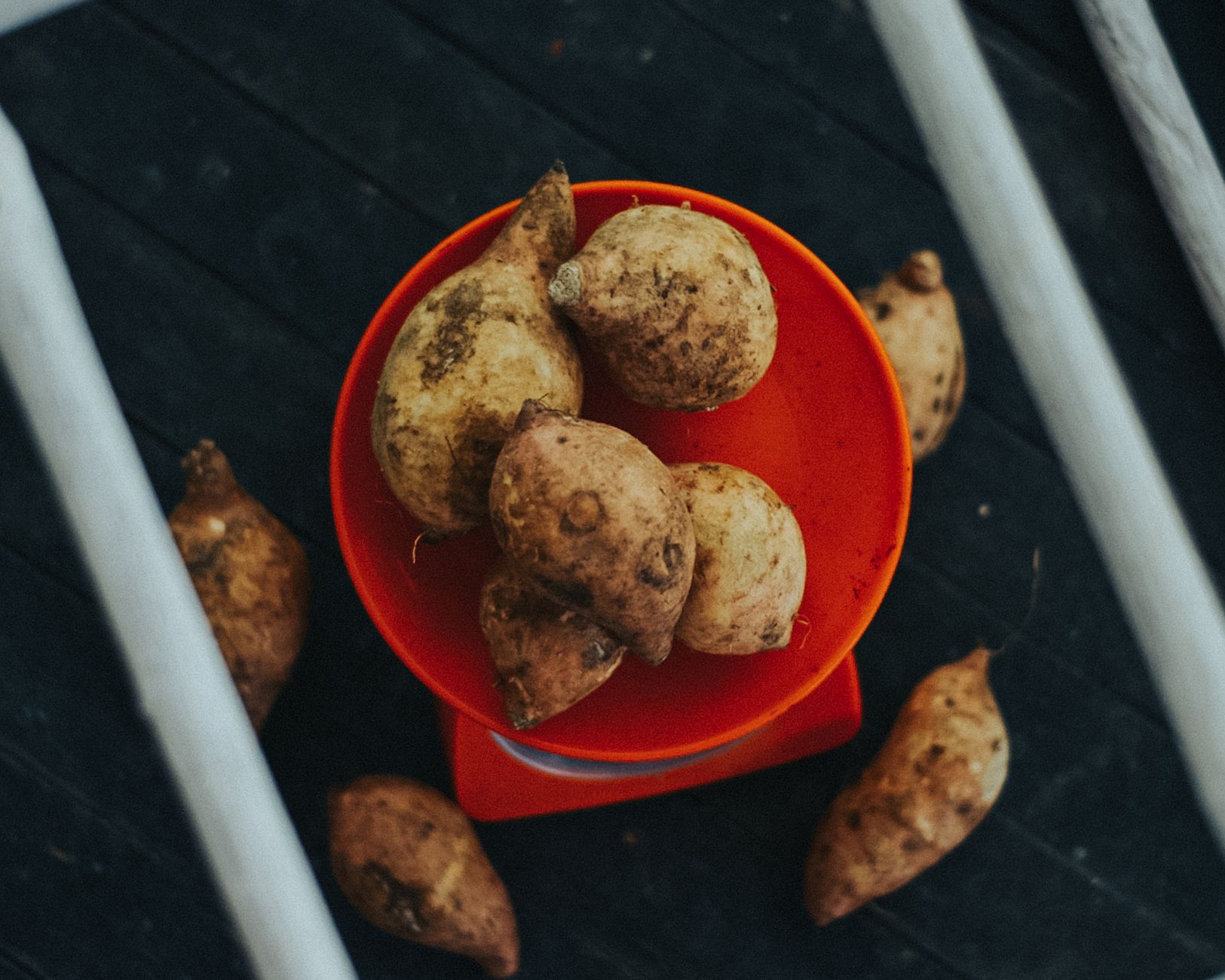
We lay them out on a table and count, weigh, and measure them — easy real-life math that fits right into our homeschool day.
Curing Sweet Potatoes After Harvest
Here’s the step most beginners skip and then wonder why their sweet potatoes taste starchy: curing. You need to cure freshly harvested sweet potatoes before eating them.
Place them somewhere warm (80–85°F) with good airflow for 7–10 days. This converts the starches to sugars and heals any small nicks or cuts in the skin. After curing, store them somewhere cool and dark — not the fridge.
Florida porches in late spring are naturally perfect for this.
Tying It Into Your Homeschool
Beyond the obvious science of plant life cycles, growing sweet potatoes touches on so many subjects naturally:
- Math: measuring vine growth, counting yield, weighing the harvest
- Nature journaling: sketching slips, leaves, and root development with Faber-Castell watercolors
- Life skills: planting, tending, harvesting, cooking
- History/geography: sweet potatoes are native to the Americas — great rabbit trail into indigenous food traditions
For more ideas on weaving the garden into your nature study year, our Homeschool Spring Florida Nature Study Ideas Your Kids Will Actually Want to Do post has a ton of practical starting points.
A Few Extra Tips for Florida Specifically
- Raised beds work great if you have particularly poor or compacted soil, but in-ground works fine in most of Northwest Florida
- Container growing is possible — use at least a 15-gallon container with drainage
- If you have backyard chickens, keep them out of the sweet potato bed until after harvest — they will absolutely eat those vines down to nothing and scratch up your crop. We use a simple chicken tractor to rotate the girls through after harvest for cleanup duty — they do a fantastic job
- You can also try a seed starting kit to start your slips indoors earlier in the season if you want a head start before the last cool nights pass
If you’re new to the backyard garden and feeling like it’s too much to figure out, I just want to say: start with sweet potatoes. Seriously. They are forgiving, productive, and they turn even kids who claim to hate vegetables into proud little farmers the moment they pull one out of the ground. There’s something about growing your own food — especially something this easy and this good — that just quietly changes how your family relates to the land, to their food, and to each other. That’s the whole point for us. Fewer screens, more dirt, and a sweet potato harvest that makes everybody proud.
Happy growing, friend. 🌿
📖 You Might Also Like:
- How to Start a Homestead Garden in Florida for Beginners (What Actually Works Down Here)
- Composting at Home with Kids: A Real Beginner’s Guide That Actually Gets Done
- Homeschool Spring Florida Nature Study Ideas Your Kids Will Actually Want to Do
Frequently Asked Questions
When should I plant sweet potatoes in Florida?
In North Florida (including Pensacola), the best time to plant sweet potato slips is late March through May, once soil temperatures are consistently above 65°F. Central and South Florida gardeners have an even longer window and can sometimes plant a fall crop as well.
Can I grow sweet potatoes in containers in Florida?
Yes! Sweet potatoes can grow in containers in Florida as long as the pot is large enough — aim for at least a 15-gallon container with good drainage holes. Use a loose, well-draining potting mix and water consistently since containers dry out faster in the Florida heat.
How do I make sweet potato slips at home?
Place an organic sweet potato in a jar with the bottom third submerged in water and set it in a warm, sunny window. In 3–6 weeks, slips (sprouts) will appear. Once they’re 4–6 inches long, twist them off and root them in a separate jar of water for about a week before planting outside.
Do sweet potatoes grow well in Florida’s sandy soil?
Actually, yes — Florida’s sandy, well-draining soil is one reason sweet potatoes do so well here. They need loose soil to expand underground, so heavy clay is the real enemy. Amending with compost helps add nutrients without reducing drainage.
How long does it take to harvest sweet potatoes in Florida?
Sweet potatoes are typically ready to harvest 90–120 days after planting slips. Watch for the vines to start yellowing and dying back as a sign they’re ready. After harvest, cure them at 80–85°F for 7–10 days before eating to develop their full sweetness.
Leave a Reply