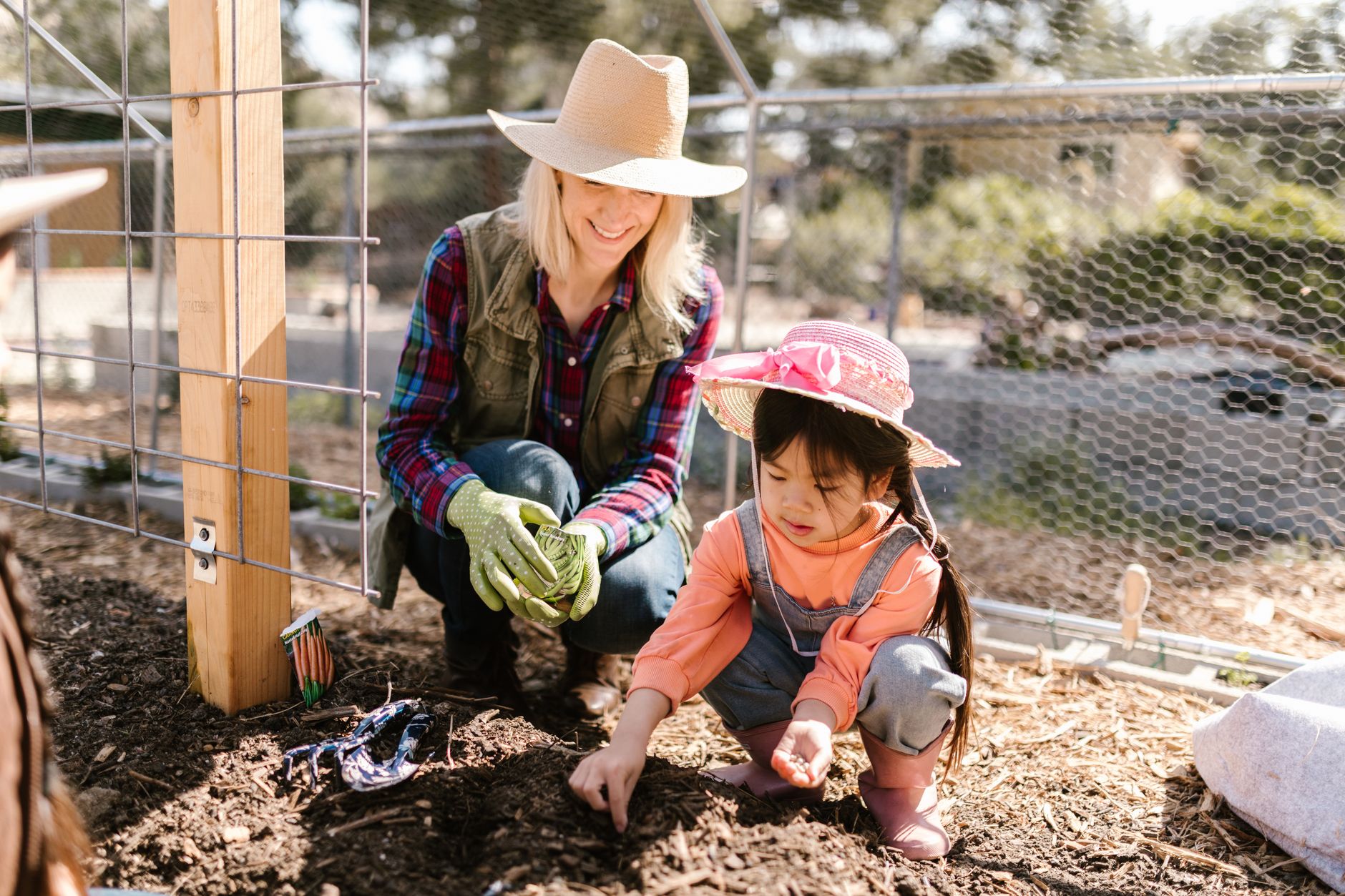
Best Kids Garden Tools That Actually Work (And Won’t Fall Apart After One Season)
This post contains affiliate links. I may earn a small commission at no extra cost to you.
If you’ve ever handed your kid a cheap plastic trowel from the dollar section and watched it snap in half before they even hit dirt — you already know the problem. Most tools marketed to children are basically toys dressed up as garden tools. They’re sized small, sure. But they’re also so flimsy and poorly made that they can’t actually do anything useful, which means your kid gets frustrated, you get frustrated, and everybody ends up just standing there.
We garden here in Northwest Florida pretty much year-round. I’m talking fall tomatoes, winter greens, spring herbs, summer okra in the blazing Pensacola heat. My kids are out there with me because that’s part of how we learn — Charlotte Mason called it “living education” and I just call it Tuesday. But for that to actually work, they need tools that function. Real tools, just appropriately sized.
Here’s what we’ve learned after a few seasons of trial and error (and one very sad broken rake incident).
What to Look For in Kids Garden Tools
Before I get into specific picks, let me save you some money with a few quick guidelines.
Skip the all-plastic sets. If it comes in a pastel gift box and costs $8 for four pieces, it’s going to break. Those tools can’t penetrate Florida’s sandy soil (or worse, our clay-heavy patches) with any kind of force.
Look for metal heads with wooden or sturdy composite handles. These are real tools made small. They’ll last multiple seasons and actually do the job.
Size matters — but not the way you think. The tool should be sized so your child can use it comfortably without bending awkwardly, but it should still be heavy enough to work. Lightweight doesn’t always mean better for kids — sometimes a little weight behind a trowel is what makes it dig.
Involve them in picking. When kids have a say in their tools, they take ownership. We use our nature journal to sketch and plan the garden before we even start, and letting the kids pick their own gloves is part of that buy-in.
The Kids Garden Tools We Actually Use
1. A Good Trowel — The Non-Negotiable
This is the workhorse of the garden. We look for a trowel with a stainless steel or carbon steel head and a handle that fits smaller hands without being so short it’s awkward. Radius Garden makes a great one, and DeWit offers scaled-down versions of their adult tools that are genuinely excellent.
What we use ours for: transplanting seedlings (especially from our indoor seed starting kit), dividing herbs, and general digging. My second grader can actually transplant a pepper start without me doing it for her. That’s the goal.
2. A Hand Cultivator / Claw
Three-pronged hand cultivators are fantastic for kids because they can break up soil and pull weeds without needing a lot of force. Even my kindergartner can use one independently. We do most of our weeding this way in the cooler months when the garden beds are active.
This is also great for aerating around established plants — something we do regularly in our beds because Florida soil compacts fast, especially after our afternoon thunderstorms all summer.
3. A Small Garden Rake
Not the leaf rake — the bow rake style, just smaller. Great for smoothing out beds before planting, which is something even a five-year-old can do with confidence. One job they can own start to finish. Pair this with some kids garden gloves and they’re ready to go.
4. A Watering Can with a Removable Rose Head
This sounds boring but it matters. The rose head (the sprinkle attachment) lets kids water seedlings without blasting them out of the soil. Without it, my son once watered a newly planted bed into a small flood. We still talk about it.
Look for a one-gallon or smaller metal watering can. The metal ones hold up way better than plastic, and honestly they look better too. We hang ours on a hook in the garden shed.
5. Rain Boots — Yes, This Counts
Okay, not technically a tool, but absolutely essential equipment. We are outside in the rain, in the mud, stomping through the chicken area before heading to the garden beds. Proper kids rain boots that fit well and don’t let water in are non-negotiable in this family. My kids have learned to grab their boots before they grab their tools — and that’s a life skill I’m proud of.
6. A Bug Catcher for the Inevitable Discoveries
I know, I know — but hear me out. The second you turn over a shovelful of soil in a Florida garden, someone is finding a worm, a pillbug, a beetle larvae, or something completely unidentified. That is a nature study moment, and I’m not going to rush past it.
We keep a bug catcher right in the garden basket so we can pause, observe, maybe sketch in the nature journal, and then return the critter to the soil where it belongs. This is the 1990s way of doing it — you don’t scroll past the interesting thing, you stop for it.
How We Use the Garden as a Classroom
Gardening isn’t separate from homeschool in our house — it is homeschool, at least part of it. We track planting dates in our nature journals. We observe and sketch what’s growing. We measure plant height for math. We read seed packets for reading comprehension. We talk about the water cycle when it rains. We compost our kitchen scraps (if you want to start, check out my post on how to build a simple compost bin for beginners) and watch what happens over time.
The chickens are part of this ecosystem too — they scratch through finished compost, eat garden pests, and produce the manure that feeds the soil. We use Storey’s Guide to Raising Chickens as a reference, and my older kids can now explain the nitrogen cycle using chickens and compost. That’s real science.
For nature journaling in the garden specifically, Faber-Castell watercolors are our go-to. The colors are gorgeous, they’re easy to use outside, and they make the whole experience feel more like art than a worksheet — because it is.
If you’re building out a more intentional outdoor learning space, my post on how to create a nature play yard in your backyard has a lot of overlap with what we’ve done in the garden area.
Tips for Actually Getting Kids to Garden (Without It Becoming a Battle)
- Give them their own space. Even if it’s one raised bed or two square feet, ownership changes everything. My daughter’s bed is hers to plant and tend as she chooses (within reason).
- Let it get messy. Florida soil in July is wet and heavy and wonderful. Mud is not the enemy.
- Don’t hover. Let them make mistakes — plant too close together, overwater, forget to weed. Natural consequences are the best teacher, and you can talk through what happened without any lecture required.
- Connect it to real life. When they eat something they grew, it matters in a way nothing else can replicate. My pickiest eater will eat a tomato straight off the vine that he wouldn’t touch if I put it on his plate.
For more on weaving these kinds of hands-on chores and skills into daily life, I really recommend reading through my post on how to involve kids in homestead chores by age — it’s one of the most practical things I’ve written.
A Simple Starter Kit If You’re Just Beginning
If you’re just setting up a kid-friendly garden and want a simple shopping list, here’s what I’d start with:
- Quality trowel with a metal head
- Hand cultivator
- Small garden rake
- Metal watering can (1 gallon)
- Kids garden gloves — one pair per kid
- Kids rain boots
- Bug catcher for nature study moments
- A nature journal for sketching and recording
That’s genuinely all you need to get started. You don’t need a fancy raised bed system or a Pinterest-perfect potting bench. You need good tools, some good soil, seeds, and a kid who’s allowed to get dirty.
Honestly, some of my favorite homeschool moments have happened in the garden with muddy knees and nobody knowing what time it is. That’s the magic of it. When kids have tools that actually work, they feel capable — and that feeling carries way beyond the garden. We want to raise kids who know how to do real things in the real world. Gardening is one of the most grounding, literal ways to do exactly that. So get them good tools. Let them dig. See what grows.
📖 You Might Also Like:
- Non-Toxic Dish Soap That Actually Cuts Grease (What We Use and Why It Matters)
- Outdoor Play Ideas for Kids That Need Zero Equipment (And Why That’s Actually the Point)
- How to Make Bone Broth in a Slow Cooker (The Easy Way That Actually Tastes Like Something)
Frequently Asked Questions
What are the best garden tools for young kids ages 4-7?
For young kids in the 4-7 range, the most useful tools are a sturdy metal-head trowel, a hand cultivator, and a small watering can with a removable rose head. Skip all-plastic sets — they break fast and can’t actually penetrate real soil. Look for scaled-down versions of real garden tools with wooden or composite handles. Adding a pair of kids garden gloves and rain boots makes them feel like real gardeners, which matters more than you’d think at that age.
Are plastic kids garden tools worth buying?
Most cheap plastic kids garden tool sets are not worth buying — they’re essentially toys and will snap under any real use. If you want tools your kids can actually garden with, look for metal heads (stainless or carbon steel) on appropriately sized handles. A few dollars more upfront means tools that last multiple seasons instead of one afternoon.
What size garden tools should I get for a 6-year-old?
For a 6-year-old, look for tools with handles around 10-14 inches long — short enough to control comfortably but not so short that they have to crouch awkwardly. The tool head should be proportionally smaller than an adult version but still made of metal so it can do real work. Brands like Radius Garden and DeWit make genuinely child-appropriate tools in this range.
How do I get my kids interested in gardening?
Give them ownership — their own small bed or even just a container they’re responsible for. Let them choose what to plant. Use a nature journal to sketch plants and track growth. Involve them in the full cycle from seed to table. The biggest thing is to step back and let them do it themselves, even imperfectly. Kids who feel capable in the garden come back to it. Kids who feel micromanaged don’t.
Can gardening count as homeschool learning?
Absolutely — and it covers more subjects than you’d expect. Gardening naturally incorporates science (plant biology, soil health, ecosystems, water cycle), math (measuring, counting, spacing), reading (seed packets, garden journals, nature books), and even art through nature journaling and sketching. For Charlotte Mason homeschoolers especially, the garden is one of the most natural extensions of a living education approach.
Leave a Reply