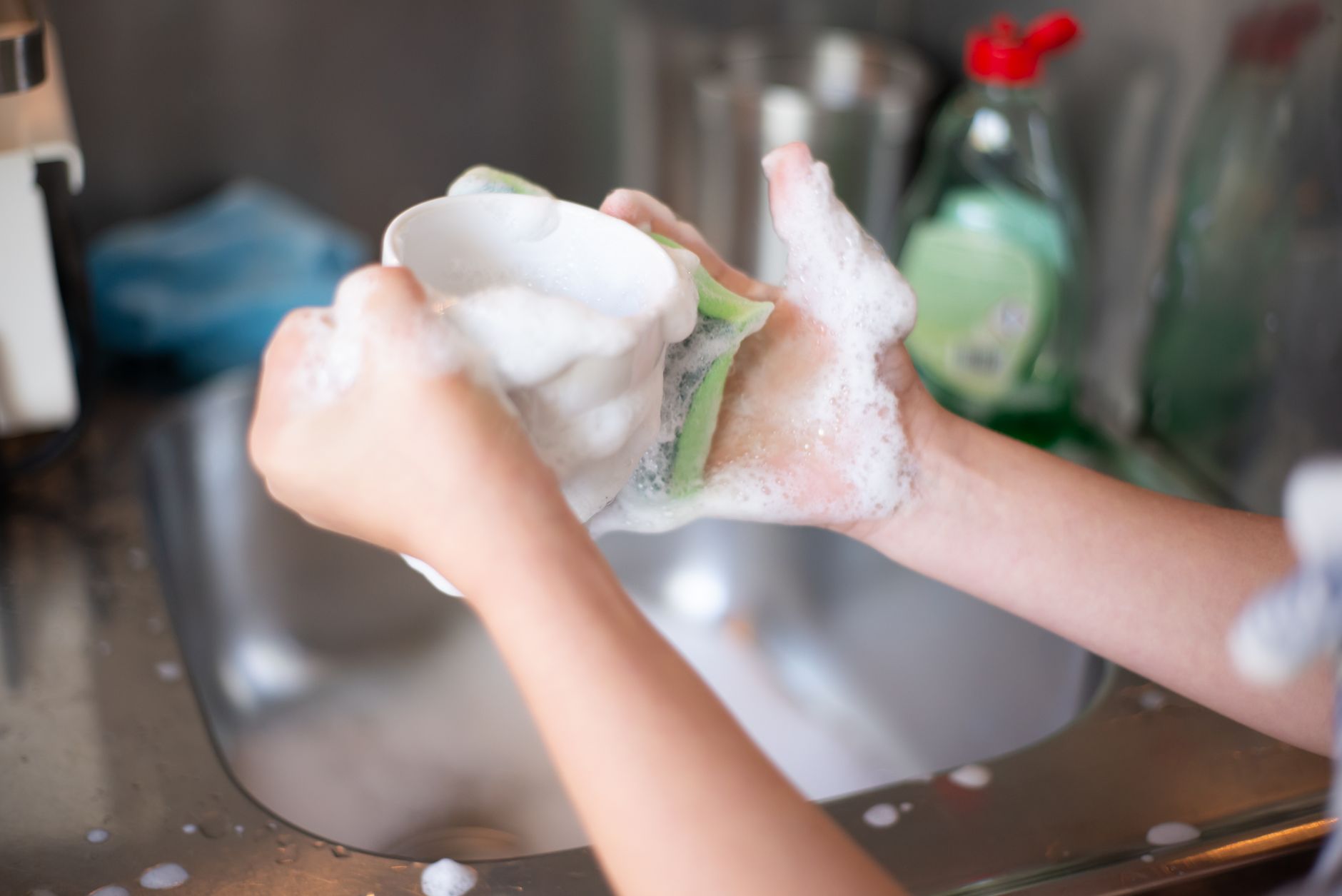
Non-Toxic Dish Soap That Actually Cuts Grease (What We Use and Why It Matters)
This post contains affiliate links. I may earn a small commission at no extra cost to you.
If you’ve ever grabbed a bottle of dish soap off the grocery store shelf because it had a leaf on the label and the word “plant-based” in big green letters — and then stood there scrubbing dried scrambled eggs off a pan wondering why it wasn’t working — you are not alone. That was me, more times than I care to admit.
We cook a lot from scratch in this house. Cast iron every morning, a slow cooker running a few times a week, roasting pans, soup pots, and approximately one million snack bowls per day courtesy of my kids. Greasy dishes are just part of the deal. And when I made the switch to a non-toxic home, dish soap was one of those things I kept going back and forth on — because so many of the “clean” options just didn’t perform.
So I want to share what I’ve learned, what we actually use now, and how to read a label so you’re not getting greenwashed at the store.
Why Dish Soap Ingredients Actually Matter
I know it can feel like dish soap is low on the priority list. It rinses off, right? But here’s the thing — we use it multiple times a day, every single day. Our kids help wash dishes. It goes down our drain and into the water supply. And a lot of conventional dish soaps contain ingredients that are worth knowing about.
Here are a few to watch for:
Fragrance (or “parfum”) — This is a catch-all term that can legally hide hundreds of undisclosed chemicals, including known hormone disruptors. Even if a soap smells like lavender, “fragrance” on the label is a red flag.
Triclosan — An antibacterial agent that’s been linked to hormone disruption and antibiotic resistance. It’s been banned in hand soaps but still appears in some dish products.
SLS (Sodium Lauryl Sulfate) — It’s what makes soap foam up. It’s not the worst thing on the planet, but it can be a skin irritant, especially for kids with sensitive skin. Some people are fine with it; others aren’t.
Methylisothiazolinone (MIT) and Benzisothiazolinone — These are preservatives that show up in a lot of “green” soaps too. They’re skin sensitizers and can be problematic with repeated exposure.
Synthetic dyes — Completely unnecessary and just added for aesthetics. No thanks.
A good resource for checking your current soap is the EWG Healthy Living app — you can scan the barcode right there in the store aisle. We also love Grove Collaborative for sourcing cleaner home products — they vet their brands and make it easy to find things that actually work without the ingredient guessing game.
What “Plant-Based” Actually Means (and Doesn’t)
Here’s the greenwashing part. “Plant-based” doesn’t mean non-toxic, and it doesn’t mean effective. It just means the surfactants (the cleaning agents) were derived from plants at some point in the process. The rest of the formula can still be full of synthetic preservatives, fragrance, and dyes.
Same goes for “biodegradable.” Most dish soaps biodegrade eventually. That word alone tells you almost nothing about whether it’s safe for your family.
What you actually want to look for is a full ingredient list you can read and recognize, a fragrance-free or essential-oil-scented option, and ideally third-party certifications like EPA Safer Choice or EWG Verified.
Brands That Actually Work
Okay, here’s what you actually came for. I’m going to be honest — I’ve tried a lot of these, and some were disappointing. Here’s what has held up in our kitchen.
Branch Basics
This is my current favorite and what we keep at the sink. It’s a concentrate you dilute yourself, the ingredient list is genuinely clean and transparent, and it actually cuts through grease. Like, real grease — the kind left behind after frying chicken thighs in a cast iron skillet. It’s not cheap upfront, but because you dilute it, one bottle lasts a long time. We also use it for other cleaning tasks around the house, which makes it even more economical.
If you’re interested in making more of your own cleaning products from scratch, I’ve got a whole post on DIY Natural Cleaning Products for Every Room (That Actually Work and Cost Almost Nothing) that walks through what we make ourselves versus what we buy.
Seventh Generation Free & Clear
This is my budget-friendly backup and honestly it does a solid job. The Free & Clear version specifically avoids fragrance and dye, which is the version I’d recommend over their scented lines. It’s widely available — I can grab it at Walmart or order through Grove Collaborative when I’m stocking up. It’s EPA Safer Choice certified, which gives me extra confidence.
Dr. Bronner’s Castile Soap
Pure castile soap is a great option, especially if you’re already using Dr. Bronner’s for other things in the house. It’s simple, the ingredient list is about as clean as it gets, and it works. The one caveat — if you have hard water (and a lot of us in Florida do), castile soap can leave a film. Adding a small splash of white vinegar to your rinse water helps with this.
Ecover Zero
Another solid EWG-rated option that’s fragrance-free and performs well. I’ve used this one in a pinch and been happy with it.
Tips for Getting Dishes Actually Clean Without Toxic Soap
Switching soaps is sometimes only half the battle. Here are a few things that made a real difference for us:
- Hot water matters more than you think. The hotter the water, the less you need to rely on strong surfactants. This is especially true for greasy pots.
- Don’t dilute your soap before it hits the dish. Squirt it directly on your sponge or brush, not into a water-filled sink, for maximum cleaning power.
- Baking soda as a booster. For really stubborn baked-on food, a sprinkle of baking soda with your dish soap works great — no harsh chemicals needed.
- Good tools help. A quality dish brush or a natural fiber scrubber makes a real difference.
We also keep beeswax wrap in heavy rotation in our kitchen — it means fewer dishes overall, since we’re not going through as much plastic wrap or foil to cover things.
What This Has to Do With Raising Kids Intentionally
I know dish soap might seem like a small thing. But I think about it this way — when my kids help wash dishes (which they do, because that’s just part of life around here), they’re putting their hands in that water. When I’m rinsing out their stainless steel water bottles and their snack containers, that soap is touching everything they eat from.
And there’s something bigger too. Teaching kids to pay attention to what goes into and onto their bodies, to ask questions about labels, to care about what goes down the drain and into the earth — that’s part of raising a thoughtful human. My kids have started noticing ingredient labels on their own. My oldest will pick up a bottle at the store and say “Mom, it has fragrance in it” before I even say a word. That’s the win, honestly.
For more on navigating non-toxic products for your family, my post on Non-Toxic Baby Products: What to Actually Buy (and What’s Just Marketing Hype) covers a lot of the same greenwashing traps across a wider range of products.
Our Current Sink Setup
In case you just want to know what we literally have right now:
- Branch Basics dish soap concentrate in a glass pump bottle
- A natural fiber dish brush (ours is bamboo)
- White vinegar in a small jar nearby for hard water rinse situations
- Wool dryer balls — okay, those aren’t at the sink, but they’re part of our overall swap-out-the-synthetics life
It took some trial and error to get here, and I don’t think there’s one perfect answer for every family. But I hope this saves you some of the back-and-forth I went through.
If you’re on a similar journey of cleaning up your home without losing your mind (or your budget), you might also love my post on How to Make Homemade Laundry Detergent (Non-Toxic, Actually Works, and Costs Almost Nothing) — it’s one of the easiest swaps we’ve made.
Here’s to clean dishes and a cleaner home — for real this time. 🌿
📖 You Might Also Like:
- DIY Natural Cleaning Products for Every Room (That Actually Work and Cost Almost Nothing)
- Non-Toxic Baby Products: What to Actually Buy (and What’s Just Marketing Hype)
- How to Make Homemade Laundry Detergent (Non-Toxic, Actually Works, and Costs Almost Nothing)
Frequently Asked Questions
What is the safest non-toxic dish soap for families with kids?
Some of the safest options are Branch Basics, Seventh Generation Free & Clear, and Ecover Zero. Look for soaps that are fragrance-free, dye-free, and ideally EPA Safer Choice or EWG Verified. Avoid anything with “fragrance” listed as an ingredient, synthetic dyes, or preservatives like methylisothiazolinone.
Does non-toxic dish soap actually cut grease?
Yes — but not all of them are equal. Branch Basics concentrate and Seventh Generation Free & Clear both perform well on greasy dishes. Using hot water and applying soap directly to your brush rather than into a full sink also makes a big difference in cleaning power.
Is Dawn dish soap non-toxic?
Dawn is effective but it’s not considered a non-toxic option. It contains synthetic fragrances, dyes, and surfactants that score poorly on the EWG database. If you’re trying to reduce chemical exposure in your home, there are cleaner alternatives that work just as well for everyday use.
What should I avoid in dish soap ingredients?
The main ingredients to avoid are synthetic fragrance (listed as ‘fragrance’ or ‘parfum’), artificial dyes (like Blue 1 or Yellow 5), triclosan, SLS if your family has sensitive skin, and preservatives like methylisothiazolinone (MIT) or benzisothiazolinone. These show up in many conventional and even some ‘green’ brands.
Is castile soap good for washing dishes?
Castile soap like Dr. Bronner’s can work well for dishes and has a very clean ingredient list. The main drawback is that in hard water areas — which is common in many parts of Florida — it can leave a white film or residue. Adding a small splash of white vinegar to your rinse water helps counteract this.
Leave a Reply