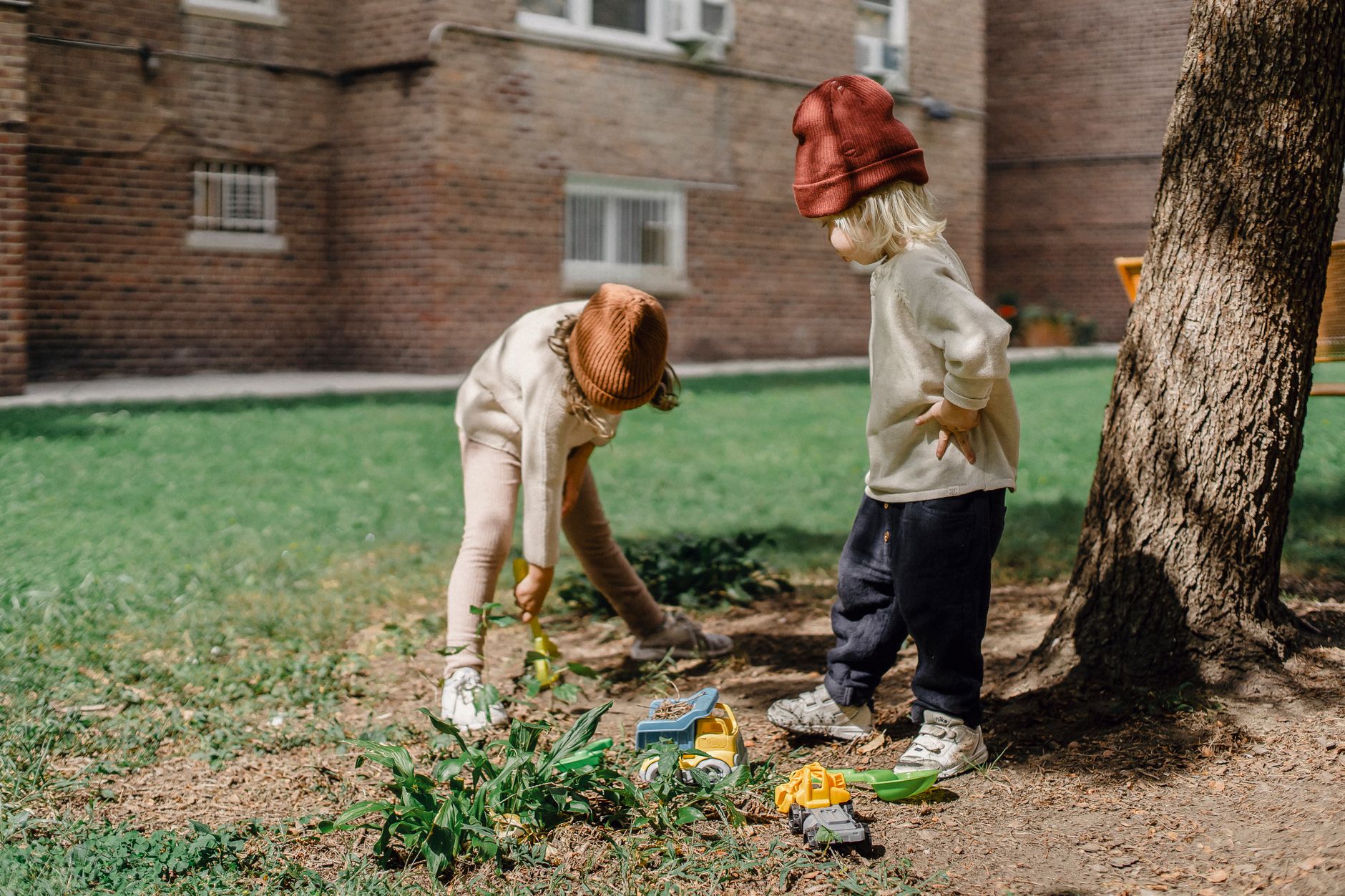
How to Create a Nature Play Yard in Your Backyard (Without Spending a Fortune)
This post contains affiliate links. I may earn a small commission at no extra cost to you.
If you grew up in the ’90s like I did, your backyard was basically your whole world from about 8am until the streetlights came on. There were no organized activities, no screens calling you back inside, no adult narrating your play. You just… went outside. You dug holes. You caught bugs. You made up entire civilizations out of sticks and mud.
That’s what I want for my kids. Not a Pinterest-perfect backyard with a $3,000 play set they’ll be bored of by next summer — but a real space that invites discovery, gets messy, and keeps them outside for hours without me having to orchestrate a single thing.
We’ve been slowly building our nature play yard here in the Pensacola area for the last couple of years, and y’all — it’s one of the best things we’ve ever done for our homeschool and our family. Let me show you how we did it.
What Even Is a Nature Play Yard?
A nature play yard is basically a backyard space designed with natural elements that invite open-ended, child-led exploration. Think loose parts, living plants, water features, digging spots, and sensory experiences — not plastic slides and prefab playhouses.
The concept is rooted in something Charlotte Mason educators have known for over a century: children learn best through direct contact with the living world. Time outside isn’t a break from education. It is the education.
And here in Northwest Florida, we’re honestly spoiled. We’ve got mild winters, an incredibly diverse ecosystem, and a long outdoor season. There’s no reason our kids shouldn’t be outside most of the day — so let’s build a space that makes that irresistible.
Start With the Zones: What Every Nature Play Yard Needs
You don’t need acres of land. Even a modest backyard can be broken into a few simple zones that serve different types of play.
1. A Digging Zone
This is the single most important thing you can add. Kids are wired to dig. Give them a designated patch of earth — or a raised bed filled with plain dirt and sand — and watch them disappear into it for hours.
We have a simple corner of our yard where the kids know they can dig freely. No off-limit plants, no worrying about the garden beds. Just dirt. We toss in a few kids’ garden gloves and some old spoons and let them at it.
Bonus: if you have chickens like we do, letting the flock scratch around near the digging zone means natural aeration and plenty of interesting findings for little scientists. Our kids have found worms, beetle larvae, and once — an entire colony of tiny ants — all of which became full Charlotte Mason nature study moments.
2. A Bug Investigation Station
Put a log or two on the ground. Add some flat rocks. Let the grass grow a little longer in one corner. That’s it — you’ve just created bug habitat.
We keep a bug collection kit and a pocket microscope in a little bin near the back door so the kids can grab them and go. When they find something interesting, they sketch it in their nature journal and we look it up together. Sometimes they use the Sibley Birds guide for flying visitors too — we get some beautiful species in the Florida Panhandle that most people walk right past.
This kind of unstructured nature observation is the backbone of a Charlotte Mason education, and honestly? It costs almost nothing to set up.
3. A Water Play Area
In Florida, water play is basically a year-round activity. We keep it simple: a large plastic tub, a hose, and a collection of cups, funnels, and tubes the kids can manipulate freely.
Rain days are the absolute best. Get them a pair of kids’ rain boots and let them splash. Our kids have learned more about water volume, flow, and erosion through puddle play than any workbook has ever taught them.
4. A Living Garden Space
Even a few containers count. We have a small raised bed where the kids each have their own section. They choose what to plant, help with watering, and observe the whole growth cycle from seed to harvest.
If you’re just starting, a seed starting kit is a great way to get going indoors and then transition plants outside. Florida’s growing seasons are different from most of the country — fall and winter are actually prime time for veggies here, which surprises people — so lean into that.
The garden also naturally ties into our homeschool. It’s living math (measuring, counting, estimating), living science (plant biology, soil health, pollination), and even writing when the kids narrate what they observe. We also love how it connects to our composting work — the kids understand the full circle now in a way that just clicks.
5. A Loose Parts Area
This is the secret weapon of nature play yards. Loose parts are any open-ended materials kids can move, rearrange, build with, and reimagine. Think:
- Stumps and logs of different heights
- Smooth river rocks and pinecones
- Bamboo poles and sticks
- Old wooden crates or pallets
- Shells (we have no shortage of those living near the Gulf)
Resist the urge to tell them what to do with any of it. That’s the whole point. Check out our post on outdoor play ideas that need zero equipment for more on why unstructured play is the real goal here.
Add Life to the Space
Plant for Pollinators and Wildlife
Native Florida plants are your best friend here. Firebush, beautyberry, and native wildflowers bring in butterflies, bees, and birds — all natural invitations for observation. We’ve had monarch butterflies lay eggs on our milkweed, and watching the caterpillar-to-chrysalis-to-butterfly process has been one of the most memorable homeschool moments we’ve had.
We also use Wondercide for pest control around the yard so we’re not harming the beneficial insects our kids are studying. It’s one of those things that just makes sense when you’re trying to keep the space genuinely alive.
Let the Chickens Be Part of It
If you have backyard chickens (or you’re considering it — here’s our go-to Storey’s Guide to Chickens and a great kid-friendly chicken book), they add so much richness to a nature play yard. Our kids help collect eggs, observe chicken behavior, and have genuinely learned about animal instinct, flock dynamics, and even life cycles through our little backyard flock.
Just designate areas that are chicken-safe versus garden-only — those girls will eat everything if you let them.
Keep It Low-Maintenance and Non-Toxic
One of my biggest goals with our outdoor space is that it stays manageable. I’m not trying to run a botanical garden over here.
A few things that help:
- Mulch pathways instead of grass in high-traffic areas — less mowing, more natural texture
- Simple watering systems so the garden doesn’t die during busy weeks
- Non-toxic pest control throughout — we’ve shared more on this in our post about natural remedies for chicken mites and it applies to the broader yard too
- Non-toxic sunscreen always accessible by the back door, because Florida sun is no joke and we’re outside constantly
You Don’t Have to Do It All at Once
Here’s my honest advice: pick one zone and start there. We started with the digging spot and the bug logs. That’s it. The rest came over time, as we figured out how our kids actually used the space.
A nature play yard isn’t a project you finish. It’s something that grows with your family — and that’s kind of the whole point. The kids are more invested when they help shape it. Ask them what they want. Let them move things around. Let it be a little wild.
That wildness? That’s where the magic happens. It’s where my kids have had the longest, deepest, most creative play of their lives — no screen, no toy, no adult direction required.
That’s the 1990s childhood I’m trying to give them. Just in flip-flops, with a little more sunscreen.
If you’re working on building a more intentional rhythm around outdoor time, you might also love our post on seasonal living ideas for families — because a nature play yard really does feel different in every season, even here in Florida.
📖 You Might Also Like:
- Outdoor Play Ideas for Kids That Need Zero Equipment (And Why That’s Actually the Point)
- How to Build a Simple Compost Bin for Beginners (No Skills Required)
- Seasonal Living Ideas for Families: Simple Ways to Celebrate Every Season All Year Long
Frequently Asked Questions
What is a nature play yard?
A nature play yard is a backyard space designed with natural, open-ended elements — like digging areas, loose parts, plants, water, and bug habitat — that invite child-led exploration and imaginative play. Unlike traditional playgrounds, the focus is on unstructured time in nature rather than fixed equipment.
How do I start a nature play yard on a small budget?
Start simple. A designated digging patch, a few logs for bug habitat, and a bin of loose natural materials (sticks, rocks, pinecones) cost almost nothing and provide hours of open-ended play. You can add more zones over time as your family’s needs become clear.
What age is a nature play yard good for?
Nature play yards work beautifully for a wide age range — typically toddlers through early elementary (ages 2-10), though older kids often stay engaged too, especially with garden projects or bug investigation stations. The open-ended nature of the space means kids grow into it rather than out of it quickly.
Can I create a nature play yard in a small Florida backyard?
Absolutely. You don’t need a large yard — even a modest space can be divided into a digging zone, a container garden, a water play area, and a loose parts corner. Florida’s year-round outdoor climate actually makes small yards work really well because kids can use the space in every season.
How do I keep a nature play yard safe and non-toxic?
Use native plants where possible, avoid chemical pesticides and herbicides, opt for non-toxic pest control products like Wondercide, and keep a non-toxic sunscreen accessible by the back door. Also make sure any loose parts (logs, rocks, pallets) are free from mold, splinters, or chemical treatments before adding them to the space.
Leave a Reply