How to Raise Grateful Kids in a Consumer Culture (Without Raising Tiny Minimalists Who Hate Fun)
This post contains affiliate links. I may earn a small commission at no extra cost to you.
Somewhere between the birthday party where my daughter got fourteen gifts and cried because she didn’t get the one specific thing she wanted, and the afternoon she spent forty-five minutes completely absorbed in watching a caterpillar inch across a tomato leaf — I realized something had to shift.
It wasn’t a dramatic revelation. It was just a quiet, tired-mama moment of this isn’t working.
We live in a world that is very, very good at making kids (and adults, let’s be honest) feel like they don’t have enough. Ads are everywhere. Peers talk about the newest toy, the latest game, the thing they just got. And if you’re raising kids with any intention at all, you’ve probably felt that low-level anxiety of am I undoing all of this the second they go on a screen or walk into Target?
Here’s what I’ve learned, though: gratitude isn’t a lecture. It’s not a chore chart that says “say thank you.” It’s a posture — and you build it slowly, through the texture of ordinary days.
Why Consumer Culture Is So Hard to Push Back Against
Let me say this clearly: I’m not anti-stuff. My kids have toys. We celebrate birthdays with real presents. I’m not here to tell you to go full homestead monk.
But consumer culture — the relentless message that more is better, that boredom means you need something new, that happiness lives one purchase away — that is worth pushing back against. Especially when you’re trying to raise kids who can sit still, notice beauty, and feel genuinely content.
The tricky part is that gratitude is the opposite of what a child raised on constant novelty learns. When everything is exciting, nothing is. When every want is immediately met, waiting becomes unbearable. When stuff flows in constantly, individual things lose meaning.
So we have to build in friction. Not punishment — just texture. Real life. Real work. Real waiting.
What Actually Works (From Our Daily Life)
Let Them Be Bored
This is the one that takes the most nerve. A bored kid is a loud kid, and a loud kid tests every ounce of patience you have on a hot Florida afternoon.
But boredom is where gratitude grows. When my kids have to create their own fun — building forts, catching bugs with their bug collection kit, making up games in the backyard — they discover that they are actually capable of entertaining themselves. That is profoundly good for their brains and their contentment levels.
We talk about this more over at Raising Kids Without Screens: What We Actually Do Every Day, but the short version is: boredom leads to creativity, and creativity leads to a kid who isn’t constantly looking to consume something.
Give Them Real Responsibility
This one is huge. Nothing grows gratitude like having skin in the game.
Our kids have chicken chores. Every single morning, rain or shine, hot or hotter (this is Pensacola — you know), someone goes out and checks the water, checks the feed, and collects eggs. We use a chicken waterer with nipple founts that’s made our life easier, but the kids still have to check it, fill it, care for it.
When you’re responsible for a living thing — when those hens are counting on you — your whole relationship with food, work, and care shifts. My kids crack eggs differently now. They know those eggs came from their hands, in a real way.
If chickens aren’t your thing, a garden works the same way. A seed starting kit is a low-stakes way to start, and watching a child eat a tomato they grew from seed is one of those parenting moments you just want to bottle up.
Practice Noticing
Charlotte Mason was onto something when she built her whole method around attention. A child who has learned to notice — really notice — the way light comes through a pine tree, or the way a mockingbird mimics three different birds in a row, is a child who is building a capacity for wonder.
And wonder is deeply connected to gratitude.
We do nature journaling most mornings. Nothing fancy — just a nature journal, some Faber-Castell watercolors, and a few minutes outside. We sketch what we find. We look things up in our Sibley Birds guide when we spot something new. It sounds simple because it is — and it works.
For more on this practice, Charlotte Mason Nature Journal Ideas for Kids (That Actually Get Used) has everything you need to get started.
Say No — And Mean It Kindly
I used to feel guilty saying no to things. Guilty that my kids weren’t getting what other kids had, guilty that they’d feel left out, guilty that I was somehow depriving them.
But here’s what I’ve noticed: a child who hears “no” sometimes — lovingly, without drama — develops something really important. They learn that desire and fulfillment are not the same thing. They learn to wait. They learn that life doesn’t deliver on demand.
This is actually a gift, even when it doesn’t feel like one.
We’re pretty intentional about holidays and birthdays. We ask the grandparents to give experiences or things with longevity. We keep gift lists short. And we’ve started doing a “one in, one out” policy with toys that has genuinely changed the energy in our house.
Talk About It — But Not Preachy
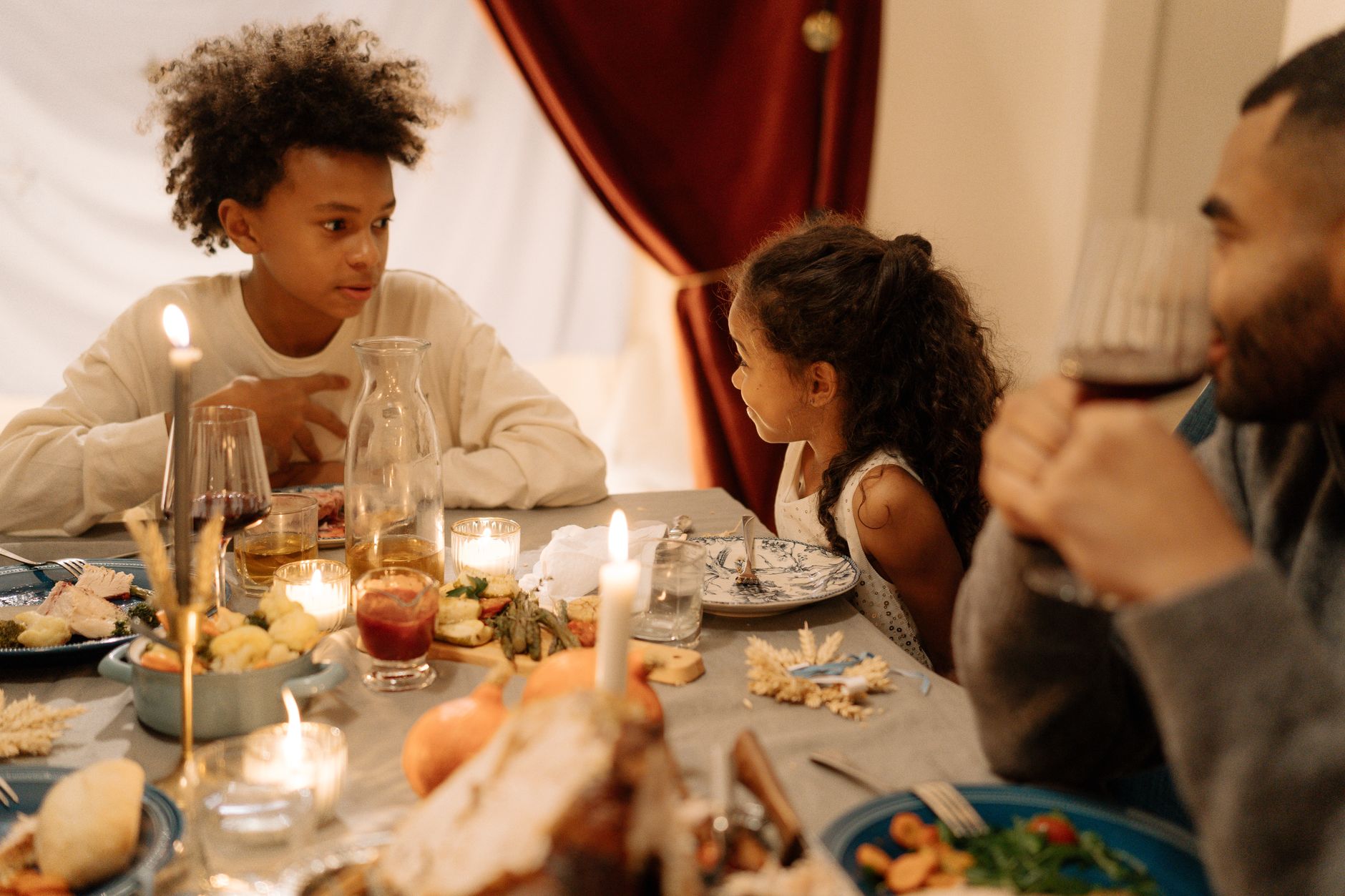
Gratitude conversations don’t have to be a lesson. Some of the best ones we’ve had happened at the dinner table, or walking back from the coop, or in the car.
What was the best part of today? What are you glad we have? What would be really hard to live without?
Those kinds of questions — casual, curious, not lecture-y — plant seeds. Over time, the kids start asking them back. They start noticing on their own.
This connects naturally to what I wrote about in Intentional Parenting: What It Actually Looks Like Day to Day — intention doesn’t mean perfection. It just means paying attention.
Create Experiences Over Things
Some of my kids’ most treasured memories have cost almost nothing. A Saturday morning at the beach with a bug catcher looking for sand crabs. An evening catching fireflies. A rainy day afternoon baking sourdough together.
Experiences stick. They create reference points for joy that aren’t tied to stuff. And in Florida, we are extraordinarily lucky — the outdoors here is genuinely magical for kids. Use it.
The 1990s Truth Nobody Wants to Say Out Loud
Here’s the thing: kids who grew up in the 80s and 90s were not raised in gratitude workshops. They were just… outside a lot. They were bored. They waited. They got one gift at Christmas, not twelve.
Not because their parents were particularly wise about consumer culture — but because the culture hadn’t fully arrived yet.
We have to be intentional about creating the conditions that used to just exist by default. Less access, more waiting, more outside, more doing. It’s a little countercultural, but honestly? It doesn’t feel like deprivation in our house. It feels like peace.
For more on slowing things down in a way that doesn’t feel like you’re missing out, How to Slow Down and Simplify Family Life (Without Feeling Like You’re Falling Behind) is a good read.
A Few Final Thoughts
Raising grateful kids in a consumer culture isn’t one big dramatic choice. It’s a hundred small ones. It’s the morning you say “go find something to do outside” instead of handing over a tablet. It’s the birthday where you hold the line on how many presents come in. It’s the chore that still gets done even when it’s ninety degrees in the shade.
You’re not going to do it perfectly. Neither am I. But the fact that you’re thinking about it means you’re already doing something right.
Keep going, mama. The seeds you’re planting — in your kids, in your backyard, in your daily life — they’re growing. Even when you can’t see it yet.
📖 You Might Also Like:
- Intentional Parenting: What It Actually Looks Like Day to Day
- Raising Kids Without Screens: What We Actually Do Every Day
- Charlotte Mason Nature Journal Ideas for Kids (That Actually Get Used)
Frequently Asked Questions
How do I teach my child to be grateful without sounding preachy?
Keep it conversational and low-key. Ask questions at dinner like ‘what was the best part of today?’ or ‘what would be really hard to live without?’ over time. You’re not lecturing — you’re just planting seeds in ordinary moments. Kids absorb more from the texture of daily life than from any formal lesson.
How do I raise grateful kids when grandparents give them too much?
Start the conversation early and frame it positively — ‘the kids love experiences as gifts’ or ‘we’re doing a smaller gift year this birthday.’ Suggest alternatives like museum memberships, nature kits, or activity-based gifts. Most grandparents are happy to redirect once they have a specific idea to work with.
What are some daily habits that build gratitude in kids?
Responsibility is one of the biggest ones — give kids real chores that matter, like caring for animals or tending a garden. Nature journaling, boredom time without screens, and simple dinner-table reflection questions all build that posture of noticing and appreciating what’s already there.
Is it harmful to say no to kids’ wants?
Not at all — in fact, it’s one of the kindest things you can do. Children who learn that desire and fulfillment aren’t the same thing develop resilience, patience, and a healthier relationship with stuff. The key is saying no calmly and without drama, not as punishment but as a natural boundary.
Can a Charlotte Mason or nature-based homeschool approach help raise grateful kids?
Absolutely. The Charlotte Mason philosophy is built on attention, wonder, and living ideas — all of which are the antidote to consumer-culture thinking. Nature journaling, outdoor hours, and slowing down to actually observe the world build in children a deep capacity to notice and appreciate, which is the foundation of genuine gratitude.
Leave a Reply