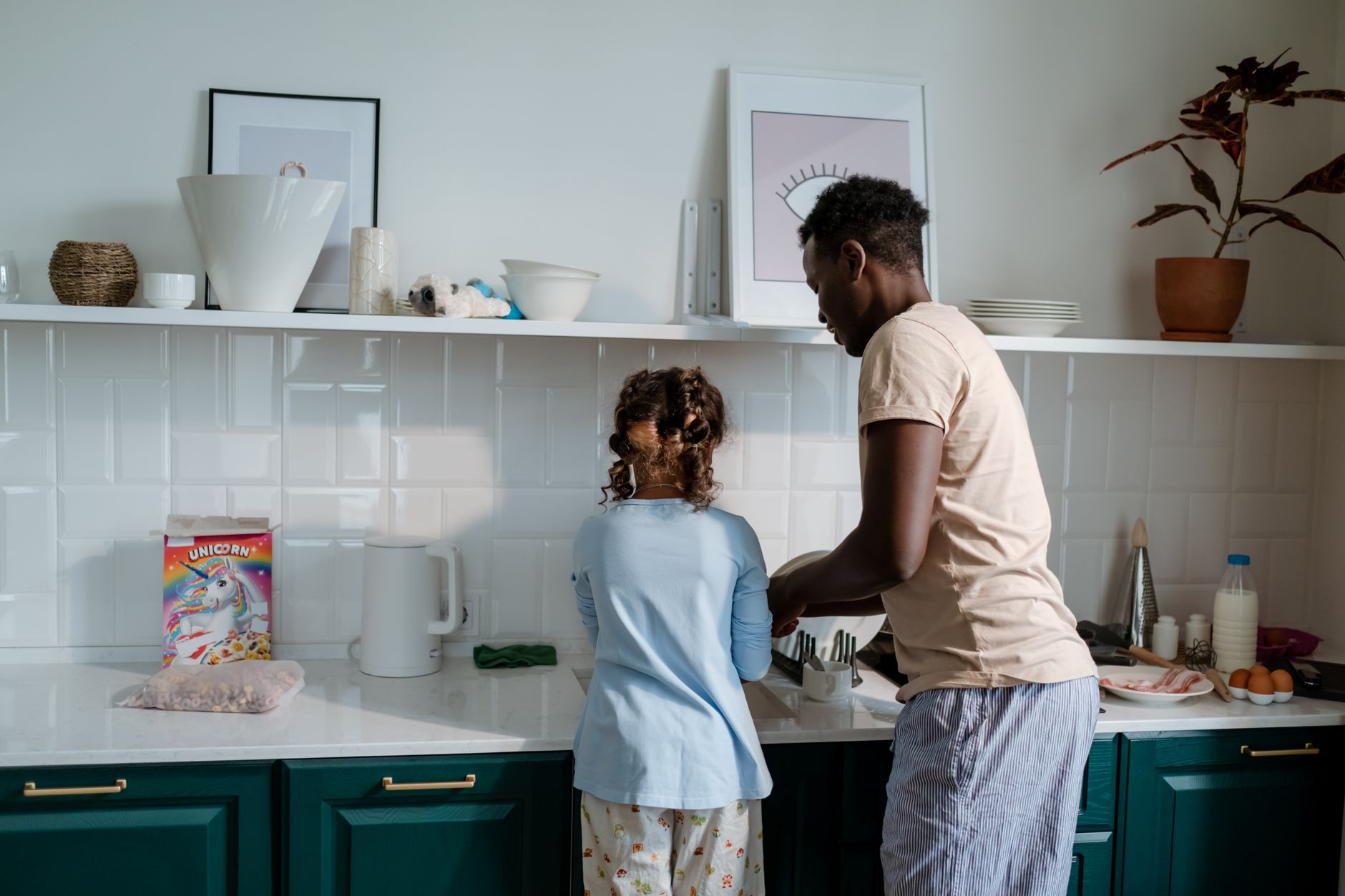
Family Rhythm vs. Routine: What Actually Works for Real Homeschool Life
This post contains affiliate links. I may earn a small commission at no extra cost to you.
If I had a dollar for every time I built a perfect color-coded daily schedule, watched it survive exactly three days, and then felt like a complete failure — well, I’d have a lot of dollars.
Maybe you know the feeling. You sit down on Sunday night, map out every hour, feel SO good about it… and then Monday hits. Someone’s chicken got out. The dog tracked mud through the kitchen. Your youngest had a meltdown before breakfast was even on the table. And by 9:15 a.m., the whole beautiful schedule is toast.
Here’s what took me an embarrassingly long time to figure out: the problem wasn’t my discipline or my planning skills. The problem was that I was building a routine when what my family actually needed was a rhythm.
These two words get used interchangeably all the time, but they are genuinely different things — and understanding the difference changed how our whole homeschool day feels.
What’s the Difference Between a Rhythm and a Routine?
A routine is time-based. It says: math at 9:00, read-aloud at 10:30, lunch at noon. It’s a schedule, essentially. And schedules are great for some families — I’m not here to knock them if they work for you.
But a rhythm is sequence-based. It says: we do this, then this, then this. Not at a specific time, but in a predictable order. The anchor isn’t the clock — it’s the pattern.
Think about how a 1990s childhood actually flowed. Nobody’s mom had them scheduled down to the minute. You woke up, you ate breakfast, you went outside, you came in when you were hungry or when someone called your name from the back porch. There was a shape to the day without it being rigid. That’s rhythm.
Charlotte Mason wrote about this too — the idea that children thrive when life has gentle predictability without being mechanical. Kids need to know what’s coming next, but they don’t need a timer going off every 45 minutes.
Why Routines Break Down (Especially in Florida)
Here in Northwest Florida, our days have a whole extra layer of unpredictability that I didn’t fully appreciate when I was trying to schedule-plan my way through homeschool. It’s July and there’s a pop-up thunderstorm at 10 a.m. that turns into a two-hour lightning show. The chicken coop needs emergency attention because something dug under the hardware cloth overnight. It’s a random Tuesday in October and the weather is perfect — like, stop-everything-and-go-to-the-beach perfect — and you’d be crazy not to take advantage of it.
A rigid routine doesn’t survive any of that. A rhythm bends.
What Our Daily Rhythm Actually Looks Like
I want to be real with you: our rhythm isn’t Pinterest-perfect. It’s evolved over years of trial and error and it still gets wobbly sometimes. But here’s the general shape of our days:
Morning Anchor
We start with what I call our “morning anchor” — the same sequence every day regardless of what time we actually wake up. Breakfast together, kids feed the chickens (this is non-negotiable and honestly one of the best things we’ve ever done for building responsibility), then we head straight into our morning basket before anyone’s brain gets pulled in ten directions.
If you’re not familiar with morning basket, I wrote a whole post about Morning Basket Ideas for Charlotte Mason Homeschool (What Ours Actually Looks Like) — it’s one of my favorite parts of our day.
We keep a nature journal on the table during morning basket because sometimes something from our reading sparks an observation that the kids want to sketch right then, and I want to say yes to that.
Learning Block
After morning basket, we move into our focused learning time. This is when we do the things that need my direct attention — phonics with my youngest using All About Reading, math with my older two (we use Math-U-See and it’s been a genuinely good fit for how my kids think).
This block doesn’t have a hard end time. We stop when we’ve gotten through what we need to get through. Some days that’s 90 minutes. Some days it’s two and a half hours because someone went deep on a question and we followed it.
Outdoor Time — Non-Negotiable
After our learning block, everybody goes outside. Full stop. This is the part of our rhythm that I protect the most fiercely, because I believe in my bones that kids need unstructured outdoor time the way they need food and sleep.
In our case “outside” often means the backyard with the chickens and the garden. My kids have a bug collection kit and a pocket microscope that get genuinely used out there. My youngest is currently obsessed with pill bugs. My oldest is working through Sibley’s Birds trying to identify every bird that visits our yard. None of this is assigned. It just happens when you give kids time and space.
If you’re curious about how we make outdoor time feel like real learning without turning it into a worksheet, check out Charlotte Mason Nature Journal Ideas for Kids (That Actually Get Used) — that post has a lot of practical ideas.
Afternoon: Loose and Led by the Kids
Afternoons in our house are largely unscheduled by design. This is where free play lives. This is where my kids build things, argue about things, make up games, get into the art supplies, and sometimes do absolutely nothing productive by any measurable standard — and I think that’s important.
I keep Faber-Castell watercolors accessible because creative materials that are easy to reach get used. I don’t plan the art. They just make things.
Evening Anchor
Just like mornings have an anchor, so do our evenings. Dinner together (always), then outside again if the heat has broken (it usually has by 6:30 or 7 here in the Panhandle), then reading before bed. The rhythm bookends the day.
How to Actually Build a Family Rhythm That Holds
If you want to shift from routine to rhythm, here’s what I’d suggest:
1. Identify your anchors first. What absolutely has to happen every day? For us it’s: meals together, chickens fed, outdoor time, reading. Build around those instead of around the clock.
2. Think in blocks, not hours. Morning learning block. Outdoor block. Free afternoon. Evening wind-down. That’s it. You don’t need more categories than that.
3. Let the rhythm live in your body, not on a printout. The goal is that your family feels the rhythm naturally, not that they’re checking a chart. It takes a few weeks of consistency to get there, but it happens.
4. Protect your non-negotiables. Know which parts of your rhythm you won’t compromise on and hold them. For us, outdoor time and family dinner are untouchable. Everything else has wiggle room.
This is also deeply connected to what Intentional Parenting: What It Actually Looks Like Day to Day is really about — making deliberate choices about how your days flow instead of just reacting to whatever the day throws at you.
A Word on Flexibility
Here’s the thing I want to say directly: building a rhythm doesn’t mean being rigid about the rhythm. The whole point is that it’s flexible enough to breathe.
If we have a co-op day, the rhythm shifts. If a kid is sick, the rhythm shrinks. If it’s a gorgeous fall morning on the Gulf Coast and we spontaneously decide to drive to the beach and call it a nature study day, the rhythm pauses — and that’s fine. That’s actually the 1990s-childhood energy I’m going for.
If you’re working on slowing down your family’s overall pace and wondering how rhythm fits into that bigger picture, How to Slow Down and Simplify Family Life (Without Feeling Like You’re Falling Behind) might be a really good next read.
It Doesn’t Have to Be Perfect — It Just Has to Be Yours
I want to leave you with this: there is no universally correct rhythm. There’s no template I can hand you that will magically work for your family. What I can tell you is that when you stop trying to make your days fit a schedule and start letting a gentle, predictable pattern carry you through — something shifts. The days feel less like you’re losing a battle and more like you’re actually living the life you wanted when you said yes to homeschooling in the first place.
That’s worth more than any color-coded planner I ever bought. Trust me.
📖 You Might Also Like:
- Charlotte Mason Nature Journal Ideas for Kids (That Actually Get Used)
- Morning Basket Ideas for Charlotte Mason Homeschool (What Ours Actually Looks Like)
- Intentional Parenting: What It Actually Looks Like Day to Day
Frequently Asked Questions
What is the difference between a family rhythm and a routine?
A routine is time-based — math at 9:00, lunch at noon. A rhythm is sequence-based — we do this, then this, then this — without being locked to specific clock times. Rhythms give kids predictability and security without the rigidity that causes schedules to fall apart when real life happens.
Is a daily rhythm better than a schedule for homeschooling?
For many families, especially those using a Charlotte Mason or nature-based approach, rhythm works better than a strict schedule because it’s flexible enough to accommodate sick days, spontaneous learning opportunities, and the natural flow of family life. Schedules work great for some families — the key is knowing which one actually fits how your household operates.
How do I create a daily rhythm for my homeschool family?
Start by identifying your non-negotiables — the things that have to happen every day no matter what. Then arrange your day in loose blocks (morning learning, outdoor time, free afternoon, evening wind-down) rather than scheduling specific times for every activity. Aim for the sequence to feel natural within a few weeks so the family carries the rhythm without needing a chart.
What does a Charlotte Mason daily rhythm look like?
A Charlotte Mason rhythm typically includes a morning basket with shared reading and poetry, focused short lessons in the late morning, a substantial outdoor time block for nature study and free play, and a calm evening routine with read-alouds. The emphasis is on gentle predictability, living books, and protecting unstructured time for children.
How do I stick to a homeschool rhythm when life gets unpredictable?
The beauty of a rhythm versus a routine is that it bends more easily. Identify one or two anchor points you’ll protect no matter what — maybe outdoor time and family dinner — and let everything else flex around them. When a day derails, you’re not starting over from scratch; you just return to the next anchor point and keep going.
Leave a Reply