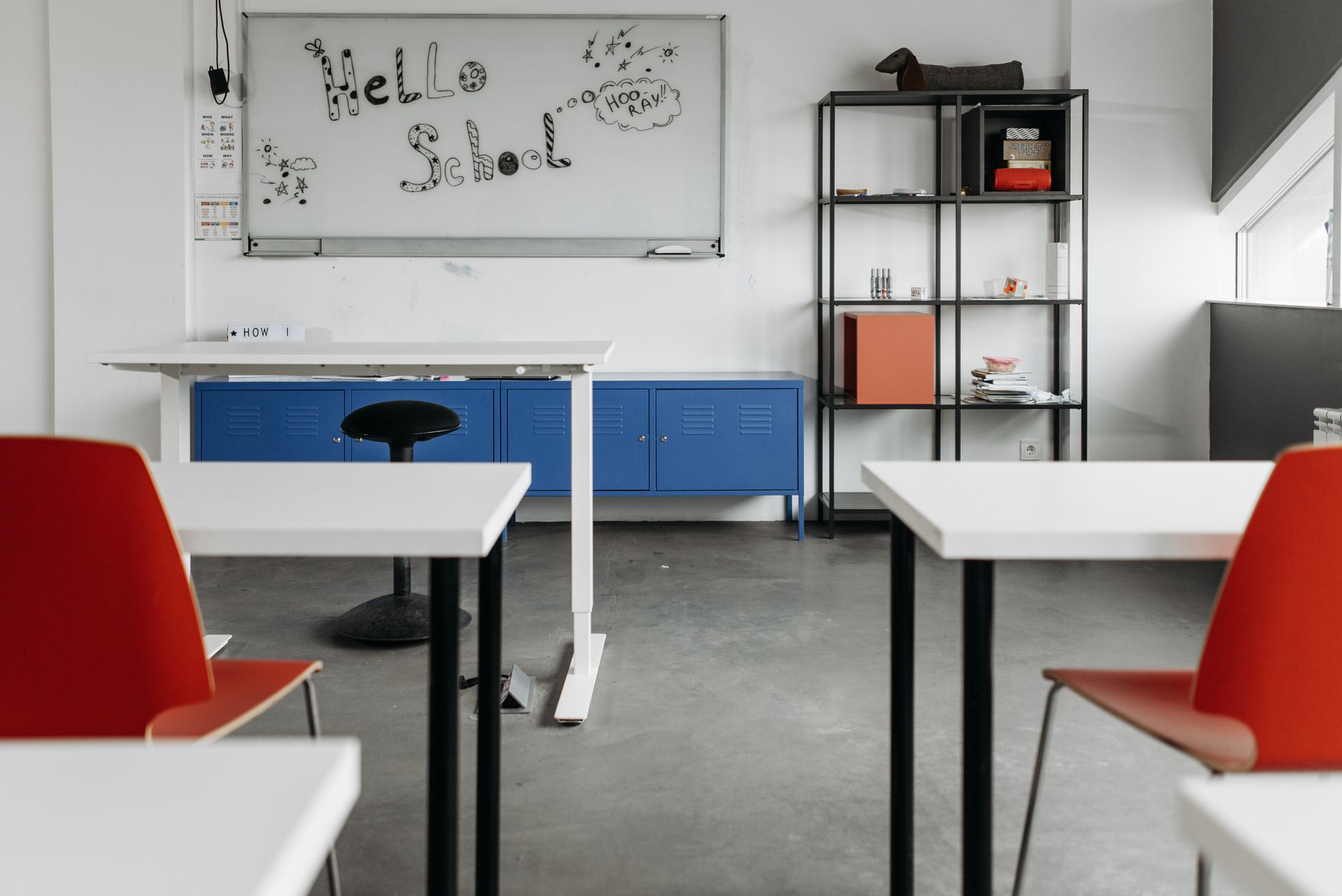
Homeschool Room Setup Ideas for Small Homes (What Actually Works for Our Family)
This post contains affiliate links. I may earn a small commission at no extra cost to you.
Can I tell you what our homeschool room looked like in year one? A folding table shoved against the laundry room wall, a plastic bin of crayons that was missing half its colors, and a whiteboard that kept falling off the door. We were making it work, but just barely — and every time I’d see those Pinterest homeschool rooms with the built-in bookshelves and the matching pencil cups, I’d feel this little pang of we’re doing it wrong.
We are not doing it wrong. And neither are you.
Here’s what I’ve learned after several years of homeschooling our elementary-age kids in a regular-sized Florida home with no spare room, a mini labradoodle underfoot, and a backyard full of chickens calling everyone outside: your homeschool space does not have to be a room. It just has to work.
Let me show you what actually works for us.
Start With What You Actually Do Every Day
Before you buy a single shelf or rearrange a single piece of furniture, spend a week just noticing where your kids naturally want to work. I’m serious. In our home, the answer was the kitchen table. Every single time. Not the cute little desk I’d set up in the corner of the living room — the kitchen table, right next to the window where they could see the chickens wandering around the yard.
So that’s where we school. Our homeschool “room” is actually a corner of our main living space, anchored by the kitchen table and a bookshelf we already owned. That’s it. And it works beautifully.
Your setup should reflect your real rhythms, not somebody else’s Instagram aesthetic.
The Non-Negotiables: What Every Small-Home Homeschool Space Actually Needs
Good Light and a View (If You Can Manage It)
This one matters more than people think. Charlotte Mason was big on atmosphere — she believed children learn better when they’re in environments that feel alive and connected to the natural world. We positioned our main work table near the window on purpose. On any given morning, my kids can look up from their copywork and spot a mockingbird on the fence or watch the chickens do their ridiculous little runs across the yard. That’s not distraction — that’s the whole point.
If you’ve got a window, use it. Orient the workspace toward it.
Dedicated Storage That Closes
This is the thing that saved my sanity more than anything else. In a small home, visual clutter is the enemy of focus — for kids and mamas. We use a simple bookshelf with baskets for each kid’s supplies, and everything goes away at the end of the school day. When the baskets are put up, school is done. It’s a psychological boundary that really helps.
For the supplies themselves, we keep it simple: pencils, Faber-Castell watercolors for nature journaling, and their individual subject books. That’s honestly most of it.
A Nature Table or Display Spot
Even if it’s just a small shelf or a windowsill, having a place where kids can display their nature finds — a feather, a cool rock, a dried wildflower — makes a big difference. It signals that this stuff matters. It’s part of school. It’s part of life. Our nature table has rotated through shark teeth from the beach, molted feathers from our hens, and Gulf Coast shells the kids identified using field guides.
If you want to make nature journaling a real part of your days (and I can’t recommend it enough), grab a good nature journal for each child and a dedicated spot to keep them. Ours live right on the shelf next to the Sibley bird guide we use constantly. (If you’re just getting started with backyard bird study, check out our Florida Backyard Birds Identification Guide for Kids — it’s one of our most-used posts.)
Small-Space Homeschool Setup Strategies That Actually Work
Use Vertical Space
When floor space is limited, go up. Floating shelves above a desk, a wall-mounted pocket organizer for papers and art supplies, hooks for bags — all of it helps. We have a small pegboard in our school corner that holds scissors, rulers, and a calendar. It takes up zero floor space and keeps everything visible and accessible.
Mobile Learning Kits
One of the best things we ever did was put together small supply bins that travel. Each kid has a little caddy they can pick up and carry to the table, the back porch, the floor — wherever they want to work that day. It sounds like a small thing, but it removes so much friction from our mornings.
For our science and nature study supplies, we keep a dedicated exploration kit together: a pocket microscope, a bug collection kit, and a kids’ guide to chickens that my daughter has basically memorized at this point. That bin lives by the back door so we can grab it on the way outside.
Let the Outdoors Be Your Biggest Classroom
I say this all the time, but I mean it deeply: in Florida, your backyard is a science classroom that no budget could replicate. We do nature study outside as often as we do it at the table — probably more. A free Florida nature scavenger hunt is a great place to start if you want to make it more intentional.
Having a small home actually pushes us outside more, and I think that’s a gift. Less room to spread out inside means more reason to go explore. Less screen temptation, more dirt under fingernails — which is very much the 1990s childhood energy we are deliberately trying to raise our kids in. (More on that here: 1990s Childhood Activities We’re Bringing Back)
Keep Curriculum Accessible but Not Overwhelming
One thing I see a lot of new homeschool families do — I did it too — is buy everything and display all of it. Every book, every manipulative, every workbook, all at once. It creates visual chaos and overwhelm for the kids (and honestly for me too).
Now we rotate what’s on the shelf. Only the current unit’s books and materials are out. The rest are stored in a labeled bin in the closet. If you use hands-on math like Math-U-See, the manipulatives get pulled out for math time and put away after. Same with All About Reading materials. It keeps the space calmer and the kids more focused.
A Word About Non-Toxic Materials in Your Homeschool Space
Since we’re spending a lot of time in this space, I’m intentional about what we bring into it — same as the rest of our home. Art supplies especially. We use non-toxic watercolors, natural beeswax crayons, and wood-based manipulatives over plastic when possible. Grove Collaborative has been my go-to for cleaning supplies that are safe for the surfaces the kids are working on all day. For more on building a healthier home environment overall, I wrote a whole guide on switching to a non-toxic home if you’re just getting started.
The Mindset Shift That Changed Everything
Here’s the real thing I want to leave you with: a beautiful, functional homeschool space in a small home is not about having enough room. It’s about having enough intention.
We school in the same square footage that other families watch Netflix in. We just chose to make that space work for learning, for creating, for growing. And most of the actual learning? It happens outside, at the chicken coop, in the garden, at the beach — nowhere near a desk at all.
If you’re feeling discouraged by your space, please hear me: the kids who learn best are not the ones with the biggest schoolrooms. They’re the ones with the most engaged mamas — and you clearly are one, or you wouldn’t be here reading this.
You’ve got everything you need. Let’s set it up.
📖 You Might Also Like:
- How to Raise Free-Range Kids in the Modern World (A Real Family’s Guide)
- Florida Backyard Wildlife Identification Guide for Families (What We’ve Actually Found in Our Yard)
- Non-Toxic Mattress Guide for Kids’ Beds: What We Actually Chose (and Why It Matters More Than You Think)
Frequently Asked Questions
Do I need a dedicated room to homeschool at home?
Absolutely not. Many families homeschool successfully at a kitchen table, in a living room corner, or even outdoors. What matters most is having organized, accessible supplies and consistent routines — not a separate room. A small designated shelf or basket system can create enough structure even in a shared space.
How do I set up a homeschool space in a small house or apartment?
Focus on vertical storage, mobile supply kits, and keeping only current curriculum materials visible. A bookshelf with labeled baskets, a wall-mounted organizer, and a nature display area can transform a corner of any room into a functional learning space. The key is reducing visual clutter so the space feels calm and focused.
What supplies do I actually need for a Charlotte Mason homeschool setup?
Charlotte Mason homeschooling is wonderfully low-supply. You’ll want good quality art materials like watercolor paints, nature journals for each child, field guides for your region, and living books. Hands-on math tools, a nature table, and outdoor exploration supplies round things out. Less is genuinely more with this approach.
How do I keep homeschool materials organized in a small space?
Rotate what’s on display — only current unit books and materials should be out at a time. Use labeled bins for each child and each subject. Mobile supply caddies that kids can carry to their workspace of choice also help a lot. At the end of each school day, everything goes away to create a clean boundary between school time and home time.
How do I homeschool when my kids keep wanting to be outside instead of at the table?
Lean into it! Outdoor learning is a cornerstone of Charlotte Mason education and nature-based homeschooling. Nature journaling, science observation, garden study, and even read-alouds can all happen outside. Build outdoor time into your daily rhythm intentionally rather than treating it as a reward for finishing desk work, and you’ll likely find your kids are more focused when they do come inside.
Leave a Reply