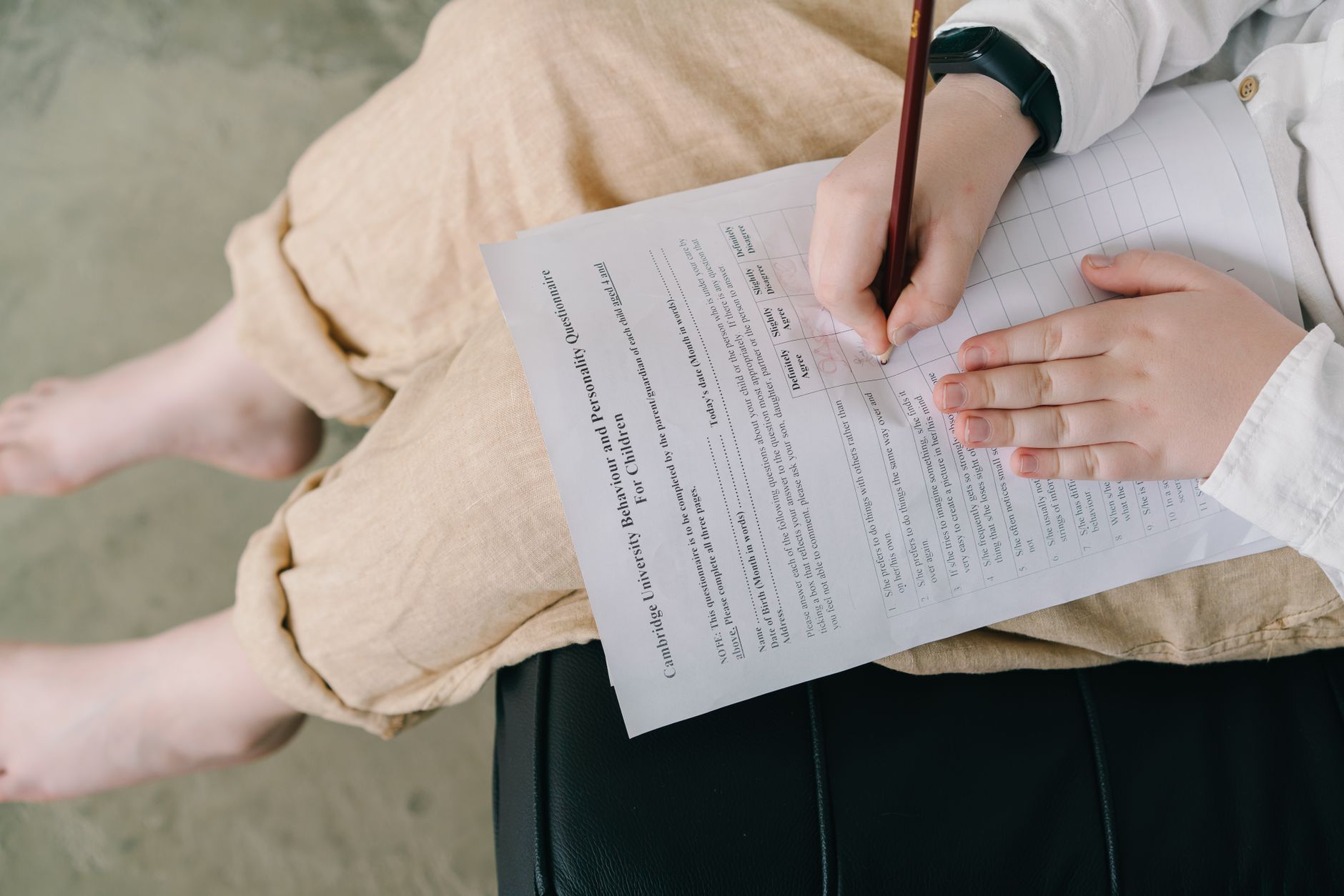
Florida Homeschool Testing Requirements: Evaluation vs Portfolio (What You Actually Need to Know)
This post contains affiliate links. I may earn a small commission at no extra cost to you.
When I first started homeschooling, the annual evaluation requirement was one of those things that made my stomach do a little flip every time I thought about it. I kept imagining my kids sitting at a desk in some sterile room, filling in bubbles on a Scantron sheet while I stood outside nervously eating a granola bar.
Spoiler: it does not have to look like that at all.
If you’re homeschooling in Florida — whether you’re under a homeschool statute, using the Florida PEP scholarship, or just starting to figure out how this whole thing works — the annual evaluation requirement is real, but it’s also genuinely flexible. And once you understand your options, most families feel a whole lot better about it.
Let me walk you through what Florida actually requires, what the testing vs. portfolio paths really look like, and how our family handles it.
What Florida Law Actually Says
Under Florida Statute 1002.41, every homeschool family that files a Notice of Intent with their county school district must demonstrate their child’s educational progress annually. You have several ways to meet this requirement, but the two most common options are:
- Standardized testing
- Portfolio evaluation by a certified teacher
Both are fully legal and equally valid. The law doesn’t say one is better than the other. It’s just asking you to show that your child is learning and growing — which, honestly, if you’re homeschooling with any intentionality at all, you already know they are.
Quick note on PEP Scholarship families: If your kids are on the Florida PEP scholarship (formerly known as FES-EO or AAA), your accountability requirements may be slightly different and tied to your scholarship’s specific guidelines. Always double-check with your scholarship funding organization directly.
Option 1: Standardized Testing
Standardized testing is probably what most people picture when they hear “annual evaluation.” In Florida, your child must take a nationally normed standardized test — things like the Iowa Test of Basic Skills (ITBS), Stanford 10, or the CAT (California Achievement Test).
What this looks like in real life
You register your child for a test, typically administered by a third-party testing organization or co-op. The test is timed, multiple choice, and covers subjects like reading, language arts, and math. Results come back with a score report showing how your child performed compared to national averages.
Who this works well for
- Families whose kids genuinely do okay in test-taking environments
- Families using more structured curriculum who want a straightforward benchmark
- Families who find a local testing group and can make a morning of it
Who might find this harder
Honestly? Families like ours. We use a Charlotte Mason approach, which means a lot of what my kids learn doesn’t fit neatly into a multiple-choice format. My daughter can narrate back a chapter of a living history book with detail and expression — but ask her to pick answer B from four options on a timed test? That’s a different skill set entirely.
That’s not a knock on standardized testing. It’s just real.
Also — and this is worth saying — if your child has learning differences or processing differences, timed testing can be genuinely stressful in a way that doesn’t reflect their actual knowledge. If that’s your situation, check out Florida Homeschool Special Needs Resources and Support for more guidance.
Option 2: Portfolio Evaluation
This is what we do, and honestly? It’s one of my favorite parts of our homeschool year.
A portfolio evaluation means a Florida-certified teacher reviews a collection of your child’s work from the year and signs off that educational progress is being made. That’s it. No timed test. No bubbles. Just real evidence of real learning.
What goes in a homeschool portfolio?
Florida law doesn’t specify exactly what your portfolio must contain — it just needs to demonstrate progress across subjects. Common items include:
- Writing samples (narrations, copywork, creative writing)
- Math worksheets or workbook pages
- Art projects
- Nature journal entries
- Book lists
- Photos of hands-on projects
- Science observations or experiments
For our family, our portfolios are some of the most beautiful artifacts of our year. Flipping through them at the end of summer feels like looking at a scrapbook of everything we discovered together.
Our kids keep nature journals year-round, and those pages — full of sketches of Gulf Coast birds, pressed leaves, painted insects — go straight into the portfolio. We paint with Faber-Castell watercolors almost weekly, and those paintings document science, art, and observation skills all at once.
Our handwriting practice from Handwriting Without Tears goes in. Math pages from Math-U-See go in. Even photos from our chicken chores and garden work can demonstrate real learning — life science, responsibility, observation.
If you want more ideas for building out that nature study component of your portfolio, I’ve got a whole post on Charlotte Mason Nature Journal Ideas for Kids that might help.
How to find a portfolio evaluator
You need a Florida-certified teacher to conduct the evaluation. Here’s where to find one:
- Your local homeschool support group or co-op (word of mouth is golden here)
- Florida Parent Educators Association (FPEA) — they often maintain evaluator lists
- Facebook groups for Florida homeschoolers
- Some homeschool co-ops coordinate group evaluation days
Evaluations typically cost $25–$75 and usually happen in a relaxed, conversational setting. Our evaluator meets with us at a coffee shop. My kids show her their work, she asks them a few questions, and they light up talking about what they’ve been learning. It takes about an hour.
Portfolio vs. Testing: How to Actually Decide
Here’s my honest take — neither option is objectively better. It comes down to your kids, your curriculum style, and what feels sustainable for your family.
Choose standardized testing if:
- Your child is a confident test-taker
- You want an external, numerical benchmark
- Your curriculum aligns well with traditional academic subjects
- You have a local testing group that makes it easy and low-stress
Choose portfolio evaluation if:
- You use a Charlotte Mason, unschooling, or project-based approach
- Your child has test anxiety or learning differences
- Your learning happens in a lot of non-traditional ways (nature study, living books, hands-on projects)
- You want the evaluation to actually reflect what your child knows and can do
For us, the portfolio path is a natural fit. Our days look less like school and more like a childhood from 30 years ago — kids outside catching bugs with their bug collection kit, checking on the chickens, doing read-alouds on the porch. (If you’re curious how we structure those days, I wrote about it in Raising Kids Without Screens: What We Actually Do Every Day.)
A standardized test doesn’t capture that. But a portfolio? A portfolio is where you can see the whole child.
Building Your Portfolio Throughout the Year (Not All at Once)
One thing I tell new homeschool moms all the time: don’t wait until April to start thinking about your portfolio. The easiest way to handle it is to collect as you go.
We keep a simple accordion folder for each child. Every few weeks, I pull out a few representative samples — a narration, some math work, a nature journal page — and tuck them in. By spring, the portfolios practically build themselves.
A good homeschool planner can help you track what subjects you’ve covered so that when evaluation time comes, you can quickly find samples from each area. I also keep a running book list throughout the year — our evaluator always loves seeing how much we’ve read together.
A Note on the PEP Scholarship Specifically
If your family uses the Florida PEP scholarship (we do!), your evaluation requirements may be tied to your scholarship organization’s specific guidelines rather than — or in addition to — the standard homeschool statute. Some scholarship organizations have their own annual assessment requirements.
Always read the fine print from your funding organization and don’t assume what applies to a non-scholarship homeschool family automatically applies to you. When in doubt, email your scholarship org directly. They’re usually really helpful.
You’ve Got This
I know annual evaluation can feel like a big looming thing — especially in your first year or two. But here’s the truth: if you’re showing up, doing the work, following your kids’ curiosity, and keeping some kind of record of it, you are already doing what the law is asking.
Florida gives us real flexibility. A portfolio evaluation, especially, is a chance to sit with an experienced educator and say, “Look at what my kid did this year.” And in my experience, those evaluators are rooting for you. They love seeing kids who are actually learning, actually engaged, actually alive to their education.
That’s what we’re building here — not test-takers, but thinkers. Not compliant students, but curious kids. And that’s always going to show up in a portfolio.
📖 You Might Also Like:
- How to Homeschool Multiple Ages at Once (Tips That Actually Work for Real Families)
- Florida Homeschool Special Needs Resources and Support (What Actually Helps Real Families)
- Morning Basket Ideas for Charlotte Mason Homeschool Families (What We Actually Do Each Day)
Frequently Asked Questions
Do Florida homeschool families have to do standardized testing every year?
No — Florida law gives homeschool families options for their annual evaluation. Standardized testing is one choice, but you can also have a Florida-certified teacher conduct a portfolio evaluation instead. Both fully satisfy the legal requirement under Florida Statute 1002.41.
What does a Florida homeschool portfolio evaluation look like?
A portfolio evaluation is when a Florida-certified teacher reviews a collection of your child’s work from the year — things like writing samples, math pages, art projects, nature journal entries, and book lists — and confirms that educational progress is being made. It’s usually a relaxed, conversational meeting that takes about an hour, and it costs anywhere from $25 to $75.
What subjects need to be covered in a Florida homeschool portfolio?
Florida law requires that homeschool instruction include reading, language arts, math, science, and social studies, among other subjects. Your portfolio should include samples that demonstrate progress across these core areas, but there’s no rigid format. Work samples, photos of projects, narrations, and book lists all count.
Does the Florida PEP scholarship change the homeschool evaluation requirements?
Possibly, yes. PEP scholarship families may have additional assessment requirements set by their scholarship funding organization, separate from — or in addition to — the standard homeschool statute requirements. Always check directly with your scholarship organization for their specific annual assessment guidelines.
How do I find a portfolio evaluator for my Florida homeschool?
The best places to find a Florida-certified portfolio evaluator are your local homeschool support group or co-op, the FPEA (Florida Parent Educators Association), and Florida homeschool Facebook groups. Many evaluators are former classroom teachers who love working with homeschool families, and group evaluation days are sometimes organized through local co-ops to make the process easy and affordable.
Leave a Reply