Charlotte Mason Nature Journal Ideas for Kids (What We Actually Do Year-Round in Florida)
This post contains affiliate links. I may earn a small commission at no extra cost to you.
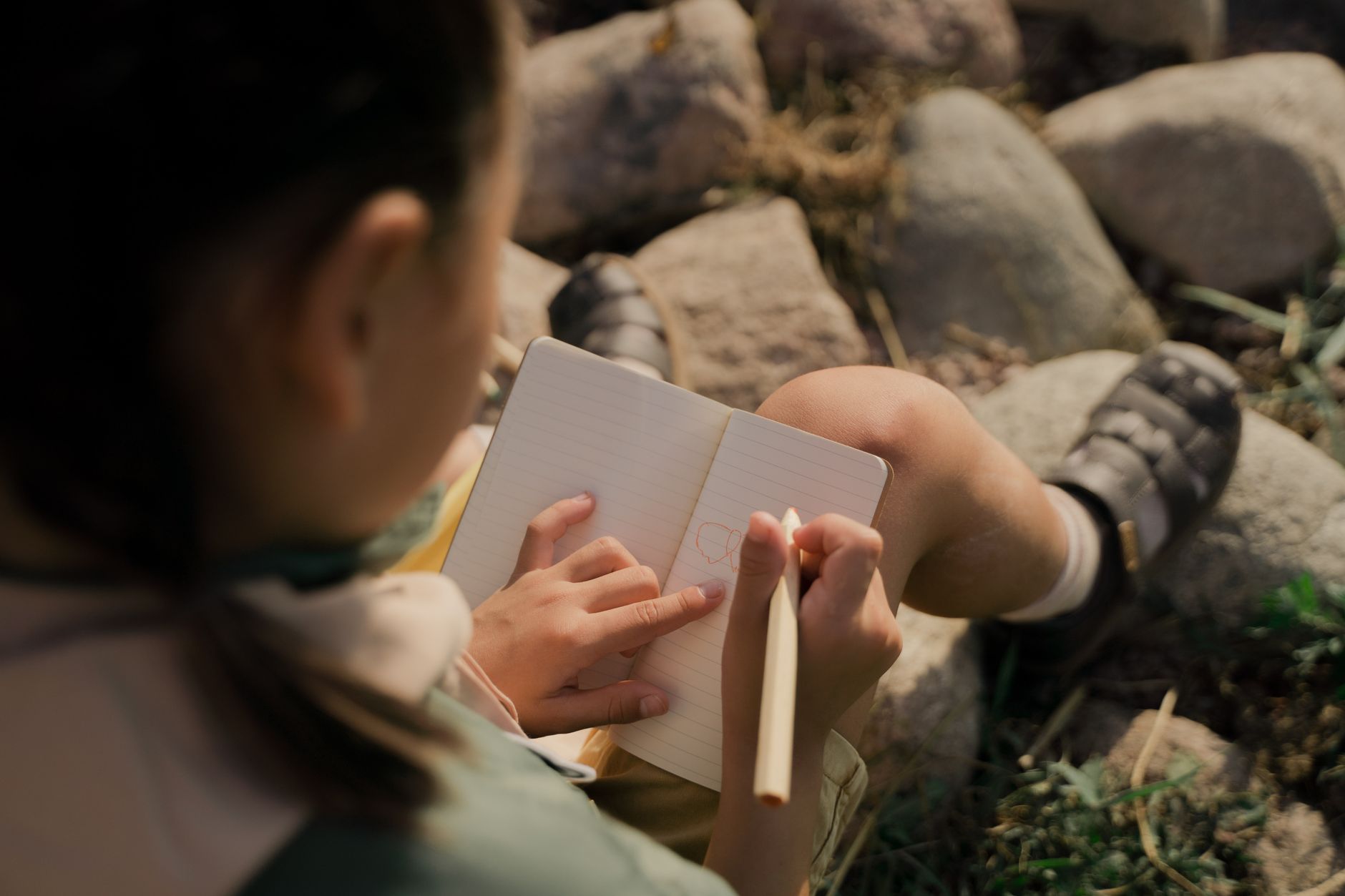
If you’ve been in the Charlotte Mason world for more than five minutes, you’ve heard about nature journals. And maybe — like me — your first attempt looked something like this: a beautiful blank notebook, one enthusiastic afternoon, and then… nothing. It sat on the shelf for three months next to the colored pencils you bought with the best intentions.
Same, friend. Same.
But I want to tell you that we figured it out, and it wasn’t by getting more organized or more Pinterest-perfect. It was by getting simpler and getting outside more. Now nature journaling is genuinely one of our favorite parts of our homeschool week. My kids ask for it. We do it in the backyard, on beach mornings, at the creek, and sometimes just sitting next to the chicken coop watching the girls scratch around in the dirt.
Here’s what actually works for us.
Why Charlotte Mason Nature Journaling Is Worth the Effort
Charlotte Mason believed that children need to form real relationships with the natural world — not just read about it, but observe it, sit with it, draw it. The nature journal is the record of that relationship. It’s not a science worksheet. It’s not a craft project. It’s a child noticing something and being given the space and tools to respond to it.
That philosophy clicks with how we were raised, honestly. We grew up outside — catching bugs, poking around in creeks, flipping over rocks to see what lived underneath. We just didn’t write it down. The nature journal is kind of like giving that 1990s outdoor childhood a little more intention without sucking the fun out of it.
And here in Northwest Florida? We have so much to work with. The biodiversity down here is genuinely wild. From the longleaf pine flatwoods to the Gulf Coast shore, from the sandhill cranes in our neighborhood to the anoles darting across the fence — there is never a shortage of things worth noticing.
What Supplies We Actually Use
Let’s keep this simple, because I’ve seen nature journal supply lists that would make your head spin.
Here’s what we actually reach for:
- A good blank journal — We love this nature journal because it has both blank and lined pages. The kids can draw on one side and write observations on the other.
- Watercolors — Faber-Castell watercolor pencils are our go-to. They travel well and the kids can use them dry for drawing and then add water to blend. No mess, beautiful results.
- A field guide — We use the Sibley Birds guide constantly. Even my kindergartener loves flipping through it to find what she spotted that morning.
- A pocket microscope — This little microscope has been one of the best homeschool purchases we’ve made. Feathers, leaves, insect wings — everything looks different up close.
- A bug collection kit — We keep a bug collection kit in our outside basket so the kids can observe before they draw.
That’s genuinely it. A journal, some watercolors, a field guide, and a way to look closer. You don’t need more than that to get started.
Charlotte Mason Nature Journal Ideas We Come Back to Again and Again
1. Backyard Chicken Observations
This one is a favorite and it makes so much sense for us — we already spend time out with the flock every morning. My kids have pages dedicated to sketching individual hens, noting egg colors, drawing feather details, and writing about behaviors they noticed. When our Buff Orpington went broody last spring, they journaled the whole thing. It turned into a genuine science study.
If you’re new to backyard chickens, Storey’s Guide to Raising Chickens is a great reference to keep alongside your nature journals — the kids can cross-reference what they’re seeing with what the book describes. There’s also a wonderful kid’s guide to chickens written specifically for younger readers that my elementary kids have loved.
2. Seasonal Sky and Weather Tracking
We keep a simple weather page each week — cloud types, wind direction, temperature ranges, any storms that rolled through. Florida weather is dramatic enough to make this genuinely interesting. My son drew a thunderstorm one afternoon last summer that is honestly one of my favorite pieces of kid art we own.
3. Plant Pressed Pages
We press leaves, wildflowers, and small ferns right into the journal (or tape pressed ones in after drying). Then we sketch them and try to identify them. This pairs beautifully with Florida Foraging Guide: Safe Plants for Beginners — we cross-reference what we’re pressing with what might be edible or useful.
4. Bug and Insect Studies
Florida insects are a whole world. We’ve journaled fireflies, lubber grasshoppers, walking sticks, dragonflies, and about forty-seven types of spiders (some of which I would have preferred we not look at so closely, but here we are). The kids catch, observe, sketch, and release. It’s the kind of thing that would have happened naturally in a 1990s backyard afternoon, and the journal just makes it last a little longer.
5. Bird Window Watching
On slower mornings — or during Florida’s merciless July heat — we do bird window watching. Binoculars, the Sibley guide, and the journal. Whoever spots something new gets to draw it first. It’s low-key and peaceful and honestly sometimes I journal right alongside them.
6. Moon Phase Pages
This is a simple one that even my kindergartener can do independently. Each night before bed, she checks the moon, draws its shape in her journal, and we write the date. Over a month, she watches the full cycle. It takes two minutes and she is so proud of that page.
7. Seasonal Nature Tables + Sketches
We keep a nature table in our schoolroom — rotating with shells, feathers, seed pods, interesting rocks, and whatever the kids dragged in that week. The rule is: if it comes inside, it gets sketched. That one little habit has produced some genuinely beautiful journal pages with almost zero planning on my part.
How to Make Nature Journaling Actually Stick
Here’s the honest truth: it doesn’t have to happen every day. In our house, we aim for two or three times a week and we count it toward our Charlotte Mason nature study. The Florida PEP scholarship framework gives us flexibility in how we document learning, and a nature journal is a beautiful portfolio piece — it shows observation, science, writing, and art all in one place.
A few things that have helped us stay consistent:
- Keep the supplies accessible. Our nature journal basket lives by the back door, not in a cabinet. If they have to ask me to get it out, it won’t happen.
- Don’t correct the art. A five-year-old’s caterpillar doesn’t need to look like a caterpillar. It needs to be hers.
- Journal with them sometimes. I keep my own. My kids think it’s the coolest thing. It signals that this isn’t just school — it’s something worth doing.
- Use what’s in front of you. You don’t need a field trip to nature journal. The backyard, the front porch, the drive home — it all counts.
For more on how we approach nature-based art in our homeschool, check out Florida Homeschool Art Curriculum Charlotte Mason Style — it goes hand in hand with what we do in our nature journals.
A Few Last Thoughts
Nature journaling is one of those things that sounds complicated until you just… start. Get a notebook, go outside, and draw what you see. That’s it. That’s the whole method.
Charlotte Mason wasn’t trying to create perfect naturalists. She was trying to create children who knew how to pay attention — to the world around them, to the living things sharing their space, to the slow and beautiful rhythms of the seasons. A nature journal is just the record of that attention.
And honestly? That’s the same thing we’re trying to do over here. Less screen time, more dirt. More watching, more wondering, more drawing wobbly chickens in a blank notebook while the labradoodle tries to eat the watercolor brush.
That’s the good stuff. I hope you find your version of it.
📖 You Might Also Like:
- Florida Homeschool Art Curriculum Charlotte Mason Style (What We Actually Do and Why It Works)
- How to Teach Kids About Money the Simple Living Way (Real Life, Not Worksheets)
- Florida Homeschool Graduation Requirements: What You Actually Need to Know
Frequently Asked Questions
What age can kids start a Charlotte Mason nature journal?
Kids can start as young as 3-4 years old with very simple drawings and a parent writing their dictated observations. By kindergarten, most children can begin copying simple labels or writing one-word descriptions themselves. The journal grows with the child — there’s no wrong starting age.
How often should kids nature journal in a Charlotte Mason homeschool?
Charlotte Mason recommended nature study at least once a week, ideally more. For most families, two to three nature journal sessions per week is very realistic and enough to build the habit and accumulate a meaningful record over time. Consistency matters more than frequency.
What should a Charlotte Mason nature journal include?
A nature journal typically includes hand-drawn sketches or watercolor illustrations of things observed in nature — plants, birds, insects, weather, animals — along with written notes, dates, and locations. It’s meant to be a personal observation record, not a copy of a textbook illustration.
Do nature journals count for homeschool records or the Florida PEP scholarship?
Yes! Nature journals make excellent portfolio documentation for Charlotte Mason homeschoolers. They demonstrate science observation, writing, and visual art skills all in one place. For Florida PEP scholarship families, they can be included in portfolio reviews as evidence of science and art learning.
What are the best supplies for a beginner Charlotte Mason nature journal?
You really don’t need much to start. A blank or mixed-page journal, a set of watercolor pencils or simple paints, a pencil, and a basic field guide for your region are plenty. A pocket magnifier or small microscope is a wonderful addition for close observation. Keep it simple and accessible so kids can reach for it on their own.
Leave a Reply