Category: Charlotte Mason

  • Florida Unschooling Laws: What Families Actually Need to Know Before You Start

    Florida Unschooling Laws: What Families Actually Need to Know Before You Start

    Florida Unschooling Laws: What Families Actually Need to Know Before You Start

    🌿 The Short Version: Florida doesn’t have a specific “unschooling” law — unschoolers operate under the same homeschool statutes as everyone else, and there are a few simple legal paths to choose from. This post breaks down exactly what you need to do to stay legal, which option fits an unschooling lifestyle best, and what it actually looks like day-to-day for a real Florida family.

    This post contains affiliate links. I may earn a small commission at no extra cost to you.

    If you’ve been down the rabbit hole of natural learning, child-led education, or just the idea that kids can thrive outside a classroom — and you’re wondering whether that’s even legal in Florida — I want you to take a deep breath. You’re not breaking any rules just by thinking differently about education.

    When we first started leaning into a more Charlotte Mason, nature-based approach here in Pensacola, I had so many questions. And honestly, the legal side of homeschooling — especially for families who want to unschool or do something more relaxed — felt murky at first. So let me just lay it all out for you the way I wish someone had done for me.

    First Things First: There Is No “Unschooling Law” in Florida

    Florida doesn’t use the word “unschooling” anywhere in its statutes. What Florida does have is a solid homeschool law, and unschoolers simply fall under that umbrella. The state genuinely doesn’t care whether you’re doing unit studies, classical education, Charlotte Mason nature journals, or full-on unschooling where your kid spends three hours building a chicken brooder and calls it school (because honestly, it kind of is).

    What the state does care about is that you’ve followed the proper legal steps to establish your homeschool and that you’re keeping some basic documentation.

    The Three Legal Paths for Florida Homeschoolers

    In Florida, there are three main ways to homeschool legally. Each works for unschoolers — but they’re not all created equal depending on your lifestyle.

    1. Homeschool Statute (F.S. 1002.41)

    This is the most common path and the one most unschooling families choose. Here’s what it requires:

    • File a Letter of Intent with your local school district within 30 days of starting (or within 30 days of your child’s 6th birthday if you’re just beginning)
    • Keep a portfolio — this is a collection of work samples and a log of educational activities. It does NOT have to look like school. It can include nature journal pages, photos of projects, recipes your kid helped cook, books read aloud, you name it.
    • Have an annual portfolio evaluation — once a year, a certified Florida teacher reviews your portfolio and signs off that educational progress is being made. They don’t grade your child or compare them to grade-level standards. They just confirm that learning is happening.
    • File a notice of termination when you’re done (or if you re-enroll in school)

    That’s genuinely it. No standardized testing required. No curriculum approval. No one coming to your house.

    2. Umbrella School or Cover School

    Some families enroll under a private umbrella school, which essentially means the school handles the legal paperwork on your behalf. You pay a small annual fee, and the umbrella school keeps your records. This can simplify things, but it adds a layer of structure some unschoolers don’t want.

    3. Florida PEP Scholarship (Formerly FES-EO)

    If your family uses the Florida PEP scholarship — which we do — there are a few more hoops to jump through. PEP requires you to purchase approved educational expenses through the scholarship account, which means you do need to show some structure in terms of what you’re spending the funds on. Pure unschooling is trickier to fit into PEP because the spending categories are defined. That said, many intentional homeschool families use PEP alongside a flexible approach and just make sure their purchases align with approved categories (curriculum, books, educational materials, etc.).

    If you want a full breakdown of how PEP works alongside a natural learning approach, it’s worth reading up on the specifics before you apply.

    What Does the Portfolio Actually Need to Look Like?

    This is where a lot of unschooling families get nervous — and they don’t need to be.

    Florida law says your portfolio should include a “log of educational activities” and “samples of the child’s work.” That’s intentionally broad. I’ve talked to evaluators who have signed off on portfolios full of nature sketches, pressed flowers, read-aloud book lists, cooking photos, and handwritten narrations.

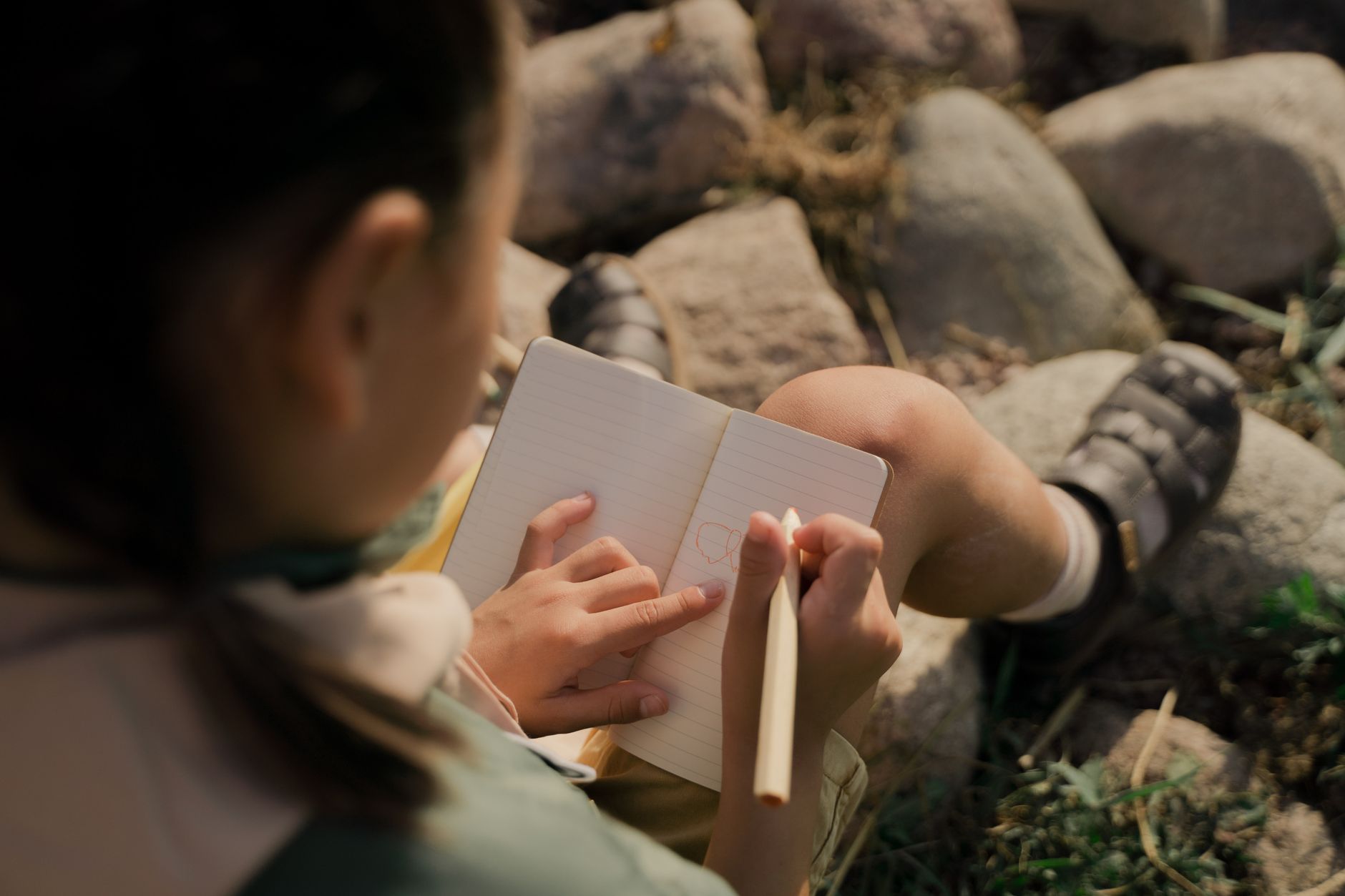
    For our family, we use a nature journal year-round as a core part of our Charlotte Mason approach — and those pages absolutely count as portfolio material. Labeled bird sketches, weather observations, plant studies — it’s science, art, and writing all in one. If you want ideas for how we do this specifically in Florida, I’ve got a whole post on Charlotte Mason Nature Journal Ideas for Kids (What We Actually Do Year-Round in Florida).

    Other things that work great in a portfolio for a nature-based or unschooling family:

    • Photos of hands-on projects (building, cooking, gardening, animal care)
    • Book lists (even picture books count for younger kids)
    • Maps drawn from memory
    • Watercolor paintings — we love these Faber-Castell watercolors for nature painting
    • Math done in real life (measuring for a recipe, counting eggs, making change)
    • Nature observations through a pocket microscope

    📌 Love this? Save it to Pinterest so you can find it later!

    Finding a Portfolio Evaluator in Florida

    You need a Florida-certified teacher to do your annual evaluation. The good news: they’re easy to find, and most are completely supportive of non-traditional homeschool approaches.

    You can find evaluators through:

    • Florida homeschool co-ops and Facebook groups (search your county + “portfolio evaluator”)
    • FPEA (Florida Parent Educators Association) — they keep a list
    • Word of mouth in your local homeschool community

    Many evaluators have seen every kind of portfolio imaginable and genuinely enjoy the creative, real-life ones. I’d encourage you to find one who has experience with Charlotte Mason or relaxed homeschoolers — it makes the whole process feel much more natural.

    What About Socialization and “Proof” of Learning?

    I’ll be honest — the socialization question is tired, but the underlying worry is real for some new unschooling families. Here’s what I’d tell you: kids who spend their days raising backyard chickens, working in the garden, doing nature study, building things, cooking alongside their parents, and playing freely outside with neighborhood kids are extremely socialized. They’re learning the actual skills of life.

    Our kids’ “social studies” looks like collecting eggs every morning, using a bug collection kit to study insects in the yard, and running around outside the way kids did in the ’90s — with dirt under their fingernails and a healthy respect for fire ants. That’s Florida childhood. That’s learning.

    If you’re also thinking about how to teach multiple kids at different levels in a relaxed way, I wrote about that in How to Homeschool Multiple Ages at Once (Tips That Actually Work for Real Families) — it’s very relevant for unschooling families trying to navigate the natural age-gap chaos.

    A Few Practical Tips Before You Start

    • Start your portfolio from day one. Take photos. Keep a simple log on your phone. It’s so much easier than trying to reconstruct it in April.
    • Join a local co-op or Facebook group. Northwest Florida has a really active homeschool community, and connecting with other families is invaluable.
    • Don’t over-explain yourself. You don’t owe anyone a curriculum list or a justification of your philosophy. You just need to meet the legal requirements.
    • Use real life as your classroom. Florida gives us so much to work with — birds, bugs, tidal pools, native plants, the bay, the forest. All of it is school.

    For more on what we actually use day-to-day in our home — curriculum, art supplies, outdoor tools — check out our Florida Homeschool Art Curriculum Charlotte Mason Style post. It’ll give you a real picture of how a nature-based approach looks in practice.

    You’ve Got This, Mama

    Florida is actually one of the more homeschool-friendly states in the country, and the laws give families real flexibility. Whether you’re doing full unschooling, relaxed homeschooling, Charlotte Mason, or some mix that doesn’t have a name — you can do it here legally and confidently.

    The legal stuff feels big until you understand it, and then it’s really just: file a letter, keep a portfolio, get it evaluated once a year. That’s it. The rest is just living and learning together, which is the whole point anyway.

    If you’re just getting started or still figuring out what approach fits your family, take your time. Look outside. Watch what your kids are naturally drawn to. There’s a lot of wisdom in that.


    📖 You Might Also Like:

    Frequently Asked Questions

    Is unschooling legal in Florida?

    Yes, unschooling is legal in Florida. There is no specific “unschooling” statute, but unschoolers operate under Florida’s homeschool law (F.S. 1002.41). Families must file a letter of intent with their local school district, maintain a portfolio of educational activities, and have the portfolio evaluated annually by a Florida-certified teacher.

    Does Florida require standardized testing for homeschoolers or unschoolers?

    No. Under the Florida homeschool statute, families are not required to administer standardized tests. The annual evaluation is a portfolio review by a certified teacher — not a test. The evaluator simply confirms that educational progress is being made.

    What needs to be in a Florida homeschool portfolio for an unschooling family?

    Florida law requires a log of educational activities and samples of the child’s work. For unschooling families, this can include photos of hands-on projects, nature journal entries, book lists, cooking or gardening documentation, art, and any other evidence of learning. It does not need to look like a traditional school portfolio.

    Can you use the Florida PEP scholarship if you unschool?

    It depends on your approach. The PEP scholarship requires that funds be spent on approved educational expenses from an approved vendor list. Pure unschooling can be harder to fit into PEP’s structure, but many relaxed or interest-led homeschoolers do use PEP by purchasing books, educational materials, and curriculum resources that align with their child’s interests and the scholarship’s approved categories.

    How do I find a portfolio evaluator in Florida?

    You can find Florida-certified portfolio evaluators through local homeschool co-ops, Facebook groups (search your county name plus ‘portfolio evaluator’), or the FPEA (Florida Parent Educators Association) directory. Look for evaluators who have experience with Charlotte Mason, relaxed, or non-traditional homeschoolers — they’ll be the most comfortable with creative, real-life portfolios.
  • How to Homeschool Multiple Ages at Once (Tips That Actually Work for Real Families)

    How to Homeschool Multiple Ages at Once (Tips That Actually Work for Real Families)

    How to Homeschool Multiple Ages at Once (Tips That Actually Work for Real Families)

    🌿 The Short Version: Homeschooling multiple ages at once is totally doable — you just need the right mindset, a loose rhythm, and a few strategies that let kids learn together as much as possible. This post walks you through exactly how our Charlotte Mason family makes it work, day in and day out.

    This post contains affiliate links. I may earn a small commission at no extra cost to you.

    Some mornings everything clicks. The older two are working independently, the youngest is coloring at the table, somebody fed the chickens without being asked, and I actually have a hot cup of coffee in my hand. And then there are the other mornings — everyone needs me at once, the dog is losing his mind over a squirrel, and I’m pretty sure no actual learning is happening.

    If you’re homeschooling more than one kid at the same time, you know exactly what I mean. You also probably know that it can work beautifully — because you’ve seen those glimpses. The trick is building a rhythm that makes the good mornings more common than the chaotic ones.

    Here’s what’s actually working for our family right now, teaching kids across elementary grades in Northwest Florida with a Charlotte Mason approach.


    Start With a Rhythm, Not a Schedule

    I used to try to map out every subject for every child in thirty-minute blocks. That lasted about a week. What actually works is a rhythm — a predictable order to our day that everyone knows without me announcing it every five minutes.

    Our mornings look something like: outside time first (chickens, garden, free play), then breakfast, then our group morning time, then independent or one-on-one work, then lunch and a long outdoor break. The times shift with the season — and in Florida, that matters a lot. In July, we’re outside by 7:30 before the heat hits. In January, we might linger a little longer.

    When kids know what comes next, they don’t need to constantly check in with you. That breathing room is everything when you’re managing multiple grades.


    Lean Hard Into Group Learning

    This is the single biggest time-saver in a multi-age homeschool: teach as much as you possibly can together.

    Charlotte Mason’s approach is perfect for this because so much of it — read-alouds, nature study, picture study, folk songs, poetry, history — works across ages without any adaptation needed. A six-year-old and a ten-year-old can both sit and listen to a great chapter book. They both go outside and sketch what they see in their nature journals. They both notice the osprey flying over the pond and want to flip through the Sibley Birds guide to figure out what it was.

    The older kids narrate with more detail. The younger ones draw pictures and tell you one thing they remember. Same lesson, naturally differentiated. No extra prep on your end.

    For nature journaling specifically, I go deep on how we do this year-round in Florida in this post: Charlotte Mason Nature Journal Ideas for Kids (What We Actually Do Year-Round in Florida). It’s one of our most used tools across every age.


    Anchor the Littles Before Working With Olders

    Here’s the thing nobody tells you: the key to teaching your older kids isn’t having a perfect plan for them — it’s having a plan for your youngest.

    When my littlest has something meaningful to do, I can actually sit down with the older kids. So we keep a rotation of “little kid anchors” — activities that are engaging enough to hold their attention without me hovering. Some of our favorites:

    • Beeswax modeling
    • Watercolor painting with Faber-Castell watercolors (these are genuinely good quality and last forever)
    • Listening to an audiobook
    • Bug hunting in the backyard with their bug collection kit
    • Playing with the chickens (supervised, obviously, but our backyard flock keeps little ones busy for a surprising amount of time)

    Once the little one is settled, I do focused one-on-one lessons with whoever needs me most — usually reading or math, since those are the subjects that really do need direct instruction at every level.


    Use Curriculum That Does the Heavy Lifting

    You don’t have to reinvent the wheel for every subject. For the skills-based stuff — reading, handwriting, math — we use programs that are structured enough that kids can work somewhat independently once they’ve got the hang of it.

    All About Reading has been a game-changer for us with early readers. It’s scripted enough that I’m not guessing what to say, and the lessons are short — which matters when you’ve got multiple kids waiting on you.

    For math, Math-U-See is mastery-based, which means kids really own a concept before moving on. The manipulatives also make it something kids can work with independently while I’m with another child.

    And for handwriting, Handwriting Without Tears is simple, works across ages, and the workbooks are genuinely self-guided once you’ve introduced the concepts.

    If you’re looking for more curriculum ideas that work well for multiple ages, I’ve put together a full breakdown over here: Best Unit Study Curriculum for Homeschool Families in 2026 (What’s Actually Worth Your Time and Money).

    📌 Love this? Save it to Pinterest so you can find it later!


    Let the Older Kids Teach the Younger Ones

    This one feels almost too simple, but it works. When an older child teaches a concept to a younger sibling, they cement their own understanding in a way that no worksheet can touch.

    We call it “teaching down” in our house, and the older kids genuinely love it. My oldest has explained how caterpillars form chrysalises, walked a younger sibling through a simple addition problem, and read aloud to the littles more times than I can count. That’s real learning — and it’s also the kind of older-sibling responsibility that kids in the 1990s just had naturally, because there wasn’t a screen to hand them instead.


    Build In Long Outdoor Breaks (Non-Negotiable)

    I know this sounds counterintuitive when you’re already trying to fit in multiple kids’ worth of lessons — but outdoor time isn’t the thing you cut when the day gets busy. It’s the thing that makes the rest of the day possible.

    Kids who have had real outdoor time — not fifteen minutes on the back porch, but a solid stretch of digging, running, building, pretending — come back inside more focused, more cooperative, and genuinely more ready to learn. Every time.

    Down here in Northwest Florida, we have access to incredible outdoor spaces almost year-round. State parks, nature trails, the bay, our own backyard. The pocket microscope lives in our bag now because we never know when someone’s going to find something worth looking at more closely. That spontaneous curiosity? That’s the whole point.


    Give Yourself Grace on the Hard Days

    Some days the best lesson is everyone helping with chores, doing a read-aloud on the couch, and calling it done. That is still homeschooling. It’s still connection, it’s still learning, and it’s still a thousand times more intentional than checking boxes on a worksheet.

    If you’re homeschooling in Florida on the PEP scholarship, you know you’ve got documentation requirements to think about. But I want to remind you: nature walks count. Cooking together counts. Talking through a problem with your kid counts. Don’t let the fear of not doing enough make you miss the good stuff right in front of you.

    For more on how to make your Charlotte Mason homeschool work beautifully across subjects and ages, go check out Florida Homeschool Art Curriculum Charlotte Mason Style (What We Actually Do and Why It Works) — it’s one of the pieces of our day I’m most proud of.


    Multi-age homeschooling is genuinely one of the best gifts you can give your kids — they learn from each other, they move at their own pace, and they grow up knowing that learning isn’t something that stops when a bell rings. It’s just life. It happens in the garden and at the chicken coop and on a walk and around the table. You’re already doing more than you think. Keep going.


    📖 You Might Also Like:

    Frequently Asked Questions

    How do you homeschool multiple ages without losing your mind?

    The biggest key is building a daily rhythm everyone knows, leaning into group subjects as much as possible, and having a solid plan for your youngest before you try to teach your older kids. When your littlest has something meaningful to do, you can actually focus on the others. It takes a few weeks to find your groove, but it does click.

    What subjects can you teach to multiple ages at the same time?

    More than you’d think! Read-alouds, history, science, nature study, picture study, poetry, folk songs, and art all work beautifully across multiple ages without any extra prep. Charlotte Mason’s approach is especially well-suited to multi-age teaching because so much of it is living-book and discussion based rather than grade-level worksheets.

    What curriculum works best for homeschooling multiple grades?

    Unit study curricula and literature-based programs tend to work best because they’re naturally multi-level. For skills-based subjects like reading, math, and handwriting, look for mastery-based programs with short lessons that kids can eventually work through semi-independently. All About Reading, Math-U-See, and Handwriting Without Tears are all great options for elementary ages.

    How do you manage one-on-one time when you have several kids to teach?

    Prioritize one-on-one time for the subjects that truly need direct instruction — early reading and new math concepts especially. Do group subjects all together, and use independent anchors (audiobooks, art projects, outdoor free play) to keep younger kids busy while you’re working with olders. You don’t need equal time with every child every day — you need the right time with the right child at the right moment.

    Is it okay if my homeschool day looks different from other families’?

    Absolutely, yes. Every family’s homeschool looks different, and that’s one of the best things about it. What matters is that your kids are learning, growing, and thriving — not that your schedule matches someone else’s Instagram grid. Give yourself grace, especially in the early months, and focus on building a rhythm that actually fits your family’s life and temperament.

  • Best Unit Study Curriculum for Homeschool Families in 2026 (What’s Actually Worth Your Time and Money)

    Best Unit Study Curriculum for Homeschool Families in 2026 (What’s Actually Worth Your Time and Money)

    Best Unit Study Curriculum for Homeschool Families in 2026 (What’s Actually Worth Your Time and Money)

    🌿 The Short Version: Unit studies let you teach multiple subjects through one rich topic — and for nature-based, Charlotte Mason families, they’re a game-changer. This post breaks down the best unit study curricula for 2026 so you can stop second-guessing and start learning together.

    This post contains affiliate links. I may earn a small commission at no extra cost to you.

    If you’ve ever sat down in August to plan your homeschool year and felt completely overwhelmed by the sheer number of options out there, friend — same. We’ve been doing this long enough now that I’ve tried a whole lot of approaches, and I can tell you with confidence that unit studies have been one of the best decisions we’ve made for our family.

    The idea is simple: pick a topic your kids are genuinely curious about, and fold your language arts, history, science, art, and math around it. Instead of bouncing between six different workbooks, you go deep into one thing. And when you’re already living a nature-based, Charlotte Mason-style life where the world outside your back door is the classroom — unit studies just click.

    So whether you’re new to homeschooling, switching things up for 2026, or just trying to figure out if unit studies are even worth it — let me share what we’ve found actually works.


    Why Unit Studies Work So Well for Charlotte Mason Families

    Charlotte Mason believed kids learn best through living books, real experiences, and narration — not busywork. Unit studies, done well, are basically that philosophy in action. You pick a topic that lights your kids up, you read great books about it, you go outside and observe it, you draw it in your nature journal, and then you narrate it back. That’s it. That’s school.

    For us here in the Florida Panhandle, a unit study on birds naturally becomes a whole season of going outside with the Sibley Birds guide and sketching what we see in the yard. A unit on bugs becomes an excuse to haul out the pocket microscope and actually look at what’s living in the leaf litter under the oaks. Real learning. Messy, slow, wonderful learning.

    And if you’ve got multiple kids at different grade levels? Unit studies are one of the sanest ways to teach them together. My K and 3rd grader can both engage with the same topic — they just go different depths.


    The Best Unit Study Curricula for 2026

    1. Timberdoodle Unit Studies

    Timberdoodle is hands-down one of my favorite homeschool resources in general, and their curated unit study bundles are fantastic for families who want something thoughtfully put together without doing all the research themselves. They lean toward hands-on, think-outside-the-box learning — which fits perfectly with the way we do things around here.

    If you’re using the Florida PEP scholarship, Timberdoodle is an approved vendor, which makes purchasing so much easier.

    2. Konos Curriculum

    Konos is one of the original unit study programs and has been around since the 1980s — which honestly makes me trust it more, not less. It’s organized around character traits and weaves history, science, language arts, and fine arts together in a way that feels natural and unhurried. It’s also heavily activity-based, which is perfect if your kids are the kind who learn by doing (mine absolutely are).

    It takes a little more parent prep than some programs, but once you’re in it, it’s genuinely enjoyable to teach.

    3. Amanda Bennett Unit Studies

    Amanda Bennett’s digital unit studies are affordable, easy to use, and cover a huge range of topics — everything from horses to the U.S. Constitution to gardening. They’re not Charlotte Mason in name, but the spirit is similar: real books, real experiences, real learning.

    I especially love these for rabbit-trail seasons when my kids are obsessed with something specific. We did a backyard chickens study a couple of years ago and paired it with Storey’s Guide to Raising Chickens and the Kid’s Guide to Chickens — the kids thought they were just reading about our flock, but they were doing science and life skills and animal husbandry all at once.

    4. Five in a Row (FIAR)

    If you have younger kids (PreK through about 2nd grade), Five in a Row is a gem. You read a beautiful picture book five days in a row and then explore geography, art, science, and character through that one story. It’s gentle, slow, and lovely — very much in line with Charlotte Mason. And the books they choose are genuinely wonderful literature, not just vehicles for a lesson.

    We used FIAR with our youngest and it set such a good foundation for how we approach learning together.

    5. Build Your Own Unit Studies (the Charlotte Mason Way)

    Okay, this isn’t a packaged curriculum — but honestly, sometimes the best unit study is the one you build yourself around what your kids are already interested in. This is where Charlotte Mason really shines.

    Our family has done self-built unit studies on Florida wetlands, the American Revolution, backyard gardening, and native birds. You start with a living book or two, add some nature observation, some narration, some art — maybe some watercolor painting of what you’re studying — and fold in math where it makes sense. Check out Rainbow Resource for sourcing living books and supplemental materials without losing your mind.

    If you want inspiration for building your own nature-focused studies, our post on Charlotte Mason Nature Journal Ideas for Kids (What We Actually Do Year-Round in Florida) has a lot of practical ideas.


    📌 Love this? Save it to Pinterest so you can find it later!


    What to Look for in a Unit Study Curriculum

    Before you spend a single dollar, here’s what I’d ask:

    Does it work for multiple ages? If you have more than one kid, you need something that scales. The best unit studies let a kindergartner and a 4th grader learn the same topic at their own level.

    Does it get you outside? For our family, any curriculum that keeps us stuck at a table all day isn’t going to last. I want something that sends us into the yard with a bug collection kit or out to the garden or down to the bayou.

    Is it PEP-compatible? If you’re on the Florida PEP scholarship (formerly the Gardiner), make sure your purchases are through approved vendors or that you’re keeping proper documentation. Most of the options above work — just double-check before you buy.

    Does it feel like learning or like checking boxes? If it feels like drudgery, it won’t stick. The 1990s-childhood philosophy we’re raising our kids with is rooted in the idea that learning is supposed to be alive and interesting — not a grind.


    What We’re Actually Using in 2026

    This year, we’re blending a few things. We use Math-U-See as our dedicated math spine because it’s hands-on and visual and my kids actually retain it. For reading, All About Reading has been solid for my early reader. And for the heart of our days — the living, breathing, beautiful part — we’re building unit studies around Florida history, native ecosystems, and the garden.

    Some of our best school moments this year have happened in the chicken run, watching our hens and talking about animal behavior, or out in the raised beds checking on the tomatoes. That’s not separate from school — that is school.

    If you want to see how we tie nature into our art time too, check out our post on Florida Homeschool Art Curriculum Charlotte Mason Style — it goes hand in hand with what I’m describing here.


    A Note for New Homeschoolers

    If you’re just starting out and feeling like you need to do all the things — please hear me when I say: you don’t. Pick one topic your kids love right now. Get two or three living books about it. Go outside and observe it. Draw it. Talk about it at dinner. That’s a unit study. You’re already doing it.

    And if you want more structure, Timberdoodle or Amanda Bennett are great starting places without overwhelming you.


    Unit studies have given our homeschool something I didn’t even know I was looking for — they’ve made learning feel the way learning should feel. Like discovery. Like play with purpose. Like the way all of us learned best as kids, back before everything got so scheduled and screened and separated into little subject boxes.

    We’re raising kids who know how to go deep, stay curious, and find the lesson in real life. That’s the whole goal. And honestly? These curricula — paired with a backyard, some chickens, a nature journal, and a family that slows down enough to notice things — will get you there.


    📖 You Might Also Like:

    Frequently Asked Questions

    What is a unit study curriculum and how does it work?

    A unit study curriculum teaches multiple subjects — science, language arts, history, art, and sometimes math — through one central topic. Instead of using separate workbooks for each subject, your whole school day revolves around a single theme. For example, a unit study on birds might include reading living books about ornithology, sketching birds in a nature journal, writing narrations, and doing math with bird data. It’s especially well-suited to Charlotte Mason and nature-based homeschool approaches.

    Are unit studies good for multiple ages at once?

    Yes — this is actually one of the biggest advantages of unit studies. The core topic stays the same for all your kids, but the depth and assignments can be adjusted by age and grade level. A kindergartner might draw and narrate verbally while a 4th grader writes a longer narration and reads more complex source material. It makes teaching a mixed-age family much more manageable.

    Can I use unit study curriculum with the Florida PEP (Personalized Education Program) scholarship?

    Many unit study curricula and vendors are compatible with the Florida PEP scholarship, formerly known as the Gardiner scholarship. Vendors like Timberdoodle and Rainbow Resource are commonly used by PEP families. Always verify current approved vendor lists through your scholarship funding organization, as these can change from year to year.

    What’s the difference between unit studies and traditional homeschool curriculum?

    Traditional homeschool curriculum typically uses separate programs for each subject — a math textbook, a grammar workbook, a separate history spine, and so on. Unit studies integrate those subjects into one cohesive topic, which tends to feel more natural and connected. Many families find unit studies more engaging for kids and easier to teach across multiple grade levels, though some families also use a hybrid approach — a dedicated math program alongside unit studies for everything else.

    How do I know if unit studies are right for my homeschool family?

    Unit studies tend to be a great fit if your kids are curious and hands-on, if you have multiple children at different grade levels, if you value real-life and nature-based learning, or if you find that your kids disengage with workbook-heavy approaches. They do require more parent involvement and planning than some boxed curricula, but programs like Timberdoodle, Konos, and Amanda Bennett Unit Studies do a lot of the prep work for you. If you love Charlotte Mason principles — living books, narration, nature study, and unhurried learning — unit studies are a very natural fit.

  • Charlotte Mason Nature Journal Ideas for Kids (What We Actually Do Year-Round in Florida)

    Charlotte Mason Nature Journal Ideas for Kids (What We Actually Do Year-Round in Florida)

    Charlotte Mason Nature Journal Ideas for Kids (What We Actually Do Year-Round in Florida)

    🌿 The Short Version: Nature journaling is one of the simplest, most powerful things you can add to a Charlotte Mason homeschool — and it doesn’t require fancy supplies or a perfect plan. In this post I’m sharing exactly how our family does it, what supplies we love, and how to make it stick even on the hard days.

    This post contains affiliate links. I may earn a small commission at no extra cost to you.

    If you’ve been in the Charlotte Mason world for more than five minutes, you’ve heard about nature journals. And maybe — like me — your first attempt looked something like this: a beautiful blank notebook, one enthusiastic afternoon, and then… nothing. It sat on the shelf for three months next to the colored pencils you bought with the best intentions.

    Same, friend. Same.

    But I want to tell you that we figured it out, and it wasn’t by getting more organized or more Pinterest-perfect. It was by getting simpler and getting outside more. Now nature journaling is genuinely one of our favorite parts of our homeschool week. My kids ask for it. We do it in the backyard, on beach mornings, at the creek, and sometimes just sitting next to the chicken coop watching the girls scratch around in the dirt.

    Here’s what actually works for us.


    Why Charlotte Mason Nature Journaling Is Worth the Effort

    Charlotte Mason believed that children need to form real relationships with the natural world — not just read about it, but observe it, sit with it, draw it. The nature journal is the record of that relationship. It’s not a science worksheet. It’s not a craft project. It’s a child noticing something and being given the space and tools to respond to it.

    That philosophy clicks with how we were raised, honestly. We grew up outside — catching bugs, poking around in creeks, flipping over rocks to see what lived underneath. We just didn’t write it down. The nature journal is kind of like giving that 1990s outdoor childhood a little more intention without sucking the fun out of it.

    And here in Northwest Florida? We have so much to work with. The biodiversity down here is genuinely wild. From the longleaf pine flatwoods to the Gulf Coast shore, from the sandhill cranes in our neighborhood to the anoles darting across the fence — there is never a shortage of things worth noticing.


    What Supplies We Actually Use

    Let’s keep this simple, because I’ve seen nature journal supply lists that would make your head spin.

    Here’s what we actually reach for:

    • A good blank journal — We love this nature journal because it has both blank and lined pages. The kids can draw on one side and write observations on the other.
    • Watercolors — Faber-Castell watercolor pencils are our go-to. They travel well and the kids can use them dry for drawing and then add water to blend. No mess, beautiful results.
    • A field guide — We use the Sibley Birds guide constantly. Even my kindergartener loves flipping through it to find what she spotted that morning.
    • A pocket microscope — This little microscope has been one of the best homeschool purchases we’ve made. Feathers, leaves, insect wings — everything looks different up close.
    • A bug collection kit — We keep a bug collection kit in our outside basket so the kids can observe before they draw.

    That’s genuinely it. A journal, some watercolors, a field guide, and a way to look closer. You don’t need more than that to get started.


    Charlotte Mason Nature Journal Ideas We Come Back to Again and Again

    1. Backyard Chicken Observations

    This one is a favorite and it makes so much sense for us — we already spend time out with the flock every morning. My kids have pages dedicated to sketching individual hens, noting egg colors, drawing feather details, and writing about behaviors they noticed. When our Buff Orpington went broody last spring, they journaled the whole thing. It turned into a genuine science study.

    If you’re new to backyard chickens, Storey’s Guide to Raising Chickens is a great reference to keep alongside your nature journals — the kids can cross-reference what they’re seeing with what the book describes. There’s also a wonderful kid’s guide to chickens written specifically for younger readers that my elementary kids have loved.

    2. Seasonal Sky and Weather Tracking

    We keep a simple weather page each week — cloud types, wind direction, temperature ranges, any storms that rolled through. Florida weather is dramatic enough to make this genuinely interesting. My son drew a thunderstorm one afternoon last summer that is honestly one of my favorite pieces of kid art we own.

    3. Plant Pressed Pages

    We press leaves, wildflowers, and small ferns right into the journal (or tape pressed ones in after drying). Then we sketch them and try to identify them. This pairs beautifully with Florida Foraging Guide: Safe Plants for Beginners — we cross-reference what we’re pressing with what might be edible or useful.

    4. Bug and Insect Studies

    Florida insects are a whole world. We’ve journaled fireflies, lubber grasshoppers, walking sticks, dragonflies, and about forty-seven types of spiders (some of which I would have preferred we not look at so closely, but here we are). The kids catch, observe, sketch, and release. It’s the kind of thing that would have happened naturally in a 1990s backyard afternoon, and the journal just makes it last a little longer.

    5. Bird Window Watching

    On slower mornings — or during Florida’s merciless July heat — we do bird window watching. Binoculars, the Sibley guide, and the journal. Whoever spots something new gets to draw it first. It’s low-key and peaceful and honestly sometimes I journal right alongside them.

    📌 Love this? Save it to Pinterest so you can find it later!

    6. Moon Phase Pages

    This is a simple one that even my kindergartener can do independently. Each night before bed, she checks the moon, draws its shape in her journal, and we write the date. Over a month, she watches the full cycle. It takes two minutes and she is so proud of that page.

    7. Seasonal Nature Tables + Sketches

    We keep a nature table in our schoolroom — rotating with shells, feathers, seed pods, interesting rocks, and whatever the kids dragged in that week. The rule is: if it comes inside, it gets sketched. That one little habit has produced some genuinely beautiful journal pages with almost zero planning on my part.


    How to Make Nature Journaling Actually Stick

    Here’s the honest truth: it doesn’t have to happen every day. In our house, we aim for two or three times a week and we count it toward our Charlotte Mason nature study. The Florida PEP scholarship framework gives us flexibility in how we document learning, and a nature journal is a beautiful portfolio piece — it shows observation, science, writing, and art all in one place.

    A few things that have helped us stay consistent:

    • Keep the supplies accessible. Our nature journal basket lives by the back door, not in a cabinet. If they have to ask me to get it out, it won’t happen.
    • Don’t correct the art. A five-year-old’s caterpillar doesn’t need to look like a caterpillar. It needs to be hers.
    • Journal with them sometimes. I keep my own. My kids think it’s the coolest thing. It signals that this isn’t just school — it’s something worth doing.
    • Use what’s in front of you. You don’t need a field trip to nature journal. The backyard, the front porch, the drive home — it all counts.

    For more on how we approach nature-based art in our homeschool, check out Florida Homeschool Art Curriculum Charlotte Mason Style — it goes hand in hand with what we do in our nature journals.


    A Few Last Thoughts

    Nature journaling is one of those things that sounds complicated until you just… start. Get a notebook, go outside, and draw what you see. That’s it. That’s the whole method.

    Charlotte Mason wasn’t trying to create perfect naturalists. She was trying to create children who knew how to pay attention — to the world around them, to the living things sharing their space, to the slow and beautiful rhythms of the seasons. A nature journal is just the record of that attention.

    And honestly? That’s the same thing we’re trying to do over here. Less screen time, more dirt. More watching, more wondering, more drawing wobbly chickens in a blank notebook while the labradoodle tries to eat the watercolor brush.

    That’s the good stuff. I hope you find your version of it.


    📖 You Might Also Like:

    Frequently Asked Questions

    What age can kids start a Charlotte Mason nature journal?

    Kids can start as young as 3-4 years old with very simple drawings and a parent writing their dictated observations. By kindergarten, most children can begin copying simple labels or writing one-word descriptions themselves. The journal grows with the child — there’s no wrong starting age.

    How often should kids nature journal in a Charlotte Mason homeschool?

    Charlotte Mason recommended nature study at least once a week, ideally more. For most families, two to three nature journal sessions per week is very realistic and enough to build the habit and accumulate a meaningful record over time. Consistency matters more than frequency.

    What should a Charlotte Mason nature journal include?

    A nature journal typically includes hand-drawn sketches or watercolor illustrations of things observed in nature — plants, birds, insects, weather, animals — along with written notes, dates, and locations. It’s meant to be a personal observation record, not a copy of a textbook illustration.

    Do nature journals count for homeschool records or the Florida PEP scholarship?

    Yes! Nature journals make excellent portfolio documentation for Charlotte Mason homeschoolers. They demonstrate science observation, writing, and visual art skills all in one place. For Florida PEP scholarship families, they can be included in portfolio reviews as evidence of science and art learning.

    What are the best supplies for a beginner Charlotte Mason nature journal?

    You really don’t need much to start. A blank or mixed-page journal, a set of watercolor pencils or simple paints, a pencil, and a basic field guide for your region are plenty. A pocket magnifier or small microscope is a wonderful addition for close observation. Keep it simple and accessible so kids can reach for it on their own.

  • Florida Homeschool Art Curriculum Charlotte Mason Style (What We Actually Do and Why It Works)

    Florida Homeschool Art Curriculum Charlotte Mason Style (What We Actually Do and Why It Works)

    Florida Homeschool Art Curriculum Charlotte Mason Style (What We Actually Do and Why It Works)

    🌿 The Short Version: You don’t need a boxed art curriculum to give your kids a rich, beautiful art education — especially if you’re homeschooling Charlotte Mason style. This post walks through exactly how we approach art in our Florida homeschool, from nature journaling in the backyard to picture study at the kitchen table, with real supply recommendations that won’t break the bank.

    This post contains affiliate links. I may earn a small commission at no extra cost to you.

    Can I be honest with you for a second? When I first started planning our Charlotte Mason homeschool, art was the thing that stressed me out the most. I am not an artist. I can barely draw a stick figure. And the idea of teaching art felt like this big, intimidating thing I needed a formal curriculum to tackle.

    But here’s what I’ve learned after a few years of doing this: Charlotte Mason art isn’t really about teaching kids to draw. It’s about teaching kids to see. And that? That I can absolutely do. Especially here in Northwest Florida, where there is genuinely so much to look at — herons standing still in the marsh, zebra longwing butterflies in the yard, the way afternoon light hits the live oaks just before a thunderstorm rolls in off the Gulf.

    So let me share what our Charlotte Mason art approach actually looks like, what supplies we use, and how it all weaves together into something that feels more like a way of life than a lesson plan.


    What Charlotte Mason Art Actually Looks Like (Hint: It’s Not a Workbook)

    Charlotte Mason believed that art education had two main components: picture study (looking at and narrating great works of art) and nature journaling (drawing and painting what you observe in the natural world). That’s it. No formal drawing curriculum required, at least not in the early years.

    What she didn’t believe in was drilling techniques or grading artwork. The goal was cultivating a habit of observation and an appreciation for beauty — two things that fit perfectly into our 1990s-style, less-screen-more-dirt kind of childhood.

    I think about how we grew up. We looked at things. We got bored and noticed stuff. That’s exactly what Charlotte Mason art is trying to preserve in kids who are growing up in a very different world.


    Picture Study: Our Simple Approach

    Picture study is probably the easiest place to start. Each term, we focus on one artist — usually six to eight weeks. We pull up a print or find a quality art book, look at it together for a few minutes without talking, then close it and narrate what we remember. That’s the whole thing.

    We’ve done Monet, Winslow Homer (his coastal paintings resonate SO much here in the Panhandle), and Mary Cassatt. The kids retain way more than you’d expect. My youngest can still describe Monet’s garden from a study we did over a year ago.

    For prints and resources, Rainbow Resource has a great selection of artist study materials, and Timberdoodle often includes picture study cards in their curriculum packages if you want something ready-to-go.


    Nature Journaling: The Heart of Our Art Time

    This is where the real magic happens for us, y’all.

    Nature journaling is exactly what it sounds like — going outside, observing something, and drawing or painting what you see. It’s not about making a perfect picture. It’s about slowing down and really looking. My kids have drawn our chickens, the Gulf Coast wildflowers that pop up in the spring, the spiders that build webs in our garden fence, and the anole lizards that turn up literally everywhere.

    We use a dedicated nature journal for each child — blank pages are key so they can write, draw, or paint however they want. I also keep one myself, which has been honestly one of the most grounding habits I’ve picked up as a homeschool mama.

    For painting, we love Faber-Castell watercolors. They blend beautifully, the colors are true, and they hold up to kids who are a little heavy-handed with water. (Spoiler: all kids are heavy-handed with water.)

    📌 Love this? Save it to Pinterest so you can find it later!


    How Nature Study and Art Overlap (in the Best Way)

    One of my favorite things about the Charlotte Mason approach is how everything connects. Nature journaling isn’t just art — it’s science too. When my kids sit down to draw a bird they spotted in the yard, they’re observing details they never would have noticed otherwise. Feather patterns, beak shape, how the feet grip the branch.

    We keep a Sibley Birds field guide nearby during journal time so we can identify what we’re looking at and add real names and notes. It turns a simple drawing session into a full nature study lesson without anyone feeling like it’s a lesson.

    Same thing happens in the garden and with our backyard flock. The kids have filled pages with chicken sketches — and honestly, if you want a willing art subject that holds still just long enough to be sketched, a chicken pecking at the ground is perfect. (If you’re just getting into backyard chickens, Storey’s Guide to Raising Chickens is our go-to reference, and the Kids’ Guide to Keeping Chickens is great for getting your littles involved too.)

    Check out our post on How to Involve Kids in Homestead Chores by Age for more on weaving real-life learning into your days — it pairs really naturally with nature journaling.


    Do You Need a Formal Art Curriculum?

    Honest answer: for K-5, probably not. The Charlotte Mason method leans heavily on living experience over packaged curriculum, and art is one of the places where that really shines.

    That said, if you want a bit more structure — especially for older elementary kids who are asking how to draw certain things — there are some gentle options that don’t feel like art class in the traditional sense. Evan-Moor, Draw Write Now, and Mona Brooks’ Drawing with Children are all popular in Charlotte Mason circles. None of them are drill-heavy or grade-focused.

    If you’re a PEP scholarship family like us, art supplies are absolutely a qualifying purchase. Stock up on good watercolors, a quality journal, and some colored pencils — your scholarship funds can cover it all.


    Our Weekly Art Rhythm (Simple and Sustainable)

    Here’s what our week actually looks like, because I know we all want the real picture:

    • 2x per week: Nature journal time — usually 20-30 minutes outside in the morning before it gets too hot. In Florida, this means we’re out there early, y’all. By 9am in July it’s already brutal.
    • 1x per week: Picture study — we look at the current artist’s work, narrate, and sometimes try to recreate a piece in our own style using watercolors.
    • As it comes up: Seasonal crafts, watercolor painting at the table, or drawing animals from our pocket microscope observations.

    That’s it. It’s not complicated. It’s consistent, it’s low-pressure, and the kids genuinely look forward to it.

    If you’re building out your broader homeschool approach and want more inspiration, our post on Seasonal Living Ideas for Families talks about how we let the rhythms of the year shape our learning — and art fits right into that.


    A Few Supplies Worth Having on Hand

    Keep it simple. You don’t need a craft store’s worth of supplies. Here’s what we actually reach for:

    That’s genuinely all you need to have a rich, Charlotte Mason-style art education for the elementary years.


    The Real Goal: Kids Who Notice Things

    At the end of the day, I’m not trying to raise little Monets. I’m trying to raise kids who pay attention — who slow down long enough to notice the way a dragonfly’s wings catch the light, or how the sunset over Escambia Bay turns three different shades of pink before it’s gone.

    That’s what Charlotte Mason art does. It builds observation habits that serve your kids in every subject and, more importantly, in the kind of childhood we’re trying to give them. The kind where they’re present. Where they put the tablet down and pick up a pencil. Where they come inside with mud on their knees and something worth drawing in their heads.

    If you’re just getting started, don’t overthink it. Grab a journal, grab some watercolors, and go outside. Florida is your curriculum.


    📖 You Might Also Like:

    Frequently Asked Questions

    What is Charlotte Mason art education and how does it work for homeschoolers?

    Charlotte Mason art education focuses on two main practices: picture study (looking at and narrating great works of art by one artist per term) and nature journaling (sketching and painting what children observe outdoors). The emphasis is on developing observation skills and a love of beauty rather than drilling technical drawing techniques. It works especially well for homeschoolers because it’s flexible, low-cost, and integrates naturally with nature study and other subjects.

    Do I need a formal art curriculum for a Charlotte Mason homeschool?

    For most elementary-age kids, a formal art curriculum isn’t necessary with the Charlotte Mason approach. A blank nature journal, quality watercolors, a field guide, and regular time outdoors will give your children a rich art education. If you want more drawing structure as kids get older, gentle options like Draw Write Now or Drawing with Children fit the CM philosophy well without feeling overly academic.

    Can Florida PEP scholarship funds be used to purchase art supplies for homeschooling?

    Yes! Florida’s PEP (previously Gardiner/Family Empowerment Scholarship) can be used for instructional materials, which includes art supplies used for educational purposes in your homeschool. This covers items like watercolor sets, nature journals, field guides, and other hands-on learning tools. Always check the current scholarship guidelines at Step Up for Students for the most up-to-date approved expense categories.

    How do I start nature journaling with elementary-age kids?

    Start simple — grab a blank journal and some basic watercolors or colored pencils and head outside. Choose one thing to observe together (a bird, a plant, a bug, a cloud formation) and spend 10-20 minutes drawing and writing about it. Don’t worry about perfect pictures. The goal is slowing down and really looking. A field guide nearby helps kids add labels and facts. Aim for 2-3 sessions per week and let it become a relaxed habit rather than a formal lesson.

    What art supplies do Charlotte Mason homeschoolers actually need?

    You don’t need much to get started with Charlotte Mason art. The essentials are: a blank nature journal for each child, a set of quality watercolor paints (Faber-Castell is a great mid-range option), a few watercolor brushes in different sizes, colored pencils for detail work, and a local field guide for nature study reference. A pocket microscope or bug kit can also add a fun science-meets-art dimension for observational drawing. Keep it simple and add as you go.

  • Florida Homeschool Graduation Requirements: What You Actually Need to Know

    Florida Homeschool Graduation Requirements: What You Actually Need to Know

    Florida Homeschool Graduation Requirements: What You Actually Need to Know

    🌿 The Short Version: Florida gives homeschool families a lot of freedom when it comes to graduation — there’s no state-mandated diploma or credit requirement for homeschoolers. But there ARE things you’ll want to plan for, especially if your kids are headed toward college, trade school, or dual enrollment, and this post walks you through all of it in plain language.

    This post contains affiliate links. I may earn a small commission at no extra cost to you.

    When my oldest was still in the early elementary years, graduation felt like something so far off I didn’t need to think about it yet. We were busy with nature walks, chicken chores, and learning to read with All About Reading. But then a friend in our co-op mentioned that her teenager had run into some roadblocks applying to community college because she didn’t have the right documentation — and suddenly I was down a rabbit hole of Florida statutes at 10pm on a Tuesday.

    If you’re a Florida homeschool family and you’ve ever wondered what graduation actually looks like for us — what’s required, what’s optional, and what you need to do right now even if your kid is only in third grade — this one’s for you. Let’s break it all down in a way that actually makes sense.


    First, the Good News: Florida Homeschoolers Have Real Freedom

    Here’s something a lot of families don’t realize: Florida does not have a state-mandated diploma requirement for homeschoolers. The state doesn’t tell you how many credits your kid needs, which subjects they must take, or when they have to graduate. That flexibility is one of the reasons we love homeschooling here.

    Under Florida law (specifically Florida Statute 1002.41), a homeschool education is considered a private school education. That means you — the parent — are the one who issues the diploma. You get to decide your own graduation standards based on your family’s goals.

    That’s beautiful. It’s also where some families get tripped up, because “freedom” without a plan can leave you scrambling later.


    What Florida Law Actually Requires (The Short Version)

    For families operating under a homeschool declaration (not a cover school), Florida requires:

    • Filing a Notice of Intent with your county school district
    • Maintaining a portfolio of work samples and a log of educational activities
    • Having your child evaluated annually — either by a Florida-certified teacher, a standardized test, a state student assessment, a psychological evaluation, or a portfolio review by a teaching professional

    That’s it. No specific graduation requirements written into state law for homeschoolers.

    If you’re using the Florida PEP Scholarship (which we do), you’re still considered a homeschool family, but there are some additional reporting and scholarship-specific requirements. The good news is that PEP doesn’t change your graduation flexibility — it just means you’re working within the scholarship’s guidelines for how funds are spent.


    But Wait — College and Beyond Changes Everything

    Here’s where you need to pay attention even when your kids are young.

    If your child wants to:

    • Attend a Florida state college or university
    • Participate in dual enrollment
    • Apply for Bright Futures scholarships
    • Enter a trade program or apprenticeship
    • Join the military

    …then the requirements they’ll face are set by those institutions, not by the state of Florida. And those requirements can look very different from what a Charlotte Mason portfolio looks like.

    What Colleges Typically Look For From Homeschoolers

    Most Florida colleges and universities (including Florida State, UF, and the state college system) will ask homeschool graduates for some combination of:

    • A homeschool transcript you create yourself
    • A course list with credit hours and grades
    • SAT or ACT scores (though many schools are now test-optional)
    • A diploma or letter of completion (which you issue)
    • Dual enrollment credits from a Florida College System institution (these transfer seamlessly)

    Some schools also want a portfolio, letters of recommendation, or evidence of extracurriculars. The point is: start keeping records now, no matter how young your kids are.


    How to Create Your Own Graduation Plan

    I want to be really honest here — we are still in the elementary years, so I am not speaking from the other side of this personally. But I’ve done a lot of research, talked to families who’ve been through it, and consulted with our homeschool community. Here’s what I’ve learned about building a solid plan.

    Step 1: Define Your Goals Early

    Ask yourself: what does my child’s path after high school likely look like? College? Trade school? Entrepreneurship? Farming? (Hey, some of us are raising future homesteaders on purpose.) Your answer shapes everything.

    For college-bound kids, a transcript that mirrors a traditional high school course load — four years of English, math through at least pre-calculus or algebra 2, lab sciences, history, foreign language — is going to make things much smoother.

    Step 2: Keep a Portfolio From Day One

    Our Charlotte Mason approach means we already keep nature journals (we love this one for field sketching), narration notebooks, and artwork. That portfolio habit you build in the elementary years? It transfers directly into the documentation habit that matters in high school.

    Start a simple folder — physical or digital — and drop work samples in regularly. You’ll thank yourself later.

    Step 3: Build a Real Transcript

    When your child hits high school, start assigning credit hours to courses. One Carnegie unit = approximately 120-180 hours of instruction. You can absolutely count hands-on learning — cooking, animal husbandry, nature study, apprenticeships. Document it.

    For structured curriculum, tools like Math-U-See make it easy to show clear grade-level progression with a paper trail.

    Step 4: Look Into Dual Enrollment

    This is one of Florida’s best-kept homeschool secrets. Florida homeschoolers can dual enroll at state colleges — often for free — and earn both high school and college credit simultaneously. This is huge. Talk to your local Florida College System school about their homeschool dual enrollment process, ideally by 9th or 10th grade.

    📌 Love this? Save it to Pinterest so you can find it later!

    Step 5: Know the Bright Futures Rules

    Bright Futures is Florida’s state scholarship program, and yes, homeschoolers can qualify — but it requires meeting specific GPA and community service standards, and homeschoolers must take the SAT or ACT and meet certain score thresholds. The requirements have changed over the years, so always check the Florida Department of Education’s current Bright Futures page for the most up-to-date info.


    What About Cover Schools?

    Some Florida families choose to operate under a cover school (also called an umbrella school) instead of filing directly with the county. Cover schools issue their own transcripts and sometimes their own diplomas. If you’re under a cover school, ask them directly what graduation requirements they use and what their transcript looks like to colleges. It varies widely.


    A Note on Keeping It Real

    I’ll be honest — sometimes when I’m out in the backyard watching my kids chase the chickens or sketch a bird in their journals, graduation feels like a very abstract concept. We’re over here identifying osprey with our Sibley Birds guide and doing skip-counting in the garden. That feels like enough for right now.

    But the reason I bother learning about graduation requirements when my kids are young is the same reason I chose this path to begin with: I want to be intentional. I don’t want to be surprised. I want to give my kids every door, even while we live slowly and purposefully. You can read more about that in Intentional Parenting: What It Actually Looks Like Day to Day if this resonates with you.

    And if you’re still figuring out your daily homeschool rhythm alongside all of this big-picture planning, Family Rhythm vs. Routine: What Actually Works for Real Homeschool Life is a good place to start.


    Quick Reference: Florida Homeschool Graduation Checklist

    • ✅ Keep annual portfolios with work samples and activity logs
    • ✅ Conduct annual evaluations as required by Florida law
    • ✅ Define your child’s post-graduation goals early
    • ✅ Build a transcript starting in 9th grade (Carnegie units)
    • ✅ Research dual enrollment options at your local Florida College System school
    • ✅ Check Bright Futures eligibility requirements if scholarships are a goal
    • ✅ Issue your own diploma when the time comes — you have that authority
    • ✅ Stay current with FDOE updates, as requirements change

    You’ve got this, mama. Florida homeschool law is genuinely on your side — it trusts you to make these decisions for your family, which is exactly how it should be. The key is just going in with a plan and not waiting until senior year to figure it out. Start the habit of documenting, stay connected to your local homeschool community (ours here in the Pensacola area is incredible), and keep showing up for your kids every day — even when school looks like chicken chores and mud puddles and watercolor paintings of live oak trees.

    That stuff counts too. More than we sometimes give ourselves credit for.


    📖 You Might Also Like:

    Frequently Asked Questions

    Does Florida require homeschoolers to earn a certain number of credits to graduate?

    No. Florida does not mandate specific credit or course requirements for homeschool graduates. As a homeschool parent, you function as a private school and issue your own diploma based on standards you define. However, if your child plans to attend college or pursue Bright Futures scholarships, those institutions have their own requirements you’ll need to plan around.

    Can a Florida homeschool diploma be used to get into college?

    Yes, most Florida colleges and universities accept homeschool diplomas. They typically also ask for a transcript, SAT/ACT scores, and sometimes dual enrollment credits or a portfolio. Requirements vary by school, so check directly with each institution your child is considering.

    Are Florida homeschoolers eligible for Bright Futures scholarships?

    Yes, Florida homeschoolers can qualify for Bright Futures, but they must meet specific GPA, community service, and standardized test score requirements. Requirements are set by the Florida Department of Education and can change, so always check the official FDOE Bright Futures page for current eligibility rules.

    Can Florida homeschoolers participate in dual enrollment?

    Yes! Florida homeschoolers can dual enroll at Florida College System institutions, often at no cost. This allows students to earn both high school and college credit simultaneously. Contact your local state college for their homeschool dual enrollment application process and deadlines, ideally before 9th or 10th grade.

    What records should I keep for my Florida homeschool student’s graduation?

    Start by keeping your required annual portfolios (work samples and activity logs) as mandated by Florida Statute 1002.41. As your child enters high school, build a formal transcript that lists courses, Carnegie credit hours, and grades. Document all learning activities — including hands-on, nature-based, and vocational work — and keep standardized test scores if applicable. These records form the foundation of a college application or scholarship file.

  • Family Rhythm vs. Routine: What Actually Works for Real Homeschool Life

    Family Rhythm vs. Routine: What Actually Works for Real Homeschool Life

    Family Rhythm vs. Routine: What Actually Works for Real Homeschool Life

    🌿 The Short Version: Routines are rigid schedules that often collapse under the weight of real family life — rhythms are flexible patterns that actually hold. In this post, I’m sharing what the rhythm vs. routine difference looks like in our homeschool days, why Charlotte Mason families swear by rhythm, and practical ways to build one that sticks.

    This post contains affiliate links. I may earn a small commission at no extra cost to you.

    If I had a dollar for every time I built a perfect color-coded daily schedule, watched it survive exactly three days, and then felt like a complete failure — well, I’d have a lot of dollars.

    Maybe you know the feeling. You sit down on Sunday night, map out every hour, feel SO good about it… and then Monday hits. Someone’s chicken got out. The dog tracked mud through the kitchen. Your youngest had a meltdown before breakfast was even on the table. And by 9:15 a.m., the whole beautiful schedule is toast.

    Here’s what took me an embarrassingly long time to figure out: the problem wasn’t my discipline or my planning skills. The problem was that I was building a routine when what my family actually needed was a rhythm.

    These two words get used interchangeably all the time, but they are genuinely different things — and understanding the difference changed how our whole homeschool day feels.

    What’s the Difference Between a Rhythm and a Routine?

    A routine is time-based. It says: math at 9:00, read-aloud at 10:30, lunch at noon. It’s a schedule, essentially. And schedules are great for some families — I’m not here to knock them if they work for you.

    But a rhythm is sequence-based. It says: we do this, then this, then this. Not at a specific time, but in a predictable order. The anchor isn’t the clock — it’s the pattern.

    Think about how a 1990s childhood actually flowed. Nobody’s mom had them scheduled down to the minute. You woke up, you ate breakfast, you went outside, you came in when you were hungry or when someone called your name from the back porch. There was a shape to the day without it being rigid. That’s rhythm.

    Charlotte Mason wrote about this too — the idea that children thrive when life has gentle predictability without being mechanical. Kids need to know what’s coming next, but they don’t need a timer going off every 45 minutes.

    Why Routines Break Down (Especially in Florida)

    Here in Northwest Florida, our days have a whole extra layer of unpredictability that I didn’t fully appreciate when I was trying to schedule-plan my way through homeschool. It’s July and there’s a pop-up thunderstorm at 10 a.m. that turns into a two-hour lightning show. The chicken coop needs emergency attention because something dug under the hardware cloth overnight. It’s a random Tuesday in October and the weather is perfect — like, stop-everything-and-go-to-the-beach perfect — and you’d be crazy not to take advantage of it.

    A rigid routine doesn’t survive any of that. A rhythm bends.

    What Our Daily Rhythm Actually Looks Like

    I want to be real with you: our rhythm isn’t Pinterest-perfect. It’s evolved over years of trial and error and it still gets wobbly sometimes. But here’s the general shape of our days:

    Morning Anchor

    We start with what I call our “morning anchor” — the same sequence every day regardless of what time we actually wake up. Breakfast together, kids feed the chickens (this is non-negotiable and honestly one of the best things we’ve ever done for building responsibility), then we head straight into our morning basket before anyone’s brain gets pulled in ten directions.

    If you’re not familiar with morning basket, I wrote a whole post about Morning Basket Ideas for Charlotte Mason Homeschool (What Ours Actually Looks Like) — it’s one of my favorite parts of our day.

    We keep a nature journal on the table during morning basket because sometimes something from our reading sparks an observation that the kids want to sketch right then, and I want to say yes to that.

    Learning Block

    After morning basket, we move into our focused learning time. This is when we do the things that need my direct attention — phonics with my youngest using All About Reading, math with my older two (we use Math-U-See and it’s been a genuinely good fit for how my kids think).

    This block doesn’t have a hard end time. We stop when we’ve gotten through what we need to get through. Some days that’s 90 minutes. Some days it’s two and a half hours because someone went deep on a question and we followed it.

    Outdoor Time — Non-Negotiable

    After our learning block, everybody goes outside. Full stop. This is the part of our rhythm that I protect the most fiercely, because I believe in my bones that kids need unstructured outdoor time the way they need food and sleep.

    In our case “outside” often means the backyard with the chickens and the garden. My kids have a bug collection kit and a pocket microscope that get genuinely used out there. My youngest is currently obsessed with pill bugs. My oldest is working through Sibley’s Birds trying to identify every bird that visits our yard. None of this is assigned. It just happens when you give kids time and space.

    If you’re curious about how we make outdoor time feel like real learning without turning it into a worksheet, check out Charlotte Mason Nature Journal Ideas for Kids (That Actually Get Used) — that post has a lot of practical ideas.

    📌 Love this? Save it to Pinterest so you can find it later!

    Afternoon: Loose and Led by the Kids

    Afternoons in our house are largely unscheduled by design. This is where free play lives. This is where my kids build things, argue about things, make up games, get into the art supplies, and sometimes do absolutely nothing productive by any measurable standard — and I think that’s important.

    I keep Faber-Castell watercolors accessible because creative materials that are easy to reach get used. I don’t plan the art. They just make things.

    Evening Anchor

    Just like mornings have an anchor, so do our evenings. Dinner together (always), then outside again if the heat has broken (it usually has by 6:30 or 7 here in the Panhandle), then reading before bed. The rhythm bookends the day.

    How to Actually Build a Family Rhythm That Holds

    If you want to shift from routine to rhythm, here’s what I’d suggest:

    1. Identify your anchors first. What absolutely has to happen every day? For us it’s: meals together, chickens fed, outdoor time, reading. Build around those instead of around the clock.

    2. Think in blocks, not hours. Morning learning block. Outdoor block. Free afternoon. Evening wind-down. That’s it. You don’t need more categories than that.

    3. Let the rhythm live in your body, not on a printout. The goal is that your family feels the rhythm naturally, not that they’re checking a chart. It takes a few weeks of consistency to get there, but it happens.

    4. Protect your non-negotiables. Know which parts of your rhythm you won’t compromise on and hold them. For us, outdoor time and family dinner are untouchable. Everything else has wiggle room.

    This is also deeply connected to what Intentional Parenting: What It Actually Looks Like Day to Day is really about — making deliberate choices about how your days flow instead of just reacting to whatever the day throws at you.

    A Word on Flexibility

    Here’s the thing I want to say directly: building a rhythm doesn’t mean being rigid about the rhythm. The whole point is that it’s flexible enough to breathe.

    If we have a co-op day, the rhythm shifts. If a kid is sick, the rhythm shrinks. If it’s a gorgeous fall morning on the Gulf Coast and we spontaneously decide to drive to the beach and call it a nature study day, the rhythm pauses — and that’s fine. That’s actually the 1990s-childhood energy I’m going for.

    If you’re working on slowing down your family’s overall pace and wondering how rhythm fits into that bigger picture, How to Slow Down and Simplify Family Life (Without Feeling Like You’re Falling Behind) might be a really good next read.

    It Doesn’t Have to Be Perfect — It Just Has to Be Yours

    I want to leave you with this: there is no universally correct rhythm. There’s no template I can hand you that will magically work for your family. What I can tell you is that when you stop trying to make your days fit a schedule and start letting a gentle, predictable pattern carry you through — something shifts. The days feel less like you’re losing a battle and more like you’re actually living the life you wanted when you said yes to homeschooling in the first place.

    That’s worth more than any color-coded planner I ever bought. Trust me.


    📖 You Might Also Like:

    Frequently Asked Questions

    What is the difference between a family rhythm and a routine?

    A routine is time-based — math at 9:00, lunch at noon. A rhythm is sequence-based — we do this, then this, then this — without being locked to specific clock times. Rhythms give kids predictability and security without the rigidity that causes schedules to fall apart when real life happens.

    Is a daily rhythm better than a schedule for homeschooling?

    For many families, especially those using a Charlotte Mason or nature-based approach, rhythm works better than a strict schedule because it’s flexible enough to accommodate sick days, spontaneous learning opportunities, and the natural flow of family life. Schedules work great for some families — the key is knowing which one actually fits how your household operates.

    How do I create a daily rhythm for my homeschool family?

    Start by identifying your non-negotiables — the things that have to happen every day no matter what. Then arrange your day in loose blocks (morning learning, outdoor time, free afternoon, evening wind-down) rather than scheduling specific times for every activity. Aim for the sequence to feel natural within a few weeks so the family carries the rhythm without needing a chart.

    What does a Charlotte Mason daily rhythm look like?

    A Charlotte Mason rhythm typically includes a morning basket with shared reading and poetry, focused short lessons in the late morning, a substantial outdoor time block for nature study and free play, and a calm evening routine with read-alouds. The emphasis is on gentle predictability, living books, and protecting unstructured time for children.

    How do I stick to a homeschool rhythm when life gets unpredictable?

    The beauty of a rhythm versus a routine is that it bends more easily. Identify one or two anchor points you’ll protect no matter what — maybe outdoor time and family dinner — and let everything else flex around them. When a day derails, you’re not starting over from scratch; you just return to the next anchor point and keep going.

  • Best Homeschool Co-op Ideas and How to Start One (From a Mama Who Did It)

    Best Homeschool Co-op Ideas and How to Start One (From a Mama Who Did It)

    Best Homeschool Co-op Ideas and How to Start One (From a Mama Who Did It)

    🌿 The Short Version: Starting a homeschool co-op doesn’t have to be complicated or overwhelming — it just takes a clear vision, a few like-minded families, and a willingness to keep it simple at first. In this post, I’m sharing the best co-op ideas for nature-based and Charlotte Mason families, plus a step-by-step guide to actually getting one off the ground.

    This post contains affiliate links. I may earn a small commission at no extra cost to you.

    Somewhere around our second year of homeschooling, I realized my kids needed more kids. Not in a “socialization” panic kind of way — I’m not worried about that — but in a genuine, they-need-to-run-wild-with-friends-who-get-them kind of way. The kind of kids who want to catch lizards and talk about birds and don’t think it’s weird that we have chickens in the backyard.

    So I did what any slightly-overwhelmed homeschool mama does: I texted a few other local mamas, picked a park, and said “what if we just started something?” And that’s honestly how our little co-op began. No fancy bylaws. No rented facility. Just a handful of families in the Pensacola area who wanted their kids to learn together outside.

    If you’ve been thinking about starting a homeschool co-op — or joining one that actually fits your family’s values — this post is for you.

    What Is a Homeschool Co-op, Really?

    A co-op (short for cooperative) is just a group of homeschool families who pool their time, talents, and sometimes resources to teach and learn together. They come in all shapes and sizes — some are highly structured with assigned classes and rotating teachers, others are loose and interest-led. There’s no one right way.

    For our Charlotte Mason, nature-based family, a co-op had to feel like an extension of what we already do at home — not a mini school with desks and worksheets. So we kept it simple and rooted in the outdoors.

    Best Homeschool Co-op Ideas for Nature-Based Families

    Here are some of the formats and themes that work really well, especially if you’re drawn to a more delight-directed, outdoor-focused approach:

    1. Nature Study Co-op

    This is exactly what it sounds like — families gather weekly or biweekly at a park, nature preserve, or someone’s backyard to do nature study together. Kids observe, sketch in their nature journals, and record what they find. You can rotate who leads each week — one parent might focus on birds using the Sibley Birds guide, another might bring out the bug collection kit and spend the morning identifying insects. It’s low-prep, high-impact, and the kids absolutely love it. Check out our post on Charlotte Mason Nature Journal Ideas for Kids (That Actually Get Used) for inspiration on what to record during these sessions.

    2. Rotating Skills Co-op

    Each parent teaches one thing they’re actually good at. One mama teaches art — watercolor painting with Faber-Castell watercolors is a huge hit. Another dad teaches woodworking basics. Someone else does simple cooking or bread baking. You show up, you teach your thing, and the other parents get a little breather while their kids learn something real from a real person. Very 1990s in the best way.

    3. Homesteading and Life Skills Co-op

    This one is close to my heart. We’ve done co-op days where kids help tend a garden, learn about composting (great tie-in to our kitchen compost bin), or spend a morning learning about backyard chickens. If you have a flock like we do, hosting a “chicken morning” where kids learn about egg collection, coop care, and basic animal husbandry is genuinely one of the most memorable things you can offer. Our post on Raising Meat Chickens at Home: A Beginner’s Guide for Real Families has great background if you want to teach this topic well.

    4. Book Club / Morning Basket Co-op

    Gather monthly around a shared read-aloud book, bring your morning basket items, and let the kids narrate, draw, and discuss together. This is such a sweet Charlotte Mason-style co-op that works for mixed ages. See Morning Basket Ideas for Charlotte Mason Homeschool (What Ours Actually Looks Like) for ideas on what to bring.

    5. Outdoor Free Play Co-op

    Honestly? Sometimes the best co-op is just showing up somewhere safe and letting kids play. Unstructured. Together. With walkie talkies and lawn games and the freedom to get dirty. We underestimate how much kids learn just from playing with other kids — conflict resolution, creativity, cooperation. It’s not “just” play. It’s childhood.

    📌 Love this? Save it to Pinterest so you can find it later!

    How to Actually Start a Homeschool Co-op (Step by Step)

    Okay, so you’re sold on the idea. Here’s how to actually do it without making it more complicated than it needs to be.

    Step 1: Get Clear on Your Vision First

    Before you invite anyone, spend a few minutes thinking about what you actually want. Is this primarily for nature study? Social time? Academic enrichment? Skill-building? What’s the vibe — structured classes or relaxed hangouts? Knowing your “why” will help you find the right families and avoid friction later.

    Step 2: Find Your People

    Start small. Seriously — three to six families is a perfect starting point. You can always grow. Look in local Facebook homeschool groups (there are great ones for the Pensacola/Northwest Florida area), your church, or even neighbors you know are homeschooling. Post something honest: “Looking for a few families to start a small, nature-focused co-op in the [area] area. Nothing fancy, just intentional.”

    Step 3: Have a Simple First Meeting

    Get together — at a park, someone’s backyard, a coffee shop while the kids play — and talk through the basics:

    • How often will you meet? (Weekly, biweekly, or monthly all work.)
    • Where will you meet? (Parks, backyards, libraries, and churches are all great free or low-cost options.)
    • Will parents take turns teaching or will everyone just show up together?
    • Any costs to share?

    Keep it casual. You don’t need a PowerPoint.

    Step 4: Set Gentle Expectations

    The co-ops that fall apart usually do so because expectations weren’t communicated. Be upfront about things like: do parents stay or drop off? What happens if someone can’t make it? Is everyone expected to help lead something? Simple agreements up front save a lot of awkwardness later.

    Step 5: Start with One Good Thing

    Don’t try to do everything in week one. Pick one activity that fits your vision and do that really well. A nature walk with sketching. A shared read-aloud. A backyard chicken tour. Let that first gathering build excitement and connection, and let the rest grow from there.

    Step 6: Stay Flexible

    The best co-ops I’ve seen evolve over time. What works in September might need to shift by January. Florida summers are brutal, so we adjust — maybe we move indoors or shift to evening meetups. Grace and flexibility keep a co-op going long-term.

    A Word About the PEP Scholarship and Co-ops

    If your family uses the Florida PEP scholarship, you may be wondering how co-op costs fit in. Some co-op expenses can be covered depending on how they’re structured — it’s worth keeping receipts and checking with your scholarship account provider. If you’re new to PEP or Florida homeschool laws in general, our post on Florida Unschooling Laws: What Families Need to Know Before You Start is a good place to get oriented.

    You Don’t Have to Have It All Figured Out

    I want to leave you with this: the co-op that has meant the most to our family wasn’t perfectly planned. It was just started. It was imperfect and sometimes chaotic and occasionally someone’s kid cried or the chickens escaped or we forgot the snacks. But our kids made real friends. They learned from real people. They got dirty and loud and free in a way that screens will never replicate.

    That’s worth starting something for. Even if it’s just you and two other mamas and a picnic blanket at the park. Start there. Let it grow.

    You’ve got this, mama.


    📖 You Might Also Like:

    Frequently Asked Questions

    How many families do you need to start a homeschool co-op?

    You really only need 2-3 families to get started. Starting small is actually an advantage — it’s easier to find a time that works, easier to build trust, and easier to course-correct if something isn’t working. You can always grow once you find your rhythm.

    Do homeschool co-ops cost money?

    They don’t have to. Many co-ops are completely free, especially if you meet at parks or rotate between family homes. If you rent a space or purchase shared supplies, costs are usually split among families and kept very low. Florida families using the PEP scholarship may be able to use funds for certain co-op-related educational expenses.

    What is a drop-off co-op vs. a parent-participation co-op?

    A parent-participation co-op means parents stay and often take turns teaching or facilitating — this is the most common format for smaller, values-aligned groups. A drop-off co-op works more like a class where parents leave and one or more teachers run the program. Both have pros and cons depending on your family’s needs and the age of your kids.

    What do homeschool co-ops actually do together?

    The options are endless — nature study, art, life skills, book clubs, science experiments, gardening, cooking, physical education, free play, and more. The best co-ops focus on what the families involved are genuinely excited about, rather than trying to replicate a traditional school schedule.

    How do I find homeschool co-ops in my area?

    Search Facebook for local homeschool groups in your city or county — in Northwest Florida there are several active groups for the Pensacola area. You can also check Homeschool.com, ask at your local library, or post in church community groups. If you can’t find one that fits your values, starting your own small group with a few like-minded families is often the best option.

  • How to Teach Reading Naturally Without a Formal Curriculum (What Actually Works)

    How to Teach Reading Naturally Without a Formal Curriculum (What Actually Works)

    How to Teach Reading Naturally Without a Formal Curriculum (What Actually Works)

    🌿 The Short Version: You don’t need a fancy boxed curriculum to raise a reader — you need great books, real conversation, a low-pressure environment, and some simple tools. This post walks you through exactly how we’ve taught reading naturally in our Charlotte Mason homeschool, including what helped most and what we’d skip.

    This post contains affiliate links. I may earn a small commission at no extra cost to you.

    When my oldest was five, I bought a highly recommended reading curriculum, sat her down at the kitchen table, and watched her eyes glaze over by lesson three. She wasn’t uninterested in reading — she’d been begging me to read to her every single night since she could talk. She just wasn’t interested in that. The flashcards. The scripted lessons. The sitting still.

    So I backed off. We kept reading together. We played with letters in the sandbox. We made words out of fridge magnets while we waited for dinner. And slowly, beautifully, she started reading on her own.

    I’m not saying structured curriculum is wrong — we’ve used All About Reading for a season and it genuinely helped one of my kids click with phonics. But I’ve also learned that reading can happen naturally, especially when you build the right environment around it. And that’s what I want to talk about today.


    First, Let’s Talk About What “Naturally” Actually Means

    Teaching reading naturally doesn’t mean you just hope it happens. It means you set up the conditions that make reading want to happen — the same way you don’t teach a kid to love the outdoors by handing them a worksheet about trees. You take them outside. You let them turn over logs. You let them get muddy.

    Natural reading instruction is about:

    • A print-rich environment where words are everywhere
    • Read-aloud as a daily practice, not just a bedtime thing
    • Low-pressure exposure to phonics concepts through play
    • Letting the child lead the pace without abandoning your gentle guidance

    Charlotte Mason believed deeply in this — that children are born curious and capable, and our job is to create the feast, not force-feed the meal. If you’re new to that approach, our Morning Basket Ideas for Charlotte Mason Homeschool post shows you what our daily rhythm actually looks like.


    Build a Home Where Reading Lives

    Before a single lesson happens, look around your home. Is it a place where reading feels natural and inviting?

    Some things that have made a huge difference for us:

    Books everywhere. Not just on a shelf. Baskets in the living room. A stack on the kitchen table. A few beside the chicken coop, even. (Okay, those end up with feed dust on them, but still.) When books are part of the landscape, kids reach for them without being asked.

    Read aloud every single day. This is the single most powerful thing you can do. Not because it directly teaches decoding, but because it builds vocabulary, comprehension, a love of story, and an understanding of how written language sounds. We read before breakfast, after lunch, and almost always before bed. Some days that’s three different books. It’s the heartbeat of our homeschool.

    Let them see you reading. I know, I know — when do we have time? But even ten minutes with a book in hand while they play nearby sends a message: reading is what grown-ups do for pleasure. Not just screens.


    The Phonics Piece — Without the Pressure

    Here’s the thing: kids do need to learn phonics. That’s not up for debate. The sounds letters make, how they blend together, how patterns work — that’s the mechanical foundation of reading. But there’s a big difference between drilling it and playing with it.

    Some of our favorite low-key ways to work on phonics:

    Letter Sound Play

    Start with the sounds, not the letter names. “B says /b/” before “this is the letter B.” We’d do this at the art table, in the garden, while we were doing anything really. “Hey, what starts with /s/? Sand! Sun! Snake!”

    Magnetic Letters on the Fridge

    This is so old-school-1990s and it works. Kids manipulate letters physically, build words, sound them out while they’re doing it with their hands. Way more engaging than a workbook page.

    Simple Word Families in Nature Journals

    We’d sometimes dedicate a page in their nature journal to a word family — all the “-at” words, illustrated with little drawings. Cat, bat, mat, rat. My nature-obsessed kid drew a rat by the chicken coop and a bat flying over the yard. She remembered every single word.

    Labeling Their World

    We went through a phase of labeling everything in the house — door, chair, window, sink. Totally normal thing to do with a preschooler or kindergartner and it builds print awareness without any kind of formal sit-down lesson.


    📌 Love this? Save it to Pinterest so you can find it later!


    Real Books Over Readers (Mostly)

    Those little decodable readers have their place — truly. But the magic happens with real books. Picture books with rich language. Stories that make kids laugh or cry or beg you to read one more chapter. When a child is emotionally invested in a story, they want to get into that book on their own. That desire is your biggest teaching tool.

    We have a soft rule: for every decodable or phonics-focused book, there are five real ones. Read to them constantly, even after they start reading themselves. Especially after.

    Also? Let them re-read books they already know. My daughter read Frog and Toad approximately 400 times one summer. Every single time, she was practicing fluency, building confidence, and falling more in love with reading. That’s not a waste of time. That’s the whole point.


    Nature Study as a Reading Accelerator

    This might sound unexpected, but our outdoor time has genuinely supported reading development. Here’s how:

    When kids are deeply curious about something — fireflies, the osprey nesting down by the bay, why the Spanish moss grows the way it does — they want to look it up. They want to read about it. We keep a Sibley Birds guide on the back porch and our kids have sounded out bird names just to figure out what they spotted.

    Curiosity is rocket fuel for reading. Feed the curiosity, the reading follows.

    This is also part of why I love Charlotte Mason so much — she understood that children learn through living, not just through sitting at a desk. Check out our Charlotte Mason Nature Journal Ideas for Kids post if you want to see how we tie nature observation into our literacy work.


    What About When They’re Struggling?

    I want to be honest here: natural doesn’t always mean easy or fast. Some kids need more structured phonics support, and there’s zero shame in that. If you’ve been doing all the right things and your child is genuinely struggling at 6, 7, or 8, a more structured approach like All About Reading can be exactly the bridge they need — and it’s gentle enough to still feel low-pressure.

    Also worth knowing: if you’re using the Florida PEP scholarship, literacy curriculum is absolutely an eligible expense. Check out our Florida Unschooling Laws post for more on how homeschool options work here in the state.

    Don’t let “teaching naturally” become a reason to avoid getting your kid real help if they need it. Natural and intentional can absolutely coexist.


    A Simple Daily Rhythm That Supports Natural Reading

    You don’t need a lesson plan. You need a rhythm. Here’s roughly what ours has looked like during early reading years:

    • Morning: Read aloud together at the table or on the porch (15–20 min)
    • Mid-morning: Some kind of phonics play — magnetic letters, word family game, labeling something new
    • Outside time: Nature observation that naturally invites curiosity and conversation (and sometimes leads to looking things up)
    • Afternoon: Independent book time — even if they’re just looking at pictures, they’re building a relationship with books
    • Evening: Read aloud again before bed — this one is non-negotiable in our house

    That’s it. No worksheets. No timed reading. Just a life built around language and story.


    You’ve Got This, Mama

    I know it can feel scary to step back from a structured curriculum and trust the process. We’re so conditioned to believe that learning has to look a certain way — sit down, open the book, complete the lesson. But the kids who grew up in the 80s and 90s learned to read in messy, imperfect, beautiful ways. Many of them became lifelong readers not because of a program, but because someone read to them every night and kept books around the house.

    You’re already doing more than you think. Keep reading to them. Keep the books everywhere. Follow their curiosity. And give yourself some grace for the days when it all falls apart and everyone ends up outside chasing lizards instead.

    Honestly? Those days count too.


    📖 You Might Also Like:

    Frequently Asked Questions

    Can you really teach a child to read without a formal curriculum?

    Yes — many children learn to read naturally through consistent read-alouds, phonics play, a print-rich home environment, and following their own curiosity. That said, some kids benefit from more structured phonics support, and there’s no shame in adding that if your child needs it. Natural instruction and structured tools can work together.

    At what age should my child start reading?

    Reading readiness varies widely. Some children begin reading fluently at 4 or 5, others closer to 7 or 8 — and both are completely normal. Rather than focusing on age, look for signs of readiness: interest in letters and words, ability to hear rhymes and sound patterns, and a desire to follow along with text. Pressure before readiness often backfires.

    What does Charlotte Mason say about teaching reading?

    Charlotte Mason emphasized a gentle, literature-rich approach to reading instruction. She favored real books over dry readers, narration over testing, and believed children should come to reading through a love of story rather than drill and repetition. She did include phonics as part of early instruction but in a playful, low-pressure way.

    What are the best tools for teaching reading naturally at home?

    Some of the most effective low-tech tools include magnetic letters, picture books, nature journals for word play, library visits, labeling items around the house, and daily read-alouds. If you want a structured-but-gentle phonics supplement, All About Reading is a popular choice among Charlotte Mason families.

    Is a reading curriculum required for Florida homeschoolers using the PEP scholarship?

    No, a specific curriculum is not required. Florida’s PEP scholarship gives families flexibility in how they use funds for educational purposes, and you can use a very literature-based, natural approach to reading. However, Florida homeschool law does require a portfolio or evaluation of educational progress annually. Check out our post on Florida homeschool laws for more details.

  • Morning Basket Ideas for Charlotte Mason Homeschool (What Ours Actually Looks Like)

    Morning Basket Ideas for Charlotte Mason Homeschool (What Ours Actually Looks Like)

    Morning Basket Ideas for Charlotte Mason Homeschool (What Ours Actually Looks Like)

    🌿 The Short Version: A Charlotte Mason morning basket brings your whole family together at the start of the school day with poetry, nature study, read-alouds, and living books — no complicated planning required. This post walks you through exactly what we include in ours and how to build one that your kids will actually look forward to.

    This post contains affiliate links. I may earn a small commission at no extra cost to you.

    If you’ve ever had one of those mornings where the kids woke up grumpy, the dog knocked over someone’s water cup, and you couldn’t figure out how to start school without someone crying — morning basket might just save your sanity.

    I’m not exaggerating. It saved mine.

    When we first started homeschooling with a Charlotte Mason approach, I kept reading about morning time or morning basket and thinking it sounded lovely but also a little… aspirational. Like, sure, we’ll all gather peacefully with our tea and our poetry and our hearts full of wonder. Meanwhile, back in real life in Pensacola…

    But here’s the thing — once I actually started doing it, stripped back to the basics and made it mine, it became the anchor of our entire school day. Even on the hard mornings. Especially on the hard mornings.

    So let me share what our morning basket actually looks like, what I include, and how you can build one that works for your family without turning it into a whole production.


    What Even Is a Charlotte Mason Morning Basket?

    Morning basket (sometimes called morning time or morning meeting) is the idea of starting your homeschool day together — all kids, all ages — with things that are rich and beautiful and communal. Not worksheets. Not individual seatwork. Just together learning.

    Charlotte Mason believed deeply in the feast of ideas. She didn’t want education to be a narrow, utilitarian thing. She wanted children’s minds to touch great thoughts, beautiful language, and the living world around them. Morning basket is a really practical way to live that out.

    The beauty of it is that it works across ages. My kindergartner and my fifth grader can both sit in on the same poetry reading, the same nature observation, the same hymn or folk song — and each one gets something different out of it. If you’re homeschooling multiple kids like we are, this is genuinely one of the best tools in your toolkit. (I talk more about juggling different ages in How to Homeschool Multiple Ages at Once (Tips That Actually Work for Real Families).)


    What We Put in Our Morning Basket

    I keep ours in an actual wicker basket on the shelf — nothing fancy, just something that holds everything and makes it feel like a special ritual. Here’s what’s in it most days:

    1. A Hymn or Folk Song

    We sing one hymn or folk song together. I’m not a musician, y’all. I play it from my phone and we sing along. That’s it. The kids have started asking to hear their favorites again, which means it’s working.

    2. A Poem

    We read one short poem aloud. Sometimes I read it, sometimes the kids take turns. We don’t analyze it to death — we just let it land. Over time, they start to absorb the rhythm and imagery in ways that quietly shape their own writing and language. It’s one of those slow, invisible things Charlotte Mason talked about.

    3. A Living Book Read-Aloud

    This is the heart of our morning basket. We’re always in the middle of something good — a biography, a nature-based story, a piece of historical fiction. I read aloud for about 15-20 minutes while the kids draw, color, or just listen. Having something to do with their hands helps, especially for my wiggly one.

    For the drawing and coloring part, we keep Faber-Castell watercolor pencils right in the basket. They’re beautiful quality and last forever.

    4. Nature Study or Nature Journal Time

    A few days a week, we work in our nature journals during morning basket. Sometimes that means drawing something from our backyard — we have a lot to work with between the chickens, the garden, and whatever birds have shown up at the feeder that morning. The Sibley Birds guide lives on the shelf next to the basket so we can look things up on the spot.

    This time of year in Northwest Florida, we’re seeing warblers come through during migration, and my kids have gotten surprisingly good at identifying them. That wouldn’t have happened without consistently slowing down and looking. If you want more ideas for this, I have a whole post on Charlotte Mason Nature Journal Ideas for Kids (That Actually Get Used).

    5. Memory Work

    We rotate through a few things we’re memorizing together — a scripture verse, a geography fact, a math fact set, a line of a poem. It only takes 3-4 minutes and it’s amazing how much sticks just from doing it daily in a low-pressure way.

    6. A Short Devotional or Character Story

    This one is personal to your family. For us, it’s a brief scripture reading or a character-focused story. Just something to set the tone for the day — kindness, perseverance, gratitude. Five minutes max.


    📌 Love this? Save it to Pinterest so you can find it later!

    Optional Add-Ins (Rotate These In)

    You don’t need all of these every day — that’s the beauty of it. Mix and match based on what you’re studying or what your kids are into right now:

    • Artist study — looking at and talking about one painting by a master artist
    • Composer study — listening to a piece and learning about the composer
    • Map work — finding places from your read-aloud on a globe or map
    • A hands-on science moment — we have a pocket microscope that lives nearby for impromptu observations. Last week we looked at a feather from one of our hens and it was genuinely awe-inspiring.
    • Shakespeare, Aesop’s Fables, or fairy tales — short oral retellings work beautifully at this age

    How Long Does Morning Basket Take?

    Honestly? Anywhere from 30 to 60 minutes. On days when we’re cozy and everyone’s engaged, it stretches longer and I let it. On days when someone’s melting down before we even start, we do the bare minimum — a song, a poem, and a few pages of read-aloud — and call it good.

    The goal is not a perfect morning basket. The goal is consistency over time. You are laying down a foundation, brick by brick, day by day. It doesn’t have to be Pinterest-perfect to work.

    (And for the record — we use our Florida PEP scholarship funds for a lot of the books and materials that end up in our basket, which makes the whole thing feel even more sustainable. If you’re navigating that scholarship and wondering what counts, it’s worth looking into the current guidelines carefully.)


    Tips for Making It Actually Happen

    Keep it in one spot. The basket being a real, physical thing matters. When the kids see it out, they know what we’re doing. There’s something grounding about that.

    Do it before individual work. Morning basket comes first, before anyone breaks off to do their own math or reading lesson. It sets the tone.

    Let the kids help choose. My older one gets to pick the poem some weeks. My younger one picks the read-aloud from a few options I pre-approve. They’re invested because they have ownership.

    Don’t overthink the basket itself. A laundry basket, a canvas tote, a wooden crate — whatever you have. I’ve seen mamas on Instagram with elaborate setups and that is genuinely lovely, but it is not required.

    Tie it to what you’re already studying. If we’re doing a unit study on birds or gardening or the American Revolution, the read-aloud and nature journal work in morning basket can connect right to that. It deepens everything. I love how unit studies weave together so naturally with this kind of morning rhythm.


    Why This Matters Beyond Academics

    Here’s what I really want you to hear: morning basket isn’t just an academic strategy. It’s a way of saying to your children, every single day, we are going to stop and notice beautiful things together.

    We’re raising kids in a world that is screaming for their attention every second. The antidote to that isn’t more rules or more restrictions — it’s more richness. More poetry. More looking at feathers under a microscope. More sitting together and letting a good story do its slow, quiet work.

    That’s the heart of Charlotte Mason, and honestly, it’s the heart of why I homeschool at all.

    So pull out a basket, toss in a poetry book and your nature journal, and just start. It doesn’t have to be big. It just has to be yours.


    📖 You Might Also Like:

    Frequently Asked Questions

    What is a Charlotte Mason morning basket?

    A Charlotte Mason morning basket is a daily gathering time at the start of your homeschool day where the whole family comes together for rich, communal activities like poetry, hymns, read-alouds, nature journaling, and memory work. It’s designed to nourish the mind and set a beautiful tone before kids break off into individual lessons.

    How long should morning basket last?

    Most families spend between 30 and 60 minutes on morning basket, but there’s no hard rule. Even a 20-minute version with just a song, a poem, and a few pages of read-aloud is worthwhile. Consistency matters more than length — a short daily basket beats a long, occasional one.

    What books should I include in a Charlotte Mason morning basket?

    Look for living books — biographies, nature-based stories, historical fiction, classic fairy tales, Aesop’s Fables, and poetry collections. You want books with real ideas and beautiful language, not dry textbooks. A good poetry anthology and one engaging read-aloud are a great starting point.

    Can morning basket work for multiple ages at once?

    Yes — this is one of its biggest strengths. Poetry, read-alouds, songs, artist study, and nature journaling are naturally multi-level. A kindergartner and a fifth grader can participate in the same morning basket and each get something valuable out of it, even if they engage differently.

    Do I need a special basket or supplies for morning basket?

    Not at all. Any basket, bin, or tote works. What matters is keeping your go-to materials in one consistent spot — your current read-aloud, a poetry book, nature journals, colored pencils or watercolors, and any memory work cards. Having everything in one place makes it easy to start the day without hunting anything down.