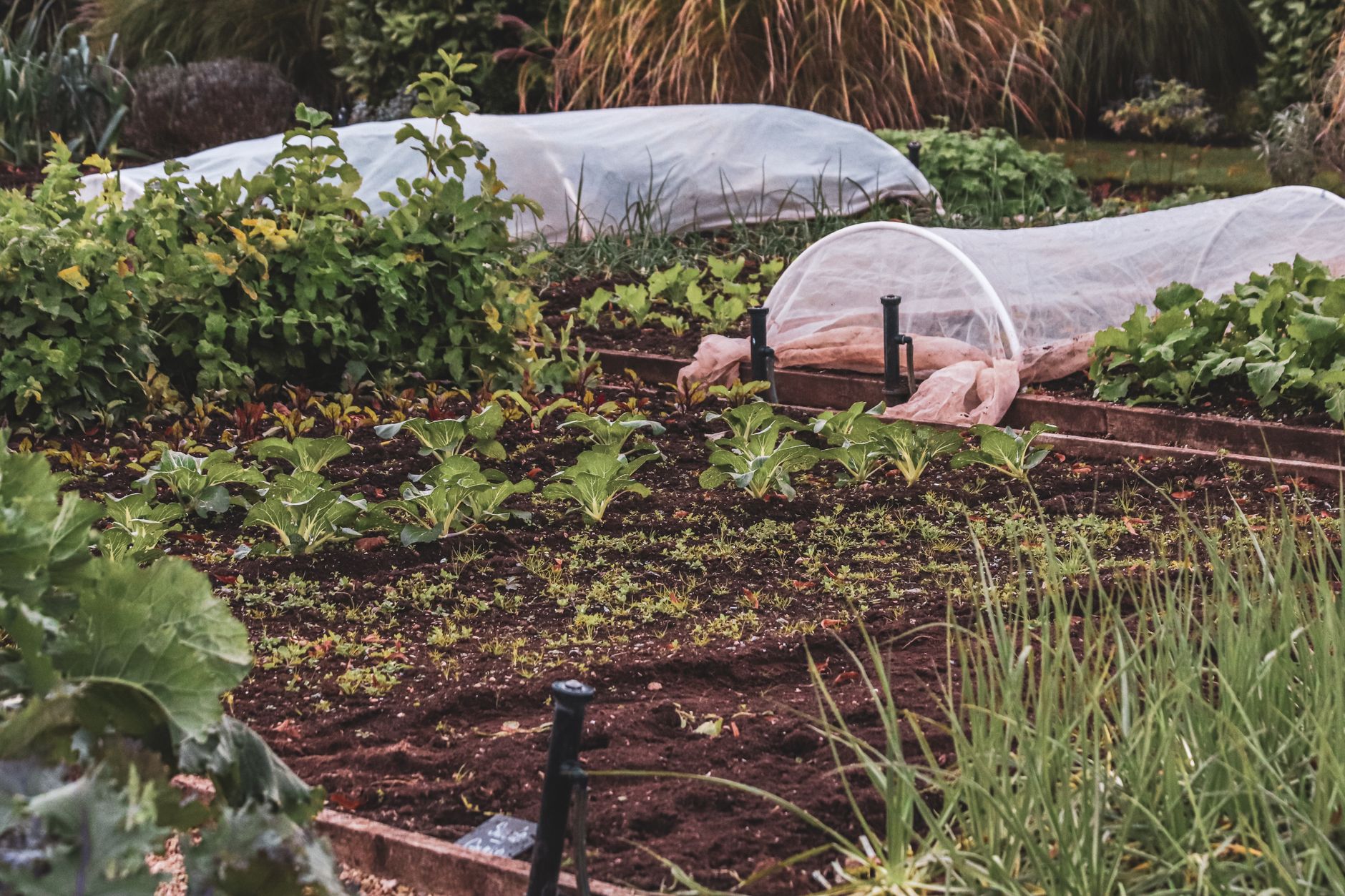
Best Cover Crops for Florida Gardens in Summer (What Actually Survives the Heat)
This post contains affiliate links. I may earn a small commission at no extra cost to you.
If you’ve ever stared at your Florida garden in July and thought, “There is absolutely nothing I can do with this scorched earth until October” — I felt that in my soul for a long time. The heat index hits triple digits, the afternoon thunderstorms are violent and fast, and anything delicate just gives up and melts into the mulch.
But here’s what changed things for us: cover crops. Specifically, summer cover crops — the kind that don’t just survive Florida’s brutal growing season but actually work during it. They fix nitrogen, suppress weeds, hold moisture, and feed the soil biology that makes your fall garden explode with life.
And honestly? They’ve become one of our favorite summer homeschool lessons too.
Why Bother With Cover Crops in a Florida Summer?
Most gardening advice you’ll find online is written for temperate climates where summer is prime growing season. Down here in the Panhandle, summer is basically the off-season for food crops. But that doesn’t mean your soil should just sit there baking.
Left bare, Florida soil — especially our sandy Northwest Florida stuff — loses moisture fast, compacts under heavy rain, and invites weeds like it’s hosting a party. Cover crops solve all of that at once.
They:
- Add organic matter when you chop and drop them before fall planting
- Fix atmospheric nitrogen (legumes especially) so you’re not buying as much fertilizer
- Keep weed pressure down with a living mulch
- Give beneficial insects somewhere to live
- And if you’re raising backyard chickens like we are, they become a free food source for your flock
That last one alone sold me. If you’re moving a chicken tractor around your property, a section of cowpeas or sunnhemp is basically a salad bar on legs for your girls.
The Best Cover Crops for Florida Gardens in Summer
1. Iron & Clay Cowpeas (Southern Peas)
This is my number one recommendation for Northwest Florida, full stop. Cowpeas are basically made for our climate. They germinate fast in warm soil, handle drought once established, fix nitrogen like crazy, and the chickens lose their minds over the leaves and pods.
Plant them in May or June, let them grow all summer, and then either chop and drop them before fall planting or let the chickens work them over first. We do a little of both.
Bonus: our kids love watching the pods develop — it’s a real natural science lesson that costs almost nothing.
2. Sunn Hemp (Crotalaria juncea)
Sunn hemp is one of those crops that looks almost too good to be true. It grows fast — we’re talking 6 feet tall in a Florida summer — and it fixes a tremendous amount of nitrogen. The University of Florida IFAS actually recommends it specifically for our region.
It’s not edible for chickens in large quantities (it can be mildly toxic in excess), so we keep the hens out of the sunn hemp patch. But it chops down beautifully before fall, and the biomass it adds to the soil is just remarkable. If your soil is really depleted, start here.
3. Buckwheat
Okay, buckwheat isn’t technically a legume — it doesn’t fix nitrogen — but it earns its spot in the summer garden rotation for other reasons. It grows in about 30 days, smothers weeds aggressively, and the flowers attract beneficial insects like nothing else we’ve grown.
In late summer when we’re starting to think about fall transplants, we’ll let a section of buckwheat bloom, then chop it right before planting. It breaks down quickly in our heat and adds a nice flush of organic matter.
The kids also love pressing the little heart-shaped seeds in their nature journals — it’s one of those small things that makes a morning in the garden feel like a real lesson.
4. Velvet Bean (Mucuna pruriens)
Velvet bean is a powerhouse legume that handles Florida summer heat and humidity like it was born for it — because essentially, it was. It’s a tropical vine that fixes nitrogen aggressively and creates a dense ground cover that’s almost weed-proof once established.
Fair warning: the pods are very itchy if you handle them without gloves (definitely grab some kids’ garden gloves before letting little hands near a mature velvet bean patch). We treat this one as a “look but don’t touch” lesson and it’s been a great conversation about plant defense mechanisms.
5. Hairy Indigo (Indigofera hirsuta)
This one’s a Florida native — or close to it — and it shows. Hairy indigo tolerates our poor sandy soils and summer rains without complaint. It’s a nitrogen-fixer and it’s incredibly low maintenance once established. We’ve let it naturalize in a corner of our property and it just comes back every year.
It also makes beautiful purple flowers that our kids like to sketch with their Faber-Castell watercolors during nature study time. Charlotte Mason would absolutely approve.
How We Teach Cover Crops as a Homeschool Lesson
This is honestly one of my favorite parts. Cover crops are a living, hands-on science lesson that runs all summer long without me having to do much extra planning.
We use them to talk about:
- The nitrogen cycle (even my youngest can explain that cowpeas “feed the dirt”)
- Plant observation — sketching growth stages in nature journals over several weeks
- Soil science — we pull up roots and look at the nodules on cowpea roots with a pocket microscope, which never gets old
- The food web — watching what insects show up on buckwheat flowers and recording them with the Sibley Birds guide nearby (because where there are insects, birds follow)
If you want to dig deeper into the journaling side of things, I wrote a whole post on Charlotte Mason nature journal ideas for kids that pairs perfectly with this kind of summer observation work.
Connecting It to the Chickens
One of the things I love most about our little backyard setup is how everything connects. The cover crops feed the soil, the soil grows the food, the food scraps go to the chickens, and the chickens add to our compost that goes back to the garden.
Cowpeas in particular are like a treat garden for our flock. We’ll let a section go to seed and then turn the hens loose on it — they scratch it up, eat the seeds and bugs, and leave behind their own nitrogen deposit. It’s the most satisfying closed-loop thing we do around here.
If you’re newer to keeping chickens and want to know more about the management side, Storey’s Guide to Raising Chickens has a great section on pasture and forage crops that I’ve referred back to more than once.
A Few Practical Tips Before You Plant
- Inoculate your legume seeds before planting. A legume inoculant (you can find it at most farm supply stores or online) contains the rhizobium bacteria that actually does the nitrogen-fixing work. Skip this and you’re leaving a lot of benefit on the table.
- Plant after a rain or water in well. Florida summer soil can get a surface crust that makes germination spotty.
- Don’t till them in too close to planting day. Give chopped-down cover crops at least 2-3 weeks to start breaking down before you transplant fall seedlings.
- Let the kids be involved from the beginning. Sowing seeds by hand, marking rows with sticks, checking for germination — this is exactly the kind of slow, real-world work that we’re trying to give our kids more of. No screens required.
If you’re also starting to think about what to actually grow come fall, our post on how to start a homestead garden in Florida for beginners lays out the whole seasonal rhythm really well.
You’ve Got This, Mama
I know summer gardening in Florida can feel discouraging. Everything bolts or wilts or just disappears, and it’s hard not to feel like you failed somehow. But planting cover crops reframes the whole thing. You’re not not gardening — you’re investing in the garden that’s coming. You’re building something underground that will pay off in October when your beds are overflowing.
And in the meantime, you’ve got a living classroom growing in your backyard, kids who know what a nitrogen nodule looks like, and chickens who are absolutely thrilled about the cowpeas. That’s a pretty good summer if you ask me.
📖 You Might Also Like:
- How to Build a Simple Chicken Tractor for Your Backyard Flock (Even If You’re Not Handy)
- Composting at Home with Kids: A Real Beginner’s Guide That Actually Gets Done
- How to Start a Homestead Garden in Florida for Beginners (What Actually Works Down Here)
Frequently Asked Questions
What cover crops grow best in Florida summer heat?
The best cover crops for Florida summers are heat-tolerant and humidity-resistant varieties like iron and clay cowpeas, sunn hemp, buckwheat, velvet bean, and hairy indigo. Cowpeas and sunn hemp are especially popular in Northwest Florida because they fix nitrogen aggressively and handle our sandy soil and intense summer rain without skipping a beat.
When should I plant summer cover crops in Florida?
In most of Florida, you can plant summer cover crops from late April through July. The soil is warm enough for fast germination, and most heat-tolerant varieties will have plenty of time to establish before you need to chop them down ahead of fall planting in September or October.
Can my backyard chickens eat cover crops?
Yes — many cover crops are excellent forage for chickens! Cowpeas (southern peas) are a favorite, and chickens will happily eat the leaves, vines, and seeds. Buckwheat is also safe and they enjoy the seeds. Sunn hemp should be kept away from chickens in large quantities, as it can be mildly toxic when consumed excessively. Always research any specific variety before turning your flock loose on a new crop.
Do I need to till in cover crops before planting vegetables?
Not necessarily — you can chop and drop cover crops and let them decompose as a mulch layer on top of the soil. If you do incorporate them, give it at least 2-3 weeks before transplanting seedlings so the decomposition process doesn’t interfere with your plants. In Florida’s heat, organic matter breaks down quickly, so you don’t have to wait long.
Are cover crops a good homeschool activity for kids?
Absolutely! Cover crops make a wonderful hands-on science lesson that stretches over an entire season. Kids can observe germination, sketch plant growth stages in nature journals, examine root nodules under a microscope, and track which insects visit the flowers. It naturally covers soil science, plant biology, and ecology — all without a textbook in sight.
Leave a Reply