Florida Backyard Beekeeping for Beginners: What You Actually Need to Know Before You Start
This post contains affiliate links. I may earn a small commission at no extra cost to you.
I’ll be honest — beekeeping was on my “someday” list for years. Right there next to sourdough bread and raising quail. It felt a little big, a little intimidating, like maybe it was for someone more capable than me.
And then one spring afternoon my kids and I were sitting in the backyard watching our chickens scratch around, and a big fat bumblebee landed on the rosemary bush by the fence. My oldest looked up at me and said, “Mama, why don’t we have bees?”
Good question, kid.
We’re in Northwest Florida — Pensacola area — and let me tell you, if you’re going to keep bees anywhere, Florida is a pretty spectacular place to do it. Our winters are mild, our bloom season is long, and there is no shortage of wildflowers, citrus, and gallberry for your girls to forage on. Once I started actually researching it, I realized beekeeping wasn’t nearly as out-of-reach as I’d made it in my head.
Here’s what I wish someone had just sat down and told me at the beginning.
Why Florida Is Actually a Great Place to Start Beekeeping
Most of the country has a hard stop on beekeeping in winter — colonies have to be managed for cold, wrapped, kept alive through months with no forage. Here in Florida? Our bees are often still foraging in December. We’ve got blooms from late winter straight through fall, and the longer active season means your colony has more time to build up honey stores and population before you ever have to worry about a rough stretch.
The flip side: Florida heat and humidity mean your hives need good ventilation, and you’ll want to be thoughtful about hive placement. Full afternoon shade is your friend down here. We put ours near our back fence line where they get morning sun and shade by 1pm, and that’s made a noticeable difference.
What You Actually Need to Get Started
You don’t need a barn full of equipment. Here’s the honest beginner list:
The Hive
Most Florida backyard beekeepers start with a Langstroth hive — it’s the standard stackable box style you’re probably picturing. You’ll want at minimum a bottom board, one deep brood box, a medium super, an inner cover, and a top cover. You can buy these as a kit or piece together your own setup.
Site your hive so the entrance faces southeast if you can — bees like early morning sun to get them moving — and make sure it’s level front-to-back with a very slight forward tilt so rain doesn’t pool inside.
Your Protective Gear
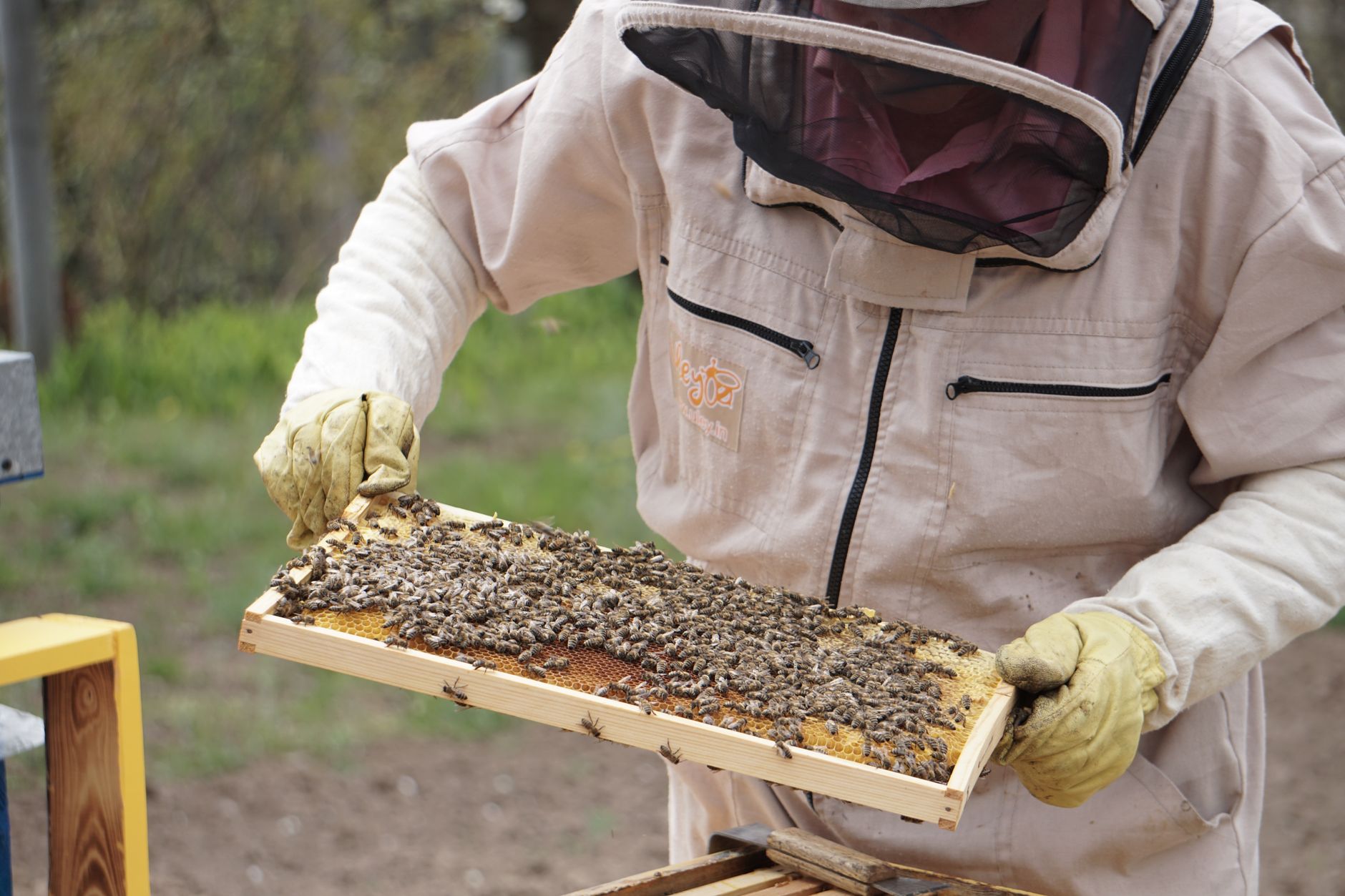
Please don’t skip this part. A good veil and jacket are non-negotiable, especially when you’re new and your movements are still a little uncertain. Gloves too, at least at first. The beekeeping starter kit I found on Amazon had everything we needed to get suited up without spending a fortune — jacket, veil, gloves, and a hive tool all in one box.
Your Bees
You’ll want to order a package of bees or a nucleus colony (called a “nuc”) from a reputable local supplier. In Florida, I’d strongly recommend buying locally — Florida bees are already adapted to our heat, humidity, and specific forage. Check with your local beekeeping association (Florida has a great network of them) or your county extension office for recommended suppliers.
Florida-Specific Rules You Need to Know
This is the part people skip and then regret. Florida does require that beekeepers register their colonies with the Florida Department of Agriculture and Consumer Services (FDACS). It’s a simple process and costs very little, but it’s the law — and it actually works in your favor because registered beekeepers get support and resources from the state apiarist program.
You’ll also want to check your local municipality or HOA rules. Some areas in Escambia County and surrounding areas have specific setbacks — meaning your hive needs to be a certain distance from property lines or neighbor’s homes. A quick call to your county extension office will get you straight answers fast.
And one more Florida-specific thing: Africanized honey bees. They are present in parts of Florida. This is not a reason to panic, but it is a reason to source your bees carefully, keep calm and gentle stock, and requeen if your hive ever becomes unusually defensive. Most backyard beekeepers never have an issue, especially in the panhandle region where Africanization pressure is lower than South Florida.
How Beekeeping Fits Into Our Homeschool
This is honestly my favorite part to talk about. If you’re doing any kind of Charlotte Mason or nature-based learning, bees are an absolute goldmine.
We’ve used our hive as the jumping-off point for lessons on pollination, ecosystems, geometry (hexagons!), the lifecycle of insects, and even basic economics — honey production, division of labor, the whole thing. My kids started keeping detailed observations in their nature journals, sketching bees, drawing comb cells, and writing down what they noticed each time we opened the hive.
We also grabbed a pocket microscope so they could look at pollen up close — that was a full morning of school right there, no curriculum needed. This is exactly the kind of thing I mean when I say living books and living experiences beat a worksheet every single time.
If you want more ideas for weaving nature observation into your days, check out our Charlotte Mason Nature Study Journal Prompts by Season — lots of it translates beautifully to bee study.
Managing Your Hive Through the Florida Seasons
Spring (February–April)
This is your big build-up season. Colonies are expanding rapidly, forage is blooming, and you’ll be doing regular inspections to watch for swarm cells and make sure your queen has room to lay. Add supers before they need them, not after.
Summer (May–August)
Heat management is everything. Make sure there’s always water nearby — bees need it to cool the hive, and they’ll find your neighbor’s pool if you don’t provide an alternative. A simple dish with marbles and water works great. Keep shade on the hive during peak afternoon heat.
Fall (September–November)
The goldenrod and wildflowers give your colony a late-season boost. This is a good time to assess honey stores and make sure they’re set up well going into the mild Florida winter.
Winter (December–January)
Honestly, our bees barely slow down. You’ll do fewer inspections, but there’s still activity and some foraging. This is a good time to treat for Varroa mites if needed and to plan for spring splits.
A Word About Integrating Bees With Your Backyard Flock
We get asked about this a lot since we have chickens too. The short answer: they mostly ignore each other. Our chickens occasionally snap at a bee that gets too close to their feed, which is not smart on the chicken’s part, but nobody’s been seriously hurt. Just don’t place your hive directly in the path your chickens travel daily, and give everyone their own space.
If you’re still building out your backyard homestead, our post on Best Chicken Breeds for Egg Color Variety (And Which Ones Actually Thrive in Florida) is a good companion read.
My Honest Recommendation for Getting Started
Join a local beekeeping club before you buy a single piece of equipment. Seriously. The Escambia Beekeepers Association and neighboring county clubs offer mentorship programs, hands-on hive days, and a community of people who genuinely want to help you succeed. Go to a meeting, ask questions, and ideally get your hands in someone else’s hive before you set up your own. That alone will save you so much second-guessing.
Then grab your beekeeping starter kit, register with FDACS, source local bees, and just begin. The bees will teach you more in one season than any book can.
And speaking of a natural ecosystem for your whole backyard — if you’re not already collecting rainwater to keep your garden and animals watered through dry stretches, that’s worth setting up alongside your hive. We wrote all about it in Best Rain Barrel Setup for Florida Homes (What Actually Works Down Here).
Beekeeping has been one of those things that’s made our backyard feel more alive — more connected, more purposeful. My kids talk to the bees, they watch for them on flowers during our nature walks, they understand now in this deep and instinctive way why pollinators matter. That’s the kind of education that sticks. Not because we planned a unit study around it, but because we just let them get close to something real.
You don’t have to do everything at once. You don’t have to be an expert before you start. You just have to start.
📖 You Might Also Like:
- Best Rain Barrel Setup for Florida Homes (What Actually Works Down Here)
- Charlotte Mason Nature Study Journal Prompts by Season (For Real Kids Who’d Rather Be Outside)
- How to Grow Sweet Potatoes in Your Florida Backyard (What Actually Works Down Here)
Frequently Asked Questions
Do I need a permit to keep bees in Florida?
Yes — Florida requires all beekeepers to register their colonies with the Florida Department of Agriculture and Consumer Services (FDACS). The process is simple and inexpensive. You’ll also want to check your local county or municipality rules for any setback requirements from property lines.
When is the best time to start a beehive in Florida?
Late winter to early spring — roughly February through April — is ideal in Florida. Colonies installed in early spring have the entire bloom season ahead of them to build up population and honey stores before the intense summer heat sets in.
Are Africanized bees a problem for Florida backyard beekeepers?
Africanized honey bees are present in parts of Florida, particularly South Florida. In the Panhandle region the risk is lower, but it’s still important to source bees from reputable local suppliers, maintain gentle stock, and requeen any hive that becomes unusually defensive. Most backyard beekeepers in Northwest Florida never have a serious issue.
How many beehives should a beginner start with?
Most experienced beekeepers recommend starting with two hives rather than one. Having two allows you to compare colonies side by side, borrow resources like frames of brood or honey between hives if needed, and better understand what ‘normal’ looks like. It sounds like more work but it actually makes troubleshooting much easier.
Can I keep bees if I also have backyard chickens?
Yes, bees and chickens coexist just fine in most backyard setups. The key is to place your hive away from the main chicken traffic areas and make sure the hive entrance isn’t in a spot where chickens congregate. Chickens may occasionally snap at a passing bee, but serious conflicts are rare and both animals generally mind their own business.
Leave a Reply