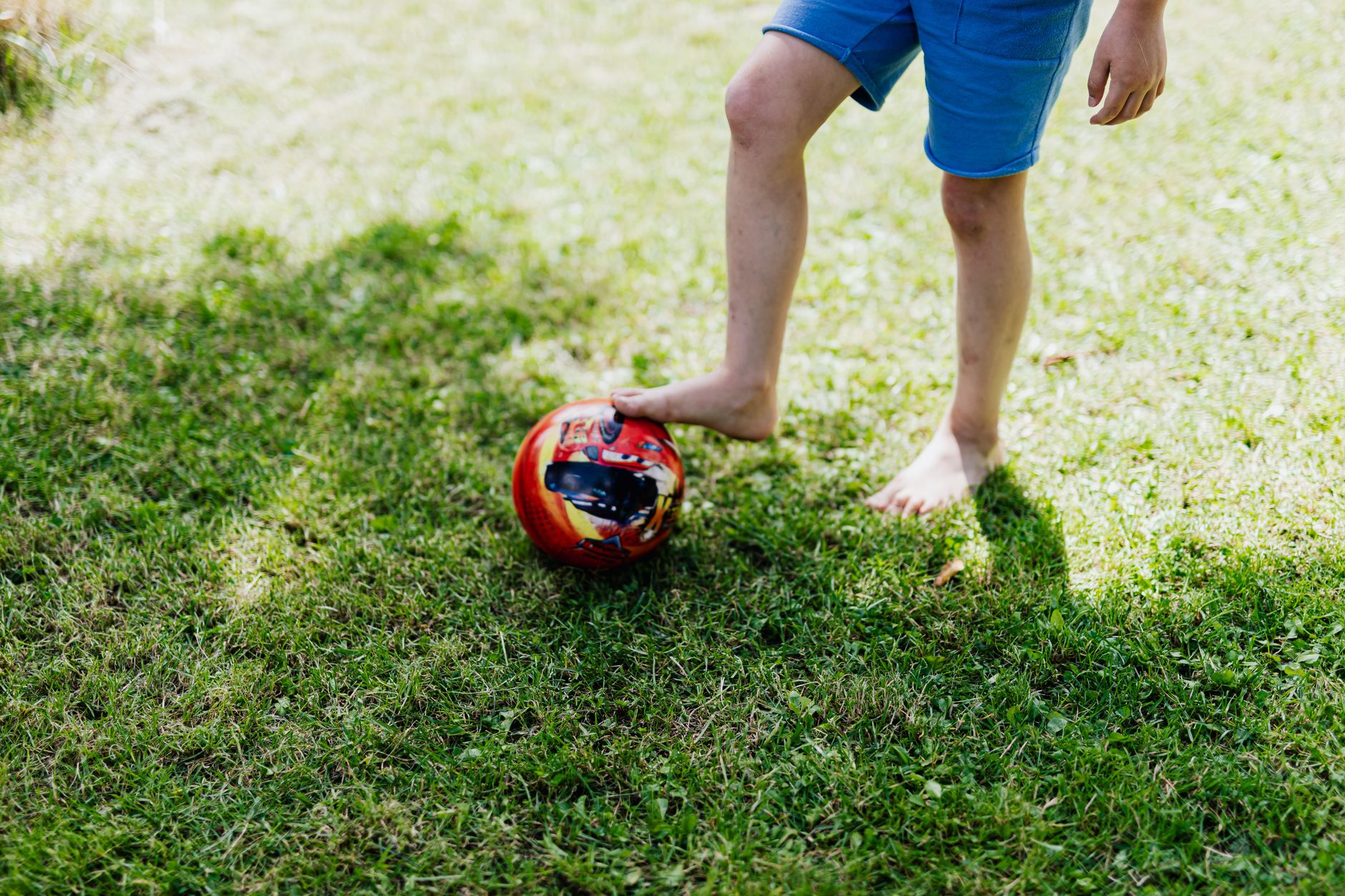
Outdoor Play Ideas for Kids with No Equipment Needed (Just Fresh Air and a Little Imagination)
This post contains affiliate links. I may earn a small commission at no extra cost to you.
Some of my best childhood memories have absolutely nothing in them — no toys, no gear, no organized activities. Just my cousin and me, a ditch full of muddy water, and about four hours of time we had to fill on our own. We built dams. We caught crawdads. We made up elaborate stories about the civilizations living beneath the roots of an old oak tree.
That was childhood in the ’90s. And I’ll be honest — that’s the childhood I’m trying to give my kids here in Northwest Florida.
The thing is, we don’t need to buy anything to make it happen. Not a single thing. Kids don’t need more equipment. They need more time and a little permission to be bored enough to get creative.
So if you’ve got a yard, a sidewalk, a patch of woods nearby, or even just a stretch of grass — here are some of our favorite outdoor play ideas that need zero equipment. Just kids, the outdoors, and maybe a little encouragement from you to get started.
Why No-Equipment Play Is Actually the Point
I know it feels counterintuitive in a world full of Amazon carts and toy catalogs, but the research really does back this up: open-ended, unstructured outdoor play is where the deep magic happens. Problem-solving, creativity, social negotiation, physical risk-taking — all of it develops when kids aren’t handed a set of instructions.
Charlotte Mason called it outdoor time for a reason. Not outdoor curriculum. Not outdoor structured activities. Just time outside, in nature, with space to observe and explore and wonder.
We do a morning basket and some lessons most days, but honestly? Some of our best “school” happens after lunch when I kick everybody outside and tell them to figure it out. (And yes, I have a post on Raising Kids Without Screens: What We Actually Do Every Day if you want to peek at how our whole day flows.)
No-Equipment Outdoor Play Ideas That Actually Work
1. Mud Kitchen Cooking (No Real Kitchen Required)
Find a corner of the yard, a patch of dirt, some sticks, and maybe an old pot you don’t mind losing to the elements. Kids will spend hours making soups, pies, potions, and full five-course meals from leaves, berries, bark, and whatever they can forage from the yard. My youngest once made me a “blueberry and acorn tart” that she was deeply proud of. I was deeply honored.
This is especially fun in Florida after a summer rain — the red clay here in the Panhandle gets perfectly workable and the kids go absolutely feral in the best way.
2. Nature Scavenger Hunts
You don’t even have to write a formal list (though you can). Just call out things and let them find them: something smooth, something living, something that crinkles, something the color of the sky. Make it sensory. Make it weird. Let them lead eventually and come up with their own lists for each other.
If your kids are into nature journaling (ours have been since we started our Charlotte Mason homeschool), they can sketch what they find. We love using a nature journal to record discoveries, but a piece of paper and a pencil works just as well.
3. Backyard Bird Watching
Sit still. Watch. That’s it. Florida is genuinely incredible for this — we get painted buntings, sandhill cranes, osprey, and more depending on the season. If your kids get into it, a Sibley bird guide makes a wonderful addition to any nature shelf. But for the play itself? They just need their eyes.
Have them try to count species, imitate bird calls, or track where different birds land. This one turns into a whole nature study without you having to do a thing.
4. Obstacle Courses from Sticks and Rocks
Our kids build entire obstacle course systems in the backyard using fallen sticks as balance beams, rocks as stepping stones, and mulch piles as “lava.” This is pure engineering and physical play with zero equipment. Let them design it, build it, test it, rebuild it when somebody falls through the lava.
5. Storytelling Worlds in the Dirt
Scratch a map into the dirt. Build villages from sticks. Create roads with your finger. My kids have built entire kingdoms in the corner of our yard — complete with neighborhoods, rivers, and yes, chicken territories (because our flock has opinions about property lines, apparently).
This kind of imaginative play is long, deep, and quiet. It’s one of those things that makes you realize your kids don’t need a single toy.
6. Animal Tracking and Backyard Science
After rain is the best time for this. Look for tracks, tunnels, disturbed soil, feathers, scat (yes, kids love this). Try to figure out what animal left each clue. Florida has armadillos, raccoons, lizards, and all kinds of critters moving through even suburban backyards.
If your family has chickens like we do, this is extra fun — kids start to notice how the chickens move through the yard, where they scratch, what they avoid. It naturally becomes a conversation about animal behavior. If you want to dig deeper into keeping backyard chickens as a family learning experience, Storey’s Guide to Raising Chickens is our go-to reference, and there’s a wonderful kid’s guide to chickens that my kids have nearly worn through.
7. Cloud Watching with a Purpose
Lay on your backs. Name the clouds. Tell stories about them. Race them across the sky. This sounds too simple, but I promise — kids who have never done this will spend thirty minutes flat on their backs completely absorbed. In Florida, our summer thunderheads are dramatic and make for genuinely wild cloud-watching sessions.
8. “1-2-3 Where Are You?” Yard Hide and Seek Variations
The classics are classics for a reason. Hide and seek, freeze tag, red light green light, Mother May I — all of these need nothing but kids and a yard. Teach your kids the games you grew up with. That’s legacy, honestly.
9. Stick and Rock Sorting, Counting, Patterns
For littler ones especially, this is genuinely educational and completely natural. Sort by size. Build patterns. Count out sets. Make a number line in the dirt. Math-U-See does a wonderful job building our formal math foundation at home — Math-U-See is hands-on and concrete, which fits perfectly alongside this kind of informal outdoor numeracy play.
10. Puddle Jumping and Rain Play
This one requires zero setup and maximum willingness to let your kids get soaked. Florida summer rain is warm. It is not dangerous. Let them go. Grab some kids rain boots if you want dry feet later, but honestly even those are optional.
A Note on Boredom
I want to say this gently but clearly: your kids will complain that they’re bored. That is normal. That is good. Boredom is the soil that creativity grows in. Do not rescue them too fast.
Give them five to ten minutes. Then maybe offer one of these ideas as a nudge — not a plan, just a seed. “I wonder if there are any crawdads in that wet spot by the fence.” That’s enough. Then walk away.
For more on how we structure our days to include this kind of slow, open outdoor time, you might like Family Rhythm vs. Routine: What Actually Works for Real Homeschool Life and Seasonal Living Ideas for Families: Simple Ways to Celebrate Every Season Year-Round — both of those posts speak directly to how we build outdoor time into the rhythm of our days without over-scheduling it.
The Simplest Thing I Can Tell You
Go outside with them sometimes. Not to teach. Not to supervise. Just to be there, present, looking at the same sky. Pick up a stick. Turn over a rock. Ask out loud, “I wonder what made this hole.”
You will be amazed at what grows from that.
The 1990s childhood I’m trying to give my kids doesn’t require a budget or a plan. It requires a back door and the willingness to open it — every single day, even when it’s hot (and friends, it is always hot in Pensacola). Slap on some non-toxic sunscreen, fill up a stainless steel water bottle, and send them out. The yard will do the rest.
That’s the whole secret. I really mean it.
📖 You Might Also Like:
- How to Build a Simple Chicken Tractor for Your Backyard Flock (Even If You’re Not Handy)
- Raising Kids Without Screens: What We Actually Do Every Day
- How to Slow Down and Simplify Family Life (Without Feeling Like You’re Falling Behind)
Frequently Asked Questions
What outdoor activities can kids do with no toys or equipment?
Tons! Mud kitchen play, nature scavenger hunts, cloud watching, stick obstacle courses, dirt map building, bird watching, puddle jumping, and classic yard games like hide and seek are all wonderful options that need zero purchased equipment. The key is giving kids unstructured time and a nudge in the right direction — then stepping back.
How do I get my kids to play outside without screens or organized activities?
Start with boredom — don’t rescue them too fast. Offer a simple, curious prompt like ‘I wonder what’s under that rock’ and then walk away. Kids who are used to screens may take a few days to rediscover outdoor imagination, but it comes back quickly once they have consistent, regular outside time built into the daily rhythm.
What are good outdoor play ideas for elementary-age kids?
Elementary kids (roughly ages 5-11) love nature scavenger hunts, building stick villages and obstacle courses, animal tracking after rain, backyard bird watching, storytelling games in the dirt, and classic movement games like freeze tag or red light green light. These age groups also really enjoy having a nature journal to sketch and record what they find outside.
How much time should kids spend playing outside each day?
Most child development experts and Charlotte Mason educators recommend at least 1-2 hours of outdoor time daily, and ideally more. For homeschool families especially, outdoor time isn’t just play — it’s where natural science learning, sensory development, physical health, and creative thinking all happen together. In Florida’s heat, early morning or late afternoon outside time works best.
Is unstructured outdoor play actually educational?
Absolutely yes. Unstructured outdoor play builds problem-solving, creativity, physical coordination, risk assessment, social skills, and even early math and science thinking — all without a curriculum or lesson plan. Charlotte Mason’s philosophy placed enormous value on outdoor time precisely because it develops the whole child in ways structured lessons simply can’t replicate.
Leave a Reply