How to Start a Butterfly Garden in Florida With Kids (And Why It’s the Best Nature Study You’ll Ever Do)
This post contains affiliate links. I may earn a small commission at no extra cost to you.
My kids spent an entire afternoon last spring crouched over a single milkweed plant, watching a monarch caterpillar inch its way up the stem. Nobody asked for a screen. Nobody said they were bored. They just watched — and then ran inside to draw what they saw in their nature journals.
That’s the magic of a butterfly garden, y’all. And here in Florida? We are so incredibly set up for this. We have butterflies flying through our yards in nearly every month of the year. The Gulf Fritillary alone will take your breath away if you plant the right thing. We don’t have to dream about monarch migration the way our northern friends do — we can watch it happen right outside.
If you’ve been thinking about starting a butterfly garden with your kids but don’t know where to begin, I’ve got you. This is genuinely one of the most low-fuss, high-reward nature projects we’ve done, and I want to help you set it up in a way that actually works for Florida and for real kids.
Why a Butterfly Garden Is Perfect for a Florida Homeschool Family
Charlotte Mason had this idea that children learn best from living things — real things, not worksheets. A butterfly garden is living education. Your kids will observe life cycles firsthand, learn plant names without a flashcard in sight, start to understand ecosystems, and develop the kind of patient, wonder-filled attention that no app can teach.
It also fits beautifully into what we try to do around here: less structured, more discovery-based. More 1990s — less scheduled. You’re not managing the lesson. You’re just planting the plants and letting nature do the teaching.
And for my Florida homeschool families using the PEP scholarship — outdoor nature study like this can absolutely be documented as science. Keep a nature journal, sketch what you find, record observations. Boom. Done.
Start With the Right Plants — Florida Butterflies Are Picky
Here’s the most important thing most people miss: butterflies need two types of plants — host plants (where they lay eggs and caterpillars eat) and nectar plants (where adult butterflies feed). You need both. If you only plant nectar plants, butterflies will visit but won’t stay or breed.
Florida Host Plants Worth Growing
- Milkweed (Asclepias) — Monarch and Queen butterflies. This is the big one. Grow native milkweed if you can find it (Asclepias tuberosa or A. incarnata). Avoid tropical milkweed or cut it back hard in winter.
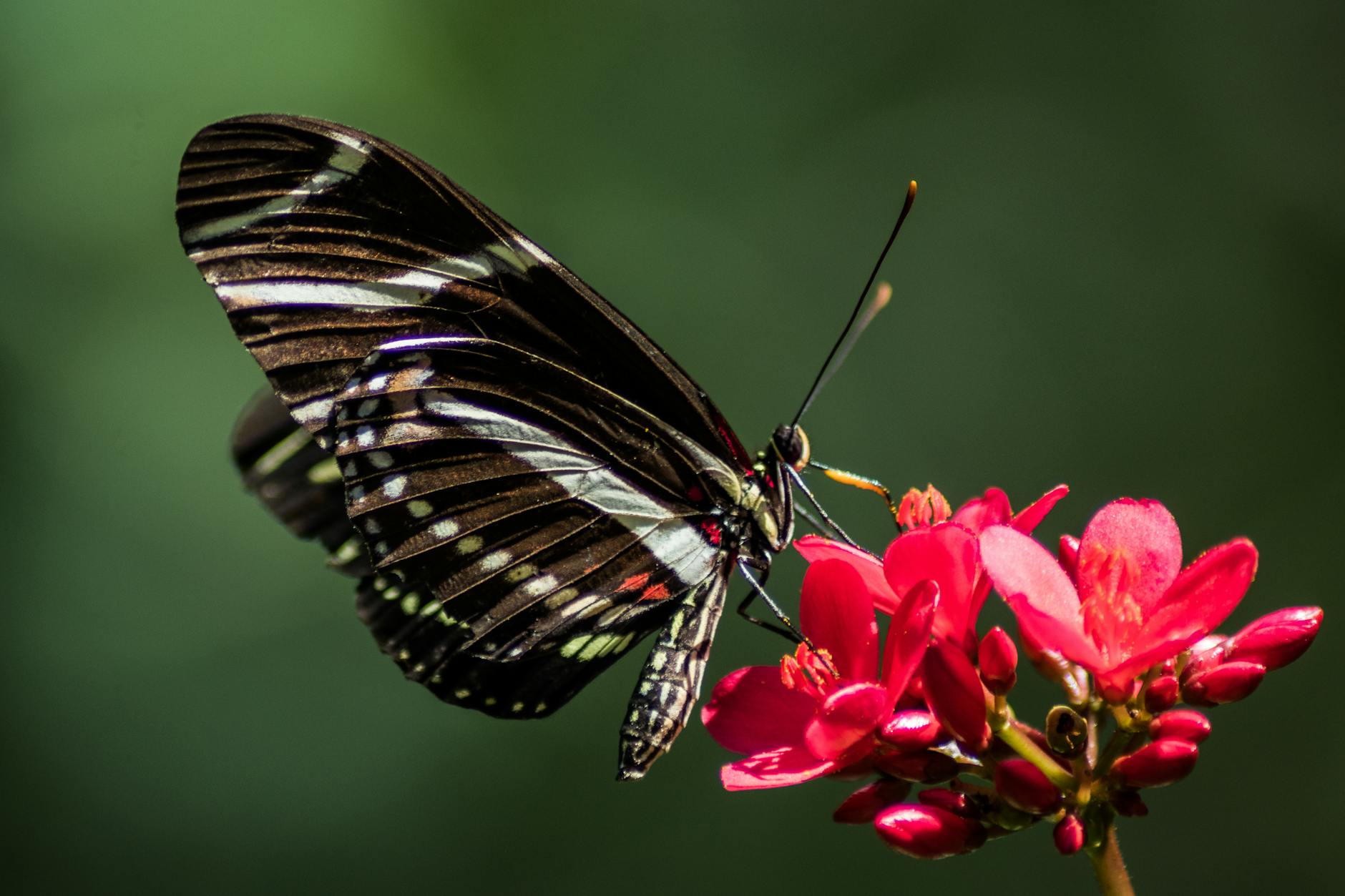
- Passionvine (Passiflora) — Gulf Fritillary and Zebra Longwing (our state butterfly!). This vine grows fast and the caterpillars will demolish it — that’s normal, it grows back.
- Pipevine (Aristolochia) — Pipevine Swallowtail. Hard to find, worth hunting for at a native plant nursery.
- Fennel, parsley, or dill — Black Swallowtail. We grow dill in our garden and find caterpillars on it every single year. Easy and edible!
- Wild lime or citrus — Giant Swallowtail. If you have a citrus tree, you probably already have Giant Swallowtail eggs on it.
Nectar Plants That Florida Butterflies Love
- Pentas (blooms almost year-round here)
- Firebush (native, butterflies mob it)
- Lantana (they go absolutely wild for this)
- Porterweed
- Salvia
- Coneflower
You don’t need all of these. Start with two or three host plants and two or three nectar plants. Even a container garden on a sunny porch will attract butterflies.
Setting Up the Garden With Your Kids
This is where the Charlotte Mason magic happens — involve them in everything, from planting to observation to sketching.
Step 1: Pick your spot. Butterflies need sun — at least 6 hours. In Northwest Florida, that’s not hard to find most of the year.
Step 2: Shop together. Take your kids to a local native plant nursery (not a big box store — the plants there are often treated with pesticides that harm caterpillars). Let the kids carry their own plant. Talk about what butterfly each one feeds.
Step 3: Plant it. Give them their own garden gloves and let them dig. Mess is fine. That’s the point.
Step 4: Set up your observation station. Put a chair or a blanket nearby. Pull out a pocket microscope for up-close egg and caterpillar inspection. Get a copy of the Sibley field guide or a Florida-specific butterfly guide so kids can identify what they’re seeing.
Step 5: Start a nature journal. This is where the learning really roots in. Have your kids draw what they observe — even rough sketches count. Note the date, the weather, what butterfly visited, what it was doing. Use Faber-Castell watercolors for beautiful nature journal pages that kids actually love to make. You can see more of how we do this in our post on Easy Outdoor Science Experiments for Kids in the Backyard.
Keeping It Non-Toxic — This Part Really Matters
If you’re growing a butterfly garden, you cannot spray conventional pesticides anywhere near it. Caterpillars are insects — they will die. This is true for your whole yard, honestly.
For general pest control in our yard we use Wondercide, which is plant-based and safe around kids and pets — but we do not spray it anywhere near the butterfly garden or the host plants. We also use food-grade diatomaceous earth in other areas of the yard, but again, keep it away from where your caterpillars are feeding. I have a full post on Non-Toxic Pest Control for Florida Homes if you want to go deeper on this.
Also — keep the chickens out. Our girls would eat every caterpillar they could find if we let them near the garden. A little fence or a designated zone for the butterfly garden has been a must for us.
Turning It Into Real Nature Study All Year
Florida’s biggest advantage is that this doesn’t have to be a seasonal project. We have butterflies visiting in December. Here’s how we weave it into our homeschool rhythm:
- Daily observation walks — even 5 minutes before morning school time. Who visited today?
- Life cycle unit — watch for eggs, caterpillars, chrysalises. Photograph and sketch each stage.
- Butterfly counts — older kids can do a tally by species over a week. Great for simple math and data recording.
- Sketch + watercolor pages — slow observation drawing is one of the most Charlotte Mason things you can do. Our nature journals have SO many butterfly pages at this point.
- Research rabbit holes — when my kids want to know more, that’s school. That’s real learning happening.
For more nature-based activity ideas that work in Florida, check out our posts on Educational Florida Beach Activities for Kids and Screen-Free Summer Activities for Florida Kids — a butterfly garden pairs beautifully with both.
A Note on Patience (For You and the Kids)
Sometimes you’ll plant everything and wait two weeks before a butterfly finds it. That waiting is part of it. Talk about that with your kids. The garden is doing something even when nothing seems to be happening — the roots are growing, the nectar is developing, the plant is becoming a home.
That’s honestly one of my favorite things about this kind of childhood. It teaches kids that good things take time and attention. You can’t fast-forward a chrysalis. You can’t scroll past a caterpillar. You just have to watch.
And when a Zebra Longwing — our gorgeous Florida state butterfly — finally floats through your yard and lands on the passionvine your kid planted with their own hands? You will not regret a single thing you planted.
Happy gardening, friend. I hope your yard is full of wings by summer. 🦋
📖 You Might Also Like:
- Easy Outdoor Science Experiments for Kids in the Backyard (No Lab Required)
- Screen-Free Summer Activities for Florida Kids (When They Say They’re Bored)
- Nature Crafts for Kids Using Backyard Materials (No Store Trip Required)
Frequently Asked Questions
What is the easiest butterfly to attract in Florida?
The Gulf Fritillary is probably the easiest Florida butterfly to attract because its host plant — passionvine — grows quickly, is easy to find, and thrives in Florida’s heat. Plant passionvine in a sunny spot and you’ll likely have Gulf Fritillary caterpillars within weeks. The Zebra Longwing, Florida’s state butterfly, also uses passionvine and is very common throughout the state.
Can I grow milkweed in Florida for monarchs?
Yes, and you should! Milkweed is essential for monarch and queen butterflies. In Florida, it’s best to grow native milkweed species like Asclepias tuberosa (butterfly weed) or Asclepias incarnata (swamp milkweed) rather than tropical milkweed (Asclepias curassavica). If you do grow tropical milkweed, cut it back hard in the fall and winter to avoid disrupting monarch migration patterns.
How do I keep a butterfly garden safe from pesticides?
The most important thing is to avoid spraying any conventional insecticides anywhere near your butterfly garden — caterpillars are insects and will be killed. Choose plants from native plant nurseries rather than big box stores, since nursery-bought plants may be pre-treated with systemic pesticides. If you need to manage pests elsewhere in your yard, use plant-based options carefully and always keep them away from host plants where caterpillars are feeding.
What host plants should I grow in a Florida butterfly garden?
The most productive host plants for a Florida butterfly garden include milkweed (for monarchs and queens), passionvine (for Gulf Fritillary and Zebra Longwing), fennel or parsley (for Black Swallowtail), and native pipevine (for Pipevine Swallowtail). If you have citrus trees, you may already be hosting Giant Swallowtail eggs. Start with two or three host plants and add nectar plants like pentas, firebush, and lantana.
When is the best time to start a butterfly garden in Florida?
The great news for Florida families is that you can start almost any time of year. Fall and winter are actually ideal planting times in Northwest Florida because the cooler temperatures help plants establish strong roots before summer heat arrives. That said, butterflies are active here year-round, so even a spring or summer planting will attract visitors quickly once nectar plants are blooming.
Leave a Reply