How to Raise Grateful Kids in a Consumer Culture (Without the Lectures)
This post contains affiliate links. I may earn a small commission at no extra cost to you.
You know that moment when your kid opens a gift, barely looks at it, and immediately asks what else they’re getting?
Yeah. That moment will humble you real fast.
It happened to us a couple of years ago and honestly, it was a wake-up call. Not because my kids are bad kids — they’re wonderful, curious, hilarious little people — but because consumer culture is relentless, and it doesn’t take long before even the most intentional family starts drifting. Amazon boxes on the porch, ads sneaking in everywhere, birthday parties where the gift pile is taller than the birthday child. It adds up.
We’re not a perfect family. We still buy things. We still celebrate big. But we’ve been really deliberate about building gratitude into the everyday fabric of our life, and I want to share what’s actually working for us — not the stuff that sounds good in theory but the stuff that holds up on a random Tuesday in Pensacola when everyone’s hot and tired and your rooster is screaming at 5 a.m.
Why Gratitude Is Harder to Grow Now Than It Used to Be
I think a lot about how I grew up in the ’90s. We didn’t have much. My mom didn’t either. When something broke, you fixed it. When you wanted something, you saved for it. You played outside because that’s just what you did — not because someone read an article about the benefits of outdoor play.
Our kids are growing up in a world that is specifically engineered to make them feel like they’re missing something. That’s not an accident. The entire advertising machine runs on manufactured longing. And as much as we try to limit screens in our house, that message still creeps in.
So instead of fighting it with lectures (trust me, that doesn’t work), we try to replace it — with real things, real work, and real experiences that actually satisfy.
What Actually Works: Building a Grateful Life, Not Just Grateful Kids
1. Give Them Real Responsibility That Matters
Nobody taught me more about gratitude than the morning I realized we were out of eggs because I forgot to check on the hens. When kids are responsible for something living — something that depends on them — it shifts everything.
Our kids help with the chickens every single day. They fill the chicken waterer, they collect eggs, they notice when a hen seems off. They understand that food doesn’t just appear. Breakfast feels different when your kid is the one who gathered the eggs.
If you don’t have chickens yet and you’re curious, I wrote a whole breakdown on best chicken breeds for egg color variety and which ones actually thrive in Florida — it’s a great starting point.
Real responsibility builds real gratitude. Kids who do nothing tend to want everything.
2. Slow Down Enough to Notice
This is the one that’s hardest for me personally because I’m a doer. But when we rush, my kids stop seeing. And gratitude is fundamentally about seeing — noticing what’s already good.
Charlotte Mason called this “living education,” and I think it applies way beyond academics. We try to take at least one slow walk a week where the goal isn’t exercise — it’s just noticing. What birds are in the yard? What’s blooming? What did the clouds do today?
My kids each keep a nature journal and we do seasonal nature sketches with Faber-Castell watercolors — nothing fancy, just observing and recording. Something about putting pencil to paper and really looking at a mockingbird or a live oak changes how they see the world. If you want prompts to get started, I have a whole post on Charlotte Mason nature study journal prompts by season that our family actually uses.
3. Let Them Be Bored
I know. Bear with me.
Boredom is where creativity and contentment are born. When my kids are bored, they eventually — after complaining for approximately 45 minutes — build something, dig something, invent something, or find something beautiful in the backyard. They come back satisfied in a way that no toy ever produces.
Our mini labradoodle, Biscuit, has become their default boredom companion. They’ll spend an hour making obstacle courses for that dog in the backyard. No screen, no purchase, no scheduled activity. Just a dog and some patio furniture and a couple of wild kids.
That kind of play is a gift. Let them find it.
4. Work Alongside Them in the Garden
Growing food is one of the most grounding things a child can do. There is something deeply right about a kid who understands that a tomato takes weeks of watering and waiting before you get to eat it.
We garden year-round here in Northwest Florida — the growing season is long and forgiving if you know what you’re doing — and our kids are involved in all of it. They have their own garden gloves, they help with planting, weeding, watering, and harvesting. We use a seed starting kit to start seeds indoors when we need to get a jump on the season.
When your child eats something they grew, they appreciate food differently. That’s not an exaggeration — I’ve watched picky eaters eat vegetables they grew with genuine pride.
5. Practice Gratitude Out Loud, Not as a Checklist
We tried the gratitude journal thing. My kids hated it. It felt like homework.
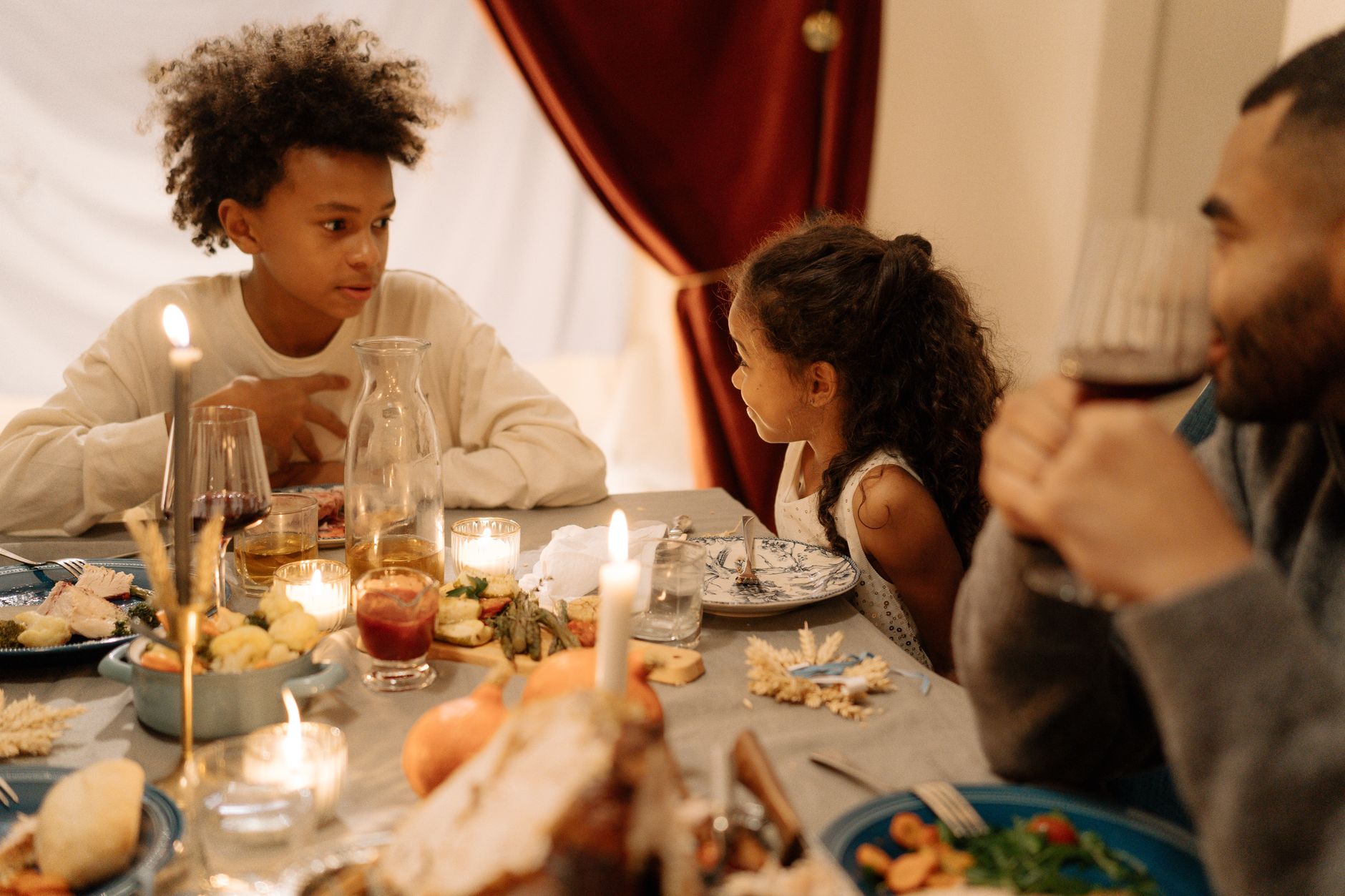
What actually works for us is just talking. Around the dinner table, in the car, at bedtime — we ask each other what was good today. Not “what are you grateful for” in that formal way, just… what was good? Sometimes it’s the chickens doing something funny. Sometimes it’s a really good lunch. Sometimes it’s something surprisingly deep from one of my kids.
You don’t need a program. You just need to keep the conversation going.
6. Curate What Comes Into Your Home
I’m not anti-stuff. We have stuff. But we try to be intentional about what we bring in and why. For our homeschool, that means choosing resources with real purpose — things that will genuinely be used and loved, not just accumulated.
Sites like Rainbow Resource and Timberdoodle are my go-tos for curriculum because I can find things that actually align with how we learn, rather than grabbing whatever’s trending.
For the home in general, we try to follow a loose one-in-one-out policy. Before a birthday or Christmas, we do a toy cleanout together. The kids are part of the decision. It takes the entitlement edge off when they’re actively choosing what to release.
7. Talk Honestly About Money and Wants vs. Needs
My kids know we have a budget. They know we make choices. When one of them wants something at the store, I don’t just say no — I explain. “That’s not in our budget right now” or “we’re saving for something else” or “let’s think about whether you’ll still want it in a week.”
That last one is powerful. Half the time, they forget about it entirely. The other half, they still want it — and then we talk about earning or saving toward it. Either way, they’re learning that wanting something doesn’t mean getting it, and that’s one of the most important things I can teach them.
If you’re thinking about how this connects to the bigger picture of intentional family life, I wrote more about that in my post on intentional parenting — what it actually looks like day to day. It’s one of my favorites.
The Long Game
Here’s what I keep coming back to: gratitude isn’t a trait you install. It’s something that grows in the right conditions — slowly, with repetition, in a life that has enough slowness and realness and noticing built into it.
Consumer culture is going to keep doing what it does. But if our kids are out in the yard catching bugs with their bug collection kit, or sitting with the chickens in the afternoon light, or growing something from seed and waiting on it with patience — they’re building a different kind of foundation.
One that doesn’t crumble the second someone shows them something shiny.
That’s the work. It’s slow and it’s ordinary and most days it doesn’t look like anything special. But I really believe it’s adding up. And maybe on a morning when your kid holds a warm egg in their hand and says “thank you, hen” without being prompted — you’ll believe it too.
You’re doing good, mama. Keep going.
📖 You Might Also Like:
- Intentional Parenting: What It Actually Looks Like Day to Day
- Simple Living with Kids: Practical Tips That Actually Work for Real Families
- Charlotte Mason Nature Study Journal Prompts by Season (For Real Kids Who’d Rather Be Outside)
Frequently Asked Questions
How do I teach my child to be grateful without it feeling forced or preachy?
The most natural way is to build gratitude into everyday life rather than making it a formal lesson. Talk around the dinner table about what was good today, involve kids in real work like gardening or animal care, and model noticing the small good things yourself. Kids absorb more from what they see you do than from anything you tell them.
What are some practical ways to raise grateful kids in a materialistic world?
Give kids real responsibilities that matter — like caring for animals or growing food — so they understand that good things take effort. Limit impulse buying by introducing a ‘think about it for a week’ rule. Do regular toy or item cleanouts together before birthdays and holidays. And slow down enough to notice and name what’s already good in your daily life.
At what age can kids start learning about gratitude?
Even toddlers can start with simple practices — saying thank you, noticing something beautiful outside, helping water a plant. Gratitude is less about age and more about consistent, low-pressure habits built over time. Elementary-age kids can handle deeper conversations about wants vs. needs, budgeting, and the work behind the things they enjoy.
Does limiting screen time really help raise more grateful kids?
It can make a significant difference because so much screen content — including ads, social media, and even kids’ YouTube — is designed to manufacture longing and dissatisfaction. When kids have more time for unstructured outdoor play, creative boredom, and hands-on work, they tend to find satisfaction in simpler things and complain less about what they don’t have.
How do backyard chickens or a garden help kids develop gratitude?
Both connect kids directly to where food comes from and teach them that good things require consistent care and patience. A child who gathers eggs every morning or waits weeks for a tomato to ripen develops a real relationship with effort and reward — which is one of the deepest foundations of genuine gratitude. It’s hard to take breakfast for granted when you’re the one who kept the hens watered.
Leave a Reply