Tide Pool Exploration on Florida’s Gulf Coast With Kids (What to Look For and How to Make It a Real Nature Study)
This post contains affiliate links. I may earn a small commission at no extra cost to you.
There’s a moment that happened at Perdido Key last fall that I keep coming back to. My youngest had been kind of dragging that morning — not really feeling the beach trip, honestly just wanted to stay home with the dog. And then she crouched down near a cluster of rocks at low tide and found a hermit crab shuffling along like he had somewhere important to be. That was it. We were there for two more hours. She didn’t ask for a single screen the rest of the day.
That’s the thing about tide pool exploration — it doesn’t need a curriculum or a lesson plan. The ocean does all the heavy lifting. You just have to know when to go, where to look, and what you’re actually seeing.
If you’re a Gulf Coast family — especially up here in the Pensacola/Northwest Florida area — you might think tide pools are more of a Pacific Coast thing. And it’s true, we don’t have the dramatic rocky intertidal zones you’d see in Oregon or Maine. But what we do have is genuinely incredible if you slow down enough to find it.
What Gulf Coast Tide Pools Actually Look Like
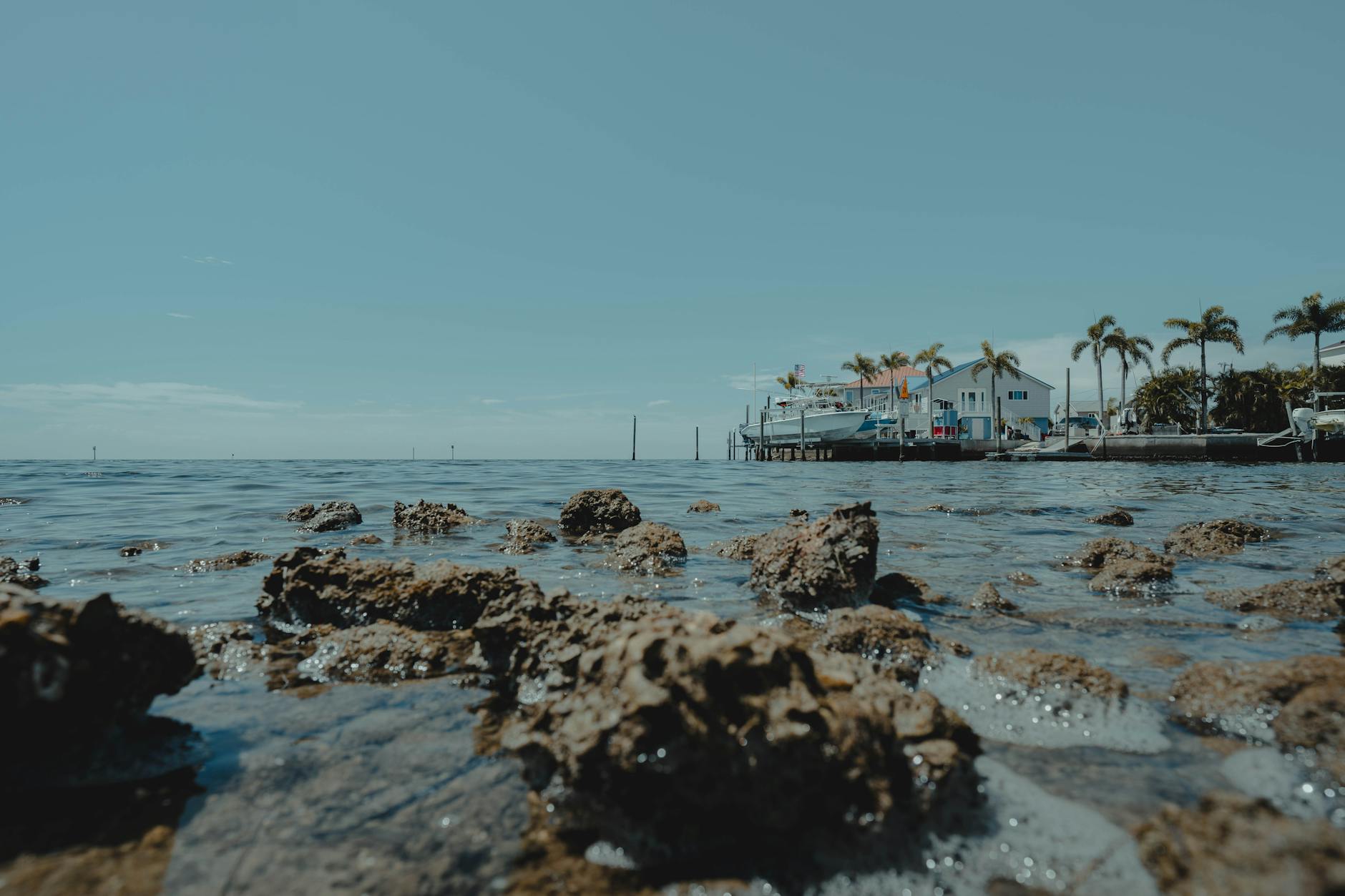
Let’s set expectations in the best possible way: Gulf Coast tide pools aren’t always big dramatic rock formations. Out here, you’re often looking at:
- Shallow sandy pools left behind near rock jetties after low tide
- Seagrass beds exposed at low water near barrier islands
- Shell hash zones — areas where shells collect and small creatures shelter
- Rock and concrete jetties at places like Pensacola Beach, Navarre, Fort Pickens, or the Destin area
- Oyster reefs at lower tidal zones (look but don’t touch — those shells are razor sharp)
The creatures living in these spaces are every bit as fascinating as anything you’d find on a rocky Pacific coast. You just have to get down low and look slowly.
What You’ll Actually Find (and How to Identify It)
This is the part my kids love. Here’s a realistic list of what Gulf Coast families regularly spot in and around tidal zones:
Invertebrates
- Hermit crabs — always a crowd favorite, and there are multiple species here
- Fiddler crabs — the males with the one giant claw are easy to spot near sandy tidal flats
- Blue crabs — usually in seagrass; they move fast, be patient
- Mole crabs (sand crabs) — those little oval guys that disappear into wet sand at the wave’s edge
- Sea urchins — especially near rocky jetties; look but absolutely do not step
- Brittle stars — hiding under rocks in shallow pools, delicate and gorgeous
- Snails and periwinkles — clinging to any hard surface near the waterline
- Barnacles — covering jetty rocks in thick colonies; they’re filter feeders and genuinely fascinating
- Moon jellies — sometimes stranded in shallow pools after tide changes
Fish
- Blennies and gobies — tiny fish that dart around in shallow rocky areas
- Sheepshead juveniles — often near structure and pilings
- Killifish — absolutely everywhere in tidal flats and marsh edges
Birds (Bonus!)
Shorebirds work the same tidal zones your kids are exploring, which makes for incredible observation. Willets, sanderlings, ruddy turnstones (who literally flip shells to find food — kids lose it over this), and great blue herons all hunt tidal areas. Grab a copy of the Sibley Guide to Birds and let your kids try to ID what they see. We have a whole post on Florida backyard birds that’s great prep before a beach trip.
When and Where to Go
Timing is everything. Low tide is your window. Download a free tide chart app (Tides Near Me is a good one) and plan to arrive 30-60 minutes before low tide. You’ll have about an hour to hour and a half of prime exploring time.
Best spots in Northwest Florida:
- Fort Pickens area (Gulf Islands National Seashore) — rocky jetties and shallow pools near the fort
- Pensacola Beach pier area at low tide
- Navarre Beach at the jetty
- Grayton Beach State Park tidal areas
- Johnson Beach on Perdido Key
For families willing to drive a bit further, the rocky outcrops near St. Andrews State Park in Panama City are genuinely excellent for this.
How to Make It a Real Charlotte Mason Nature Study
This is where homeschool families have a real advantage — we can actually stay long enough for real observation instead of racing to the next thing.
Bring a nature journal. I cannot say this enough. We use a simple nature journal and our Faber-Castell watercolors for field sketches. Even my kindergartner can draw a hermit crab with a few coaching prompts. Charlotte Mason believed that children develop real knowledge through direct observation and narration — a tide pool is about as perfect a setting for that as you’ll ever find.
Use a pocket microscope back home. We bring home a small piece of seaweed or a shell with barnacles and look at it under our pocket microscope. The detail kids can see — the texture of barnacle shells, the structure of seaweed — keeps the learning going for days.
Ask narration questions in the car on the way home:
- What’s the most surprising thing you found today?
- How do you think a hermit crab picks a new shell?
- Why do you think those fish were so flat and small?
That conversation is science, language arts, and critical thinking all at once — no worksheet required.
For more outdoor science ideas that don’t need a fancy setup, check out our easy outdoor science experiments post.
What to Bring
Keep it simple — this isn’t an equipment-heavy activity.
- Good kids’ rain boots — perfect for wading in shallow tidal pools without worrying about sharp shells on bare feet
- A bug catcher kit — works beautifully for scooping small tidal creatures for a quick look (always return them exactly where you found them)
- Nature journal and pencils or watercolors
- Non-toxic sunscreen — because Gulf Coast sun is no joke even in the cooler months
- Stainless steel water bottles — stay hydrated, skip the plastic
- A small bucket for temporary observation — fill it with tidal water, not tap
The Golden Rule of Tide Pool Exploring
We have one non-negotiable with our kids: look, observe, sketch, return.
If you pick something up (and gentle handling of hardy creatures like hermit crabs is fine), put it back exactly where it was — same rock, same pool, same orientation. Tide pool ecosystems are fragile even when they look tough. A creature pulled from its habitat and left on dry sand can die within an hour.
We talk about this the same way we talk about our chickens — these are living creatures with real needs, not props. It shapes how kids approach everything in the natural world.
Also — never remove living shells, live sand dollars, or sea stars. It’s actually illegal in many Florida beach areas, and beyond that, it’s just not who we want to be as a family.
Connecting It Back Home
After a good tide pool day, we love to look up what we found together. The Florida Backyard Wildlife guide isn’t beach-specific, but it builds the same habit of identification and curiosity that carries right over to coastal exploration.
We also talk about the water cycle, the moon’s effect on tides (yes, really — my 8-year-old now explains lunar tides to anyone who will listen), and how the same Gulf water that laps our beach connects all the way around Florida and beyond.
That’s the kind of education I wanted when I was a kid — the kind where learning feels like discovery, not obligation. The 1990s childhood we’re trying to give our kids isn’t really about nostalgia. It’s about letting them be genuinely curious in a real, unfiltered world. And there’s no better classroom for that than a quiet tidal flat at low tide with nothing but time and a good pair of boots.
Go find some hermit crabs. Your kids will thank you — probably not in words, but in the look on their faces. That’s enough.
📖 You Might Also Like:
- Educational Florida Beach Activities for Kids (That Don’t Feel Like School)
- Screen-Free Summer Activities for Florida Kids (When They Say They’re Bored)
- Easy Outdoor Science Experiments for Kids in the Backyard (No Lab Required)
Frequently Asked Questions
Does Florida’s Gulf Coast actually have tide pools?
Yes — though they look different from the dramatic rocky pools you’d see on the Pacific Coast. On the Gulf Coast, you’ll find tidal pools near rock and concrete jetties, around oyster reefs, in shallow seagrass areas exposed at low tide, and along sandy flats near barrier islands. Spots like Fort Pickens, Navarre Beach jetty, and St. Andrews State Park in Panama City are particularly good for finding tidal life with kids.
What creatures can kids find in Florida Gulf Coast tide pools?
Quite a lot! Common finds include hermit crabs, fiddler crabs, mole crabs (sand crabs), barnacles, periwinkle snails, brittle stars, sea urchins near rocky jetties, small fish like blennies and killifish, and sometimes moon jellies stranded in shallow pools. Shorebirds like willets, sanderlings, and ruddy turnstones also work the same tidal zones and are great for identification practice.
When is the best time to explore tide pools in Florida?
Low tide is your prime window. Download a free tide chart app and plan to arrive 30-60 minutes before low tide — you’ll have roughly an hour to an hour and a half of the best exploring conditions. Morning low tides are especially nice in the summer since you’ll beat the heat. Florida’s tidal range is smaller than other coasts, so timing matters more here to catch exposed pools.
Is it okay for kids to pick up creatures in tide pools?
Gentle observation is fine for hardy creatures like hermit crabs, but the golden rule is: look, observe, and return everything exactly where you found it — same rock, same pool, same position. Never remove living shells, live sand dollars, or sea stars, which is actually illegal on many Florida beaches. Keep temporary observation in a bucket filled with tidal water (not tap water), and get kids in the habit of treating all wildlife with real respect.
How can I turn tide pool exploring into a homeschool nature study?
A Charlotte Mason approach works beautifully here. Bring a nature journal and have kids sketch what they observe on location — even young children can draw simple creatures with guidance. Use narration questions on the drive home (‘What surprised you most?’) to process what they saw. Back at home, look up species together and use a pocket microscope to examine anything you’ve brought back (like seaweed or a barnacle-covered shell fragment). Tides also open up natural conversations about moon phases, ocean ecosystems, and food chains — rich, real learning with no worksheet required.
Leave a Reply