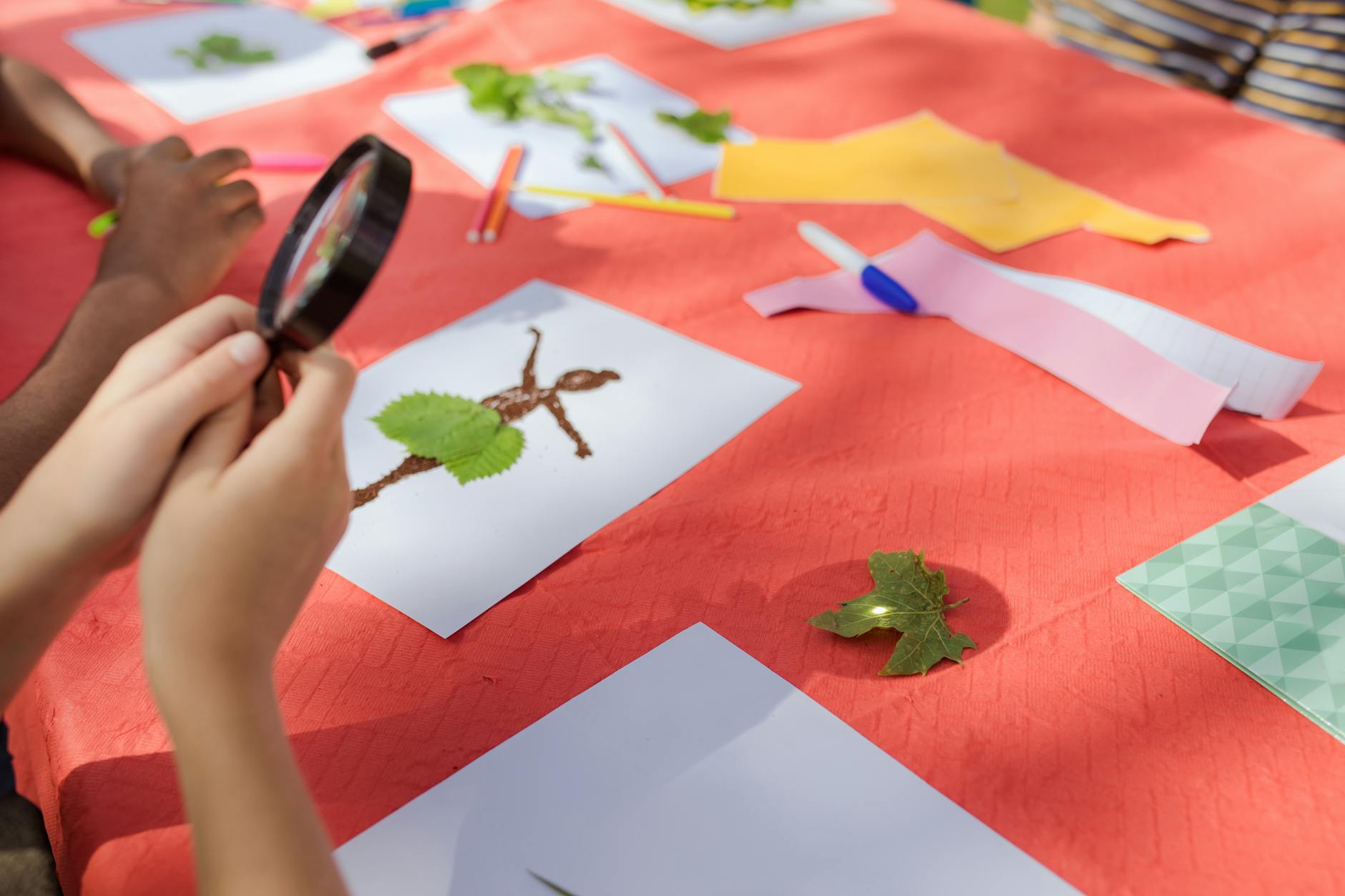
Nature Crafts for Kids Using Backyard Materials (No Store Trip Required)
This post contains affiliate links. I may earn a small commission at no extra cost to you.
Some of my favorite childhood memories involve a pile of sticks, a handful of acorns, and absolutely no adult supervision. Nobody was guiding me toward a “learning objective.” I was just outside, making something, because that’s what kids do when you let them.
These days I try hard to give my kids that same kind of childhood — the kind where the backyard is a supply cabinet and a Saturday afternoon is enough. We homeschool with a Charlotte Mason approach, so nature is already woven into our days, but honestly these crafts aren’t just for homeschoolers. They’re for any family who wants to spend less time at the craft store and more time outside.
Here in the Florida Panhandle, we’ve got a ridiculous amount of good material to work with year-round — pine cones the size of your fist, Spanish moss, bay leaves, magnolia pods, chicken feathers from our little backyard flock, and enough sticks after a summer storm to build a small village. If you’re in Northwest Florida, you know exactly what I mean.
Let’s get into it.
First: Make Collecting Part of the Craft
Before you even sit down to make anything, send the kids outside with a mission. This part matters just as much as the actual crafting — maybe more.
Give them a basket or paper bag and ask them to find:
- 5 different kinds of leaves
- Sticks of different sizes
- Anything interesting on the ground (seed pods, bark, pebbles, feathers)
- Something that smells good
- Something that surprised them
That last one always leads to the best conversations. One of my kids came in last fall with a shed cicada shell and was absolutely beside himself about it. That’s Charlotte Mason nature study happening in real time — no worksheet needed.
If your kids are old enough to start noticing what they’re finding (not just grabbing everything), a nature journal is a beautiful addition to this routine. Mine sketch and label what they collected before we start crafting. It takes maybe ten minutes and it makes the whole thing feel more intentional.
Nature Crafts That Actually Work (And Hold Together)
Leaf and Feather Sun Catchers
This one is simple enough for kindergarteners and pretty enough that I’ve kept a few on our windows for months.
What you need: Fresh leaves, small feathers, contact paper (two pieces), scissors
Peel the backing off one piece of contact paper and lay it sticky-side-up on the table. Kids arrange their leaves, feathers, and any small flat finds on top. Then you press the second piece of contact paper over it, sticky sides together, trim the edges into a shape (circle, sun, whatever), and hang it in a window.
The light coming through pressed magnolia leaves or Florida bay leaves is genuinely beautiful. And if you’ve got backyard chickens like we do, those pretty feathers your hens leave in the run? Perfect for this. We’ve used feathers from our Buff Orpingtons and the colors are just gorgeous.
Stick Frame Nature Art
Find four similarly-sized sticks and tie them into a square or rectangle frame using twine or thin strips of bark. Then weave leaves, grasses, or Spanish moss through the frame — or use it as a “canvas” to attach small nature finds with a dab of hot glue.
This is a great one for older elementary kids (think 3rd–5th grade) who want something more structured. My son spent a whole afternoon on one of these last spring and it’s still hanging on his bedroom wall.
Charlotte Mason tie-in: Have them narrate what they chose and why. What story does the frame tell about your yard right now, in this season?
Pine Cone Bird Feeders (The Classic, For Good Reason)
Roll a pine cone in peanut butter (or sunflower seed butter if you’re nut-free), then in birdseed, and hang it from a tree branch with twine. Simple. Effective. Kids love it every single time.
The real magic is what happens next — grab your Sibley Birds guide and see who comes to visit. We’ve spotted Carolina wrens, blue jays, and the occasional red-bellied woodpecker right off our back porch. For kids who are in that curious “what’s that bird?” phase, this turns into an ongoing nature study all on its own.
Pressed Leaf Watercolor Cards
This one combines nature collection with a little art lesson.
Have the kids arrange leaves on watercolor paper and press down firmly, then paint over and around the leaves with watercolors. Lift the leaves while the paint is still slightly wet — they leave behind a perfect silhouette. It looks like something you’d see in a boutique, and it takes about 20 minutes.
We use Faber-Castell watercolors because they’re non-toxic and the colors stay vibrant even on cheaper paper. My kids have made these as birthday cards, thank-you notes, and just for fun.
Mud Paint and Bark Canvases
Okay, this one requires a bit of a “yes” mindset from the grown-up, but stay with me.
Dig up a little dirt, add just enough water to make a thick paste, and let the kids paint with it on pieces of bark or flat rocks using sticks, pine needles, or their fingers as brushes. Add berry juice or crushed flower petals if you want more color.
This is pure 1990s backyard energy. No instructions needed. Just step back and watch what they make. We tie this into our Easy Outdoor Science Experiments for Kids in the Backyard (No Lab Required) days when we want a longer outdoor block — the kids naturally start asking questions about soil color, texture, and why wet dirt looks different than dry dirt.
Seed Pod and Twig Sculptures
Collect a mix of seed pods (magnolia pods are incredible for this in Florida), acorns, small pine cones, and twigs. Use a low-temp hot glue gun (with supervision) or even just press into a ball of air-dry clay as a base.
Kids can make little forest creatures, abstract sculptures, or tiny imaginary scenes. My daughter made a “fairy house” village last winter that kept her busy for an entire rainy afternoon.
For kids who need a little more guidance getting started, Timberdoodle has some wonderful open-ended craft kits that pair beautifully with natural materials if you want to supplement.
A Few Practical Notes
Bug check: We live in Florida. Before bringing materials inside, give everything a quick shake outside and check for fire ants, especially on anything that was on the ground. A bug catcher kit is actually handy here — some kids would rather study what they find than toss it, and that’s a win.
Preserve your finds: Press leaves between heavy books for a few days before using them in crafts — they hold up much better and don’t curl or crumble as quickly.
Chicken connection: If you have backyard chickens, get the kids in the habit of collecting shed feathers for crafts. It’s a sweet way for them to feel connected to the flock. Our kids know which feathers belong to which hen, and it makes the crafts feel more personal. If you’re just getting started with chickens, the Storey’s Guide to Raising Chickens is the one I always recommend, and the Kid’s Guide to Chickens is wonderful for getting the kids involved in the actual care side of things.
You Already Have Everything You Need
I really do believe that one of the kindest things we can do for our kids is resist the urge to make childhood so curated. The best nature crafts don’t come from a kit — they come from twenty minutes outside with a paper bag and a curious kid.
If you want more ideas for getting outside with your crew, check out Screen-Free Summer Activities for Florida Kids (When They Say They’re Bored) — it pairs perfectly with a nature crafting afternoon. And if you’re heading to the coast anytime soon, Educational Florida Beach Activities for Kids (That Don’t Feel Like School) has some great ideas for collecting and observing on the beach too.
Now go send your kids outside. The backyard is waiting.
📖 You Might Also Like:
- Easy Outdoor Science Experiments for Kids in the Backyard (No Lab Required)
- Screen-Free Summer Activities for Florida Kids (When They Say They’re Bored)
- Educational Florida Beach Activities for Kids (That Don’t Feel Like School)
Frequently Asked Questions
What are the best backyard materials for nature crafts with kids?
Sticks, leaves, pine cones, seed pods, feathers, bark, pebbles, and dried grasses are all fantastic. In Florida specifically, magnolia pods, Spanish moss, and large pine cones are especially fun to work with. The key is to let kids collect freely — they’ll find things you never would have noticed yourself.
How do I preserve leaves and natural materials for crafts?
Press fresh leaves between two heavy books for 3–5 days before using them in crafts. This flattens them and removes moisture so they don’t curl, crack, or mold. For seed pods and pine cones, just let them air dry completely before storing or using them in projects.
Are nature crafts a good fit for Charlotte Mason homeschooling?
Absolutely — Charlotte Mason placed enormous value on nature study and hands-on observation, and nature crafts fit beautifully into that philosophy. Pairing crafting with nature journaling, narration, or bird/plant identification turns a fun afternoon into rich, living education without it feeling like school.
What age are nature crafts with backyard materials good for?
Most of these crafts work well for kids ages 4–12, with some adaptation. Younger kids (K–1) love the sensory aspects like mud paint and leaf sun catchers. Older kids (grades 3–5) tend to enjoy more structured projects like stick frames and seed pod sculptures. The collecting and exploring part works for every age.
Can backyard chicken feathers be used in nature crafts?
Yes! Shed feathers from backyard chickens are wonderful for crafts — they’re free, unique to your own flock, and kids love the personal connection. Give feathers a gentle shake to remove debris, and let them air out before using. They work especially well in sun catchers, collages, and decorative wreaths.
Leave a Reply