How to Teach Kids About Nutrition the Homestead Way (From the Backyard to the Table)
This post contains affiliate links. I may earn a small commission at no extra cost to you.
Here’s something nobody tells you when you start homeschooling: the best nutrition lesson you’ll ever give your kids happens before breakfast.
It happens when your seven-year-old runs out to the coop in her rain boots, collects warm eggs with her own hands, and then cracks them into a cast iron pan twenty minutes later. She doesn’t need a worksheet telling her eggs have protein. She knows it — the way kids know things when they’ve lived it.
That’s the whole philosophy behind how we approach nutrition in our homeschool. We’re not sitting down with a food pyramid chart (does anyone even use those anymore?). We’re learning about food by growing it, raising it, cooking it, and eating it together. Very 1990s. Very Charlotte Mason. Very us.
If you’ve been wondering how to teach kids about nutrition in a way that actually sticks — especially with a homestead-leaning, nature-based homeschool — I hope this gives you some real, practical ideas you can start using this week.
Start Where the Food Starts: The Backyard
The single most powerful nutrition lesson we’ve ever given our kids costs nothing and requires no curriculum. It’s just this: let them see where food comes from.
When kids understand that a tomato grew from a tiny seed in the dirt, or that the egg in their lunchbox came from a hen they named and fed — food becomes real to them in a way no poster or documentary can replicate.
Chickens as Living Nutrition Teachers
Our little flock has been one of the best homeschool investments we’ve ever made — not just for eggs, but for everything that comes along with it. When the kids help care for the chickens, they naturally start asking questions: Why do the hens need oyster shell? What makes the yolk so orange? Why is our egg yolk darker than the ones at the grocery store?
Those are real science and nutrition conversations happening organically, sparked by curiosity rather than a lesson plan. We’ve loved using Storey’s Guide to Raising Chickens as a family reference book — my older kids can actually flip through it on their own — and the Kid’s Guide to Keeping Chickens has been fantastic for my elementary-age ones who want something written just for them.
We’ve talked about how pasture-raised hens produce eggs with more omega-3s. We’ve compared our deep orange yolks to pale store-bought ones. We’ve talked about what the hens eat and how that affects what we eat. That’s nutrition education. And nobody groaned or asked when it would be over.
If you’re curious about getting more from your flock nutrition-wise, I also wrote about how to get chickens to lay more eggs naturally — some of it ties right into what the hens are eating and why it matters.
Gardening Together in a Florida Backyard
Now, I’ll be honest — gardening in Northwest Florida is humbling. The heat is real, the sandy soil is a challenge, and our growing season looks nothing like what you’d see in a northern homesteading book. But that’s actually a gift when it comes to teaching kids. We grow through the fall and winter, take stock in summer, and the kids learn real-world lessons about seasons, patience, and why certain foods grow where they grow.
Getting kids involved with a seed starting kit and their own pair of garden gloves makes such a difference. There’s something about ownership — this is MY row of beans — that makes a child actually want to eat what they grew. We’ve had kids who claimed to hate vegetables happily eat cherry tomatoes warm off the vine because they picked them themselves.
Bring It Into Your Homeschool Intentionally
Okay, so you’ve got the backyard piece. But how do you actually weave nutrition into your school day in a Charlotte Mason-friendly way?
Nature Journaling Food and Plants
One of my favorite overlaps between nutrition and nature study is having the kids sketch and journal what they’re growing and eating. My daughter has entire pages in her nature journal dedicated to our garden plants — labeled drawings of bean plants, notes on when we harvested, observations about what the hens ate versus what we ate. She used her Faber Castell watercolors to paint a beautiful cross-section of a sweet potato we dug up last fall.
This is living science. It’s real observation, real learning, and it builds a relationship with food that lasts.
Simple Kitchen Lessons That Teach Nutrition Naturally
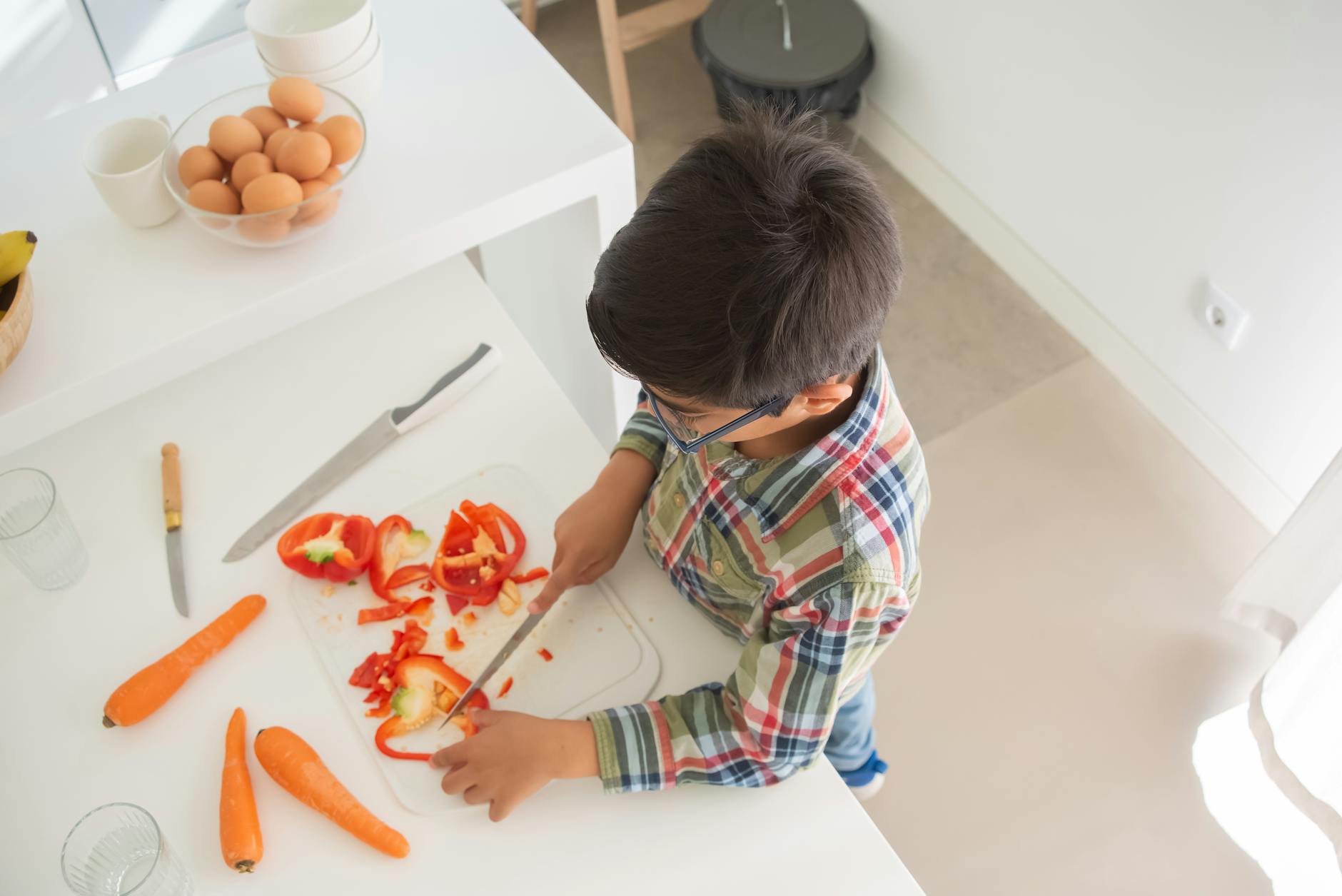
We cook together. That sounds simple, but it’s probably the most underrated homeschool tool in existence. When kids are in the kitchen — measuring, stirring, tasting — they’re learning:
- Where nutrients come from and what they do (“Why do we add butter to the vegetables?” “Because fat helps your body absorb the vitamins in them, babe.”)
- How to read an ingredient label
- What whole food looks like versus processed food
- Why what we eat actually matters for how we feel
Our cast iron skillet sees more homeschool action than most of our curriculum materials, honestly.
For composting food scraps, which ties nutrition back to the garden cycle beautifully, check out how to teach kids about composting with a simple worm bin setup. My kids fully understand now that food waste feeds the soil that feeds our plants that feed us. That’s a complete nutrition ecosystem lesson right there.
Making It a Little More Formal When Needed
For families using the Florida PEP scholarship, nutrition can absolutely count toward your science documentation hours. We log it under life science — food systems, human biology, ecology of food. If you want to make sure you’re documenting it well, I have a whole post on how to document homeschool for the Florida PEP scholarship that breaks down how we keep it simple without losing our minds.
The 1990s Secret Ingredient: Less Overthinking
Here’s the thing I keep coming back to. Kids in the 80s and 90s weren’t given nutrition curricula. They weren’t tracked and optimized. They ate what was on the table, helped in the garden when told to, and went outside until the streetlights came on.
And most of them were fine.
I think we’ve overcomplicated this. The goal isn’t for your eight-year-old to be able to explain macronutrients on a quiz. The goal is for them to grow up with a healthy relationship with real food — to know that food comes from somewhere, that what we eat matters, that cooking is a skill worth having, and that eating together around a table is one of the best things a family can do.
That’s what the homestead approach gives you. Not a perfect diet. Not a nutrition expert at age nine. Just kids who know their food, respect where it comes from, and actually enjoy eating it.
We also try to keep what goes on our food as clean as what goes in it — which is why we use Grove Collaborative for our kitchen and household cleaners, and Wondercide around the yard and coop instead of conventional pesticides. All of it is connected.
A Few Practical Ideas to Start This Week
- Let your kids collect eggs and ask questions about what they notice
- Plant one thing — even in a pot — and watch it together
- Cook one meal a week with your kids fully involved in prep
- Start a food page in their nature journal
- Visit a local farmers market and let them ask the growers questions
- Talk at the dinner table about what’s on the plate and where it came from
None of this is fancy. All of it works.
Teaching kids about nutrition doesn’t need a curriculum box or a color-coded food chart on the refrigerator. It needs time, intention, and a willingness to let messy, real-life experiences be the teacher. Our backyard, our chickens, our garden, and our kitchen table have done more for our kids’ understanding of food than anything I could have purchased or planned. And honestly? That’s the most Charlotte Mason thing I can think of.
Start where you are. Grow what you can. Cook together. The rest follows naturally.
📖 You Might Also Like:
- How to Get Chickens to Lay More Eggs Naturally: What Actually Works for Our Florida Flock
- How to Teach Kids About Composting: A Simple Worm Bin Setup for Curious Families
- Best Homeschool Science Experiments in the Backyard (No Fancy Equipment Needed)
Frequently Asked Questions
How do I teach kids about nutrition without making it a boring lesson?
The best way is to make food tangible — let kids grow something, collect eggs, or help cook a meal. When children are involved in where food comes from and how it’s prepared, nutrition becomes something they experience rather than memorize. Hands-on activities like gardening, raising chickens, and cooking together are far more effective than worksheets or lectures.
Can teaching nutrition count toward our homeschool science hours for the Florida PEP scholarship?
Yes! Nutrition fits naturally under life science — topics like food systems, human biology, plant biology, and ecology of food all qualify. Make sure you’re documenting activities like garden journaling, cooking projects, and animal care. Keep a simple log with dates and descriptions and you’re covered.
What age can kids start learning about nutrition in a homestead homeschool?
Honestly, from toddlerhood. Even very young children can help collect eggs, water plants, and stir ingredients in the kitchen. The concepts grow with the child — a five-year-old learns that eggs come from hens, while a ten-year-old can explore why pasture-raised eggs have more nutrients. You don’t need to wait until they’re ‘old enough’ for a formal lesson.
How do backyard chickens help teach kids about nutrition?
Chickens are incredible living classrooms. Kids naturally ask questions about what hens eat and how it affects the eggs they produce. Comparing the deep orange yolks of pasture-raised eggs to pale store-bought ones sparks real conversations about nutrients, diet, and food quality. Caring for chickens also builds responsibility and a deeper respect for where food comes from.
What are some simple homestead-style nutrition activities for elementary-age kids?
Try having kids sketch and watercolor the foods they grow in a nature journal, cook one meal together per week with full kid involvement in prep, start a small container garden and track growth, visit a local farmers market, or set up a simple compost bin to show the full food cycle. All of these are low-cost, high-impact, and work beautifully within a Charlotte Mason or nature-based homeschool approach.
Leave a Reply