Blog

  • Backyard Chicken Coop Ventilation in a Hot Climate: What Actually Works (From a Florida Mama Who Learned the Hard Way)

    Backyard Chicken Coop Ventilation in a Hot Climate: What Actually Works (From a Florida Mama Who Learned the Hard Way)

    Backyard Chicken Coop Ventilation in a Hot Climate: What Actually Works (From a Florida Mama Who Learned the Hard Way)

    🌿 The Short Version: Proper coop ventilation is the single most important thing you can do to keep your flock safe in a hot climate like Florida — more important than shade, more important than cold water, more important than fancy gear. This guide walks you through exactly what to look for, what to fix, and what we’ve done in our own backyard to keep our girls thriving through the brutal Gulf Coast summers.

    This post contains affiliate links. I may earn a small commission at no extra cost to you.

    Y’all, I almost lost a hen our first Florida summer. She wasn’t sick. She wasn’t injured. She was just… hot. And I had no idea our coop was basically a sauna with nesting boxes.

    We moved to the Pensacola area with big homesteading dreams and a flock of five hens who had survived perfectly fine in a mild climate. But Northwest Florida in July is a different animal entirely. The heat index regularly hits 105°F, the humidity wraps around you like a wet blanket the second you step outside, and if your coop doesn’t have serious airflow? Your chickens are in real danger.

    I spent a whole afternoon that summer reading everything I could find, talking to other local chicken keepers, and basically rebuilding our ventilation setup from scratch. What I learned is pretty simple once you understand it — but nobody really explains it well for hot, humid climates specifically. So let me save you the panic and the scramble.

    Why Ventilation Matters More Than Almost Anything Else

    Here’s the thing most beginner chicken resources get wrong: they treat ventilation like it’s about temperature. It’s not just about temperature. In a humid climate like ours, ventilation is about moisture management just as much as heat.

    Chickens release moisture through their breath and droppings constantly. In a closed or poorly ventilated coop, that moisture builds up fast — and in a hot climate, you end up with a hot, wet, ammonia-filled box. That combination is genuinely dangerous. Respiratory illness spreads quickly in those conditions, and heat stress can become fatal before you even realize what’s happening.

    The goal is cross-ventilation: fresh air moving through the coop, not just a hole in the wall somewhere.

    The Basic Rule: Way More Ventilation Than You Think You Need

    Most general chicken-keeping guides say to allow 1 square foot of ventilation per 4 birds. In Florida? Triple that. At minimum.

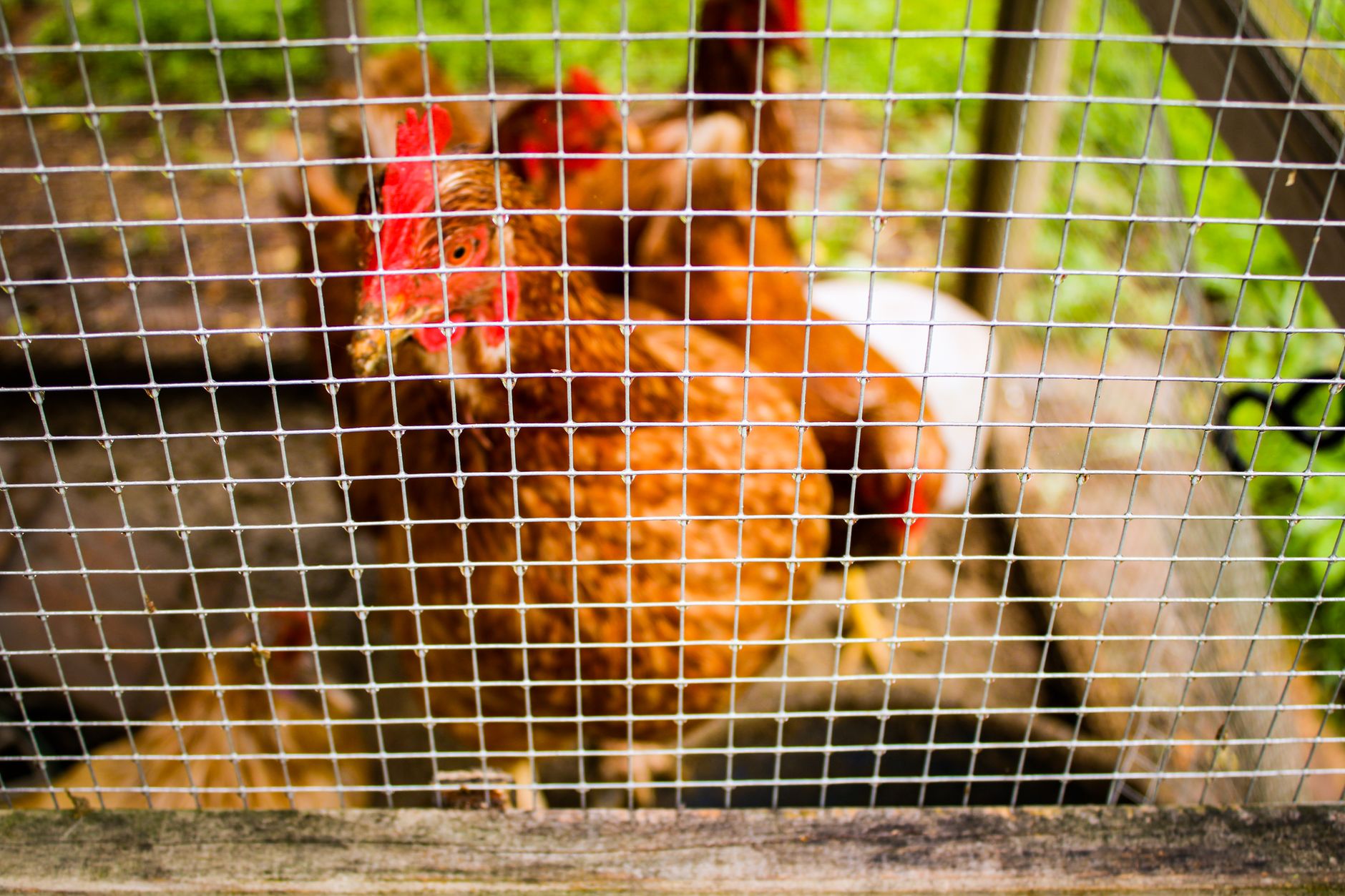
    Our coop has open hardware cloth (not chicken wire — hardware cloth is sturdier and predator-resistant) along the entire upper third of two opposite walls. In the summer, we also open the pop door and leave it open through the night using an automatic coop door so we don’t have to be out there at 5am. That door has been genuinely life-changing — for the chickens and for me.

    If you’re in a cold climate, you’d worry about drafts. In Florida, we’re basically chasing airflow wherever we can get it.

    What Good Coop Ventilation Actually Looks Like

    High Vents, Not Low Ones

    Heat rises. Hot air and ammonia both accumulate near the ceiling of your coop, so that’s where your primary venting needs to be. Vents low on the wall will let in drafts near your birds’ bodies at night — not ideal — but vents up high let the worst of the heat and moisture escape.

    We have hardware cloth windows on opposite walls (cross-ventilation!) and a vented roof ridge. The ridge vent alone made a noticeable difference.

    North and South Facing Openings

    In Northwest Florida, our prevailing breeze tends to come from the south in summer. Positioning your main open vents to catch that breeze means you’re working with the Gulf Coast climate instead of against it. Pay attention to where the wind usually comes from on your property — it matters.

    Shade the Coop Itself

    Ventilation works a lot harder when the coop itself isn’t absorbing full sun all day. We have our coop positioned under a big oak tree and we’ve also added a shade cloth over the run. A shaded coop stays meaningfully cooler, which means your ventilation doesn’t have to do as much heavy lifting. If you want to go deeper on this, I wrote a whole post about how to keep chickens cool in Florida summer heat — it covers shade, water, and a few other tricks that actually move the needle.

    What We Changed in Our Coop (Real Stuff, Not Just Theory)

    Okay here’s what we actually did, step by step, after that scary summer.

    1. Replaced solid wall sections with hardware cloth.

    We basically made the top half of two opposing walls open-air. We used 1/2 inch hardware cloth stapled in and framed out with wood. Total game changer.

    2. Added a gable vent at the peak of the roof.

    This cost almost nothing and lets that hot, rising air actually escape instead of just sitting up there baking everything below it.

    3. Switched to nipple waterers.

    This sounds unrelated to ventilation but hear me out — traditional open waterers contribute to interior humidity. A good chicken waterer with nipples keeps the water contained, reduces the moisture in the air, and also keeps the water cleaner in the heat. Win all around.

    4. Deep litter with diatomaceous earth.

    We use the deep litter method in our coop and sprinkle food grade diatomaceous earth into the bedding regularly. It helps control moisture, absorbs ammonia, and keeps the pest load down — all of which reduce the burden on your ventilation system.

    5. Installed the automatic door.

    Seriously. If you don’t have one and you live somewhere hot, this is worth every penny. Our hens can get fresh air all night instead of being shut in from dusk to dawn.

    Bringing the Kids Into It

    I’ll be honest — coop maintenance is one of my favorite parts of homeschooling, and not just because someone else is doing the scooping (though that’s a perk). My kids genuinely love caring for the chickens, and something like rethinking the coop’s airflow turned into a whole little unit on weather, biology, and building.

    We talked about why hot air rises (hello, science!), drew diagrams of how cross-ventilation works, and the kids helped me measure and cut the new hardware cloth sections. It’s the kind of hands-on learning that a Charlotte Mason approach is all about — real problems, real solutions, real work.

    If your kids are getting into chickens too, Storey’s Guide to Raising Chickens is the reference book I reach for constantly, and there’s also a great kid-friendly chicken guide that my older one has basically memorized.

    For choosing breeds that handle Florida heat well in the first place — which absolutely affects how much they struggle with a warm coop — check out my post on best chicken breeds for Florida heat and humidity. Starting with the right birds makes everything easier.

    A Few Things That Don’t Actually Help (So You Can Skip Them)

    • Box fans blowing into a closed coop: Moving hot, moist air around doesn’t help. You need fresh air exchange, not recirculation.
    • Misters inside the coop: Great in the run, not in the coop. You’ll spike the humidity and make things worse.
    • Tiny windows that look “ventilated”: If the air can’t move through, it doesn’t count. Two small windows on the same wall does almost nothing compared to two openings on opposite walls.

    You’ve Got This

    Keeping chickens in Florida is absolutely doable — and so rewarding — but you have to build and think for this climate, not the one the generic coop kit was designed for. Once we got our ventilation right, our flock transformed. They’re happier, healthier, and way more fun to watch scratch around in the yard on a hot August morning.

    If you’re just getting started or troubleshooting a struggling flock, start with airflow. Everything else comes after. Your chickens will thank you — probably by leaving you a pile of eggs on the nesting box, which is basically a standing ovation in chicken.


    📖 You Might Also Like:

    Frequently Asked Questions

    How much ventilation does a chicken coop need in a hot climate?

    In a hot, humid climate like Florida, you need far more ventilation than standard guides suggest. Aim for at least 1 square foot of ventilation per bird — and honestly, in Gulf Coast heat, more is better. The key is cross-ventilation: open vents on opposite walls so fresh air actually flows through, not just a hole in one wall.

    Should a chicken coop be open or closed in hot weather?

    In hot climates, your coop should be as open as safely possible during summer. The upper portions of walls are ideal candidates for hardware cloth panels that allow maximum airflow while keeping predators out. Many Florida chicken keepers leave the pop door open overnight (using an automatic door for safety) so birds can access fresh air all night long.

    What is the best coop design for Florida heat?

    The best coop design for Florida heat prioritizes shade, cross-ventilation, and elevated positioning. Replace solid upper wall sections with hardware cloth on two opposing walls, add a ridge or gable vent at the roof peak, and position the coop under tree shade or use shade cloth. Avoid enclosed designs made for cold northern climates.

    Does coop humidity matter as much as temperature for chickens?

    Yes — humidity is actually a huge factor, especially in the Southeast. High humidity combined with heat stresses chickens faster than dry heat alone. Moisture from droppings and breath builds up quickly in a poorly ventilated coop, leading to respiratory illness and ammonia buildup. Good airflow manages both heat and humidity simultaneously.

    Can I use a fan to ventilate a chicken coop in summer?

    A fan can help move air, but only if the coop has actual openings for fresh air to enter and stale air to exit. A fan blowing inside a closed coop just recirculates hot, humid air. For best results, use a fan to enhance cross-ventilation you’ve already set up — not as a substitute for proper ventilation design.
  • How to Keep Chickens Cool in Florida Summer Heat (What Actually Works)

    How to Keep Chickens Cool in Florida Summer Heat (What Actually Works)

    How to Keep Chickens Cool in Florida Summer Heat (What Actually Works)

    🌿 The Short Version: Florida summers can be genuinely dangerous for backyard chickens — heat stress is real and it can happen fast. This post walks you through the practical steps we use to keep our flock safe and comfortable from June through September, including coop setup, hydration tricks, and daily management habits that actually make a difference.

    This post contains affiliate links. I may earn a small commission at no extra cost to you.

    If you’ve ever walked out to your coop on a July afternoon in Northwest Florida and found your hens standing with their beaks wide open, wings out, panting — yeah. That’s heat stress, and it is not a drill.

    We’re talking 95°F with 90% humidity on a regular Tuesday. Florida summers are no joke, and for backyard chickens, that combination of heat and moisture is genuinely more dangerous than a cold snap ever would be. Our flock has been through a few summers now and we’ve learned a lot — some of it the hard way. So if you’re new to keeping chickens down here, or you’ve had a rough summer already, let me share what’s actually worked for us.

    Why Florida Heat Hits Chickens So Hard

    Chickens don’t sweat. They regulate their body temperature by panting and holding their wings away from their bodies to release heat. When the air temperature gets close to their body temperature — around 105°F internally — they simply can’t cool down fast enough. Add Florida humidity and the air itself stops cooperating.

    Heat stress leads to reduced egg production, poor appetite, and in serious cases, death. Heavy breeds like Buff Orpingtons and Easter Eggers feel it more than lighter Mediterranean breeds. (If you’re still picking your flock, I’ve got a whole post on Best Chicken Breeds for Florida Heat and Humidity (What Actually Thrives Down Here) — definitely worth reading before you buy chicks.)

    The good news: with a little preparation and some daily habits, you can get your flock through summer in good shape.

    Start With the Coop: Airflow Is Everything

    If your coop is tight and poorly ventilated, nothing else you do will be enough. Heat builds in enclosed spaces and a hot coop overnight is just as dangerous as a hot yard during the day.

    What we’ve done to our coop for ventilation:

    • Added hardware cloth panels high on the walls (hot air rises — you want vents near the top)
    • Made sure the roost bars aren’t directly in front of the vents so there’s no draft on sleeping birds, but airflow is still moving
    • Oriented the coop so prevailing Gulf breezes can move through
    • Painted the exterior a light color to reflect heat

    We also installed an automatic coop door a while back and it’s been a game changer — the girls can get outside early in the morning before it gets brutal, and we’re not running out there at 5 AM to open up.

    Shade, Shade, and More Shade

    This one sounds obvious but it’s worth saying clearly: your chickens need access to deep shade all day long, not just during peak hours. Morning sun in July in Florida is already intense by 9 AM.

    Natural shade from trees is best — a live oak or a big crape myrtle does more than a tarp ever could because it doesn’t trap heat underneath. If you’re working with a bare yard, shade cloth stretched over the run (70% block or higher) makes a real difference.

    Our girls also love to scratch around under our back deck. It stays noticeably cooler under there, and they’ve claimed it as their summer headquarters. We just roll with it.

    Keeping Water Cold (This Is a Big One)

    Chickens drink significantly more in summer — sometimes two to three times their normal intake. If that water gets warm and stagnant, they’ll drink less and dehydration makes heat stress much worse.

    A few things that work well for us:

    • Nipple waterers keep the water cleaner and cooler longer than open bowls. We use nipple-style chicken waterers and check them every morning.
    • Frozen water bottles dropped into the water container keep temps down for hours
    • Multiple water stations — don’t make them walk across a hot yard to find a drink
    • Refresh water in the afternoon, not just in the morning — afternoon water in July is basically a warm bath by 3 PM

    We also add a little apple cider vinegar to the water periodically (just a tablespoon per gallon in a plastic waterer, not metal) for general gut health support.

    Frozen Treats and Electrolytes

    This is the part the kids love. Frozen watermelon chunks, frozen corn, even just a block of ice with scratch grain or berries frozen inside — our hens go absolutely wild for these on hot afternoons, and it genuinely helps bring their core temperature down.

    It’s turned into a whole summer routine for us. The kids are responsible for making frozen treat blocks for the chickens, which honestly fits right into our nature-based homeschool rhythm. They observe the chickens, take notes in their nature journals, and have started doing little experiments — which treat do the hens prefer? Do they go for the watermelon or the corn first? Real science, right there in the backyard.

    You can also add electrolyte powder to their water during extreme heat events. Look for poultry-specific electrolytes at your local feed store — Tractor Supply usually carries them.

    Keep the Coop Dry and Treated

    Moisture plus heat equals a miserable environment, and it also creates conditions for mites and respiratory issues. We do a deep clean of the coop before summer really kicks in and dust the bedding and corners with food-grade diatomaceous earth. It helps with moisture control and keeps pests down without any harsh chemicals, which matters to me.

    We also spray the outside perimeter of the coop and run with Wondercide — it’s our go-to for pest control around the yard in general, and it’s safe around the kids and our labradoodle.

    Time Management: Work With Florida’s Schedule

    Florida summers have a rhythm to them and once you lean into it, managing the flock gets a lot easier.

    • Morning chores happen early. We do feed, water checks, and egg collection before 9 AM when possible.
    • Afternoon is rest time — for the chickens and honestly for us too. The girls go find shade and stay still. We’re usually inside doing our quieter school work or reading aloud during the hottest part of the day.
    • Late afternoon brings the thunderstorms — almost every day in summer. The rain actually cools things down nicely and the chickens know to head in when the sky turns.
    • Evening is active time again. Once the sun drops behind the tree line, everyone perks back up. It’s the nicest part of a Florida summer day, and free range time in the evening has become one of our favorite family rhythms.

    If you’re raising chickens alongside a Charlotte Mason lifestyle, this seasonal rhythm ties in beautifully. Observation, patience, working with nature instead of against it — Charlotte Mason Nature Table Ideas by Season has been something we’ve pulled from for keeping the kids engaged with what the chickens are doing throughout the year too.

    Signs of Heat Stress to Watch For

    Know what you’re looking at so you can act fast:

    • Panting with beak open — early sign
    • Wings held away from body — normal cooling behavior, but watch closely
    • Pale or discolored comb — more serious
    • Lethargy, stumbling, or not moving — emergency situation

    If you see a hen in serious distress, bring her inside to a cool (not cold) space, offer water, and wet her legs and comb with cool water. Don’t dunk her in ice water — the shock can make it worse. Most birds recover quickly if you catch it early.

    For deeper reading on flock management and health, Storey’s Guide to Raising Chickens is the reference book we keep on the shelf, and if your kids want their own chicken resource, the Kid’s Guide to Keeping Chickens is genuinely wonderful — mine have read it cover to cover.

    You’ve Got This, Mama

    Florida summers are intense, but I promise — once you get a system down, it becomes second nature. We do our morning check, we freeze some treats, we make sure the water is cold, and we trust that our hens know how to find the shade. Most days it’s totally fine. The really brutal weeks (usually late July through mid-August) just require a little extra attention.

    And honestly? Watching your kids learn to care for living things through a Florida summer — to be observant, to be responsible, to understand that animals depend on you — that’s exactly the kind of real-life education we chose this path for. A sweaty afternoon with a frozen watermelon block and a flock of happy hens is my kind of homeschool.

    If you’re just getting started with chickens and want to make sure you’ve got the right breeds for our climate, don’t skip Best Chicken Breeds for Florida Heat and Humidity — it’ll save you a lot of heartache.

    Stay cool out there. 🌿


    📖 You Might Also Like:

    Frequently Asked Questions

    At what temperature do chickens start experiencing heat stress?

    Chickens begin showing signs of heat stress when temperatures rise above 90°F, especially when combined with high humidity. Florida’s combination of heat and moisture makes it particularly dangerous. Watch for open-mouth panting and wings held away from the body as early warning signs.

    How do I keep my chicken coop cool in Florida?

    Ventilation is the most important factor. Make sure your coop has hardware cloth vents near the top of the walls so hot air can escape. Add shade over the run with shade cloth or trees, use light-colored exterior paint to reflect heat, and consider an automatic coop door so chickens can get outside early in the cooler morning hours.

    What can I give chickens to help them stay cool in summer?

    Frozen treats work really well — frozen watermelon chunks, frozen corn, or a block of ice with scratch grain frozen inside are all big hits. Cold, fresh water refreshed multiple times a day is essential. You can also add poultry electrolytes to their water during extreme heat events, available at most feed stores.

    Should I use a fan in my chicken coop in summer?

    A fan can help with airflow in a larger coop, but it’s not a substitute for proper ventilation. Make sure the fan is moving air through the coop rather than just circulating hot air around. Box fans mounted in a window or vent opening work better than small desk fans placed inside. Always keep cords and motors out of reach of curious hens.

    What chicken breeds do best in Florida’s heat and humidity?

    Lighter Mediterranean breeds like Leghorns and Andalusians handle heat well. Among the dual-purpose breeds, Easter Eggers, Black Australorps, and Dominiques tend to be more heat-tolerant than heavy breeds like Buff Orpingtons or Brahmas. We have a full post on the best chicken breeds specifically for Florida’s climate that goes into much more detail.

  • Best Chicken Breeds for Florida Heat and Humidity (What Actually Thrives Down Here)

    Best Chicken Breeds for Florida Heat and Humidity (What Actually Thrives Down Here)

    Best Chicken Breeds for Florida Heat and Humidity (What Actually Thrives Down Here)

    🌿 The Short Version: Not all chicken breeds can handle Florida’s brutal summer heat and humidity — but several absolutely love it. This post breaks down the best heat-tolerant breeds for Gulf Coast backyard flocks, plus practical tips for keeping your chickens healthy and happy when it feels like the surface of the sun outside.

    This post contains affiliate links. I may earn a small commission at no extra cost to you.

    If you’ve ever stood in your backyard in July in Northwest Florida and thought how are any of us still alive right now — you understand the problem. The heat index regularly hits 105°F here in the Pensacola area, and that thick Gulf Coast humidity makes it feel even worse. For us humans, we can go grab a glass of sweet tea and stand in front of the air conditioner. For our chickens? They’re out there depending on us to get their setup right.

    We’ve had backyard chickens for a few years now, and I won’t pretend our first flock choices were perfect. We made some mistakes early on — picking breeds based on looks and egg color rather than heat tolerance — and we paid for it that first summer with stressed, barely-laying hens and one really scary heat emergency that I never want to repeat.

    So if you’re new to keeping chickens in Florida, or you’re rebuilding your flock and want to do it smarter this time, this post is for you. These are the breeds that genuinely thrive down here — not just survive.

    Why Breed Choice Actually Matters in Florida

    Chickens regulate their body temperature by panting and holding their wings away from their bodies. They don’t sweat. Large, heavy breeds with dense feathering — your classic fluffy cold-weather birds — really struggle when it’s 95°F with 90% humidity before 9 a.m.

    What you want in a Florida chicken is:

    • A smaller, leaner body (less body mass to overheat)
    • A larger comb (blood flows through it to release heat — this is actually a fascinating thing to teach your kids!)
    • Mediterranean or tropical heritage (bred for hot climates for centuries)
    • Active foragers who handle the free-range life well

    This also makes for incredible nature study with your kids. Comparing comb sizes, talking about why certain animals are built for certain climates — it’s living biology right in the backyard. My kids have learned more about adaptation from our chickens than from any worksheet.

    If you want to go deeper on the biology and care side, Storey’s Guide to Raising Chickens is genuinely the best reference book I’ve found — we keep it on the shelf right next to the kitchen. And if your kids want their own resource, the Kid’s Guide to Keeping Chickens is wonderful — mine have read it cover to cover multiple times.

    The Best Chicken Breeds for Florida Heat and Humidity

    1. Black Australorp

    This is our number one recommendation for Florida families, and honestly for most of the Gulf Coast. Australorps are calm, friendly, incredibly productive layers, and they handle heat better than almost any dual-purpose breed out there. Our Australorp hens kept laying consistently through July and August when our other hens basically went on strike.

    They have a single comb (good for heat dissipation), a lean build, and an easygoing temperament that makes them wonderful around kids. Ours follow my kids around the yard like dogs.

    2. Leghorn

    If eggs are your primary goal, you cannot beat a White Leghorn in Florida. These birds were developed in the Mediterranean and they are built for heat. Large single comb, lightweight body, active foragers — they’re basically the ideal Florida chicken on paper.

    The trade-off is temperament. Leghorns are flighty and a little skittish compared to more docile breeds. They’re not really lap chickens. But if you want an egg-laying machine that won’t miss a beat in August? Leghorns deliver.

    3. Easter Egger

    We have three Easter Eggers in our current flock and they are absolutely beloved by my kids — partly because they lay blue and green eggs, which never gets old. Easter Eggers are a mixed breed (typically carrying the blue-egg gene from Ameraucanas), and they tend to be hardy, adaptable birds.

    They handle Florida summers reasonably well, especially with good shade and airflow in the coop. They’re also incredibly gentle and curious, which makes them great for a family flock where kids are involved in daily care.

    4. Dominique

    The Dominique is America’s oldest chicken breed, and it’s a sleeper pick for Florida. Their rose comb — lower and flatter than a single comb — actually does well in both heat and cold, and their smaller, tighter body feathering doesn’t trap as much heat as fluffier breeds. They’re calm, self-sufficient foragers and good layers of brown eggs.

    If you want a heritage breed with history you can weave into your homeschool (hello, living history), the Dominique is a beautiful choice.

    5. Catalana

    This one’s a little harder to find but worth mentioning: the Catalana was developed in Spain specifically for hot, dry climates. They have a large comb, a lean Mediterranean build, and they are exceptional in heat. If you can find them through a local breeder or hatchery, they’re a fantastic Florida flock addition.

    6. Rhode Island Red

    A classic for a reason. Rhode Island Reds aren’t cold-weather birds — they’re tough, adaptable, and handle Florida summers with the right setup. They’re excellent layers, easy to manage, and most farm stores carry them reliably. Not our top heat pick, but a solid, accessible choice for beginners.

    Breeds to Avoid (or Be Cautious With) in Florida

    I want to gently steer you away from a few breeds that are popular nationally but genuinely struggle in Gulf Coast heat:

    • Brahmas — gorgeous birds, but that heavy feathering is brutal in summer
    • Cochins — same problem, plus feathered feet that stay damp and muddy in Florida rain
    • Silkies — sweet and fluffy and honestly miserable in our humidity
    • Orpingtons — we had two Buff Orpingtons and they struggled. Some people make it work with excellent ventilation, but they’re not our first pick for Florida.

    Practical Heat Management Tips

    Breed choice is step one. Setup is step two. A heat-tolerant breed in a poorly ventilated coop will still suffer. A few things that have made a huge difference for us:

    • Coop ventilation over insulation — In Florida, you want maximum airflow, not a sealed-up box. Hardware cloth panels instead of solid walls where possible.
    • Deep shade — We planted native shrubs near our run and added a shade sail. Game changer.
    • Fresh cold water constantly — We use a nipple waterer system and add ice in the hottest weeks. The nipple style stays cleaner and the chickens drink more.
    • Automatic coop door — This lets us open the coop at first light so the birds can get out into the cooler morning air before the heat sets in, without us having to be up at 5:30 a.m. every day.
    • Diatomaceous earth in the coop for mite control — mites are worse in summer and stressed hot birds are more vulnerable.

    Chickens as a Homeschool Learning Tool

    One of my favorite things about our backyard flock is how naturally it weaves into our Charlotte Mason approach. Chicken chores are part of our daily rhythm. My kids have learned responsibility, life cycles, biology, and animal behavior — not from a textbook, but from showing up every single morning with a scoop of feed.

    Watching a hen pant in the heat and then talking about why — that’s nature study. Sketching the different comb shapes in a nature journal and comparing them to what we read in the chicken guide — that’s Charlotte Mason at its most natural. If you’re looking for more ideas on weaving nature into your daily rhythm, my post on How to Start Nature Journaling with Kids is a good place to start.

    And honestly? There’s something about a kid who grows up responsible for living creatures — feeding them, noticing when something’s off, problem-solving in the heat of a Florida July — that builds a kind of quiet competence you just can’t manufacture. That’s the 1990s-childhood-in-the-best-way kind of growing up I’m going for over here.

    If you’re using the Florida PEP Scholarship and wondering whether chicken-related books and resources are eligible, check out my post on the Florida PEP Scholarship Approved Vendors List 2026 — curriculum and educational materials often qualify in ways families don’t realize.

    The Bottom Line

    You can absolutely keep a happy, productive backyard flock in Florida — you just have to start with the right birds. Black Australorps, Leghorns, Easter Eggers, and Dominiques are our top picks for the Gulf Coast. Combine smart breed choices with good coop airflow, reliable clean water, and deep shade, and your chickens will do more than survive the summer — they’ll thrive.

    And so will your kids, who will grow up knowing where eggs come from, how to read an animal’s body language, and what it means to be responsible for something besides themselves. That’s worth every sweaty July morning.


    📖 You Might Also Like:

    Frequently Asked Questions

    What is the best chicken breed for Florida heat?

    Black Australorps and Leghorns are consistently the top performers in Florida’s heat and humidity. Australorps are excellent layers with a calm temperament and handle Gulf Coast summers well. Leghorns are Mediterranean-bred, lightweight, and egg-laying machines even in peak summer heat. Easter Eggers and Dominiques are also solid choices for Florida backyard flocks.

    Can you raise chickens in Florida year-round?

    Yes — Florida is actually quite manageable for chickens year-round compared to northern climates where you’re battling frozen water and frostbite on combs. The challenge in Florida is summer heat, not winter cold. With the right breeds, good coop ventilation, shade, and consistent fresh water, a Florida flock can thrive in every season.

    How do I keep my chickens cool in Florida summer?

    Focus on airflow over insulation — Florida coops need maximum ventilation, not sealed walls. Provide deep shade in the run, keep fresh cold water available at all times (add ice on the hottest days), avoid handling birds during peak afternoon heat, and consider a nipple waterer system to keep water cleaner and cooler longer. Opening the coop early with an automatic door so birds can access cool morning air also helps significantly.

    What chicken breeds should I avoid in Florida?

    Heavy, densely-feathered breeds like Brahmas, Cochins, Silkies, and Buff Orpingtons tend to struggle in Florida’s heat and humidity. Their thick feathering traps body heat and the humid air makes it hard for them to cool down efficiently. Some people make them work with excellent setups, but for a beginner or someone in a particularly hot microclimate like coastal Northwest Florida, these breeds are a harder road.

    How many eggs will I get from Florida backyard chickens in summer?

    Egg production typically drops in summer for most breeds due to heat stress and the longer daylight hours triggering molting in some hens. Heat-tolerant breeds like Leghorns and Black Australorps hold up better than others. You can expect reduced production from most hens in July and August compared to fall and spring, which are peak laying seasons in Florida. Keeping hens cool, well-fed, and well-hydrated helps maintain production as much as possible.

  • Charlotte Mason Nature Table Ideas by Season (What We Actually Keep on Ours)

    Charlotte Mason Nature Table Ideas by Season (What We Actually Keep on Ours)

    Charlotte Mason Nature Table Ideas by Season (What We Actually Keep on Ours)

    🌿 The Short Version: A Charlotte Mason nature table is a simple, rotating display of things your kids find outside — and it’s one of the easiest ways to bring real nature study into your home all year. This post walks you through what to put on yours each season, including what actually works for Florida families where “the seasons” look a little different than the rest of the country.

    This post contains affiliate links. I may earn a small commission at no extra cost to you.

    If you’ve been around the Charlotte Mason world for any length of time, you’ve probably seen a gorgeous nature table on someone’s Instagram — a little wooden tray with a bird’s nest, some acorns, a pinecone, maybe a candle. And you thought: that’s so lovely. I could never.

    Friend, I was you. And then I just… started. And now our nature table is one of my favorite things in this house.

    It doesn’t have to be Pinterest-perfect. Ours has a shed chicken feather on it right now, a piece of Spanish moss my son found on a walk, a sand dollar from Pensacola Beach, and a dead cicada shell my daughter is very attached to. That’s it. That’s the whole table. And it’s working beautifully.

    Here’s how we do it by season — with some real talk about doing this in Florida, where the seasons don’t always cooperate with the traditional nature table Pinterest aesthetic.


    What Is a Charlotte Mason Nature Table, Actually?

    Charlotte Mason believed children needed regular, unhurried contact with the natural world — not just textbook descriptions of it. The nature table is a physical space in your home where your kids can display, revisit, and wonder about the things they’ve collected outside.

    It’s not a museum. It’s not a craft project. It’s just a little spot that says: the outside world is welcome in here, and what you find matters.

    If you’re newer to the Charlotte Mason approach, I’ve got a longer breakdown in my post on Charlotte Mason Morning Basket Ideas for Beginners (What Actually Works for Our Family) that gives you more context for how nature study fits into the bigger picture.


    Setting Up Your Nature Table: The Basics

    You don’t need much. A low shelf, a wooden tray, a windowsill, a corner of your school table — any flat surface your kids can reach works. We use a small wooden tray on a bookshelf in our school room.

    A few things we keep nearby that make the nature table more useful:

    The nature table and the nature journal work together. Something goes on the table, the kids study it, then they sketch it. That’s the whole loop.


    Charlotte Mason Nature Table Ideas by Season

    🌸 Spring (March–May in Northwest Florida)

    Spring in Pensacola is glorious — and it comes earlier than most of the country, which means we’re already outside collecting by February. This is honestly one of the best seasons for the nature table because there is so much happening.

    What to put on your spring nature table:

    • Wildflowers pressed between wax paper (we find lots of clover, henbit, and wild violets)
    • Bird feathers — our chickens are molting, so we always have a few interesting ones
    • A bird’s nest if you find one that’s been abandoned
    • Seed pods and early blooms
    • Butterfly wings if you find one that’s passed
    • Caterpillars in a small ventilated jar (temporarily, for observation — then released)

    For collecting and observing bugs and critters, a bug collection kit is so handy. My kids use theirs constantly during spring and fall.

    Spring is also a great time to tie the nature table into a little seed study. We’ve started seedlings right alongside our nature table observations — if you want ideas for that, a seed starting kit makes it really approachable even with young kids.


    ☀️ Summer (June–August)

    Okay, real talk: summer in Florida is hot. Like, aggressively hot. We’re outside early in the morning and then we’re inside by 10am. But there’s still plenty to bring to the nature table.

    What to put on your summer nature table:

    • Shells from beach trips (we’re lucky — Pensacola Beach is right there)
    • Dried sea oats or dune grass
    • Cicada shells — my kids find these all over our yard
    • Sand dollars and shark teeth if you’ve been shelling
    • Interesting rocks or coral pieces
    • Pressed tropical flowers like hibiscus
    • Feathers from our backyard chickens and neighborhood birds

    Summer is also peak lizard and frog season around here, and while we don’t keep live critters on the nature table permanently, a temporary observation setup is a great learning moment. My kids have caught and sketched anoles, skinks, and the occasional green tree frog before releasing them. A bug catcher works perfectly for this.

    For those early morning outdoor explorations, we love having kids rain boots handy — Florida mornings mean wet grass, always.

    If you’re looking for places to take summer nature walks without melting, check out my post on Florida State Parks Free Homeschool Field Trip Ideas (A Real Mama’s Guide) — so many of our best nature table finds have come from those trips.


    🍂 Fall (September–November)

    This is everyone’s favorite season for nature tables — and even in Florida, fall brings some real changes. The light shifts. The humidity finally breaks. The migratory birds start showing up.

    What to put on your fall nature table:

    • Acorns and pine cones (we have longleaf pines everywhere up here)
    • Dried magnolia leaves and pods
    • Sycamore seed balls
    • Mushrooms and fungi — we find some interesting ones after rain
    • Migratory bird feathers (this is when having the Sibley Birds guide really pays off)
    • Dried flowers from the garden
    • Spanish moss arrangements

    Fall is also when our chickens start laying again consistently after the summer heat slows them down, and we’ll sometimes put a particularly pretty or unusual egg on the nature table for a day before it goes to the kitchen.


    ❄️ Winter (December–February)

    Winter in Northwest Florida is mild — we might get a few freezes, some real chilly mornings, and occasionally an ice day that shuts everything down. But there’s still nature to notice, and the nature table stays full.

    What to put on your winter nature table:

    • Bare branch arrangements in a small jar
    • Pine cones and dried seed heads
    • Camellia blooms — they peak in winter here and they’re stunning
    • Berry clusters from native hollies and beautyberry
    • Interesting bark pieces
    • Dried citrus slices (we hang some for birds and keep a few for display)
    • Rocks and minerals — winter is great for a rock study since there’s less else going on

    Winter is also a wonderful time for deeper nature journaling since we’re not rushing outside and back in to beat the heat. That slow, quiet observation period is some of my kids’ best nature journal work.


    A Few Tips That Have Actually Helped Us

    Keep it rotating. When something gets old or gross (and it will), swap it out. The nature table isn’t a permanent shrine — it’s a living, changing thing.

    Let the kids own it. My rule is: if they found it and they want it on the table, it goes on the table. Yes, even the weird stuff. Especially the weird stuff.

    Don’t force the journaling. Some days they want to draw every detail of a feather. Some days they just want to look. Both are fine.

    Connect it to your reading. When we were reading books about birds, the feathers on our table became so much more interesting. The nature table works best as part of the bigger Charlotte Mason picture — if you want more on how that fits together, How to Start Nature Journaling with Kids: A Beginner’s Guide for Families Who Love the Outdoors is a great next read.


    You Don’t Need to Do It Perfectly

    Our nature table has had some questionable items on it over the years. A very small, very dead lizard. A clump of chicken poop that someone thought was an interesting rock. A spider that was not, in fact, dead.

    It’s all part of it. The whole point is that your kids are paying attention — to the world outside, to the creatures in it, to the way things change. That’s Charlotte Mason nature study in its truest form, and it doesn’t require a beautifully curated display to work.

    Just a tray, a few treasures, and kids who are being given the time and space to notice things. That’s it. That’s the whole beautiful thing.


    📖 You Might Also Like:

    Frequently Asked Questions

    What is a Charlotte Mason nature table?

    A Charlotte Mason nature table is a dedicated space in your home — usually a tray, shelf, or low table — where kids display natural items they’ve collected outside. It’s meant to encourage observation, wonder, and connection to the natural world as part of a Charlotte Mason education. Items rotate seasonally to reflect what’s happening in nature right now.

    What should I put on a nature table for kids?

    Anything your kids find outside! Common items include feathers, pinecones, acorns, shells, seed pods, dried flowers, rocks, bark, fungi, pressed leaves, and interesting insects. The best nature table items are things your children actually collected and are curious about — there’s no wrong answer.

    How do you do a nature table in Florida when the seasons don’t change much?

    Florida seasons are subtle but real! Focus on what IS changing: migratory birds arriving in fall, wildflowers blooming in spring, shells and sea finds in summer, camellias and berries in winter. You can also track your chickens’ molting cycle, watch for different fungi after rain, and note the changing light. Florida has rich nature — it just tells time a little differently.

    How often should you change a Charlotte Mason nature table?

    There’s no strict rule, but many families do a full seasonal refresh every few months while swapping out individual items as kids bring new finds home. The key is that the table feels current and alive — not dusty and forgotten. If your kids aren’t interacting with it anymore, it’s probably time for fresh items.

    Do you need special supplies for a Charlotte Mason nature table?

    Not really! A wooden tray or a corner of a shelf is all you need to start. A few tools that make it richer include a nature journal for sketching finds, watercolor paints for illustrations, a pocket microscope for close-up observation, and a good field guide like Sibley’s for bird identification. But the items on the table themselves? Free. Just go outside and look.

  • Best Read Aloud Books for Elementary Homeschool in 2026 (Real Picks Our Kids Actually Love)

    Best Read Aloud Books for Elementary Homeschool in 2026 (Real Picks Our Kids Actually Love)

    Best Read Aloud Books for Elementary Homeschool in 2026 (Real Picks Our Kids Actually Love)

    🌿 The Short Version: Read alouds are one of the most powerful things you can do in a Charlotte Mason homeschool — and the right book can hold kids from K through 5th grade completely spellbound. This list shares the real books we keep coming back to, organized by age and theme, so you can skip the guesswork and just read.

    This post contains affiliate links. I may earn a small commission at no extra cost to you.

    There is nothing — and I mean nothing — quite like that moment when a read aloud has your kids completely still. No wiggling. No arguing over who gets to hold the dog. Just wide eyes and “one more chapter, please.”

    If you’re homeschooling elementary-age kids, you already know that read alouds aren’t just a cozy bonus. They’re the backbone. Especially in a Charlotte Mason-style home, where living books do the heavy lifting that no workbook ever could. We read aloud every single day — usually curled up on the couch after morning basket, sometimes out on the back porch while the chickens scratch around in the yard — and it is honestly one of my favorite parts of our whole school day.

    But figuring out which books to actually read? That’s where it gets overwhelming fast. So I put together this list of our real, tried-and-true favorites — the ones my kids have begged to continue, cried over, and still talk about months later. These are the best read aloud books for elementary homeschool families in 2026, and I think your crew is going to love them too.


    Why Read Alouds Matter More Than Ever Right Now

    Honestly? In a world that keeps trying to hand our kids a screen for every quiet moment, sitting together with a real book feels almost countercultural. And I love that about it.

    Read alouds build vocabulary, comprehension, empathy, and imagination in ways that are hard to replicate anywhere else. They’re also one of the great equalizers — a reluctant reader in 2nd grade can still experience a rich, complex story when you’re doing the reading. That’s a gift.

    If you’re newer to Charlotte Mason, I’d encourage you to check out our Charlotte Mason Morning Basket Ideas for Beginners (What Actually Works for Our Family) — read alouds fit beautifully right into that rhythm.


    Our Favorite Read Alouds for the K–2 Crowd

    These are books that hold little ones without losing your older kids entirely. That’s the sweet spot.

    The Secret Garden — Frances Hodgson Burnett

    We read this one on the back porch in early spring and it just fit. Kids who love digging in dirt and watching things grow are going to feel this one deeply. It’s longer but totally doable in chapters, and it sparked the best conversations about taking care of living things.

    Charlotte’s Web — E.B. White

    Classic for a reason. Our kids cried. I cried. Even the labradoodle seemed sad. If you have backyard chickens, this one hits different — there’s a whole farm world here they already understand.

    Little House in the Big Woods — Laura Ingalls Wilder

    This is the gateway book for so many homeschool families, and it earns that reputation. Real-life skills, family rhythms, nature woven into everything — it reads like the kind of childhood we’re actually trying to give our kids.

    The Boxcar Children — Gertrude Chandler Warner

    Four kids living independently in a boxcar, solving their own problems, making something out of nothing? My kids were completely riveted. This is pure 1990s-kids-running-wild energy in book form, and I am here for it.


    Strong Picks for the 3rd–5th Grade Range

    Once your kids can handle a little more complexity, the whole world opens up.

    My Side of the Mountain — Jean Craighead George

    A boy runs away to live in the Catskill Mountains. Alone. He learns to forage, builds a shelter in a hollow tree, and tames a peregrine falcon. My nature-loving kids were absolutely transfixed. This is the book that made my oldest start a nature journal of his own without me even suggesting it.

    The Phantom Tollbooth — Norton Juster

    Brilliantly weird and completely original. This one is chef’s kiss for curious, wordy kids. It rewards attention and makes learning feel like an adventure.

    Island of the Blue Dolphins — Scott O’Dell

    Survival story. Strong heroine. Based on a true story. Sits beautifully alongside nature study and history. This one generated more narration from my kids than almost anything else we’ve read — which, if you’re doing Charlotte Mason, you know that’s the real win. Speaking of which, our post on Charlotte Mason Narration Activities by Grade: What Actually Works at Each Stage pairs perfectly with books like this.

    The Wind in the Willows — Kenneth Grahame

    Mole, Rat, Badger, and Toad. Friendship, seasons, the river, the open road. This one is pure magic read aloud. We pulled out the Faber-Castell watercolors and painted scenes from the chapters as we went. Highly recommend.

    Farmer Boy — Laura Ingalls Wilder

    Okay, I know I already mentioned Little House, but Farmer Boy deserves its own spot. It’s basically a homestead education in novel form. The food, the animals, the seasons, the work — if you’re raising your kids with any kind of intentional, hands-on life, they will feel deeply seen by Almanzo Wilder.


    A Few Nature-Themed Read Alouds Worth Mentioning

    If your homeschool leans heavily nature-based (ours definitely does), these are worth weaving in:

    • The Story of Ferdinand — simple, beautiful, perfect for littles
    • Rascal by Sterling North — a boy and his raccoon. Outdoorsy, adventurous, bittersweet
    • Julie of the Wolves by Jean Craighead George — another George classic, for older elementary
    • Swallows and Amazons by Arthur Ransome — children sailing independently, building camps, living adventurously. The 1990s childhood book before the 1990s existed.

    For kids who love nature and animals, pairing these with real-life observation is so powerful. We use a pocket microscope and our nature journals alongside books like these — it keeps the wonder alive between chapters.

    If you want more guidance on building that nature journaling habit, our post on How to Start Nature Journaling with Kids: A Beginner’s Guide for Families Who Love the Outdoors walks through exactly how we do it.


    Tips for Making Read Alouds Actually Work in Your Day

    Pick a consistent time. We do ours right after morning basket — kids are already mentally present and it flows naturally. Some families do it after lunch. Some do it at bedtime. Doesn’t matter when, just that it’s predictable.

    Don’t stress about comprehension checks. The story does the work. You can ask “what was your favorite part?” or invite narration, but read alouds don’t need to become interrogations to be valuable.

    Let your hands do something. My kids listen better when they’re drawing, sorting LEGOs, or folding laundry beside me. Don’t require eye contact — it’s not a performance.

    Florida families — use the season. We read nature-heavy books in fall and winter when we’re actually outside more. Summer read alouds in our house lean toward adventure stories we can enjoy with the AC running and a glass of sweet tea in hand.

    Use your PEP scholarship for books. Living books — including read alouds — can absolutely be purchased through PEP-approved vendors. Check out the Florida PEP Scholarship Approved Vendors List 2026 to see what qualifies.


    One More Thing

    You don’t need a perfect shelf or a curated reading list to do this well. You just need to open a book and start reading. Some of our most beloved read alouds happened because I grabbed something off the library shelf on a whim.

    But I hope this list saves you some decision fatigue and gets you to that magical “one more chapter” moment a little faster. These books are the real ones — the ones we’ve actually read out loud, on real days, with real kids who were sometimes grumpy and sometimes bored and sometimes completely enchanted.

    Here’s to more of the enchanted days. Happy reading, friend. 🌿


    📖 You Might Also Like:

    Frequently Asked Questions

    What are the best read aloud books for elementary homeschool?

    Some of the best read aloud books for elementary homeschool include Charlotte’s Web, Little House in the Big Woods, My Side of the Mountain, The Phantom Tollbooth, Island of the Blue Dolphins, and The Wind in the Willows. These books work well across a range of ages and are especially popular in Charlotte Mason-style homeschools because they’re rich, story-driven, and spark genuine conversation.

    How long should a homeschool read aloud session be?

    For elementary-age kids, 20–30 minutes per day is a sweet spot for most families. Younger children (K–1) may do better with 10–15 minutes, while older elementary kids can often sustain longer sessions — especially when the book has them hooked. The key is consistency rather than length.

    Can I count read alouds as part of our homeschool curriculum in Florida?

    Yes! In Florida, living books and read alouds count toward your homeschool instruction time and can be documented in your portfolio as part of Language Arts, Literature, or History. If you’re using the Florida PEP scholarship, some books and curricula can be purchased through approved vendors — check the current approved vendor list for details.

    What’s the difference between a read aloud and a living book in Charlotte Mason?

    A living book is any book written by someone who has a genuine passion for their subject — it brings ideas to life rather than presenting dry facts. Many read alouds are living books, but not all books you read aloud qualify as living books. In a Charlotte Mason homeschool, you prioritize living books over textbooks across subjects, and read alouds are one of the primary ways you deliver them.

    Should I use a structured reading list or just pick books as we go?

    Both approaches work! Many Charlotte Mason families use a structured booklist like Ambleside Online as a guide, while others choose books more intuitively based on what their kids are curious about. A hybrid approach — having a general list but staying flexible — tends to work well for most homeschool families. The most important thing is that you’re actually reading together consistently.

  • Singapore Math vs Saxon Math for Homeschool: Which One Is Actually Better?

    Singapore Math vs Saxon Math for Homeschool: Which One Is Actually Better?

    Singapore Math vs Saxon Math for Homeschool: Which One Is Actually Better?

    🌿 The Short Version: Singapore Math and Saxon Math are both solid homeschool options, but they teach very differently — one goes deep on concepts, one spirals through repetition. This post breaks down exactly how each works so you can pick the one that actually fits your kid and your homeschool day.

    This post contains affiliate links. I may earn a small commission at no extra cost to you.

    If you’ve spent more than five minutes in a homeschool Facebook group or co-op hallway, you’ve heard this debate. Singapore Math or Saxon Math? Somebody’s swearing by one, somebody’s quietly swearing at the other, and you’re standing there just trying to figure out how to teach your third grader fractions without everyone crying.

    We’ve been there. Math curriculum was honestly one of the harder choices for our homeschool, right up there with figuring out our rhythm for nature study and morning basket. So let me just share what we’ve learned — what these two programs actually are, who they work for, and how we made our decision.

    First, Let’s Talk About How They’re Different

    These two programs have completely different philosophies about how kids learn math, and once you understand that, the choice gets a lot clearer.

    Singapore Math: Deep Understanding First

    Singapore Math is built on a method called the Concrete-Pictorial-Abstract approach. The idea is that kids first learn with hands-on objects, then move to pictures and drawings, then finally to numbers and symbols. It spends a lot of time on fewer topics — really drilling down into understanding why something works before moving on.

    It’s the kind of math that produces kids who can explain their thinking out loud. Charlotte Mason families tend to love it for that reason — it’s less rote, more reasoning. If you’ve ever read Charlotte Mason’s thoughts on arithmetic being about training the mind to think clearly, Singapore Math fits that vision naturally.

    The downside? It moves fast within each concept and doesn’t spiral back much. If your child misses something or has a rough week, you can have real gaps. It also asks you as the teacher to understand the method well enough to guide them through it, which can feel intimidating if math wasn’t your strong suit.

    Saxon Math: Slow, Steady, and Repetitive

    Saxon is built on incremental learning and constant review. New concepts are introduced in small pieces, and then they’re reviewed again and again across dozens of lessons. Nothing gets dropped. Everything keeps cycling back.

    For kids who need a lot of repetition to retain things — and honestly, a lot of kids do — Saxon is like a warm security blanket. It’s predictable, it’s structured, and there’s real comfort in that spiral. You’re not going to have giant gaps because the program literally won’t let you forget a concept.

    The tradeoff is that it can feel slow and repetitive for kids who catch on quickly. Some kids (and mamas) find the long lesson sets genuinely tedious. And the understanding-why piece can get lost in all the procedure.

    Which One Is Right for Your Kid?

    Honestly? It comes down to two things: your child’s learning style and your own confidence as the teacher.

    Singapore Math tends to work well for kids who:

    • Are naturally curious and like knowing why
    • Catch on to new concepts fairly quickly
    • Enjoy discussion and talking through problems
    • Thrive in a Charlotte Mason-style learning environment

    Saxon Math tends to work well for kids who:

    • Need lots of repetition to really lock things in
    • Feel anxious about math and need the security of familiar review
    • Have struggled with other programs
    • Do better with very clear, scripted instructions for the teacher

    We tried Singapore first with our oldest and it was a great fit — she loves the conceptual side of things and would rather understand something deeply than just drill it. Our younger one is more of a Saxon kid. He likes knowing what to expect, and that spiral review is genuinely helping things stick.

    What About Math-U-See?

    I’d be doing you a disservice not to mention Math-U-See here, because it comes up in this same conversation constantly and for good reason. It’s a mastery-based program like Singapore, but the manipulative blocks make it incredibly concrete and hands-on. For younger elementary kids especially, it’s a beautiful option. We’ve used it as a supplement during some of our math seasons and loved the visual component.

    The Charlotte Mason Angle

    If you’re a Charlotte Mason homeschool family like us, math can feel like the awkward subject that doesn’t quite fit the living books, narration-and-nature-journaling vibe. But it doesn’t have to.

    Charlotte Mason herself believed math should be taught with understanding, not mechanical memorization. That puts Singapore Math pretty naturally in the CM camp. But she also valued short lessons and mastery before moving on — and both programs, used well, can honor that.

    We keep our math lessons short (20-30 minutes max), we use real manipulatives when something isn’t clicking, and we don’t push ahead just to stay on a schedule. Whether you use Singapore or Saxon, that mindset matters more than the box.

    If you want more on how we structure our whole school day, I wrote about that in our Charlotte Mason Daily Schedule for Elementary Ages: What Actually Works for Our Family post.

    PEP Scholarship Families: What to Know

    If you’re using the Florida PEP Scholarship — which we are — both Singapore Math and Saxon Math are purchasable through approved vendors. Rainbow Resource and Timberdoodle both carry math curriculum options that work with PEP funds.

    Check out Rainbow Resource if you want to compare editions side by side — they have detailed descriptions that are really helpful when you’re trying to figure out which level to start at. And Timberdoodle puts together grade-level kits that sometimes include math as part of a full curriculum package, which is worth looking at if you’re just getting started.

    For more on navigating the scholarship, our post on the Florida PEP Scholarship Approved Vendors List 2026 is a good starting point.

    A Few Practical Things Nobody Tells You

    Placement matters more than grade level. Don’t just buy the grade-level book and assume it’s right. Both Singapore and Saxon have placement tests — use them. Starting a level too easy is frustrating. Starting too hard is demoralizing.

    You can switch. This is a big one. If you try something for a semester and it’s not working, you’re allowed to change. Homeschool is flexible — that’s literally the whole point. We switched mid-year once and did not look back.

    Supplements are your friend. Even if a curriculum is mostly working, a pocket microscope or a nature observation session can sneakily reinforce measurement, counting, and pattern recognition in ways that make the formal math lessons stick better. We count chicken eggs, measure garden beds, and track bird sightings — math is everywhere once you start looking for it.

    Short lessons beat long ones every time. A focused 20 minutes of math is worth more than 45 minutes of a wiggly, checked-out kid. Stop when the lesson is done. Trust the program.

    So Which One Do We Use?

    We’re a split household — Singapore for our oldest, and honestly a blend of Saxon-style review with some Math-U-See blocks for our youngest. There’s no shame in that. Your homeschool doesn’t have to be one-size-fits-all, even within your own family.

    If I had to pick just one for a family starting fresh with elementary kids and no strong preference either way, I’d probably lean Singapore — especially for Charlotte Mason families who value understanding over drilling. But if your kid is anxious about math or really needs that repetition, Saxon is genuinely excellent and I’d never talk someone out of it.

    The best math curriculum is the one your kid will actually sit down and do without it turning into a standoff at the kitchen table. Start there, and you’ll figure out the rest.

    If you’re still working through your overall curriculum picture, I have honest reviews of a few other programs that might help — check out our Timberdoodle Curriculum Review: Is It Actually Worth It for Your Homeschool? and the Ambleside Online Curriculum Honest Review for more of a CM-specific deep dive.

    You’ve got this, mama. Pick something, start small, and adjust as you go. That’s not giving up — that’s just good homeschooling.


    📖 You Might Also Like:

    Frequently Asked Questions

    Is Singapore Math or Saxon Math better for homeschool?

    It depends on your child’s learning style. Singapore Math is concept-driven and great for kids who want to understand the ‘why’ behind math. Saxon Math uses a spiral repetition approach that works well for kids who need consistent review to retain information. Many homeschool families try one and switch if it’s not a good fit — and that’s completely normal.

    Is Singapore Math a Charlotte Mason approach?

    Singapore Math aligns well with Charlotte Mason principles because it emphasizes deep understanding and reasoning over rote memorization. Charlotte Mason believed math should train the mind to think clearly, which is exactly what Singapore’s Concrete-Pictorial-Abstract method is designed to do.

    Can I use Singapore Math or Saxon Math with the Florida PEP Scholarship?

    Yes — both Singapore Math and Saxon Math can be purchased through PEP-approved vendors. Rainbow Resource and Timberdoodle are popular options for homeschool families using the PEP Scholarship to purchase math curriculum.

    What grade level should I start with for Singapore Math or Saxon Math?

    Don’t assume your child should start at their current grade level. Both Singapore and Saxon offer free placement tests on their websites. It’s very common for kids to place one level behind their grade — and starting at the right level makes a huge difference in how well the curriculum works.

    What is the main difference between Singapore Math and Saxon Math?

    The biggest difference is how they structure learning. Singapore Math uses a mastery approach — kids spend significant time deeply understanding one concept before moving on. Saxon Math uses a spiral approach — new concepts are introduced in small increments and reviewed continuously throughout the year. Neither is inherently better; it comes down to how your child learns best.

  • All About Reading Honest Review: The Real Pros and Cons After Using It With Our Kids

    All About Reading Honest Review: The Real Pros and Cons After Using It With Our Kids

    All About Reading Honest Review: The Real Pros and Cons After Using It With Our Kids

    🌿 The Short Version: All About Reading is a structured, Orton-Gillingham-based phonics program that works really well for kids who need a clear, step-by-step approach to reading — but it’s more teacher-led and formal than some Charlotte Mason families expect. Here’s what we actually experienced using it, and how we made it work in our nature-based homeschool.

    This post contains affiliate links. I may earn a small commission at no extra cost to you.

    If you’ve been in homeschool circles for more than five minutes, you’ve probably heard someone swear by All About Reading. And you’ve probably also heard someone say it felt too scripted, too slow, or too much. So which is it?

    We’ve now used it with two of our kids at different levels, and I want to give you the real, unfiltered version — not a sales pitch, not a panic-pass either. Just what we actually saw happen at our kitchen table (and sometimes out on the back porch while the chickens free-ranged and our labradoodle did his best to steal the letter tiles).

    What Is All About Reading, Exactly?

    All About Reading (AAR) is a multi-level phonics and reading program based on the Orton-Gillingham method — which is the gold standard for structured literacy, especially for kids who struggle with reading or show signs of dyslexia. It’s systematic, sequential, and explicit. That means nothing is left to chance. Every phonics rule is introduced one at a time, practiced, reviewed, and built upon.

    There are four levels (Pre-Reading through Level 4), and each one comes with a teacher’s manual, student activity book, and a set of letter tiles. The lesson plans are fully written out, which either sounds like a lifesaver or a straitjacket depending on where you are in your homeschool journey.

    Who It’s Made For

    AAR works beautifully for:

    • Kids who are just starting to read (Pre-Reading or Level 1)
    • Kids who are struggling or stuck and need a methodical reset
    • Kids who may be dyslexic or have other learning differences
    • Moms who want a done-for-you reading plan with zero guesswork

    It’s worth knowing upfront that this isn’t a Charlotte Mason living-books-by-the-fireplace kind of curriculum. It’s structured. But that doesn’t make it wrong — it just means you go in with clear eyes.

    What We Loved: The Honest Pros

    It Actually Works

    I’ll start here because it matters most. My daughter was stuck. We’d tried a more relaxed, CM-style approach to phonics — reading poems aloud, gentle copywork, letting things click naturally — and it just wasn’t clicking. At all. We started AAR Level 1 in the fall, and by spring she was reading simple readers on her own. That’s not nothing. That’s everything.

    The Orton-Gillingham method works because it uses all the senses — hearing the sound, seeing the letter, touching the tile, saying it out loud. For kids who need that multi-sensory hook, AAR delivers.

    The Lesson Plans Are Genuinely Easy to Use

    I don’t have to think when I open this book. The script is right there. On mornings when I’ve already handled a chicken waterer leak and broken up a sibling argument before 8 a.m., having a curriculum that just tells me exactly what to say? Priceless.

    Each lesson is also short — usually 20 minutes or less. That fits beautifully with a Charlotte Mason short-lesson philosophy, even if the approach itself is more structured.

    The Letter Tiles Are Genuinely Fun

    My kids treated those letter tiles like toys. They built words on the floor, sorted them by color, and yes, occasionally launched them across the room. But they worked. Hands-on, tactile, moveable — it beat worksheets every single time.

    It Pairs Naturally With Nature Study

    This one surprised me. The decodable readers that come with AAR have simple, sweet stories — and we started narrating them, CM-style, after each one. We’d read about a bug in the reader and then go outside with our bug collection kit to find a real one. Reading as a doorway to the living world — that felt very us.

    What Was Hard: The Honest Cons

    It’s a Lot of Teacher Time

    This is a one-on-one program. You can’t hand it to your kid and walk away to start dinner. Every lesson requires you, sitting there, present and engaged. If you’re juggling multiple kids at different grade levels (hi, that’s us), scheduling that one-on-one time takes real intention.

    The Cost Adds Up

    Each level runs $90–$100+, and you need a new activity book for each child (the teacher’s manual is reusable, but the student workbook isn’t). If you have three kids who each go through four levels… you do the math. The good news is that if you’re on the Florida PEP Scholarship, All About Reading is an approved vendor — so that funding can help cover it.

    It Can Feel Dry If You Let It

    The curriculum itself is warm and encouraging, but it’s still phonics practice. There’s nothing inherently beautiful or inspiring about drilling the /sh/ blend for the fourth day in a row. We had to bring the life to it ourselves — outside lessons when possible, nature journals nearby, watercolor paints on the table so she could illustrate the word of the day.

    It’s Slower Than You Might Hope

    AAR doesn’t rush. And honestly, that’s a feature, not a bug — but if you’re hoping your kindergartner will be reading chapter books by Christmas, you might feel impatient. Trust the pace. It’s doing its job.

    How We Made It Work in a Charlotte Mason Home

    We don’t use AAR as our whole language arts approach. We use it for phonics instruction only, and then we layer everything else around it the CM way — living books, narration, copywork from beautiful passages, nature journaling, poetry teatime.

    If you want to see how we structure our days around this kind of balance, our Charlotte Mason Daily Schedule for Elementary Ages walks through exactly what that looks like in real life.

    We also pair it with Handwriting Without Tears for penmanship, which has a similar clear, structured feel that complements AAR well without adding complexity.

    Is It Worth the Money?

    For us? Yes — especially for the child who needed it. If I’d had a kid who picked up reading easily and naturally, I might have just kept it gentle and let it unfold. But when a child is struggling, you don’t need beautiful. You need effective. AAR was effective.

    For a fuller picture of how we choose and mix curricula, you might also enjoy our Ambleside Online Curriculum Honest Review — because we absolutely do both, and they play nicer together than you’d think.

    The Bottom Line

    All About Reading isn’t the most Charlotte Mason-flavored program on the shelf. But it’s one of the most reliable. If your child is struggling to read, or if you just want a structured, foolproof phonics foundation before you let the living books do their magic — it’s absolutely worth looking into.

    Just don’t forget to take your lesson outside sometimes. Spell words in the dirt. Find the bug from the reader in the backyard. Let the chickens wander nearby while you practice. That’s still school. That’s actually the best school.


    📖 You Might Also Like:

    Frequently Asked Questions

    Is All About Reading worth it for homeschoolers?

    For most families, yes — especially if your child is struggling with reading or if you want a reliable, no-guesswork phonics foundation. It’s a more expensive and teacher-intensive program, but it consistently delivers results, particularly for kids who need a structured, multi-sensory approach.

    Is All About Reading a Charlotte Mason curriculum?

    Not exactly. All About Reading is an Orton-Gillingham-based structured literacy program, which is more systematic and scripted than traditional Charlotte Mason methods. However, many CM families use it just for phonics instruction and layer living books, narration, and nature study around it.

    Can I use All About Reading with the Florida PEP Scholarship?

    Yes! All About Reading is an approved vendor under the Florida PEP Scholarship program, so eligible families can use their scholarship funds to purchase it. Always verify the current approved vendor list at Step Up For Students before purchasing.

    How long does each All About Reading lesson take?

    Most AAR lessons take between 15 and 20 minutes, which fits nicely with the Charlotte Mason philosophy of short, focused lessons. Lessons are designed to be done one-on-one with a parent or teacher.

    What’s the difference between All About Reading and All About Spelling?

    All About Reading focuses on decoding — teaching kids to read phonetically. All About Spelling uses the same Orton-Gillingham method but teaches encoding — how to spell words correctly. They’re companion programs designed to work together, and many families use both.

  • Timberdoodle Curriculum Review: Is It Actually Worth It for Your Homeschool?

    Timberdoodle Curriculum Review: Is It Actually Worth It for Your Homeschool?

    Timberdoodle Curriculum Review: Is It Actually Worth It for Your Homeschool?

    🌿 The Short Version: Timberdoodle makes beautifully curated homeschool kits that lean hands-on and creative — a real fit for Charlotte Mason and nature-based families. This is my honest take on what we loved, what we swapped out, and whether the price tag is actually justified.

    This post contains affiliate links. I may earn a small commission at no extra cost to you.

    If you’ve spent more than five minutes in a homeschool Facebook group, someone has probably mentioned Timberdoodle. Maybe you’ve drooled over their catalog, wondered if it’s just hype, or felt that familiar mix of excitement and sticker shock when you clicked over to their website. Same, friend. Same.

    We’ve been homeschooling here in the Pensacola area for several years now, and I’ll be honest — I held off on Timberdoodle for a while. It felt like a lot of money for things I wasn’t sure we’d actually use. But after enough recommendations from mamas I trust, I finally ordered a kit, and I’ve got thoughts. Real ones.

    Here’s my honest Timberdoodle curriculum review — the good, the “eh,” and the “we just didn’t need that.”


    What Exactly Is Timberdoodle?

    Timberdoodle is a family-owned homeschool curriculum company that builds grade-level kits for preschool through high school. What sets them apart is the curation — instead of a dry textbook approach, they pull together hands-on tools, manipulatives, art supplies, logic games, and living books into one cohesive package.

    They also let you customize. You can build a full kit or just grab individual items. And if you’re using the Florida PEP Scholarship, Timberdoodle is an approved vendor — which is a huge win because that means you can use scholarship funds toward your purchase.


    What We Actually Ordered (and Why)

    We tried the Elementary kit for one of our kids who was in the K-1 range at the time. I customized it a bit — swapped out a couple of items and added a few things that aligned better with our Charlotte Mason approach.

    Here’s what stood out:

    The Hands-On Stuff Is Genuinely Good

    Timberdoodle has a reputation for stocking quality manipulatives and thinking games, and that reputation is earned. The logic puzzles and spatial reasoning toys they include are the kind of thing my kids will pick up voluntarily — on a rainy afternoon, or while I’m out checking on the chickens. That’s the real test, honestly.

    If your kids are the type who learn by touching, building, and doing (and most elementary kids are), this is where Timberdoodle really shines.

    The Nature Study and Science Components

    Okay, this is where my Charlotte Mason heart got genuinely excited. Timberdoodle regularly includes nature-forward science tools and resources. We’ve seen kits include things like a pocket microscope for close-up observation, bug collection kits, and art supplies that work beautifully alongside nature journaling.

    We already do a lot of outdoor nature study — it’s one of our favorite parts of our homeschool day. (If you’re not doing nature journaling yet, go read How to Start Nature Journaling with Kids — it’s such a simple habit to build.) Timberdoodle’s science selections fit right into that rhythm without feeling forced or overly structured.

    We also use a nature journal and Faber-Castell watercolors for nature sketching — and honestly, those are the kinds of supplies Timberdoodle tends to include or pair well with.

    The Art Supplies and Creative Tools

    Timberdoodle doesn’t skimp on quality here. They tend to include real art supplies — not the cheap stuff — which matters when you’re trying to give kids a genuine creative experience. This aligns so well with the Charlotte Mason philosophy of giving children access to beautiful, quality materials.


    What I Customized or Swapped Out

    Here’s where I’ll be real with you: not everything in a Timberdoodle kit will be a perfect fit for every family. And that’s okay — they actually make it pretty easy to swap things out.

    Language Arts: We use All About Reading for phonics and reading, and we’re happy with it. So I swapped out the reading component in our kit. Same goes for handwriting — we prefer Handwriting Without Tears for our kids, so we skipped whatever handwriting was in the original kit.

    Math: We’re Math-U-See people, full stop. If Timberdoodle includes a math component that doesn’t match our approach, I just remove it. The kit customization feature makes this easy.

    The point is — Timberdoodle works best when you treat it like a starting point, not a rigid prescription. Customize it to fit your family’s actual approach.


    Is It Charlotte Mason Compatible?

    This is the question I get asked most, and the honest answer is: mostly yes, with some caveats.

    Timberdoodle leans hands-on and creative, which fits naturally with Charlotte Mason ideals. They value living books, real experiences, and quality materials. You won’t find a lot of workbook-heavy drill-and-kill in their kits.

    That said, Charlotte Mason purists might find some components too structured or might want to supplement more heavily with living books, narration, and free outdoor time. If you’re deep into Ambleside Online or a similar CM framework, check out my Ambleside Online Honest Review to see how I think about layering resources.

    For our family, Timberdoodle fills in the tools and enrichment layer really well — it’s not our entire curriculum framework, but it adds a lot of value to what we’re already doing.


    What About the Price?

    Let’s talk about the elephant in the room. Timberdoodle kits are not cheap. Depending on the grade level and customization, you’re looking at several hundred dollars.

    Here’s how I think about it:

    • If you’re on the Florida PEP Scholarship, this becomes much more manageable. Timberdoodle is an approved vendor, so you can use those funds directly. That changes the math considerably.
    • Quality over quantity. The items in Timberdoodle kits tend to be things that last and actually get used — not cheap filler that ends up in a closet.
    • Resale value. A lot of what they include can be resold after your kids outgrow it.

    For our family, it passed the “is this worth it” test — but I also didn’t use it as our sole curriculum. It’s a supplement and enrichment layer, not our entire school year in a box.


    The Bottom Line: Who Is Timberdoodle Best For?

    Timberdoodle is a great fit if you:

    • Want hands-on, creative, quality materials without hunting everything down yourself
    • Have a nature-based or Charlotte Mason-leaning homeschool
    • Are using the Florida PEP Scholarship and want an easy approved-vendor purchase
    • Like the idea of a curated kit but want the flexibility to customize

    It might not be the right fit if you:

    • Are already fully committed to a complete all-in-one curriculum
    • Are on a very tight budget with no scholarship assistance
    • Prefer a more traditional, textbook-based approach

    Overall? We’ve genuinely enjoyed what we’ve gotten from Timberdoodle, and I’d order from them again. The quality is real, the curation is thoughtful, and for a Charlotte Mason family that loves hands-on learning — it just fits.

    If you want to browse their full catalog and see what’s available for your child’s grade level, their website makes it easy to build or customize a kit. I’d also recommend checking Rainbow Resource as a companion source for any living books or supplemental materials you want to add.

    We’re always finding new ways to make our homeschool feel more like childhood and less like school — and honestly, Timberdoodle helps with that. Whether we’re out in the backyard sketching the chickens in our nature journals or working through a logic puzzle at the kitchen table, the goal is always the same: real learning, real childhood, real life.

    Hope this helps, friend. Come find me over on Instagram if you have questions — I’m always happy to chat curriculum.


    📖 You Might Also Like:

    Frequently Asked Questions

    Is Timberdoodle curriculum worth the money?

    For most hands-on, nature-based homeschool families, yes — especially if you’re using the Florida PEP Scholarship, which covers Timberdoodle as an approved vendor. The quality of materials is high, and most items actually get used. That said, it works best as a curated supplement or partial kit rather than a complete curriculum for families with a strong existing framework.

    Is Timberdoodle compatible with Charlotte Mason homeschooling?

    Mostly yes. Timberdoodle leans hands-on, creative, and away from heavy workbook-style learning, which aligns well with Charlotte Mason values. You may want to customize the kit to swap in living books, nature journaling components, and remove anything too structured — but the overall philosophy fits well with CM families.

    Can I use the Florida PEP Scholarship to buy from Timberdoodle?

    Yes! Timberdoodle is an approved vendor for the Florida PEP (Personal Education Program) Scholarship. This makes it much more accessible for Florida homeschool families, since you can apply your scholarship funds directly toward a kit purchase.

    Can I customize a Timberdoodle kit to remove things I don’t need?

    Absolutely — and this is one of Timberdoodle’s best features. Their website allows you to build a custom kit, remove components that don’t fit your curriculum approach, and add individual items. So if you already use Math-U-See or All About Reading, you can simply swap those out and only pay for what you’ll actually use.

    What grade levels does Timberdoodle offer curriculum kits for?

    Timberdoodle offers kits from preschool all the way through high school. Their elementary kits are particularly popular and well-reviewed for the K-5 age range, which is where most Charlotte Mason and nature-based homeschool families find them most useful.

  • Ambleside Online Curriculum Honest Review: What Works, What Doesn’t, and What Our Family Actually Does

    Ambleside Online Curriculum Honest Review: What Works, What Doesn’t, and What Our Family Actually Does

    Ambleside Online Curriculum Honest Review: What Works, What Doesn’t, and What Our Family Actually Does

    🌿 The Short Version: Ambleside Online is a free, literature-rich Charlotte Mason curriculum that’s genuinely beautiful — but it requires real parental involvement and some flexibility to make it work for your family. This is our honest take after using it in our Florida homeschool, including what we kept, what we swapped, and who it’s the best fit for.

    This post contains affiliate links. I may earn a small commission at no extra cost to you.

    If you’ve spent more than ten minutes in a Charlotte Mason homeschool group online, you’ve seen Ambleside Online mentioned approximately eight hundred times. It’s kind of the free Charlotte Mason curriculum, and honestly, the hype is mostly warranted — but I want to give you the real picture, not just the honeymoon version.

    We’ve been using Ambleside Online as the backbone of our homeschool for a few years now, and I have feelings. Good ones, complicated ones, and a few “okay we’re just not doing that” ones. So let’s talk about it like real people.


    What Is Ambleside Online, Exactly?

    Ambleside Online (AO) is a free, volunteer-run Charlotte Mason curriculum that covers Year 1 through Year 12. It’s built around Charlotte Mason’s original philosophy — living books instead of textbooks, narration instead of worksheets, nature study, handicrafts, composer and artist study, and short lessons that respect a child’s natural attention.

    The whole thing lives at amblesideonline.org and costs nothing to access. The book lists, schedules, weekly lesson plans, and advisory forum are all free. That’s genuinely remarkable.

    If you’re new to the Charlotte Mason approach and want to understand the bigger philosophy behind it, I’d start with my post on Charlotte Mason vs Classical Education: Which One Is Right for Your Homeschool Family? — it’ll help you figure out if this whole world is even your vibe before you dive into a specific curriculum.


    What We Genuinely Love About Ambleside Online

    The Book Selections Are Legitimately Beautiful

    This is where AO really shines. The books chosen for each year are rich, layered, and often old — Pilgrim’s Progress, Parables from Nature, Fifty Famous Stories Retold, Paddle to the Sea. These are not dumbed-down readers. They’re real literature, and watching our kids engage with them has been one of the best parts of our homeschool.

    These are exactly the kinds of books I want my kids reading instead of staring at a screen. Very 1990s-kid-who-grew-up-in-the-library energy, and I am here for it.

    Narration Does the Heavy Lifting (And It Works)

    AO leans hard into Charlotte Mason’s narration method — after a reading, the child tells back what they heard in their own words. No fill-in-the-blank, no multiple choice. Just talking and eventually writing.

    It sounds simple, but it’s genuinely powerful. My kids retain so much more from narration than any worksheet ever produced. If you want to go deeper on this, I wrote a whole post on Charlotte Mason Narration Activities by Grade: What Actually Works at Each Stage — very practical, very real.

    Nature Study Is Woven In (Not Bolted On)

    AO includes nature study as a core subject, not an optional add-on. For us here in Northwest Florida, that’s been incredible. We have so much to work with — the longleaf pine ecosystem, Gulf Coast shorebirds, native wildflowers, our own backyard chickens and the bugs they scratch up.

    We pair our nature study time with a good nature journal and Faber-Castell watercolors for sketching what we find. Our Sibley Birds guide lives on the nature study shelf permanently. If you want more on getting started with this piece, How to Start Nature Journaling with Kids walks you through exactly how we do it.

    It’s Free — And That Matters

    As a Florida PEP Scholarship family, our scholarship funds are real money that we budget carefully. The fact that AO’s core framework costs nothing means we can put those dollars toward manipulatives, supplies, field trips, and the occasional curriculum piece we’re actually buying. If you want to know more about how we use our PEP dollars strategically, check out the Florida PEP Scholarship Approved Vendors List 2026.


    Where Ambleside Online Gets Complicated

    The Book Sourcing Takes Real Time

    Here’s the thing nobody tells you upfront: AO’s booklists are beautiful, but actually getting all those books takes effort. Some are free on Project Gutenberg or LibriVox. Some are at your library. Some you’ll need to hunt for used copies of on ThriftBooks or eBay. A few are out of print and annoying to find.

    Plan on spending a few hours per year tracking down books before your school year starts. It’s worth it, but go in with eyes open.

    It Requires You to Actually Show Up

    AO is not a “hand the kid a workbook and check back in an hour” situation. You are reading aloud. You are facilitating narration. You are sitting with your child during nature study. This is a with curriculum, not a for curriculum.

    For some families, that’s the whole appeal. For others, especially mamas with multiple ages and a lot of moving parts (hi, that’s me some days), it takes real intention to make it work.

    Math and Phonics Are Not Included

    AO does not provide a math or phonics curriculum. You need to bring your own. We use Math-U-See for math — it’s hands-on, mastery-based, and our kids genuinely like it. For reading, All About Reading has been our go-to for the early years. Both pair naturally with the AO philosophy without feeling jarring.

    For handwriting, we layer in Handwriting Without Tears in the early grades. It’s gentle, developmentally appropriate, and doesn’t feel like punishment.

    The Schedule Can Feel Overwhelming at First

    If you open the AO website for the first time and look at a Year 1 schedule, it might make your eye twitch a little. It lists a lot of subjects across the week. The key thing to know is that Charlotte Mason’s lessons are short — most 10 to 20 minutes — and not everything happens every day. Once you’ve worked through the schedule a few times, it flows naturally. But that first week is a lot.


    How We’ve Adapted It for Our Florida Family

    We don’t follow AO rigidly, and honestly, the AO community would tell you that’s fine. We’ve swapped some books for ones with more Florida relevance when we could. We skip outdoors for nature study during the peak of summer heat and go heavy in fall, winter, and spring. We add in our own chicken-keeping observations as a real living science unit — the Storey’s Guide to Raising Chickens has been a great reference for us as a family, and the Kid’s Guide to Chickens is one my kids actually pick up on their own.

    We also supplement with things from Timberdoodle and Rainbow Resource for hands-on extras that keep things interesting. Our pocket microscope and bug collection kit get almost as much use as the books some weeks.


    So Who Is Ambleside Online Actually For?

    AO is a wonderful fit if you:

    • Love Charlotte Mason’s philosophy and want a structured framework to follow
    • Are willing to be actively involved in your child’s education daily
    • Have some flexibility to source books and prep ahead of time
    • Want a literature-rich, screen-light education that values beauty and wonder
    • Need a free curriculum backbone you can build on

    It’s probably not the best fit if you need a completely independent curriculum your child can do mostly alone, if you’re overwhelmed by open-and-go being your primary need, or if the living books approach feels like too much uncertainty.


    Our Honest Bottom Line

    Ambleside Online has genuinely shaped the kind of homeschool we have — slow, rich, outside as much as possible, full of good books and real conversations. It’s not perfect, and we don’t follow it perfectly, and that’s okay. Charlotte Mason herself would probably tell us to stay flexible.

    If you’ve been circling around it and wondering if it’s worth trying, my honest answer is yes — start with Year 1, give it a real six-week shot, and see how your family responds. You can always layer on what’s missing and let go of what doesn’t fit. That’s the whole point of homeschooling, right?

    Now if you’ll excuse me, the chickens need fresh water and my youngest just found something extremely interesting in the backyard that apparently requires immediate scientific investigation. It’s a good life.


    📖 You Might Also Like:

    Frequently Asked Questions

    Is Ambleside Online really free?

    Yes — the full curriculum framework, booklists, and weekly schedules are completely free at amblesideonline.org. The main cost is purchasing or sourcing the books themselves, some of which are available free through Project Gutenberg or your local library, while others you’ll need to buy or borrow.

    What grade levels does Ambleside Online cover?

    Ambleside Online covers Year 1 through Year 12, which roughly corresponds to grades 1 through 12. Most families use Year 1 for ages 6–7, though AO encourages you to place your child based on readiness rather than strictly by age or grade.

    Does Ambleside Online include math and phonics?

    No — Ambleside Online does not include a math or phonics/reading curriculum. You’ll need to choose your own. Popular pairings in the Charlotte Mason community include Math-U-See for math and All About Reading for phonics, both of which complement AO’s gentle, mastery-based philosophy.

    How much time does Ambleside Online take each day?

    Charlotte Mason lessons are intentionally short — typically 10 to 20 minutes per subject — which keeps things from dragging. Most elementary-age years take roughly 2 to 3 hours of active school time per day, not counting outdoor time and free play, which Charlotte Mason considered essential parts of education.

    Can you use Ambleside Online with the Florida PEP Scholarship?

    Because the core Ambleside Online curriculum is free, it can’t be purchased with PEP Scholarship funds directly. However, many families use AO as their free framework and then spend their PEP dollars on supplemental materials, books, math curricula, art supplies, and other approved vendors that pair beautifully with the AO approach.

  • Charlotte Mason vs Classical Education: Which One Is Right for Your Homeschool Family?

    Charlotte Mason vs Classical Education: Which One Is Right for Your Homeschool Family?

    Charlotte Mason vs Classical Education: Which One Is Right for Your Homeschool Family?

    🌿 The Short Version: Charlotte Mason and classical education are both excellent, literature-rich approaches — but they have real differences in philosophy, method, and daily feel. This post walks you through both so you can figure out which one actually fits the way your family learns and lives.

    This post contains affiliate links. I may earn a small commission at no extra cost to you.

    If you’ve spent more than five minutes in a homeschool Facebook group, you’ve probably seen this debate play out in real time. Someone asks about curriculum, and suddenly half the thread is Team Charlotte Mason and the other half is Team Classical, and you’re sitting there with your coffee going cold wondering what on earth the difference even is.

    I’ve been there. When we first pulled our kids from public school and started down this homeschool road, I was genuinely confused. Both approaches sounded beautiful. Both used real books. Both seemed like a far cry from the worksheets-and-standardized-tests world we were leaving behind. So I did what I do — I read everything I could get my hands on, talked to other homeschool mamas, and eventually figured out what actually made sense for our family here in Northwest Florida.

    Let me save you some of that confusion.

    The Big Picture: What These Two Approaches Actually Are

    Charlotte Mason in a Nutshell

    Charlotte Mason was a British educator in the late 1800s and early 1900s who had some pretty radical ideas about children — namely, that they are born persons, not empty vessels to be filled. She believed kids learn best through living books (not dry textbooks), nature study, narration, short lessons, and lots of time outdoors.

    If you’ve ever handed your kid a nature journal and sent them outside to draw what they noticed, or read a chapter of a beautifully written book aloud and asked your child to tell it back to you — that’s Charlotte Mason. She’s the reason we’re out in the backyard at 8am watching our chickens scratch around and calling it science.

    The CM approach is gentle and rhythmic. Lessons are short (15-20 minutes for younger kids). There’s a lot of art, handicrafts, music appreciation, and time in nature. Narration — where the child tells back what they just read or heard — replaces most testing. It’s a method that respects childhood.

    Classical Education in a Nutshell

    Classical education goes back even further — like, ancient Greece far back. In its modern homeschool form, it’s largely based on Dorothy Sayers’ essay “The Lost Tools of Learning” and books like The Well-Trained Mind by Susan Wise Bauer.

    Classical ed organizes learning into three stages called the Trivium: Grammar (ages roughly 6-10, when kids absorb facts easily), Logic (middle school, when they start questioning everything), and Rhetoric (high school, when they learn to argue and persuade). It’s systematic and rigorous, with a strong emphasis on history told chronologically, Latin, formal logic, and eventually the great books of Western civilization.

    Classical education produces kids who can think, argue, and write with precision. It’s structured and intentional, and it tends to be more academically demanding earlier on.

    Where They Overlap (More Than You’d Think)

    Here’s the thing — both approaches share a lot of common ground, and that’s part of why it’s so easy to get confused.

    Both reject dry, workbook-heavy learning in favor of real books and real ideas. Both care deeply about history, literature, and the development of the whole child. Both produce kids who can think, not just regurgitate facts. And honestly, a lot of homeschool families end up blending elements of both.

    If you’re over on our Charlotte Mason morning basket post, you’ll notice we pull in some classical-leaning elements too — memorization, recitation, a chronological spine for history. That overlap is real and it’s okay to lean into it.

    Where They Diverge: The Real Differences

    The Role of the Child

    This is probably the deepest philosophical difference. Charlotte Mason believed children are naturally curious and that the teacher’s job is to set a rich feast before them and get out of the way. The child’s own attention and interest does the work.

    Classical education tends to be more teacher-directed. The parent or teacher is guiding the child through a very intentional progression, building knowledge systematically whether or not the child finds it immediately captivating. There’s more of a “you’ll appreciate this later” energy to it.

    Neither is wrong — they just reflect different beliefs about how children learn best.

    Atmosphere and Daily Rhythm

    A Charlotte Mason day feels more organic. We do morning time, short lessons, outdoor time, narration, a handicraft in the afternoon. There’s breathing room. On a good day it feels like childhood used to feel — the way I remember growing up in the 90s, following curiosity and getting dirty outside.

    A classical day tends to be more scheduled and rigorous, especially as kids get older. There’s more emphasis on drill, memorization, and formal grammar. Some families love that structure. Others find it stifling.

    How They Handle Subjects

    History: Classical ed typically follows a four-year rotation of world history told chronologically. Charlotte Mason also values history deeply but weaves it through living books rather than a formal spine. (Our take on CM history approaches is over in our history curriculum review if you want the details.)

    Reading and Language Arts: Both value great literature. Classical ed adds formal grammar and Latin earlier. Charlotte Mason relies heavily on narration, copywork, and dictation. For early readers, we’ve used All About Reading which works beautifully with either approach.

    Math: Honestly, both approaches are pretty agnostic about math curriculum. We use Math-U-See because it’s hands-on and conceptual, and it fits our CM-leaning style well.

    Nature Study: This is a big one. Charlotte Mason is famous for nature study — it’s baked in. Kids keep nature journals, observe the natural world closely, and develop a real relationship with their local environment. For us in the Florida panhandle, that means watching herons at the water’s edge, identifying coastal birds with our Sibley field guide, and yes — letting the chickens teach us about biology in the most hands-on way imaginable. Classical ed doesn’t specifically emphasize nature study, though it certainly doesn’t exclude it.

    So Which One Is Right for Your Family?

    Here’s my honest take after years of living this:

    Choose Charlotte Mason if: You want an approach that honors childhood, values outdoor time and nature study, uses beautiful living books, and gives your kids breathing room. If you want your homeschool to feel gentle and joyful even while it’s substantive, CM is probably your people. It’s especially wonderful for kids who are sensitive, creative, or who don’t thrive under heavy academic pressure in the early years. It also pairs beautifully with a nature-based lifestyle — if your kids are chasing bugs in the backyard and helping collect eggs, Charlotte Mason fits like a glove.

    Choose Classical Education if: You want a rigorous, systematic framework that builds toward formal logic and rhetoric. If you love the idea of Latin, formal debate, and a very intentional four-year history cycle, classical might be your fit. It tends to appeal to families who love structure and want a very clear academic roadmap.

    Choose a blend if: You’re like most of us, honestly. Many homeschool families — including ours — take the Charlotte Mason heart and add classical-leaning rigor where it makes sense. There is no homeschool police. You can use CM methods for nature, narration, and living books while borrowing classical history timelines or memory work. The free Charlotte Mason resources post we put together shows how we piece things together without spending a fortune.

    A Word About the Florida PEP Scholarship

    If you’re using the Florida PEP scholarship like we are, the good news is that both approaches have plenty of PEP-eligible curriculum options. Whether you’re leaning classical or CM, just make sure you’re buying from approved vendors and keeping your records straight. The approach you choose doesn’t affect your scholarship eligibility — what matters is that you’re purchasing approved educational materials.

    The Bottom Line

    There is no single right answer here, friend. Both Charlotte Mason and classical education are rich, thoughtful, and miles above what most kids are getting in conventional school. The best approach is the one that fits your kids, your family culture, and honestly — the way you want your days to feel.

    For us, life outside in the Florida heat, barefoot kids, chickens to care for, and a nature journal on the back porch — Charlotte Mason just made sense. It matched the childhood we wanted to give our kids. But I have dear friends who thrive in a classical framework and their kids are absolutely flourishing.

    Trust yourself on this one. You know your kids better than any curriculum writer does.


    📖 You Might Also Like:

    Frequently Asked Questions

    What is the main difference between Charlotte Mason and classical education?

    The core difference lies in philosophy and daily feel. Charlotte Mason centers on the child’s natural curiosity, short lessons, living books, narration, and extensive nature study. Classical education follows the Trivium (Grammar, Logic, Rhetoric stages), is more teacher-directed and systematic, and emphasizes formal grammar, Latin, and rigorous academic progression. Both use real books and reject dry textbook learning, but Charlotte Mason feels more organic while classical tends to be more structured and academically rigorous earlier on.

    Can you combine Charlotte Mason and classical education?

    Absolutely — and many homeschool families do. It’s sometimes called a ‘CM-classical blend.’ You might use Charlotte Mason methods like narration, nature journaling, and living books while borrowing classical elements like a four-year history rotation or memory work. There’s no homeschool police, and the best curriculum is the one that fits your family. Many popular curricula like Ambleside Online or My Father’s World already blend these philosophies naturally.

    Is Charlotte Mason or classical education better for elementary-age kids?

    Most homeschool educators — including Charlotte Mason herself — would argue that the early elementary years (K-5) are best suited to a gentler, more nature-based, curiosity-driven approach. Classical education’s Grammar stage does overlap with these ages, but it still tends to be more structured than CM. For young children especially, Charlotte Mason’s emphasis on short lessons, outdoor time, and living books often feels like a more developmentally appropriate fit. That said, every child is different, and some kids genuinely thrive with more structure early on.

    Is Charlotte Mason or classical education more rigorous?

    Classical education is generally considered more academically rigorous, especially as children get older. It introduces Latin, formal logic, and rhetoric, and follows a very intentional academic progression. Charlotte Mason is often perceived as gentler, but don’t mistake gentle for easy — narration, nature journals, copywork, dictation, and a wide literary feast are genuinely challenging. CM rigor shows up differently than classical rigor, but a child raised on Charlotte Mason methods is absolutely receiving a rich, substantive education.

    Which homeschool approach works best with the Florida PEP scholarship?

    Both Charlotte Mason and classical education have PEP-eligible curriculum options available. The Florida PEP scholarship doesn’t require you to follow a specific homeschool philosophy — it just requires that purchases be made from approved vendors and that you maintain proper records. Whether you choose a CM curriculum like Ambleside Online supplemented with approved materials, or a classical program like The Well-Trained Mind or Memoria Press, you can make either approach work within the PEP framework. Check the current approved vendor list and keep your receipts organized.