How to Ferment Chicken Feed (Benefits, Method, and What We Actually Do)
This post contains affiliate links. I may earn a small commission at no extra cost to you.
I’ll be honest with you — when I first heard about fermenting chicken feed, my brain went immediately to: that sounds like something that will go wrong in my kitchen and smell terrible. I filed it under “things real homesteaders do” and moved on.
But then our flock started going through feed faster than I could justify, egg production dipped a little over one of our muggy Pensacola summers, and I kept seeing fermented feed pop up in every chicken-keeping conversation I was in. So I gave it a real shot. And y’all — it was so much simpler than I expected, and the difference in our girls was genuinely noticeable within a few weeks.
If you’ve been curious but a little intimidated, this one’s for you.
What Is Fermented Chicken Feed, Exactly?
Fermenting chicken feed is basically just soaking your regular dry feed in water and letting beneficial bacteria (lactobacillus, the same kind in yogurt and sourdough) do their thing over a few days. The process is called lacto-fermentation, and it’s been used to preserve and enhance food for thousands of years — for humans and animals alike.
No special starters needed. No fancy equipment. Just feed, water, a container, and a little patience.
Why Bother? The Real Benefits of Fermented Feed
Here’s what actually shifted things for us and why the research backs it up:
Better Nutrient Absorption
The fermentation process breaks down phytic acid in the grain, which is an anti-nutrient that actually blocks your chickens from absorbing minerals like zinc, calcium, and iron. When you ferment the feed, those nutrients become bioavailable — meaning your hens actually use what they’re eating instead of just passing it through.
Healthier Gut = Healthier Flock
Lactobacillus bacteria are probiotics. When your hens eat fermented feed regularly, they’re getting a natural gut boost that supports their immune system and digestion. We noticed our chickens had firmer, less smelly droppings within about two weeks. I know that sounds like a weird thing to celebrate, but if you have a backyard flock, you know exactly why that matters.
You’ll Actually Use Less Feed
This was the part that sold my husband. Fermented feed is more calorie-dense because the water weight fills the birds up faster and the nutrients are more absorbable. Most chicken keepers report using 20–30% less feed once they switch. In a Florida summer when you’re already spending more on extra chicken waterer refills and trying to keep everyone cool, that matters.
Stronger Eggshells and Better Yolks
Our egg yolks got noticeably more orange after a few weeks on fermented feed. That deeper color means more nutrients — and our shells got harder too. If you’re already thinking about which breeds are giving you the best production in this heat, our post on Best Egg Laying Chickens for Florida Heat pairs really well with this one.
How to Ferment Chicken Feed: Step by Step
Okay, here’s the actual how-to. This is genuinely simple — my kids help with this as part of our morning chore rotation.
What You Need
- A large glass jar, ceramic crock, or food-safe plastic bucket with a lid (we use a gallon jar)
- Your regular dry chicken feed (pellets, crumbles, or whole grains all work)
- Unchlorinated water (filtered or left out overnight — chlorine kills the good bacteria)
- A breathable cover like a cloth or loose lid (not airtight)
That’s it. No starter culture, no special additives.
The Process
Day 1: Add your dry feed to the container — fill it about halfway. Pour in enough water to cover the feed by 2–3 inches. Feed absorbs a lot, so you’ll likely need to add more water in the first hour. Cover loosely with a cloth or leave the lid slightly cracked.
Days 2–3: Stir it once or twice a day. You’ll start to see bubbles — that’s the fermentation working. It’ll smell slightly sour and tangy, kind of like sourdough. That’s exactly what you want. If it smells rotten or grows visible mold (pink, black, or fuzzy), something went wrong — toss it and start fresh with cleaner water.
Day 3–4: It’s ready. The feed should have a pleasant sour smell, a thick porridge-like consistency, and visible bubbles when you stir.
How to Feed It
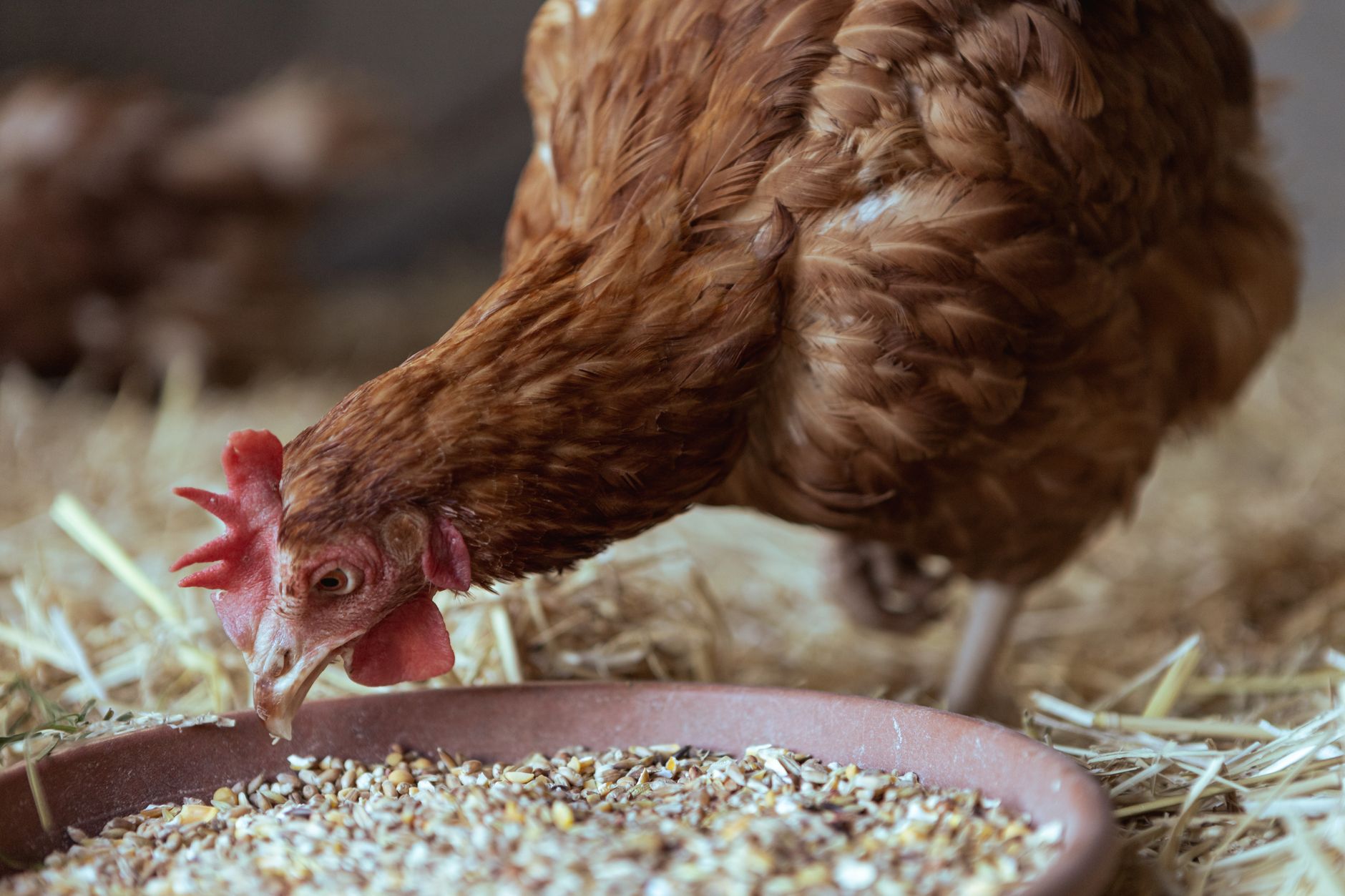
Scoop out what your flock needs for the day and serve it in a shallow dish or trough. Keep the remaining ferment in your container and top it back off with fresh feed and water — it becomes a continuous culture, like a sourdough starter. You’ll always have some ready.
Serve fermented feed within the first half of the day so it doesn’t sit in the heat and go bad. Here in Florida especially, anything left in the sun past noon on a summer day can turn quickly.
How Much to Give
We do about half fermented, half dry. Some folks go 100% fermented — that’s totally fine — but we like keeping dry feed available free-choice too, especially in summer when the girls are drinking more and eating a little differently.
Keeping the Coop Healthy Alongside Fermented Feed
Fermented feed is one piece of a healthy flock puzzle. We also use diatomaceous earth in the coop bedding and dust bath area to keep mites and lice down naturally — food grade only, always. And we keep things clean and dry, which in Northwest Florida humidity is a real commitment.
If your coop setup is still in progress, we have a whole post on Best Chicken Tractor Plans for Small Yards that might help you think through your space.
For general flock health reference, Storey’s Guide to Raising Chickens is still the book I reach for when something seems off. And if your kids are getting curious about why the chickens are getting fermented food and what’s happening at a biology level, the Kid’s Guide to Chickens is a fantastic read-aloud that we’ve used as part of our nature study.
Making It a Homeschool Moment
Here’s what I love about this practice beyond just the chicken benefits: it’s a living science lesson happening in our kitchen every week. My kids have watched the bubbles form, smelled the difference between day one and day three, and asked questions about bacteria and fermentation that have led to some genuinely rich conversations.
We’ve sketched the process in our nature journals — labeled diagrams of lacto-fermentation, little watercolor sketches of the jar at different stages with our Faber-Castell watercolors. It’s the kind of thing Charlotte Mason had in mind when she talked about living education — real processes, real observation, real wonder. Not a worksheet about fermentation. The actual thing, right there on the counter.
That’s the heart of what we’re doing here, right? The chickens, the garden, the fermenting feed — it’s all connected. It’s the kind of childhood I want my kids to remember. Hands in things. Learning because they’re curious. Seeing where food comes from and how living systems work.
A Few Common Questions Before You Start
Can I ferment layer pellets? Yes. Pellets, crumbles, and whole grains all ferment well. Pellets will break down into more of a mash consistency, which is fine.
What if it smells really strong? Sour and tangy = good. Sharp, rotten, or truly foul smell = something’s off. Start fresh.
Do I need to refrigerate it? No. Keep it at room temperature out of direct sunlight. In summer, I keep mine in a cool corner of the kitchen or garage.
What about in Florida heat specifically? Just be more mindful of how long it sits out after you’ve served it. Fermented feed left in a 90-degree yard for four hours is not the same as fresh fermented feed. Serve in the morning, clean up what they don’t finish by midday.
I want you to feel like you can actually do this — because you can. It’s one of those things that sounds complicated until you try it once and realize it’s just a jar of wet feed on your counter. The chickens love it, your feed bill drops, and your flock gets healthier. That’s a win I’ll take every single week.
If you’re just getting your backyard flock set up and want to make sure you’ve got the basics covered before adding fermented feed to the mix, check out our full post on Best Egg Laying Chickens for Florida Heat — it’s a good place to start.
And if you try fermented feed and love it, come tell me. I always love hearing from real families putting these things into practice.
📖 You Might Also Like:
- Best Composting Toilets for Off-Grid Florida Homesteads (What Actually Works Down Here)
- Best Essential Oils for a Family Home That Are Actually Safe for Kids
- How to Make Elderberry Syrup at Home (The Simple Way Our Family Actually Does It)
Frequently Asked Questions
How long does it take to ferment chicken feed?
Most chicken feed is ready to serve after 3–4 days of fermentation at room temperature. You’ll know it’s ready when it smells pleasantly sour and tangy (like sourdough) and you can see bubbles when you stir it. In warmer climates like Florida, fermentation can move a little faster, so start checking around day 2.
Can I ferment layer pellets or does it have to be whole grain?
You can ferment layer pellets, crumbles, or whole grains — all of them work. Pellets will break down into a soft mash consistency during fermentation, which chickens actually tend to love. Whole grains hold their shape a bit more. Use whatever feed your flock is already eating.
Does fermented chicken feed really reduce how much feed you use?
Yes — most backyard chicken keepers report using 20–30% less feed once they switch to fermented feed. This is because fermentation increases nutrient bioavailability, meaning your chickens actually absorb and use more of what they eat. The water content also helps fill them up faster.
Is fermented chicken feed safe? Can it go bad?
When done correctly, fermented chicken feed is very safe and actually beneficial for flock gut health. The lactobacillus bacteria that develop during fermentation create an acidic environment that inhibits harmful pathogens. It goes wrong if mold grows (usually from unclean equipment or chlorinated water) — if you see pink, black, or fuzzy mold or smell something truly rotten rather than sour, toss it and start fresh.
How much fermented feed should I give my chickens per day?
There’s no strict rule, but a good starting point is roughly the same volume you’d give in dry feed — fermented feed is heavier due to water absorption, so you’ll actually be giving a bit less dry matter by weight. Many keepers do half fermented and half dry free-choice, especially in hot climates where chickens may eat less. Serve it in the morning and clean up any uneaten portions within a few hours, especially in warm weather.
Leave a Reply