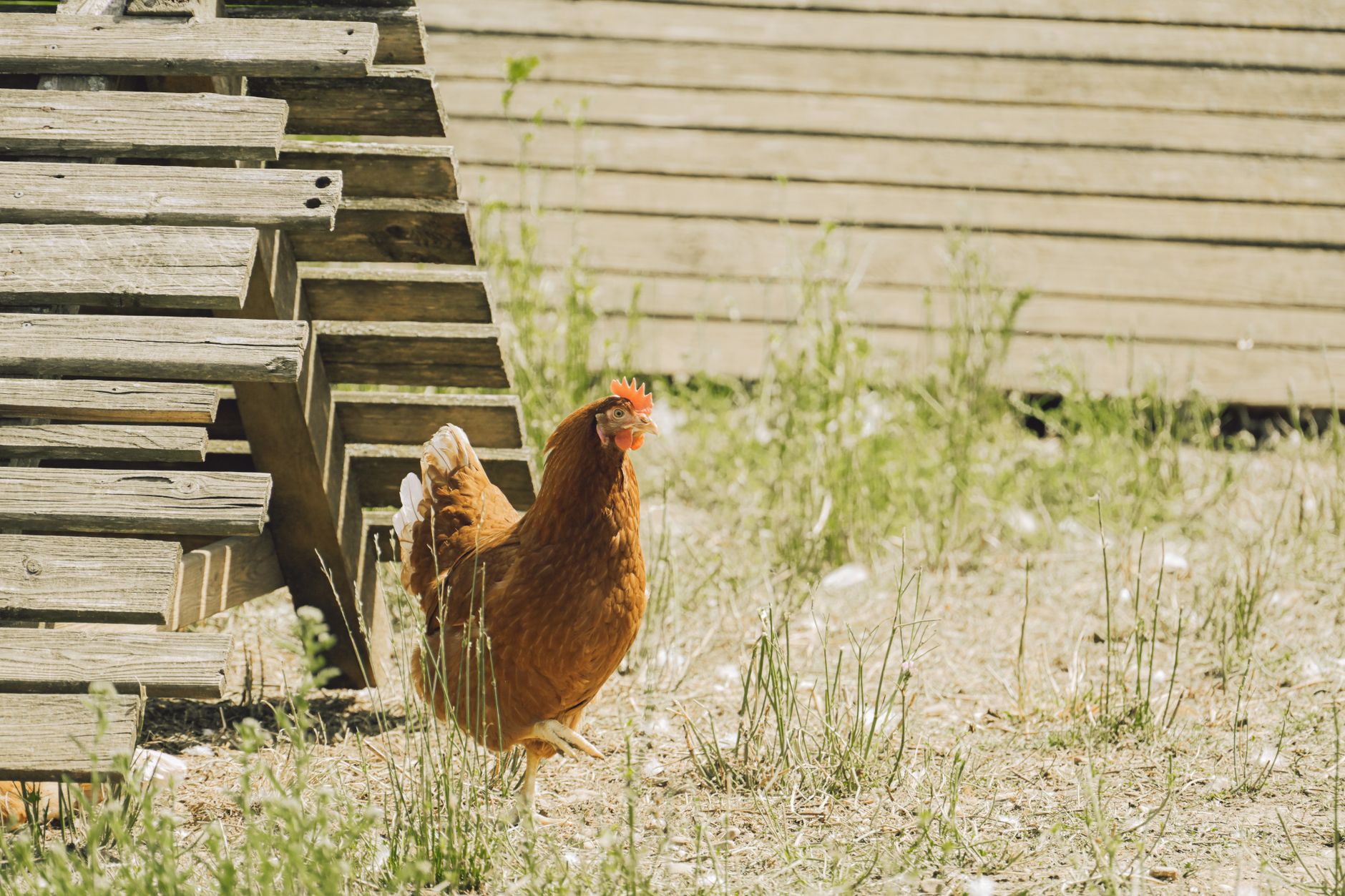
How to Build a Simple Chicken Tractor for Your Backyard Flock (Without Overcomplicating It)
This post contains affiliate links. I may earn a small commission at no extra cost to you.
Okay, so picture this: It’s a Tuesday morning. My kids are in the backyard in their pajamas, bare feet in the grass, watching our hens scratch around in a little patch of clover. Nobody’s on a screen. Nobody’s arguing. The dog is flopped out in the shade watching the whole scene like it’s her favorite TV show. And me? I’m drinking my coffee while it’s still hot.
That’s what a chicken tractor gave us. And y’all — it was so much simpler to build than I expected.
If you’ve been thinking about getting backyard chickens, or you already have a small flock and want to give them more freedom without letting them destroy every square inch of your yard (been there), a chicken tractor might be exactly what you need. Let me walk you through how we built ours, what actually works down here in the Pensacola heat, and how it’s quietly become one of our best homeschool tools too.
What Even Is a Chicken Tractor?
A chicken tractor is basically a bottomless, movable coop. It has walls, a roof, and sometimes a small attached run — but no floor. You set it right on the grass, the chickens scratch and peck and fertilize that patch of ground, and then you move it to a fresh spot every day or two. The old spot gets naturally fertilized and has time to recover. Everybody wins.
It’s not a new idea. Farmers have been doing this for generations, and honestly it’s one of those things that just makes sense once you see it in action. Your hens get fresh forage, your yard gets natural fertilization, and you’re not stuck cleaning a fixed-floor coop every single week.
If you want a solid foundation on all things flock-keeping, Storey’s Guide to Raising Chickens is the book I recommend to every new chicken mama. It covers tractors, feeding, health, and everything in between.
Why a Chicken Tractor Works Especially Well in Florida
Here in Northwest Florida, our summers are brutal. Standing water, humidity that’ll take your breath away, and bugs — oh, the bugs. A fixed coop sitting on dirt can get muddy, smelly, and problematic fast in our climate.
Moving the tractor to fresh ground every couple of days means:
- No mud pits under the coop
- Less odor buildup
- Natural pest control (the hens eat the bugs before they become a problem)
- Healthier ground for your yard overall
We also use food grade diatomaceous earth around the base of the tractor and in the nesting area to keep mites and lice from taking hold — especially important during our humid summers.
If you’re still getting your flock management routines down, check out my post on Best Chicken Coop Predator-Proof Latches (What Actually Keeps Your Flock Safe at Night) — because whatever shelter you’re building, the hardware is everything.
What You’ll Need to Build a Basic Chicken Tractor
This is not a Pinterest-perfect, power-tool-required build. This is a real-life, built-it-on-a-Saturday-with-my-husband version. Here’s what we used:
Materials:
- 2×2 or 2×3 lumber for the frame
- 1/2″ hardware cloth (NOT chicken wire — hardware cloth is much stronger against predators)
- Poultry staples or zip ties to attach the wire
- A small piece of plywood or corrugated metal for the roof section
- Hinges and a latch for the access door
- Handles or rope for moving it
- Screws and a drill
Basic Size: For 3-4 hens, a 4×8 foot footprint gives them room to move. You can attach a small covered sleeping area on one end if you plan to leave them in it overnight.
Total cost? Ours came in around $60-80 using lumber from the hardware store and hardware cloth we already had on hand.
Step-by-Step: How We Built Ours
Step 1: Build the Frame
Cut your lumber into a simple rectangular frame — four sides and a few cross supports for stability. We built ours as an A-frame shape (like a little tent) because it’s naturally more stable and sheds rain better, which matters a lot here in Florida during afternoon thunderstorm season.
Step 2: Attach the Hardware Cloth
Wrap hardware cloth around the entire frame and staple it in place with poultry staples. Cover the top too. Don’t skip the top — hawks are real, and we have plenty of them in this area. Use zip ties at the corners for extra security if anything feels loose.
Step 3: Add a Small Covered Section
One end of our tractor has a plywood roof section for shade and shelter. In Florida, shade is non-negotiable. Chickens can overheat fast in summer, so at least a third of the tractor should have solid overhead cover.
Step 4: Build an Access Door
Cut a door opening in one end, attach it with hinges, and add a secure latch. If you’re going to leave the hens in there while you’re away from home, make it a latch a raccoon can’t figure out. (Trust me on this one.)
Step 5: Add Handles
Screw on two wooden handles or thread rope through the frame so you can actually drag the thing across the yard. We move ours every 1-2 days, so this matters more than you’d think.
Step 6: Add Water Inside
We hang a small chicken nipple waterer from the top of the frame. It keeps water clean and off the ground, which is huge for keeping things sanitary inside the tractor.
How We Use the Chicken Tractor as a Homeschool Tool
This is my favorite part, honestly. Our kids don’t just watch the chickens — they study them. We’ve turned chicken tractor days into real living science lessons.
My kids sketch the hens in their nature journals — noting behavior, what they’re eating, how they interact with each other. We’ve talked about food chains (bugs → chickens → eggs → us), soil health, composting, and even simple animal behavior patterns. My oldest started tracking which patches of yard the hens prefer and why.
This is exactly the kind of slow, observational learning that Charlotte Mason talked about — and it happens completely naturally when you put kids near animals and give them time. No worksheet required. If you want more ideas like this, my post on Charlotte Mason Nature Journal Ideas for Kids (What We Actually Do Year-Round in Florida) has a lot of our real-life routines.
If you want to get the kids more formally involved in chicken keeping, the Kids’ Guide to Keeping Chickens is a genuinely great read for elementary-age kids. Mine have read it cover to cover multiple times.
A Few Things I Wish I’d Known First
- Move it more often than you think you need to. Especially in summer. The ground under a tractor gets stripped fast in Florida heat.
- Don’t put it on slopes. It’ll slide, and gaps appear at the bottom — which is an invitation for predators.
- Add shade cloth if needed. We zip-tied a strip of shade cloth over part of the hardware cloth top on really brutal summer days.
- Check it every morning. Something is always trying to get in at night in Florida. Raccoons, opossums, the occasional confused armadillo.
- An automatic coop door is worth it if your tractor has an attached sleeping area and you want to skip the early morning run outside.
Is a Chicken Tractor Right for Your Setup?
If you’ve got a small suburban yard, a few hens, and you want to give them a better life without sacrificing your lawn entirely — yes. A thousand times yes. It’s also a really manageable starting point if you’re newer to backyard chickens and not ready to commit to a full permanent coop build.
If you’re curious about expanding your backyard flock situation, I also wrote about Best Backyard Duck Breeds for Egg Production (What Actually Lays Well and Fits a Real Family) — because once you’ve got the chicken tractor down, ducks start looking real appealing.
You’ve Got This, Mama
Building a chicken tractor doesn’t have to be a big production. Grab some lumber, a roll of hardware cloth, and a free Saturday morning. Put the kids to work handing you screws and calling out measurements. Let it be a little imperfect. Ours has a slightly wobbly handle and one corner that needed an extra zip tie — and our hens do not care one bit.
What they care about is fresh grass, bugs to scratch for, shade on a hot afternoon, and clean water. A simple tractor gives them all of that. And honestly? Watching them get it gives me the same satisfaction every single time.
This is the kind of slow, intentional, hands-in-the-dirt life we’re building over here — and a chicken tractor is one of the most humble, practical pieces of it.
📖 You Might Also Like:
- Charlotte Mason Nature Journal Ideas for Kids (What We Actually Do Year-Round in Florida)
- Best Backyard Duck Breeds for Egg Production (What Actually Lays Well and Fits a Real Family)
- Best Chicken Coop Predator-Proof Latches (What Actually Keeps Your Flock Safe at Night)
Frequently Asked Questions
How many chickens can fit in a chicken tractor?
A standard 4×8 foot chicken tractor comfortably houses 3-4 standard-size hens. If you have bantam breeds, you can fit a couple more. The general rule of thumb is about 2-3 square feet of space per bird inside the tractor — more is always better if you can manage it.
Can you leave chickens in a chicken tractor overnight?
Yes, but only if the tractor has a fully enclosed, secure section with a predator-proof latch. Open hardware cloth sides alone won’t deter determined predators like raccoons at night. Many people use a chicken tractor during the day only and move their hens into a more secure fixed coop at dusk.
How often should you move a chicken tractor?
Every 1-3 days is the general recommendation, though in Florida’s summer heat you may need to move it daily. Once the grass starts looking sparse and the ground looks scratched bare, it’s time to move. Regular moving keeps the ground healthier and your hens happier.
What is the best material to use for a chicken tractor in Florida’s humidity?
Use pressure-treated lumber or cedar for the frame since both resist moisture and rot better in Florida’s climate. For the wire, always use 1/2-inch hardware cloth rather than traditional chicken wire — it’s far more durable and predator-resistant. Avoid OSB or untreated pine, which will break down quickly in our humidity.
Do I need a floor in a chicken tractor?
No — and that’s actually the point. A chicken tractor is intentionally bottomless so the hens can access the grass and soil beneath it. This allows them to forage naturally, scratch for bugs, and fertilize the ground as you move them around. Just make sure the sides sit flush with the ground to prevent gaps that predators could exploit.
Leave a Reply