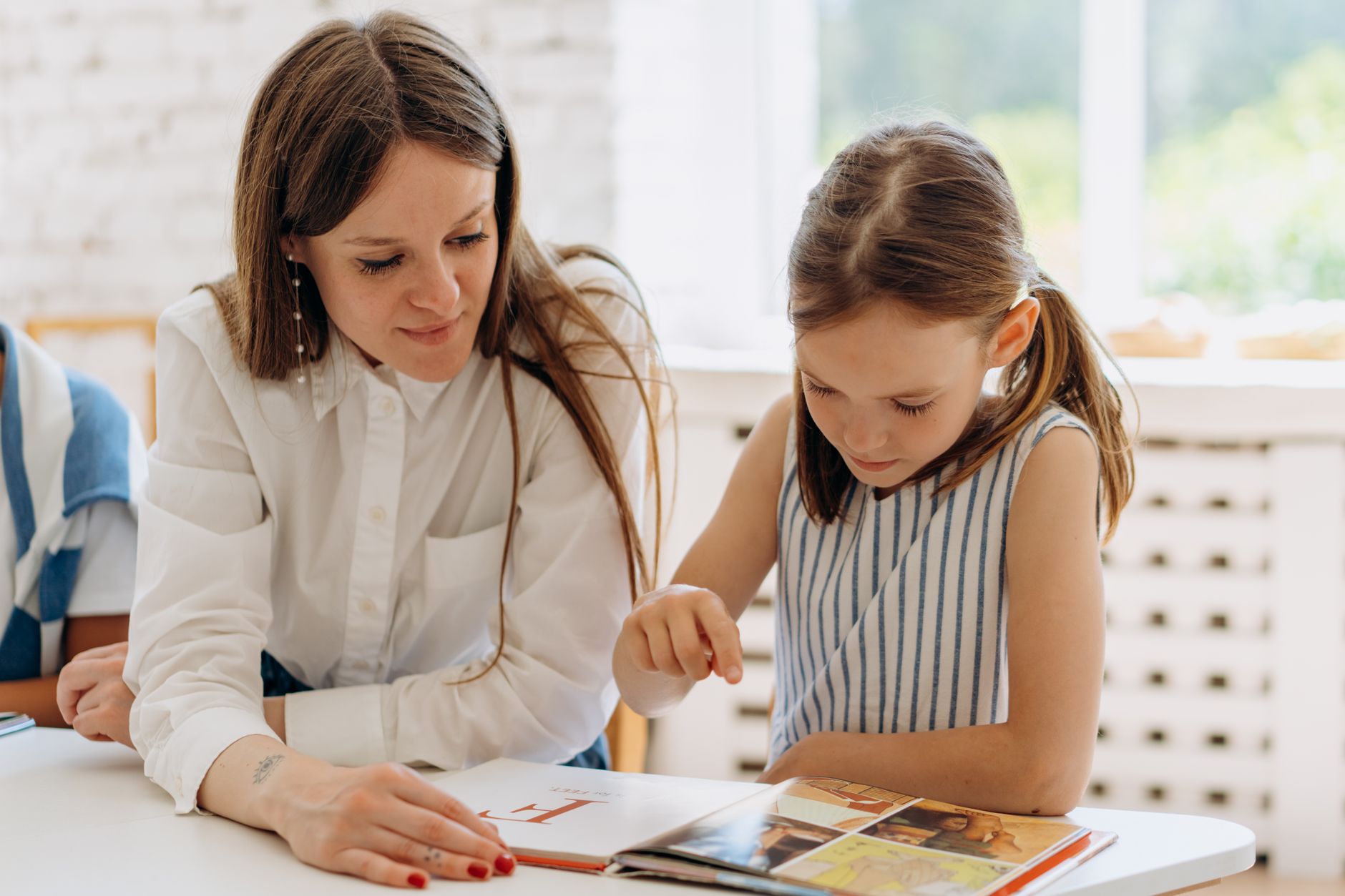
How to Teach Reading Naturally Without Curriculum (What Actually Works for Real Kids)
This post contains affiliate links. I may earn a small commission at no extra cost to you.
If you’ve ever watched your kid sound out the word on a cereal box at breakfast, or trace letters in the dirt out back by the chicken coop, you already know something important: kids are wired to learn. They don’t always need a workbook to make it happen.
Now, I want to be honest with you — I’m not anti-curriculum across the board. We use All About Reading for one of my kids because that’s what that child needed. But another one of mine? She basically taught herself to read through living books, being read to constantly, and a lot of patience on my part. Every kid is different, and that’s the whole point.
What I am saying is that you don’t have to feel locked into a scripted program if it’s not working — or if you just want to start more gently. Teaching reading naturally is absolutely possible, and for a lot of families (especially those of us drawn to the Charlotte Mason approach), it’s actually a better fit.
Here’s what that actually looks like in our home.
What “Teaching Reading Naturally” Actually Means
It doesn’t mean doing nothing and hoping for the best. It means being intentional without being rigid. It means creating an environment so rich in language, stories, and print that reading becomes the natural next step — not a performance your kid has to nail on a schedule.
Charlotte Mason herself believed that young children shouldn’t be formally drilled on reading before age six. She emphasized living books, oral narration, and short focused lessons over long tedious workbook sessions. That philosophy has shaped how I approach this with my own kids, and it has relieved so much pressure for all of us.
Start With Being Read Aloud To — A Lot
This is the single most powerful thing you can do. Before a child ever picks up a book on their own, they need to fall in love with stories. They need to hear fluent reading, rich vocabulary, and sentences that are more complex than anything they’d encounter in a beginner reader.
We do this in our Morning Basket every single day. Picture books, chapter books, poetry, nature books — whatever fits the season. We read outside on the back porch when the Florida weather cooperates, which is a lot of the year here in Northwest Florida (and you’d better believe the chickens wander over to supervise).
This builds:
- Vocabulary
- Comprehension
- A love of stories
- Phonemic awareness (hearing the sounds in words)
All before formal reading instruction even begins.
Weave Phonics Into Real Life
You don’t need a 45-minute phonics lesson to teach letter sounds. You need moments.
- Point out letters on signs during errands
- Let them “help” you write the grocery list
- Spell out words in the garden — we’ve done it in the dirt with sticks
- Write words on a whiteboard during lunch and just… talk about them
- Play “I spy something that starts with the /s/ sound” on nature walks
These micro-moments add up. And because they’re attached to real life instead of a worksheet, kids actually remember them.
When my kids are ready to start connecting sounds more formally, I do use some structure — but even then, I keep sessions short (10-15 minutes max for young kids) and follow the child’s lead on pacing.
Use Living Books — Not Just Readers
Beginning readers (the decodable kind) have their place, especially for kids who need extra phonics support. But they are not the only books your emerging reader should be exposed to.
Keep your home full of books that are above their independent reading level. Read them together. Let your child see you reading for pleasure. Visit the library regularly and let kids pick whatever they want — yes, even if it’s the same dinosaur book for the fifth week in a row.
Nature books are huge in our house. A good field guide like the Sibley Birds Guide gets pulled out constantly during our nature walks, and even my youngest has started recognizing words in it because she wants to know what she’s looking at. Motivation is the best reading teacher there is.
Nature Journaling as a Reading and Writing Bridge
This one surprises people, but nature journaling is one of the best literacy tools we have. When a child draws what they observed, then labels it, then writes a sentence about it — that is reading and writing instruction happening in the most meaningful possible context.
We use a simple nature journal and Faber-Castell watercolors for illustrations. I’ll spell words for them when they ask. I never correct their invented spelling in journals — that comes later. Right now, the goal is that writing feels worth doing.
If you want more on how we use nature journaling year-round here in Florida, I wrote a whole post about it: Charlotte Mason Nature Journal Ideas for Kids (What We Actually Do Year-Round in Florida).
The 1990s Secret: Less Pressure, More Time
Here’s the thing I keep coming back to. Kids in the 1990s weren’t being formally taught to read at age four. Kindergarten was play-based. First grade was gentle. And most kids? They learned to read just fine.
We’ve somehow convinced ourselves that earlier is always better, that a child who isn’t reading fluently by the end of kindergarten is behind. But the research doesn’t actually support that panic. Many children — especially boys — aren’t neurologically ready for formal reading until age six or seven, and pushing hard before they’re ready can actually create reading aversion.
Give them time. Give them books. Give them dirt and rain boots and a magnifying glass and a bug catcher kit. Let them live richly. That is not wasted time — it is building the brain that will one day read.
When to Add More Structure
Some kids will pick reading up almost on their own with rich environment and read-alouds. Others need more explicit phonics instruction, and that’s completely okay. Watch for these signs that your child might be ready for or benefit from more structure:
- They’re showing interest in sounding out words on their own
- They’re frustrated that they can’t read something they want to read
- They’re 6-7+ and still not connecting letters to sounds
If you decide to add a more structured phonics approach, All About Reading is hands-down our family’s favorite. It’s multisensory, low-stress, and actually fun. You can also check out my post on How to Homeschool Multiple Ages at Once for how I manage different reading levels without losing my mind.
A Few Practical Things That Help
- Label things around the house. Door. Window. Chair. Simple, old-school, and effective.
- Let them see you read. Not just to them — for yourself. Kids imitate what they observe.
- Keep books everywhere. Basket in the living room, books in the car, books on the back porch.
- Don’t rush narration into writing. Oral narration counts. Let them tell you what a book was about before they can write it.
- Celebrate small wins loudly. When my daughter sounded out “chicken” by herself near the coop one afternoon, we made it a whole moment. She still talks about it.
You Know Your Kid Best
I’ll wrap up with this: teaching reading naturally isn’t about being relaxed to the point of being hands-off. It’s about being present, intentional, and responsive to the actual child in front of you — not the imaginary average child the curriculum was written for.
Some kids bloom early. Some bloom later. Both are okay. What matters is that reading stays something warm and wanted, not a source of shame or stress.
You’re already doing something countercultural by homeschooling with intention, by choosing books over screens, by letting your kids get muddy and feed chickens and catch bugs. Trust that same instinct when it comes to reading. It’ll come. And when it does, it’ll be theirs.
📖 You Might Also Like:
- Morning Basket Ideas for Charlotte Mason Homeschool Families (What We Actually Do Each Day)
- Charlotte Mason Nature Journal Ideas for Kids (What We Actually Do Year-Round in Florida)
- How to Homeschool Multiple Ages at Once (Tips That Actually Work for Real Families)
Frequently Asked Questions
Can a child learn to read without a formal reading curriculum?
Yes — many children learn to read through rich read-aloud environments, phonics woven into daily life, and access to lots of books. Some kids need more structured phonics instruction, and that’s okay too. The key is watching your individual child and responding to what they need rather than following a one-size-fits-all program.
At what age should I start teaching my child to read?
There’s no single right age. Many children aren’t neurologically ready for formal reading instruction until age 6 or 7, especially boys. Before that, the best thing you can do is read aloud to them daily, expose them to rich language, and create a print-rich environment. Pushing too early can actually create reading aversion.
What is the Charlotte Mason approach to teaching reading?
Charlotte Mason believed in delaying formal reading instruction until around age 6, prioritizing living books and read-alouds, using short focused lessons rather than long drills, and keeping reading tied to real, meaningful content. She emphasized oral narration before written work and valued a child’s natural curiosity as the engine of learning.
How do I teach phonics naturally without a workbook?
You can teach phonics through everyday moments — pointing out letters on signs, spelling words in the garden or in sand, playing ‘I spy’ sound games on walks, writing the grocery list together, and labeling items around the house. These informal exposures add up significantly over time and keep phonics connected to real life.
What if my child is older and still struggling to read — should I be worried?
If your child is 7 or older and still not connecting letters to sounds despite exposure and read-alouds, it may be worth adding more structured phonics instruction or speaking with a specialist to rule out dyslexia or other learning differences. Programs like All About Reading are multisensory and work well for kids who need a more explicit approach. Early intervention for genuine struggles is always better than waiting.
Leave a Reply