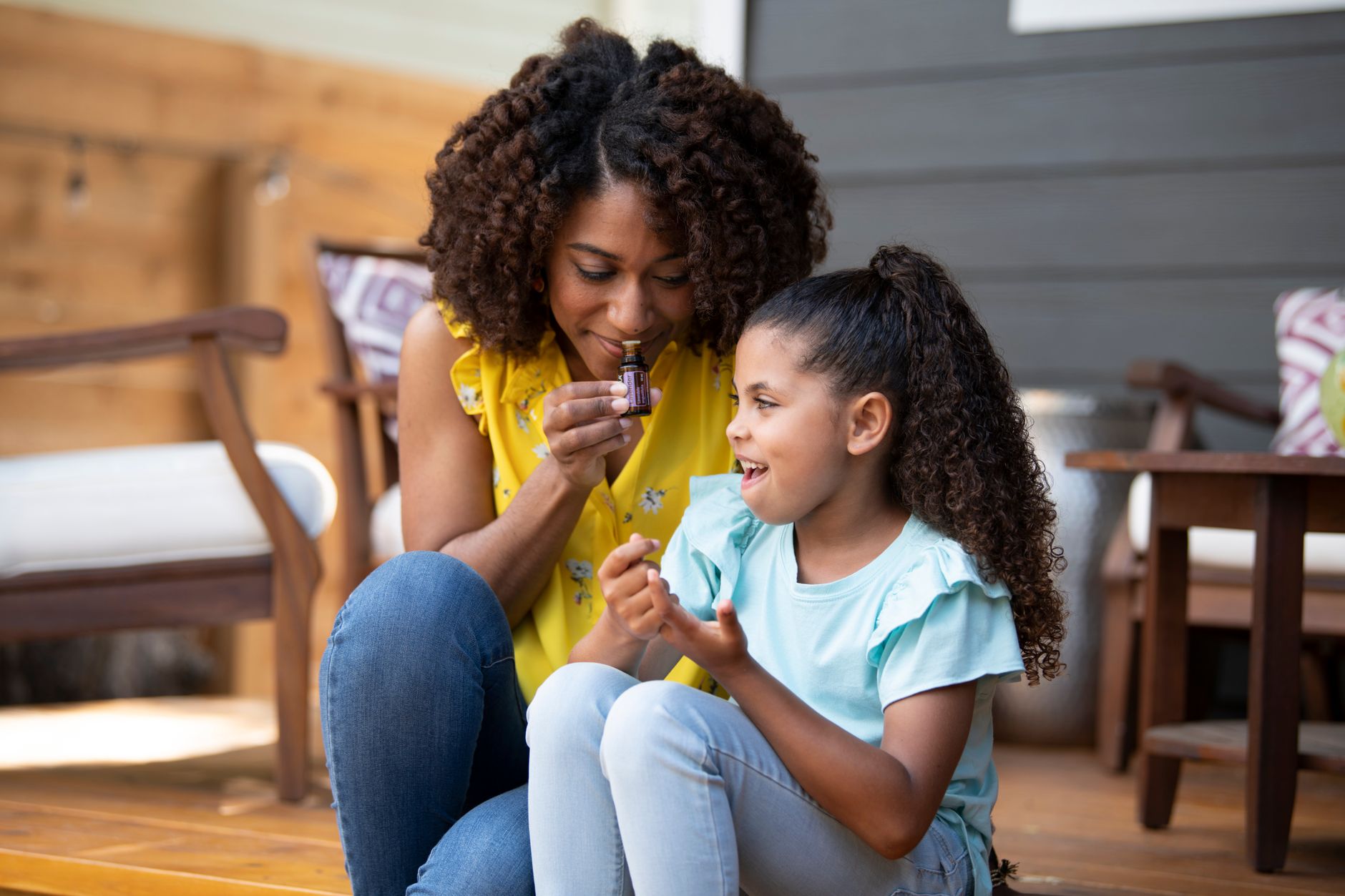
Best Essential Oils for a Family Home That Are Actually Safe for Kids
This post contains affiliate links. I may earn a small commission at no extra cost to you.
If you’ve ever stood in a store staring at a wall of little brown bottles wondering which ones are actually safe to diffuse around your kids — same, friend. I was that mama a few years ago, equal parts curious and overwhelmed. Essential oils feel so natural, so surely they’re all fine, right?
Not exactly. That was the thing nobody told me upfront.
Once I started digging into it — really digging, not just reading the back of a box — I realized there’s a lot of nuance here. Some oils that are perfectly lovely for adults can be genuinely harsh on little lungs and nervous systems. And some of the oils I’d written off as boring are actually the workhorses of a safe, non-toxic family home.
We use essential oils pretty regularly around here — for cleaning, for seasonal support, for sleep, for keeping the bugs at bay (this is Florida, y’all, the mosquitoes are not playing). So I wanted to share what’s actually in our rotation, what we avoid, and how we think about all of it with elementary-age kids in the house.
Why Kid-Safe Matters More Than You Think
Kids’ bodies are not just small adult bodies. Their livers process things differently, their skin absorbs more, and their airways are more sensitive. What’s fine diffused in a house with adults can be genuinely irritating — or worse — for babies and toddlers.
The good news: once you know which oils to lean on and how to use them safely, it’s actually pretty simple. You don’t need a cabinet full of 50 oils. You need maybe five or six really solid ones.
A Few Ground Rules We Follow
- Always dilute before applying to skin. For kids, that usually means 1% or less (about 1 drop per teaspoon of carrier oil).
- Diffuse in a ventilated space — not a small closed room — and take breaks. Thirty to sixty minutes on, then off.
- Keep oils away from eyes, mouth, and ears. Obvious, but worth saying.
- Store everything out of reach. Essential oils are potent and some are toxic if ingested.
- When in doubt, skip it. There are plenty of gentle options.
And if you’re ever unsure, the Robert Tisserand Institute and KidSafe certifications are good references to bookmark.
The Oils We Actually Use (and Love)
Lavender — The One You Probably Already Have
Lavender is the OG of family-safe essential oils, and for good reason. It’s gentle, well-researched, and incredibly versatile. We use it in our bedtime diffuser blend, diluted in a roller for minor scrapes and bug bites, and occasionally in our homemade linen spray.
Lavender is also one of the few oils generally considered safe even around younger kids (always check age-specific guidance for babies under 2). For our elementary crew, it’s become almost a sleep cue — they smell it and their bodies start to wind down. That’s the power of consistent routine, honestly.
Frankincense — Slow, Steady, Grounding
Frankincense is one I didn’t expect to love as much as I do. It’s deeply calming — like the scent equivalent of a slow exhale. We diffuse it during morning homeschool time, especially during nature journaling or quiet reading. There’s something about it that just settles the energy in the room.
It blends beautifully with lavender and is generally well-tolerated by kids when used appropriately. It’s become a staple in our Charlotte Mason rhythm — quiet, grounding, intentional.
Tea Tree — The Non-Toxic Cleaner’s Best Friend
We use tea tree (also called melaleuca) primarily for cleaning. It goes into our DIY all-purpose spray along with water and a little castile soap. Great for wiping down the chicken coop supply area, the mudroom, the bathroom — anywhere that needs a germ-fighting boost without the toxic chemical smell.
One important note: tea tree should NOT be used on or around cats, and it needs to be well diluted before any skin contact with kids. Diffusing it occasionally in a ventilated space is generally fine for kids over 2, but I wouldn’t overdo it. We mostly keep it to cleaning applications.
For our non-toxic cleaning routine overall, Grove Collaborative has been a great source for clean-ingredient products that pair perfectly with our DIY stuff.
Cedarwood — The Sleepiest Oil in Our Cabinet
Honestly? Cedarwood might be my secret weapon. It’s a natural sedative (in the gentlest sense), incredibly safe for kids, and smells like a walk through the woods — which, in a Charlotte Mason home, feels very right. We diffuse it at bedtime alongside lavender and the whole house calms down.
It’s also a gentle bug repellent, which around here in the Florida panhandle is basically a year-round concern. We sometimes add a drop or two to our outdoor spray (always diluted in a carrier) before the kids head outside to play.
Speaking of outdoor play — if you want to build a backyard that actually invites that kind of free-range, 1990s-style childhood, check out our post on How to Create a Nature Play Yard in Your Backyard (That Kids Actually Use).
Sweet Orange — Happy, Bright, and Just Plain Fun
Citrus oils get a bad rap because some of them are photosensitive (meaning if you put them on skin and go in the sun, you can burn — which, living in Florida, matters). But sweet orange diffused is just joyful. It lifts the mood, smells like a creamsicle, and is one of the gentler citrus oils for family use.
We diffuse it on Monday mornings to kick off our homeschool week on a bright note. It’s become a little tradition the kids actually look forward to. Simple stuff, y’all.
Roman Chamomile — Gentle Support for Big Feelings
Roman chamomile is gentle enough for young kids and is one of our go-to options when someone’s having a hard day emotionally. Diluted in a roller and applied to the wrists or bottoms of feet, it takes the edge off a meltdown in a way that feels supportive rather than chemical. It’s one of the most widely recommended oils for children’s emotional wellness.
What We Avoid Around Kids
This list matters just as much as the good stuff:
- Eucalyptus and Peppermint — These are probably the most important ones to know about. Both contain high levels of 1,8-cineole, which can cause breathing issues in young children. Most sources say to avoid eucalyptus and peppermint entirely for kids under 6, and use with caution up to 10. I know peppermint smells amazing. I know. But I keep it in my personal stash, not in the family diffuser.
- Clove and Cinnamon Bark — Hot oils that can cause serious skin irritation. Not in our family blends.
- Rosemary — Generally not recommended for young children or anyone with seizure history.
- Wintergreen — Contains methyl salicylate, which is similar to aspirin. Keep it away from kids entirely.
For outdoor pest control in a kid-safe way, we’ve had really good luck with Wondercide — it’s plant-based, smells great, and we’ve used it on the kids, the dog, and even around the chicken run.
How We Store and Diffuse Safely
All our oils live in a small wooden box on a high shelf — the kids know they are not toys. We use a basic ultrasonic diffuser and run it for 30-60 minute cycles in a room with a door or window cracked. I don’t diffuse 24/7, even the gentle ones. Less is more with essential oils, I’ve come to believe.
For our non-toxic cleaning supplies and home products more broadly, Grove Collaborative has been a go-to — they’ve got a really solid curation of clean products that align with the way we try to keep our home.
And if you’re curious about what we use when the kids are under the weather, I’ve got a whole post on Natural Remedies for Kids’ Cough and Cold This Florida Winter (What We Actually Use) — essential oils are part of that conversation too.
A Note on Brands and Quality
This is a whole topic unto itself, but the short version: quality matters a lot with essential oils. Look for companies that publish GC/MS testing (gas chromatography/mass spectrometry — basically a purity test), source transparently, and don’t make wild medical claims. You don’t have to buy the priciest MLM brand on the market, but you do want to skip the $3 bottle at the checkout lane.
The Simple Takeaway
You don’t need a complex system or a huge collection to make essential oils work safely in your family home. A handful of well-chosen, quality oils — lavender, frankincense, cedarwood, sweet orange, Roman chamomile — used thoughtfully in a ventilated space, can genuinely support your home’s atmosphere and wellness without any of the synthetic fragrance stuff we’re trying to move away from.
Start simple. Learn as you go. And don’t let anyone pressure you into buying 40 oils when five will do just fine.
That’s kind of our whole philosophy around here, honestly — intentional, not overwhelming. Simple living doesn’t mean doing without. It means doing with purpose.
If you’re building a more natural home and want to explore what that looks like with kids who are outside in the dirt, learning at home, and growing things — you’re in the right place. Welcome.
📖 You Might Also Like:
- Wild Edibles in Florida: What to Look for on Your Next Family Walk
- Best Raised Bed Soil Mix for Florida Gardens (What Actually Works in Our Sandy Southern Soil)
- How to Create a Nature Play Yard in Your Backyard (That Kids Actually Use)
Frequently Asked Questions
Which essential oils are safest to diffuse around young children?
Lavender, frankincense, cedarwood, sweet orange, and Roman chamomile are among the most widely recommended essential oils for use around children. Always diffuse in a ventilated room for limited time periods (30–60 minutes), and avoid using eucalyptus or peppermint around children under 6 years old.
Is it safe to diffuse essential oils around kids all day?
No — more is not better with essential oils. Even the gentlest oils can be irritating with prolonged exposure. A good rule of thumb is to diffuse for 30–60 minutes at a time, then take a break, and always make sure the room has good ventilation. Constant diffusion can cause headaches, irritability, or respiratory irritation even with safe oils.
Can I apply essential oils directly to my child’s skin?
Essential oils should always be diluted in a carrier oil (like fractionated coconut oil or jojoba oil) before applying to a child’s skin. For children, a 1% dilution is recommended — that’s about 1 drop of essential oil per teaspoon of carrier oil. Never apply undiluted oils to children’s skin, and keep oils away from the eyes, ears, and mouth.
What essential oils should I avoid around kids?
Avoid eucalyptus, peppermint, rosemary, wintergreen, clove, and cinnamon bark around young children. Eucalyptus and peppermint in particular contain compounds that can cause breathing difficulties in children under 6. Wintergreen contains methyl salicylate (similar to aspirin) and is not safe for children at all.
Do essential oil brands really make a difference in safety?
Yes, quality matters significantly. Look for brands that publish third-party GC/MS (gas chromatography/mass spectrometry) testing to verify purity and potency. Avoid very cheap oils with no sourcing transparency, as they may be adulterated or diluted with synthetic compounds. You don’t have to buy the most expensive brand on the market — you just want one that’s transparent about what’s in the bottle.
Leave a Reply