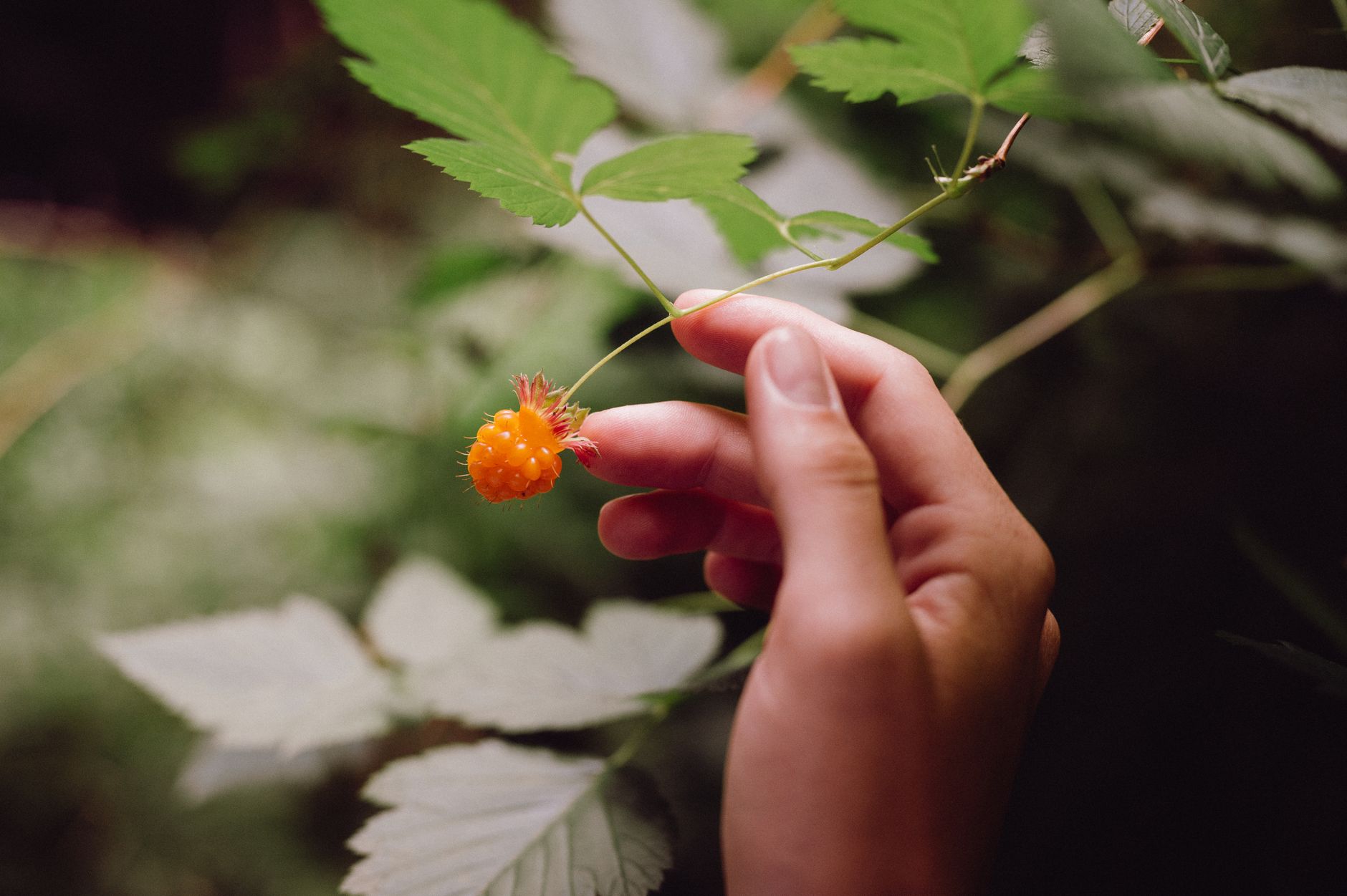
Florida Foraging Guide: Safe Plants for Beginners (What We’ve Found Right in Our Own Backyard)
This post contains affiliate links. I may earn a small commission at no extra cost to you.
I still remember the first time my oldest stopped on a trail, pointed at a cluster of low-growing leaves, and said, “Mama, can we eat that?” We were out at one of our favorite spots near Pensacola, the kind of scrubby pine flatwoods that most people walk right past without a second glance. And honestly? I didn’t know the answer. I’d grown up outside — bikes, bare feet, creek water — but nobody had ever taught me to read the land like that.
That question sent me down a rabbit hole that has genuinely changed the way our whole family moves through the outdoors. Foraging isn’t just about food. It’s about paying attention. Slowing down. Learning to see what’s actually there instead of just passing through. For our Charlotte Mason homeschool, it has been one of the richest, most living lessons we’ve stumbled into.
If you’re in Florida — especially up here in the Panhandle — you are sitting on an absolute treasure chest of edible wild plants. The landscape looks scrubby and unremarkable to a lot of folks, but once your eyes are trained, you start to see it everywhere. Let me share what we’ve learned, what’s safe for beginners, and how to get started without feeling overwhelmed.
A Few Ground Rules Before You Forage Anything
I want to be really honest here: foraging is wonderful AND it requires real care. There are toxic lookalikes for some plants, and Florida has a few that are genuinely dangerous. So before we ever put anything in our mouths, we follow these rules in our family:
- Never eat anything unless you are 100% sure of the identification. Not 90%. Not “pretty sure.” 100%.
- Use multiple identification methods — field guide, photos, texture, smell, location, season.
- Start with the easiest, most distinctive plants that have no toxic lookalikes.
- Go slow. One or two new plants per season is plenty.
- Teach kids the rule: Ask before you touch, and always ask before you eat.
We keep a nature journal specifically for plant sketching and ID notes, and we use the Sibley field guide alongside a Florida-specific plant app. Drawing the plant from life is a Charlotte Mason staple, and it genuinely helps kids remember identification details better than any worksheet ever could.
Safe Florida Foraging Plants for Beginners
1. Muscadine Grapes (Vitis rotundifolia)
If you’ve spent any time in Florida woods, you’ve seen these thick, twisting vines. Muscadine grapes are one of the most beginner-friendly wild edibles in the Southeast — they’re hard to mistake for anything dangerous, and the grapes (late summer into fall) are sweet-tart and amazing. The kids go absolutely wild picking them straight off the vine. No lookalikes that’ll hurt you. Total win for beginners.
2. Blackberries (Rubus spp.)
These thorny canes pop up along roadsides, fence lines, and forest edges all over Northwest Florida, typically ripening in late spring. Kids love them. Thorns and all, they will push through a thicket for a ripe blackberry. We bring kids’ rain boots and garden gloves for the kids because that underbrush can be scratchy and wet. Easy to identify, no dangerous lookalikes in our area.
3. Elderberry (Sambucus canadensis)
Elder grows in moist areas — ditches, edges of floodplains, stream banks. The clusters of tiny white flowers in spring and deep purple berries in late summer are pretty distinctive once you’ve seen them. Important note: the berries should be cooked before eating (raw elderberries can cause stomach upset), and the stems and leaves are not edible. We use the flowers for elderflower lemonade and the berries for syrup. But do your homework here — this one takes a little more study than the others.
4. Wood Sorrel (Oxalis spp.)
This little plant is probably already growing in your yard right now. Small clover-like leaves (but with a distinct heart shape to each leaflet) and tiny yellow flowers. It has a bright, lemony-sour flavor — kids almost always love it. Snack on it fresh while you’re outside. Easy to identify, grows everywhere in Florida, and it’s a fantastic first “nature snack” for hesitant little foragers.
5. Cattail (Typha spp.)
Find a pond, find a cattail. These are basically the most forgiving plants to identify in North America — nothing looks quite like a cattail. Different parts are edible in different seasons: the pollen in spring, the green flower spikes before they open, and the starchy roots. We haven’t done a lot with cattail beyond the pollen stage, but it’s a great one to know and a fascinating nature study all on its own.
6. Chickweed (Stellaria media)
A cool-weather plant that shows up in Florida lawns and gardens from fall through early spring. Mild flavor, good in salads or just eaten fresh. Tiny white star-shaped flowers are a helpful identifier. Our chickens are obsessed with it, actually — which is a fun conversation starter about what’s edible across species.
7. Loquat (Eriobotrya japonica)
Okay, technically not a “wild” plant — but loquat trees have naturalized all over Florida neighborhoods and roadsides, and the fruit just drops unpicked by the thousands every spring. If you’re in Pensacola, you’ve probably walked past a loquat tree without knowing it. Yellow-orange, apricot-sized fruit, incredibly sweet when fully ripe. The kids can spot them now and it feels like finding buried treasure every March.
Making Foraging Part of Your Nature Study
One of the things I love most about foraging with kids is that it requires all the skills Charlotte Mason wanted to cultivate — careful observation, patience, wonder, and narration. When my kids stop to really look at a plant, they’re doing living science, living botany, living ecology. It’s not a worksheet. It’s real.
Here’s what a simple foraging nature walk looks like for us:
- Bring the nature journal and Faber-Castell watercolors for sketching
- Bring a pocket microscope for up-close leaf and stem examination
- Bring a bug collection kit because there will always be bugs to investigate too
- Let the kids lead — they find things I walk right past
- Sketch first, then narrate, then look up. In that order.
If you want to go deeper into nature journaling and outdoor discovery with your kids, I wrote more about that in How to Create a Nature Play Yard in Your Backyard (That Kids Actually Use) — lots of overlap with foraging as a habit.
A Note on Foraging and Your Chickens
Since I know a lot of you also have backyard flocks — our chickens have become our best foraging teachers in a weird way. Watching what they scratch at and eat has opened up more than a few conversations about edible plants. Chickweed, wood sorrel, dandelion greens — they go after all of it. If you’re newer to backyard chickens, Storey’s Guide to Raising Chickens has a solid section on what chickens can and can’t eat from the yard, which overlaps nicely with what’s safe for humans too.
And honestly, having chickens has made our kids so much more tuned in to plants and bugs in the yard. They notice things now. That’s exactly the 1990s-style childhood we’re after — kids who are literate about their outdoor environment, not just passing through it.
If you want more on homesteading chores and how to involve kids at different ages, How to Involve Kids in Homestead Chores by Age (Without the Meltdowns or Doing It All Yourself) is a good read.
How to Keep Learning Without Getting Overwhelmed
My best advice: start with ONE plant. Learn it deeply. Sketch it. Find it in multiple places. Eat it. Then add another.
A few resources that have genuinely helped us:
- A Florida-specific foraging Facebook group (there are several good ones) for local confirmation
- Timberdoodle has some great nature curriculum components that pair well with foraging study
- Rainbow Resource carries botany resources that work well alongside real outdoor practice
For younger kids, the Kid’s Guide to Chickens might seem unrelated, but it’s the same Storey Publishing style — approachable, real, farm-literacy focused — and it shows kids that knowing your land is a skill worth learning.
Also, if you’re doing seasonal living and want foraging to fit into your rhythm throughout the year, check out Seasonal Living Ideas for Families: Simple Ways to Celebrate Every Season Year-Round — I map out what we’re doing outside in each season and spring foraging is a big part of it.
The Real Point of All This
Foraging isn’t about survivalism or being hardcore. For our family, it’s about knowing where we live. It’s about my kids looking at a scrubby Florida trail and seeing abundance instead of weeds. It’s about slowing down enough to actually see what’s there.
Every time one of my kids pops a wood sorrel leaf in their mouth, or spots a muscadine vine before I do, or stops to sketch a plant they don’t know yet — I think, yes, this is it. This is exactly the kind of childhood I wanted to give them. Curious. Capable. Rooted.
Get outside, go slow, and start with one plant. That’s all it takes.
📖 You Might Also Like:
- Natural Chicken Coop Deodorizer and Cleaning Routine That Actually Works
- Intentional Parenting: What It Actually Looks Like Day to Day
- How to Build a Simple Chicken Tractor for Your Backyard Flock (Even If You’re Not Handy)
Frequently Asked Questions
Is it safe to forage with kids in Florida?
Yes, with the right approach. Start with plants that have no dangerous lookalikes — like blackberries, muscadine grapes, and wood sorrel — and always positively identify something before eating it. Teach kids a firm rule: never eat anything without a grown-up’s confirmation. Florida does have toxic plants, so taking it slow and starting simple is key.
What are the easiest edible plants to find in Florida for beginners?
Some of the most beginner-friendly edible plants in Florida include wood sorrel (the lemony clover-like plant in your yard), blackberries, muscadine grapes, loquat, and chickweed in cooler months. These are widely available, relatively easy to identify, and have low risk of dangerous misidentification for careful beginners.
Are there dangerous plants to watch out for while foraging in Florida?
Yes. Florida has several toxic plants including water hemlock, pokeweed berries (roots and leaves are toxic though berries are sometimes used cooked — best avoided entirely by beginners), and various toxic lookalikes. Always use a reliable field guide, cross-reference multiple sources, and when in doubt, don’t eat it. Joining a local Florida foraging group for confirmation is a smart move.
Can foraging count as homeschool nature study?
Absolutely — and it’s one of the richest forms of it. Foraging naturally incorporates botany, ecology, observation skills, journaling, and even food science. For Charlotte Mason homeschoolers especially, foraging checks almost every nature study box: it requires careful looking, narration, sketching from life, and developing a real relationship with the local environment.
What’s the best time of year to forage in Florida?
Florida has foraging opportunities year-round, which is one of its great gifts. Spring is prime time for loquats, wild berries, and elderflowers. Summer brings muscadine grapes. Fall and winter (Florida’s cool season) are excellent for chickweed, wood sorrel, and many leafy wild edibles that can’t survive the heat. Basically, there’s always something — you just have to know what to look for.
Leave a Reply