Morning Basket Ideas for Charlotte Mason Homeschool (What Ours Actually Looks Like)
This post contains affiliate links. I may earn a small commission at no extra cost to you.
If you’ve ever had one of those mornings where the kids woke up grumpy, the dog knocked over someone’s water cup, and you couldn’t figure out how to start school without someone crying — morning basket might just save your sanity.
I’m not exaggerating. It saved mine.
When we first started homeschooling with a Charlotte Mason approach, I kept reading about morning time or morning basket and thinking it sounded lovely but also a little… aspirational. Like, sure, we’ll all gather peacefully with our tea and our poetry and our hearts full of wonder. Meanwhile, back in real life in Pensacola…
But here’s the thing — once I actually started doing it, stripped back to the basics and made it mine, it became the anchor of our entire school day. Even on the hard mornings. Especially on the hard mornings.
So let me share what our morning basket actually looks like, what I include, and how you can build one that works for your family without turning it into a whole production.
What Even Is a Charlotte Mason Morning Basket?
Morning basket (sometimes called morning time or morning meeting) is the idea of starting your homeschool day together — all kids, all ages — with things that are rich and beautiful and communal. Not worksheets. Not individual seatwork. Just together learning.
Charlotte Mason believed deeply in the feast of ideas. She didn’t want education to be a narrow, utilitarian thing. She wanted children’s minds to touch great thoughts, beautiful language, and the living world around them. Morning basket is a really practical way to live that out.
The beauty of it is that it works across ages. My kindergartner and my fifth grader can both sit in on the same poetry reading, the same nature observation, the same hymn or folk song — and each one gets something different out of it. If you’re homeschooling multiple kids like we are, this is genuinely one of the best tools in your toolkit. (I talk more about juggling different ages in How to Homeschool Multiple Ages at Once (Tips That Actually Work for Real Families).)
What We Put in Our Morning Basket
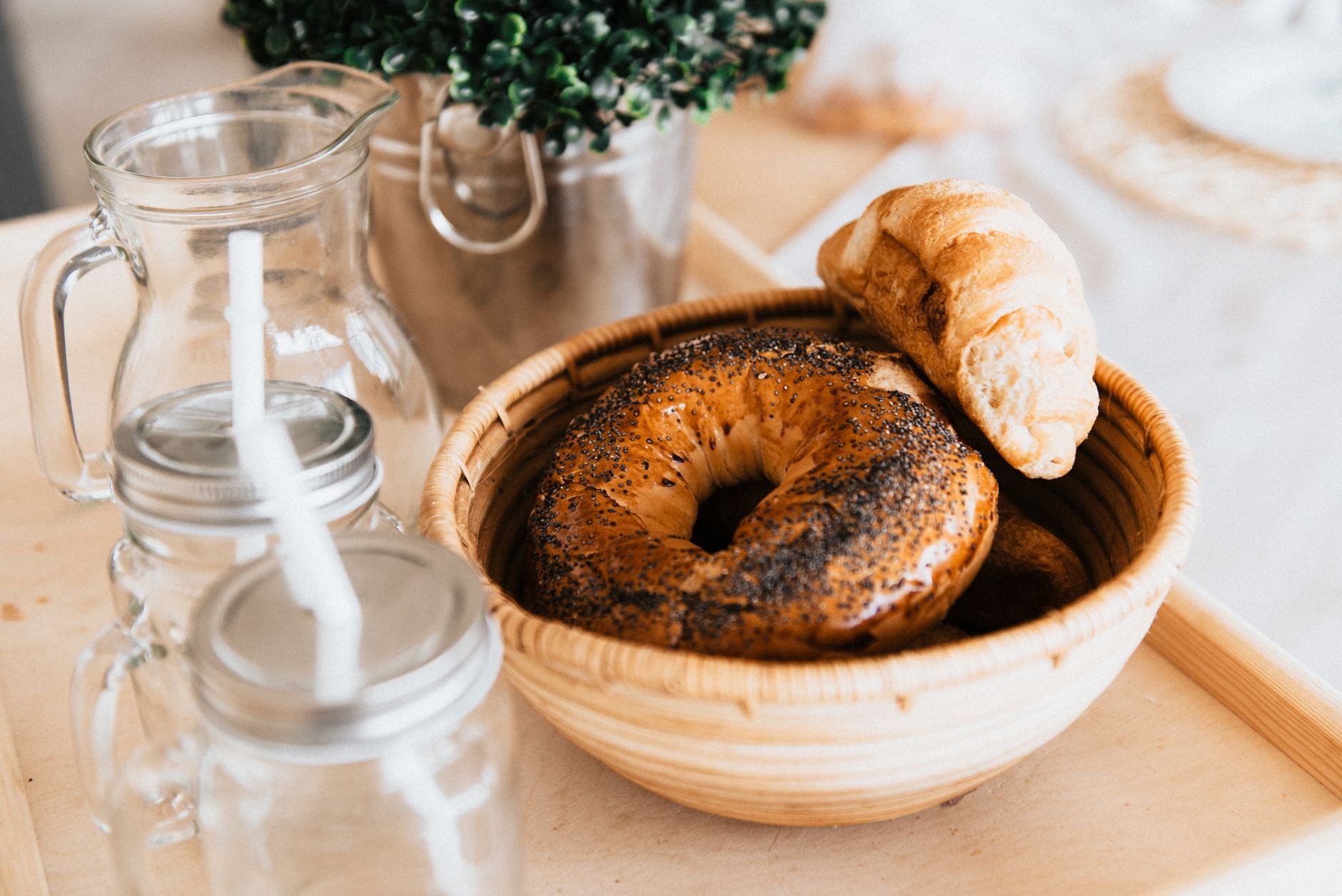
I keep ours in an actual wicker basket on the shelf — nothing fancy, just something that holds everything and makes it feel like a special ritual. Here’s what’s in it most days:
1. A Hymn or Folk Song
We sing one hymn or folk song together. I’m not a musician, y’all. I play it from my phone and we sing along. That’s it. The kids have started asking to hear their favorites again, which means it’s working.
2. A Poem
We read one short poem aloud. Sometimes I read it, sometimes the kids take turns. We don’t analyze it to death — we just let it land. Over time, they start to absorb the rhythm and imagery in ways that quietly shape their own writing and language. It’s one of those slow, invisible things Charlotte Mason talked about.
3. A Living Book Read-Aloud
This is the heart of our morning basket. We’re always in the middle of something good — a biography, a nature-based story, a piece of historical fiction. I read aloud for about 15-20 minutes while the kids draw, color, or just listen. Having something to do with their hands helps, especially for my wiggly one.
For the drawing and coloring part, we keep Faber-Castell watercolor pencils right in the basket. They’re beautiful quality and last forever.
4. Nature Study or Nature Journal Time
A few days a week, we work in our nature journals during morning basket. Sometimes that means drawing something from our backyard — we have a lot to work with between the chickens, the garden, and whatever birds have shown up at the feeder that morning. The Sibley Birds guide lives on the shelf next to the basket so we can look things up on the spot.
This time of year in Northwest Florida, we’re seeing warblers come through during migration, and my kids have gotten surprisingly good at identifying them. That wouldn’t have happened without consistently slowing down and looking. If you want more ideas for this, I have a whole post on Charlotte Mason Nature Journal Ideas for Kids (That Actually Get Used).
5. Memory Work
We rotate through a few things we’re memorizing together — a scripture verse, a geography fact, a math fact set, a line of a poem. It only takes 3-4 minutes and it’s amazing how much sticks just from doing it daily in a low-pressure way.
6. A Short Devotional or Character Story
This one is personal to your family. For us, it’s a brief scripture reading or a character-focused story. Just something to set the tone for the day — kindness, perseverance, gratitude. Five minutes max.
Optional Add-Ins (Rotate These In)
You don’t need all of these every day — that’s the beauty of it. Mix and match based on what you’re studying or what your kids are into right now:
- Artist study — looking at and talking about one painting by a master artist
- Composer study — listening to a piece and learning about the composer
- Map work — finding places from your read-aloud on a globe or map
- A hands-on science moment — we have a pocket microscope that lives nearby for impromptu observations. Last week we looked at a feather from one of our hens and it was genuinely awe-inspiring.
- Shakespeare, Aesop’s Fables, or fairy tales — short oral retellings work beautifully at this age
How Long Does Morning Basket Take?
Honestly? Anywhere from 30 to 60 minutes. On days when we’re cozy and everyone’s engaged, it stretches longer and I let it. On days when someone’s melting down before we even start, we do the bare minimum — a song, a poem, and a few pages of read-aloud — and call it good.
The goal is not a perfect morning basket. The goal is consistency over time. You are laying down a foundation, brick by brick, day by day. It doesn’t have to be Pinterest-perfect to work.
(And for the record — we use our Florida PEP scholarship funds for a lot of the books and materials that end up in our basket, which makes the whole thing feel even more sustainable. If you’re navigating that scholarship and wondering what counts, it’s worth looking into the current guidelines carefully.)
Tips for Making It Actually Happen
Keep it in one spot. The basket being a real, physical thing matters. When the kids see it out, they know what we’re doing. There’s something grounding about that.
Do it before individual work. Morning basket comes first, before anyone breaks off to do their own math or reading lesson. It sets the tone.
Let the kids help choose. My older one gets to pick the poem some weeks. My younger one picks the read-aloud from a few options I pre-approve. They’re invested because they have ownership.
Don’t overthink the basket itself. A laundry basket, a canvas tote, a wooden crate — whatever you have. I’ve seen mamas on Instagram with elaborate setups and that is genuinely lovely, but it is not required.
Tie it to what you’re already studying. If we’re doing a unit study on birds or gardening or the American Revolution, the read-aloud and nature journal work in morning basket can connect right to that. It deepens everything. I love how unit studies weave together so naturally with this kind of morning rhythm.
Why This Matters Beyond Academics
Here’s what I really want you to hear: morning basket isn’t just an academic strategy. It’s a way of saying to your children, every single day, we are going to stop and notice beautiful things together.
We’re raising kids in a world that is screaming for their attention every second. The antidote to that isn’t more rules or more restrictions — it’s more richness. More poetry. More looking at feathers under a microscope. More sitting together and letting a good story do its slow, quiet work.
That’s the heart of Charlotte Mason, and honestly, it’s the heart of why I homeschool at all.
So pull out a basket, toss in a poetry book and your nature journal, and just start. It doesn’t have to be big. It just has to be yours.
📖 You Might Also Like:
- Delight-Directed Learning in Homeschool: How It Actually Works (And Why It’s Not Just Unschooling)
- How to Detox Your Home from Toxins Room by Room (A Real Family’s Guide)
- How to Make Homemade Sourdough Bread From Scratch (Even If You’ve Killed Every Starter You’ve Ever Had)
Frequently Asked Questions
What is a Charlotte Mason morning basket?
A Charlotte Mason morning basket is a daily gathering time at the start of your homeschool day where the whole family comes together for rich, communal activities like poetry, hymns, read-alouds, nature journaling, and memory work. It’s designed to nourish the mind and set a beautiful tone before kids break off into individual lessons.
How long should morning basket last?
Most families spend between 30 and 60 minutes on morning basket, but there’s no hard rule. Even a 20-minute version with just a song, a poem, and a few pages of read-aloud is worthwhile. Consistency matters more than length — a short daily basket beats a long, occasional one.
What books should I include in a Charlotte Mason morning basket?
Look for living books — biographies, nature-based stories, historical fiction, classic fairy tales, Aesop’s Fables, and poetry collections. You want books with real ideas and beautiful language, not dry textbooks. A good poetry anthology and one engaging read-aloud are a great starting point.
Can morning basket work for multiple ages at once?
Yes — this is one of its biggest strengths. Poetry, read-alouds, songs, artist study, and nature journaling are naturally multi-level. A kindergartner and a fifth grader can participate in the same morning basket and each get something valuable out of it, even if they engage differently.
Do I need a special basket or supplies for morning basket?
Not at all. Any basket, bin, or tote works. What matters is keeping your go-to materials in one consistent spot — your current read-aloud, a poetry book, nature journals, colored pencils or watercolors, and any memory work cards. Having everything in one place makes it easy to start the day without hunting anything down.
Leave a Reply