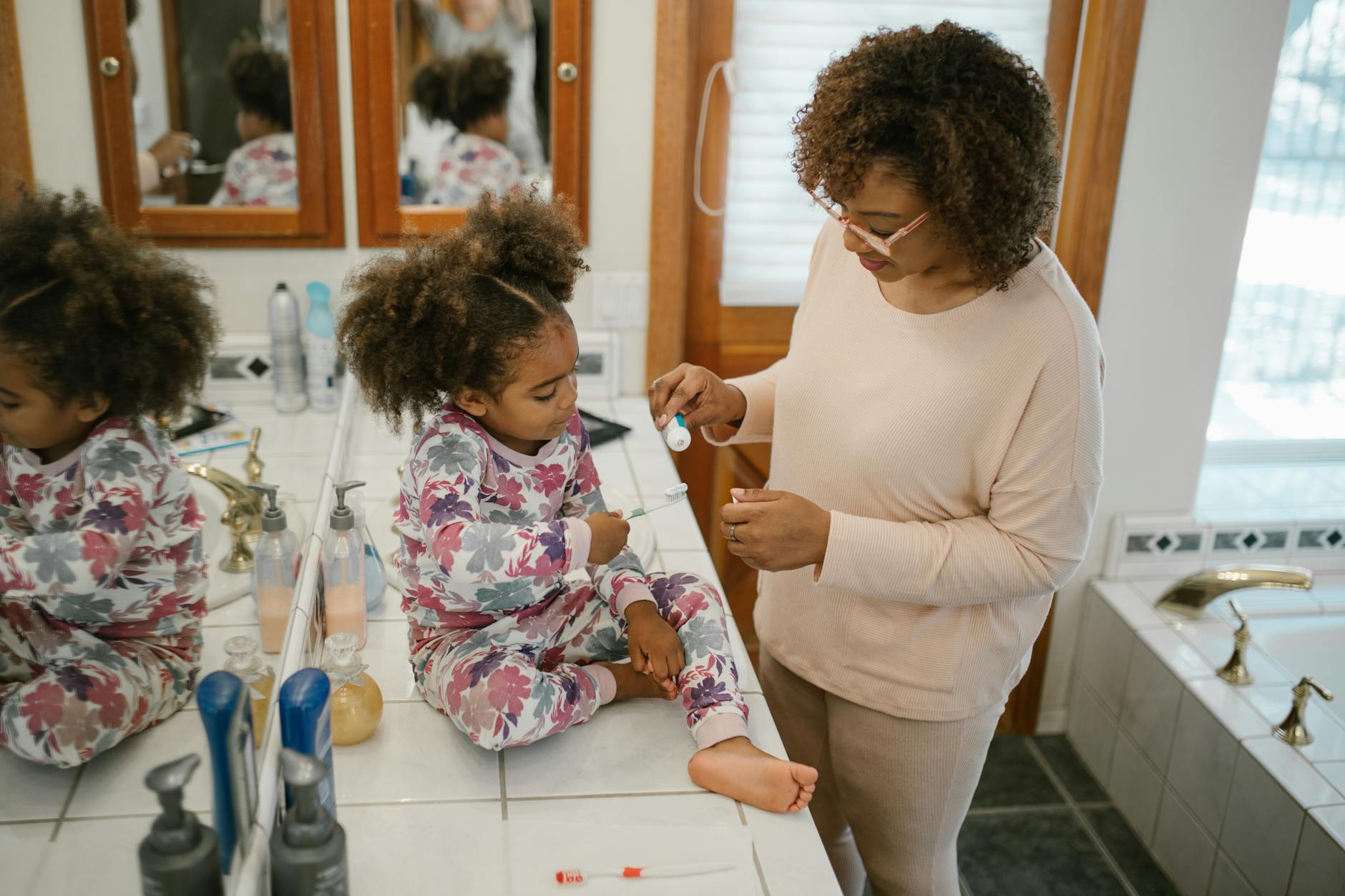
Non-Toxic Toothpaste for Kids: Fluoride-Free Options We Actually Trust
This post contains affiliate links. I may earn a small commission at no extra cost to you.
Let me tell you how this rabbit hole started. I was standing in the toothpaste aisle at Target, reading the back of a tube of bubblegum-flavored toothpaste — the kind with a cartoon character on the front — and I counted four artificial dyes, two synthetic sweeteners, and a warning that said to call poison control if more than a pea-sized amount was swallowed.
We’re talking about toothpaste. For children. That they put in their mouths twice a day.
If you’re in the same headspace I was — already intentional about what’s in your home, maybe already using Grove Collaborative for your cleaning products, checking labels on sunscreen — it only makes sense that toothpaste would eventually make it onto the list. So let’s talk about it.
Why Some Families Choose Fluoride-Free Toothpaste for Kids
I want to be straightforward here: this is a personal decision, and I’m not here to tell you what your family should do. Our pediatric dentist knows we use fluoride-free toothpaste and we have an open, honest relationship with her. That matters.
That said, here’s why we made the switch:
- Fluoride is technically a pesticide and mineral that, in large amounts, is toxic. Little kids swallow toothpaste. A lot of it. Especially when it tastes like candy.
- Dental fluorosis — white spots or streaking on permanent teeth from too much fluoride during development — is more common than most people realize.
- We try to reduce total toxic load, not just eliminate one thing. It’s the cumulative effect that we’re thinking about across sunscreen, cleaning products, food, and yes, toothpaste.
- There are genuinely good alternatives that clean teeth effectively using ingredients you can actually pronounce.
If you’re already being thoughtful about what touches your kids’ skin and what they breathe in your home (we talked about this in our post on Non-Toxic Rug Cleaner Safe for Kids Crawling: What We Actually Use in Our Florida Home), then it’s worth being just as thoughtful about what goes in their mouths every single day.
What to Look For (and Avoid) in Kids’ Toothpaste
Ingredients to Avoid
- Sodium Lauryl Sulfate (SLS) — a foaming agent that can cause mouth sores and irritation
- Artificial dyes (Red 40, Blue 1, etc.) — no reason for these to exist in toothpaste
- Saccharin or aspartame — synthetic sweeteners we avoid across the board
- Triclosan — an antimicrobial that was actually banned from soaps but still shows up in some oral care products
- Carrageenan — a thickener linked to gut inflammation
- Propylene glycol — a penetration enhancer we just don’t love
Ingredients That Are Actually Good
- Xylitol — a natural sweetener derived from birch trees that actually inhibits cavity-causing bacteria. This is the big one.
- Hydroxyapatite — a form of calcium that remineralizes enamel. This is what Japanese dentistry has used for decades instead of fluoride.
- Calcium carbonate — a gentle natural abrasive that cleans without scratching
- Coconut oil — natural antimicrobial properties
- Baking soda — classic, effective, gentle
- Essential oils (spearmint, peppermint, clove) — natural antibacterials and breath fresheners
Fluoride-Free Kids’ Toothpaste Options We’ve Actually Tried
1. Jack N’ Jill Natural Toothpaste
This is probably the most kid-friendly fluoride-free toothpaste out there, and it’s been in our bathroom longer than anything else. It’s got xylitol, organic calendula, and comes in flavors like Strawberry and Blueberry that kids actually enjoy. No SLS, no artificial sweeteners, no fluoride. The tube is also biodegradable, which is a bonus for our low-waste-leaning household.
Best for: Littles who are still learning to spit (because it’s genuinely safe to swallow in small amounts)
2. Dr. Brite Kids Toothpaste
Clean ingredient list, xylitol-based, and comes in a fun enough flavor that my kids don’t groan about brushing. Also SLS-free and certified non-toxic.
3. Hello Kids Fluoride-Free Toothpaste
You can find this one at most Targets and Walmarts now, which makes it accessible. It uses xylitol, has no artificial sweeteners or dyes, and the watermelon flavor is a hit. It’s not perfect — some versions do contain SLS — so read the label on the specific variety you’re grabbing.
Best for: Families transitioning away from conventional toothpaste who want something easy to find locally
4. Risewell Kids Hydroxyapatite Toothpaste
This one uses hydroxyapatite instead of fluoride for remineralization, which is pretty exciting if you’re a label-reader. It’s more of an investment price-wise, but the ingredient list is one of the cleanest I’ve found for kids. Our older kids use this one.
Best for: Older elementary kids whose permanent teeth are coming in
5. Burt’s Bees Kids Toothpaste
A more budget-friendly option that’s widely available. Fluoride-free, SLS-free, and made with natural flavors. Not as clean as some of the others on this list, but a solid step up from conventional.
What About Making Your Own?
Honestly? We’ve done it. When we were deep in a Charlotte Mason nature study week and running low on toothpaste at the same time (the chaos is real), I made a simple batch with coconut oil, baking soda, xylitol powder, and a drop of peppermint essential oil. The kids thought it was hilarious and it worked just fine.
That said, homemade toothpaste doesn’t have quite the same remineralization support as a product formulated with hydroxyapatite or a balanced xylitol ratio. For everyday use, we stick with one of the products above. But in a pinch? Coconut oil and baking soda will not hurt your child’s teeth.
Tying It Into the Bigger Picture
I think about the intentional home the same way I think about our Charlotte Mason approach to learning: it’s about doing the next right thing, not doing everything perfectly all at once. We didn’t overhaul every product in our home in a weekend. We made changes slowly, as things ran out, as we learned more.
Toothpaste happened because I was already thinking about what my kids were absorbing through their skin with sunscreen (we use non-toxic kids sunscreen), what they were drinking from (we use stainless steel water bottles), and what I was cleaning the house with. It just made sense to think about toothpaste too.
Same way we think about our chickens’ feed — what goes in matters. (Speaking of which, if you haven’t read How to Make Homemade Chicken Feed Recipe: A Simple Guide for Backyard Flocks, that post is all about this same mindset applied to the coop.)
We also use Wondercide for pest control around the yard and coop instead of conventional sprays — same idea. Same philosophy. Reduce what doesn’t need to be there.
A Note on Dental Health Without Fluoride
If you’re going fluoride-free, here’s what our family does to support strong teeth naturally:
- Xylitol throughout the day — we keep xylitol gum or mints for after meals when brushing isn’t possible
- Limit juice and sugary drinks — honestly the biggest cavity driver is liquid sugar
- Remineralizing toothpaste (hydroxyapatite-based for our older kids)
- Oil pulling for our oldest — she actually loves it, which surprised me
- Regular dental checkups — we see a biologic/holistic-leaning dentist and I genuinely recommend seeking one out if you’re going this route
You Don’t Have to Do It All at Once
If toothpaste feels like one more thing on a long list, just start with one change. When the current tube runs out, replace it with a cleaner option. That’s it. That’s the whole move.
This is the same grace I give myself with our homeschool, our garden, our chicken coop — we’re not going for perfection. We’re going for better, one small decision at a time. Down here in the Florida heat, with sand on the floor, chickens in the yard, and a labradoodle underfoot, “perfect” was never on the table anyway.
And honestly? That’s exactly how we like it.
📖 You Might Also Like:
- How to Make Homemade Chicken Feed Recipe: A Simple Guide for Backyard Flocks
- Best Charlotte Mason Homeschool Podcasts for Moms: My Go-To List for Encouragement and Inspiration
- How to Do Hymn Study in Your Charlotte Mason Homeschool (Without Overthinking It)
Frequently Asked Questions
Is fluoride-free toothpaste safe for kids?
Many families use fluoride-free toothpaste safely, especially when paired with other remineralizing strategies like hydroxyapatite toothpaste, xylitol use, and a low-sugar diet. It’s a personal decision best made with your child’s dentist. The key is finding a clean alternative that still supports enamel health rather than just skipping fluoride with no replacement strategy.
What is hydroxyapatite toothpaste and is it as effective as fluoride?
Hydroxyapatite is a naturally occurring form of calcium that makes up most of our tooth enamel. Studies — particularly from Japanese dentistry research — suggest it remineralizes enamel comparably to fluoride without the toxicity concerns. It’s increasingly popular in biologically-minded dental care and is a top ingredient to look for in fluoride-free toothpaste for kids.
What is xylitol and why is it in natural kids’ toothpaste?
Xylitol is a natural sugar alcohol derived from birch trees or corn that actually inhibits the growth of Streptococcus mutans — the main bacteria responsible for tooth decay. Unlike sugar, xylitol cannot be metabolized by cavity-causing bacteria, making it a genuinely beneficial sweetener in oral care products rather than just a flavor additive.
What toothpaste ingredients should I avoid for my kids?
The main ingredients many intentional families avoid include: sodium lauryl sulfate (SLS), artificial dyes like Red 40 and Blue 1, synthetic sweeteners like saccharin and aspartame, triclosan, carrageenan, and propylene glycol. Reading the full ingredient list rather than just the front label is always the move.
Can young toddlers and babies use fluoride-free toothpaste?
Yes — many fluoride-free options like Jack N’ Jill are specifically formulated to be safe if swallowed in small amounts, making them ideal for babies and toddlers who haven’t mastered spitting yet. Always check the specific product, as even natural toothpastes can have ingredients not suitable for infants under a certain age. A tiny smear of xylitol-based toothpaste on a soft-bristled baby toothbrush is a good starting point.
Leave a Reply