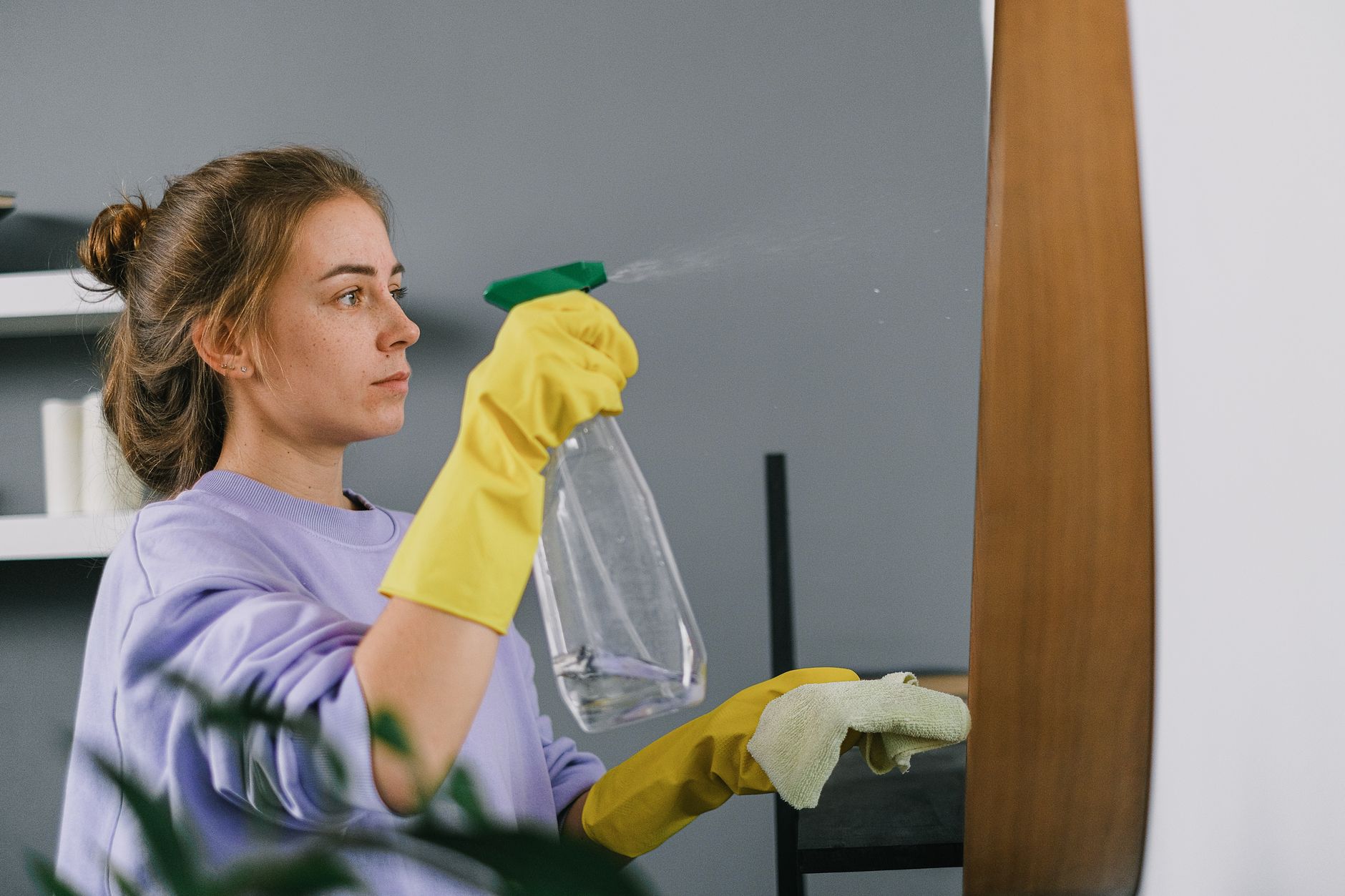
DIY Natural Cleaning Products for Every Room (That Actually Work and Cost Almost Nothing)
This post contains affiliate links. I may earn a small commission at no extra cost to you.
I remember the first time I really read the label on a bottle of conventional bathroom cleaner. I was standing there in the cleaning aisle at Walmart, kids in the cart, and something made me flip it over. I couldn’t pronounce half of it. The warnings alone — keep away from children, avoid skin contact, do not inhale — made me set it back on the shelf and walk away.
That was a few years ago now. We haven’t bought a single bottle of conventional cleaner since.
Here’s the thing: switching to DIY natural cleaning products sounds like a big lifestyle overhaul. It’s really not. You need maybe five ingredients, some glass spray bottles, and fifteen minutes. And once you make the switch, you’ll wonder why you ever paid $4.99 for something that required ventilation.
This is especially important to me because our kids are in this house all day. We homeschool. They’re crawling on the floors, eating at the table I just wiped down, sticking their faces in everything. I want clean — I just want clean without a side of mystery chemicals.
Let me walk you through what we actually use, room by room.
The Basics You’ll Need First
Before we get into the recipes, let me give you the short shopping list. Almost everything stems from these:
- White distilled vinegar — degreaser, disinfectant, deodorizer
- Baking soda — gentle abrasive, odor absorber
- Castile soap (Dr. Bronner’s is our go-to) — all-purpose cleaning base
- Hydrogen peroxide (3%) — natural disinfectant
- Essential oils — tea tree, lavender, lemon for antimicrobial properties and actual good smells
- Distilled water — extends shelf life of sprays
You’ll also want a few glass spray bottles. I pick mine up from Grove Collaborative — they have great non-toxic starter kits that come with everything you need.
That’s honestly it. Everything below comes from those six things.
Kitchen: The Room That Needs It Most
All-Purpose Counter Spray
This is the one I make most often because we go through it fast.
- 1 cup distilled water
- 1 cup white vinegar
- 15 drops lemon essential oil
- 10 drops tea tree oil
Shake and spray. Wipe with a clean cloth. Done.
Note: Skip vinegar on natural stone countertops — it can etch the surface. Use just castile soap and water instead.
Dish Soap Boost
We use castile soap as our dish soap base, but when things get greasy (hello, cast iron cleanup night), I add a few drops of lemon oil. Speaking of cast iron — if you’re still using non-stick pans with their questionable coatings, our family made the switch to a Lodge cast iron skillet and never looked back. Genuinely non-toxic, lasts forever, and you clean it with barely anything.
Refrigerator and Appliance Wipe-Down
Equal parts water and white vinegar in a spray bottle. That’s it. Wipe down the fridge shelves, the microwave interior, the stovetop. It cuts through grime without leaving any residue or smell once it dries.
Drain Freshener
Pour 1/2 cup baking soda down the drain, followed by 1/2 cup vinegar. Let it fizz for 5-10 minutes, then flush with hot water. The kids think this is basically a science experiment, which, honestly, it is — and we talk about it that way.
Bathrooms: Where the Worst Products Usually Live
Toilet Bowl Cleaner
- 1/2 cup baking soda
- 1/4 cup castile soap
- 10 drops tea tree oil
Stir it into a paste. Spread it around the bowl with the brush, let it sit for 5 minutes, scrub, flush. That’s a clean toilet with nothing scary in it.
Tile and Tub Scrub
Sprinkle baking soda directly onto the wet surface, add a few drops of castile soap, scrub with a brush or cloth. Rinse well. This works so well on grout — I was genuinely shocked the first time I tried it.
Mirror and Glass Spray
- 1 cup distilled water
- 1 cup white vinegar
- Optional: a tiny drop of dish soap if there’s toothpaste splatter
Spray and wipe with a microfiber cloth for streak-free mirrors. My daughter does the bathroom mirrors now as part of her morning chores. At seven years old, I feel completely fine with her handling this.
Living Areas and Floors
All-Purpose Floor Cleaner
For our tile and wood floors (we have mostly tile here in the Florida heat because, same, every Florida home):
- 1 gallon warm water
- 1/2 cup white vinegar
- 5 drops lavender or lemon essential oil
Mop as usual. It dries clean, no residue, and smells like a spa for about ten minutes, which I fully enjoy.
Skip vinegar on hardwood — use just a few drops of castile soap in warm water instead.
Fabric and Upholstery Freshener
- 1 cup distilled water
- 1 tablespoon baking soda (shake to dissolve)
- 10 drops lavender oil
Spray lightly on couches, curtains, rugs. Especially helpful with a labradoodle who thinks the couch is her couch. (Looking at you, Biscuit.)
Dusting Spray
A tiny amount of olive oil mixed with a few drops of lemon essential oil on a microfiber cloth works beautifully on wood surfaces. It cleans, conditions, and leaves a gentle shine.
Laundry Room
If you haven’t already made the switch to homemade laundry detergent, I’ve already written all about it over here — How to Make Homemade Laundry Detergent (Non-Toxic, Actually Works, and Costs Almost Nothing). It is genuinely the best switch we ever made.
We also use wool dryer balls instead of dryer sheets — no synthetic fragrance, no fabric softener chemicals, and they cut dry time down too.
For tough stains on kids’ clothes (and it is always muddy kids’ clothes here in Northwest Florida), I spray hydrogen peroxide directly on the stain, let it sit 10 minutes, then wash. Works on grass, food, and chicken coop adventure aftermath.
The Chicken Coop (Because Yes, That Counts)
Okay, this one is specific to those of us with backyard flocks — but it matters. Conventional coop cleaning products can be harsh on chickens’ sensitive respiratory systems.
We use:
- White vinegar diluted 50/50 with water as a general coop spray between deep cleans
- Diatomaceous earth (food-grade only!) dusted in nest boxes and along roost bars for mites
- Wondercide for pest control around the coop perimeter
I’ve got a whole detailed post on our routine — Natural Chicken Coop Deodorizer and Cleaning Routine (What Actually Works for a Backyard Flock) — if you want to go deeper on that.
Making It a Learning Moment (Because Charlotte Mason Said So)
One thing I love about making our own cleaners is how naturally it turns into a real lesson. My kids have learned fractions measuring out ingredients. They’ve learned chemistry watching the vinegar and baking soda react. They understand why tea tree oil works — we’ve talked about plant compounds and antimicrobial properties in the most basic, kid-friendly way.
This is exactly the kind of living, hands-on education that Charlotte Mason was talking about. It’s not a worksheet. It’s real life. They help me make a batch of counter spray, they label the bottle, and they use it. That’s science, handwriting, and home economics wrapped into one afternoon.
If you want more of this kind of nature-and-life-integrated learning, check out my Charlotte Mason Nature Study Journal Prompts by Season — it’s the same spirit, just outside.
A Note on Making This Sustainable
The goal here isn’t perfection. It’s just better. We didn’t switch everything overnight, and honestly, there are still a couple of things we haven’t fully replaced yet. That’s okay. Start with one room, one spray bottle. See how it goes.
And if you want to simplify your non-toxic shopping even more, Grove Collaborative delivers clean, simple household products and refills on a schedule — so you’re not running out of castile soap mid-mopping session on a Tuesday.
Sweet friend, your home doesn’t have to be a chemistry lab of warnings and fumes to be clean. A few simple ingredients, some glass bottles, and a little intention goes a long way. Your kids are watching everything — how you clean, what you choose, what you decide matters. And this? This is one of those small, quiet things that adds up to something really good over time.
📖 You Might Also Like:
- How to Make Homemade Laundry Detergent (Non-Toxic, Actually Works, and Costs Almost Nothing)
- Natural Chicken Coop Deodorizer and Cleaning Routine (What Actually Works for a Backyard Flock)
- Charlotte Mason Nature Study Journal Prompts by Season (For Real Kids Who’d Rather Be Outside)
Frequently Asked Questions
What are the best natural ingredients for DIY cleaning products?
The five you really need are white distilled vinegar, baking soda, castile soap, hydrogen peroxide (3%), and essential oils like tea tree and lemon. From just those ingredients, you can make effective cleaners for every room in your home.
Are DIY natural cleaners actually effective, or do I still need commercial products?
For everyday cleaning — counters, toilets, floors, glass, laundry, and more — DIY natural cleaners work extremely well. Vinegar disinfects, baking soda scrubs, tea tree oil has real antimicrobial properties, and castile soap cuts grease. They may take an extra minute of dwell time compared to harsh chemical formulas, but they genuinely get the job done.
Is it safe to mix vinegar and baking soda in a cleaning recipe?
You can use them together (like for a drain cleanse where the fizzing action is the point), but you generally shouldn’t pre-mix them in a spray bottle as a cleaner. They neutralize each other, reducing the effectiveness of both. Use them separately for best results.
Can I use vinegar to clean all surfaces?
Vinegar is great for most surfaces — tile, glass, laminate counters, appliances, and floors — but you should avoid using it on natural stone (like marble or granite) because the acidity can etch and damage the surface. Also avoid it on hardwood floors and cast iron. Use plain castile soap and water for those instead.
How long do homemade natural cleaning products last?
Most DIY spray cleaners made with vinegar, water, and essential oils will last 2–4 weeks when stored in a cool, dark spot in glass bottles. Avoid direct sunlight, which can break down the essential oils faster. Recipes that include fresh citrus (like citrus peels infused in vinegar) should be used within a few weeks as well.
Leave a Reply