Author: pmorris1620@gmail.com

  • Chicken Pecking Order Problems: How to Manage Your Flock Without Losing Your Mind

    Chicken Pecking Order Problems: How to Manage Your Flock Without Losing Your Mind

    Chicken Pecking Order Problems: How to Manage Your Flock Without Losing Your Mind

    🌿 The Short Version: Pecking order drama is normal in backyard flocks, but it doesn’t have to mean bloodshed. This post covers why it happens, when to intervene, and simple, practical ways to keep the peace — including how we handle it with our own Northwest Florida flock.

    This post contains affiliate links. I may earn a small commission at no extra cost to you.

    If you’ve ever walked out to your coop in the morning and found one hen looking rough — missing feathers, hunched in the corner, getting chased away from the waterer — you already know that chicken pecking order problems are real. And they can go from “a little scrappy” to genuinely worrying faster than you’d expect, especially in Florida’s summer heat when everybody’s already a little irritable.

    We’ve been keeping backyard chickens for a few years now, and I’ll be honest: the social dynamics of a small flock surprised me more than almost anything else about chicken keeping. These birds have opinions. Strong ones. And they are not shy about expressing them.

    The good news? Most pecking order behavior is completely natural and manageable. You just have to know what you’re looking at.

    What the Pecking Order Actually Is (And Why It Exists)

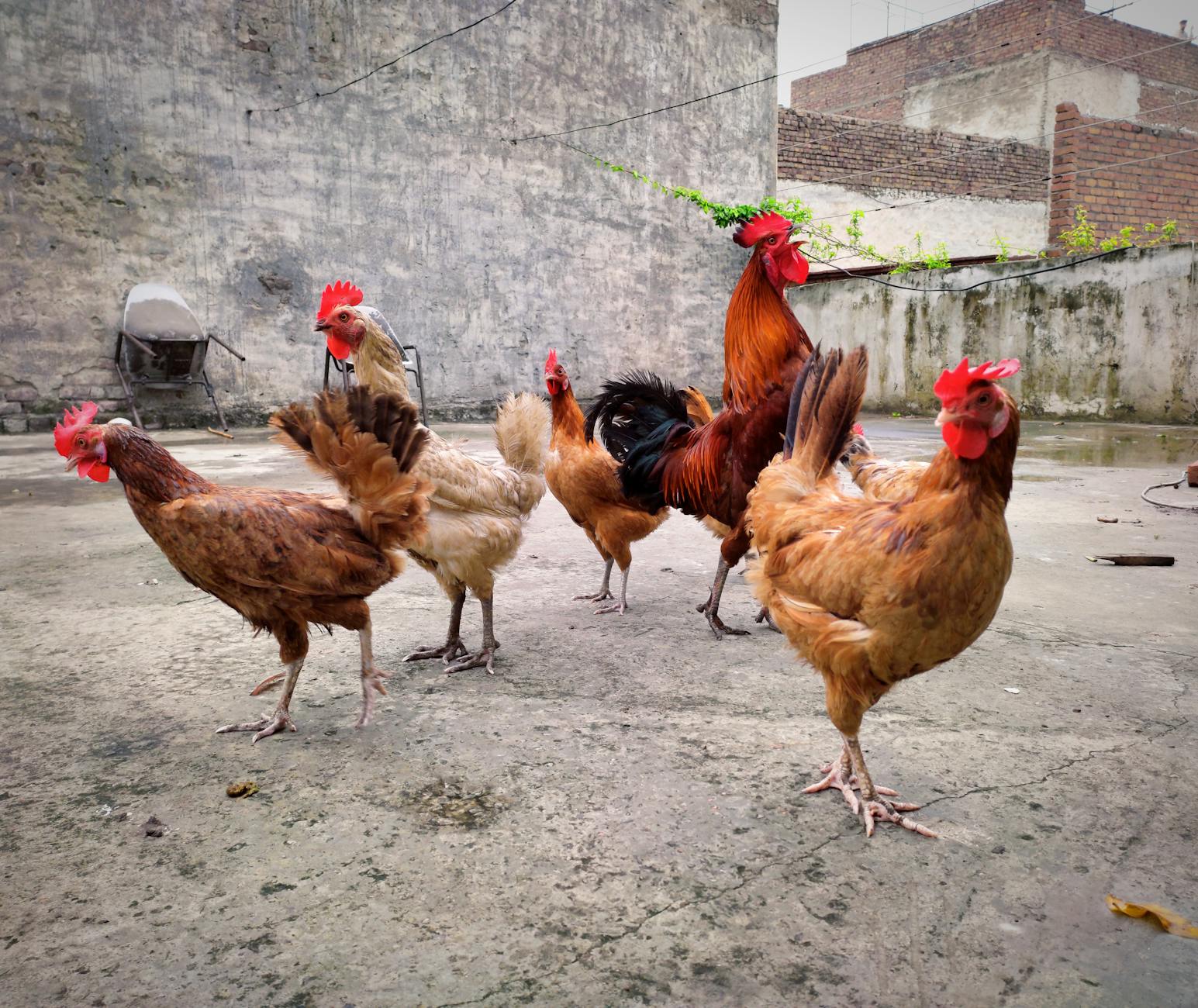
    Chickens are flock animals with a very clear social hierarchy. Every bird knows her place — who she can boss around, and who she has to defer to. That structure is called the pecking order, and it exists for a real reason: it actually reduces conflict in a stable flock by making the rules clear to everyone.

    The problems start when that hierarchy gets disrupted. Adding new birds, losing a hen, moving to a new coop, overcrowding, or even a change in lighting can throw the whole social structure into chaos. And when the hierarchy is unsettled, everybody’s squabbling to figure out who’s who again.

    This has been a genuinely great nature study lesson for our kids, by the way. Watching the flock work out their social structure — talking through why animals behave this way, what it tells us about community and resources and survival — that’s living science right in your backyard. We pull out our nature journal and just observe sometimes. Charlotte Mason would approve.

    When Pecking Order Behavior Crosses the Line

    Some chasing and minor pecking? That’s normal. A hen getting bumped away from the feeder and then coming back a few minutes later? Normal. But here’s when you need to step in:

    • Broken skin or bleeding. This is urgent. Chickens are drawn to the color red and will escalate on a bleeding bird fast.
    • One bird being relentlessly excluded from food, water, or shelter.
    • Feather pulling that creates bare patches — especially on the back of the head or neck.
    • A hen hiding constantly or refusing to come out of the nesting box.

    If you’ve got wounds to deal with, I always keep our non-toxic wound care supplies stocked for exactly this reason — the same kit works for the kids and the chickens, which my kids think is hilarious.

    Our Favorite Practical Solutions for Pecking Order Problems

    1. Give Them More Space

    This is the single biggest factor. Crowding is the number-one cause of flock aggression, and in the Florida heat, stressed birds are cranky birds. The general rule is 4 square feet per bird inside the coop and 10 square feet per bird in the run — and honestly, more is always better. If your run feels tight, expanding it or adding free-range time can make a dramatic difference almost overnight.

    2. Add Multiple Feeding and Watering Stations

    If the dominant hen can physically block access to the only feeder, lower-ranking birds will go without. We use nipple-style waterers placed at different spots in the run — this style is especially great in Florida because it stays cleaner in the humidity. A good chicken waterer with multiple nipples means no one bird can monopolize it. Same goes for feeders — two feeders on opposite ends of the run works wonders.

    3. Introduce New Birds the Right Way

    This is where most pecking order chaos comes from — throwing new birds straight into an established flock. We always do a “look but don’t touch” introduction period of at least 2 weeks. New birds go into a separate pen inside or adjacent to the run so everyone can see and smell each other without physical contact. By the time they actually share space, the flock has already processed the newcomers as “part of the scene” and the drama is much lower.

    If you’re newer to the whole flock management thing, Storey’s Guide to Raising Chickens is genuinely the book I recommend to every backyard chicken mama. It covers flock dynamics in a way that actually makes sense.

    4. Enrich the Environment

    Bored chickens pick on each other. It’s just what they do. We hang cabbage heads in the run, scatter scratch in the grass to encourage foraging, and add stumps and roosts at different heights so birds can get away from each other. In our Northwest Florida yard, there’s usually enough bugs and vegetation to keep them busy — but in the dry season or during extreme heat when we limit free ranging, enrichment matters more.

    For the coop itself, make sure you have enough roost space so lower-ranking hens aren’t forced to sleep next to the birds that peck them. Our roost bar spacing post goes into the details on this.

    5. Treat for Parasites

    This one gets overlooked but it’s real — a hen who’s uncomfortable from mites or lice is more irritable and more likely to be a problem, either as an aggressor or a target. We use food-grade diatomaceous earth in the dust bath area and do regular checks. It’s one of those unglamorous chicken keeping tasks that pays off big.

    6. Remove a Truly Aggressive Bird Temporarily

    If one hen is causing serious harm, separating her (not the victim) for a week or two can reset the dynamic. When she goes back in, she loses her dominant position and has to re-earn it — usually with a lot less drama the second time around. This is sometimes the kindest thing you can do for the rest of the flock.

    What We Tell Our Kids About It

    Honestly, the pecking order has become one of our favorite unplanned homeschool topics. We’ve talked about animal behavior, about why community rules matter, about fairness and resources and what happens when things feel scarce. My kids have made observations in their nature journals, sketched the flock, and we’ve looked up chicken behavior in a kid-friendly chicken guide that breaks it all down in a way they actually understand.

    There’s something really grounding about watching animals live out actual biology concepts. No worksheet required. This is exactly the kind of living education I was hoping for when we started down this chicken-keeping path.

    And if your flock has recently started laying and you’re navigating all the new dynamics that come with that life stage, my post on what to expect when your hens start laying is a good companion read — flock behavior often shifts around that time too.

    A Few Extra Things That Help

    • Automatic coop door — We use an automatic coop door so our girls can get outside early in the morning before we’re even up. More space earlier in the day = less tension. It’s also been a sanity saver for this busy homeschool mama.
    • Consistent routine — Chickens are creatures of habit. The more consistent your feeding, letting-out, and closing-up schedule, the calmer your flock tends to be.
    • Protein during molt — Feather-pecking often spikes during molt because stressed birds crave protein. Adding mealworms or upping their feed quality during this season helps.

    You’ve Got This

    Pecking order drama feels alarming the first time you really see it, but most of the time it’s manageable with some simple adjustments. More space, more resources, thoughtful introductions, and a watchful eye will carry you through most situations. Your flock wants to establish order — your job is just to make sure the environment supports peace rather than competition.

    If you want to go deeper into keeping a healthy, happy flock without a lot of complicated products or chemicals, check out how we make chicken keeping easier with a few smart automations — it’s made a big difference for us, especially during busy homeschool seasons when I can’t be checking on everyone every hour.

    Here’s to a peaceful coop and hens who actually like each other. 🐔


    📖 You Might Also Like:

    Frequently Asked Questions

    Is pecking order behavior normal in backyard chickens?

    Yes, completely. Every flock establishes a pecking order, and some chasing, minor pecking, and jostling for position is totally normal chicken behavior. It only becomes a problem when a bird is being injured, excluded from food and water, or relentlessly bullied to the point of stress or hiding.

    How do I introduce new chickens to an existing flock without fighting?

    The best method is a slow introduction — keep new birds in a separate pen where the existing flock can see and smell them but can’t make physical contact. Do this for at least 2 weeks before combining them. This allows the flock to get used to the newcomers before actual social jostling begins, which dramatically reduces aggression.

    What should I do if one hen is being severely bullied?

    First, separate the injured or bullied hen so she can recover safely. Treat any wounds right away. Then look at your setup — do birds have enough space, multiple feeding and watering stations, and environmental enrichment? If one specific hen is the primary aggressor, try removing *her* for a week or two. When she’s reintroduced, she’ll lose her dominant position and typically settles back in with less aggression.

    Why is my chicken losing feathers from being pecked?

    Feather pecking is often a sign of overcrowding, boredom, nutritional deficiency (especially protein), or parasite stress. It can also spike during molt when birds are naturally losing feathers anyway. Check your space per bird, add enrichment to the run, make sure your feed has adequate protein, and check birds regularly for mites or lice.

    Does the pecking order change when you add or lose a hen?

    Yes — any change in flock composition can temporarily disrupt the established hierarchy and lead to a period of re-establishing order. This is normal but can mean more squabbling for a week or two. Adding new birds slowly and thoughtfully (see the introduction method above) minimizes this disruption significantly.

  • Best Homeschool Convention Florida 2026: A Real Mama’s Guide to Planning Your Year

    Best Homeschool Convention Florida 2026: A Real Mama’s Guide to Planning Your Year

    This post contains affiliate links. I may earn a small commission at no extra cost to you.

    If you’re sitting at your kitchen table right now, surrounded by curriculum catalogs and wondering how on earth you’re supposed to figure out next year’s plan, I see you. Convention season is coming, and honestly? It’s one of my favorite times in our homeschool rhythm. There’s something about walking into a convention hall full of families who get it — who understand why we do this wild, beautiful, exhausting thing called home education.

    But Florida is a big state, y’all. And figuring out which convention is worth the drive, the hotel stay, and the inevitable “can we get Chick-fil-A on the way home?” negotiations… that takes some planning. So let’s talk about the best homeschool convention options in Florida for 2026 and how to make the most of whichever one you choose.

    Why Attend a Homeschool Convention in the First Place?

    I’ll be honest — the first year I homeschooled, I skipped convention season entirely. I figured I could just order everything online and save myself the trouble. Big mistake.

    Here’s what I didn’t understand then: conventions aren’t just about buying curriculum. They’re about getting your hands on materials before you commit. Flipping through that math program. Seeing whether the science kit actually looks sturdy or like it’ll fall apart by October. Listening to speakers who remind you why you started this journey when you’re feeling burnt out by February.

    Plus, for us Charlotte Mason families? Convention vendor halls are treasure troves. I’ve found nature study resources, living books, and art supplies I never would have discovered scrolling Amazon at midnight.

    Top Florida Homeschool Conventions for 2026

    Florida Parent Educators Association (FPEA) Convention

    Location: Orlando area (typically at the Orange County Convention Center)

    Expected Dates: Late May 2026 (dates usually announced in fall 2025)

    This is the big one, y’all. FPEA is Florida’s largest homeschool convention, and it’s worth the trip if you’ve never been. The vendor hall is massive — we’re talking rows upon rows of curriculum, manipulatives, books, and yes, even some homesteading supplies (I may have picked up chicken-keeping resources here before).

    The speaker lineup typically includes both nationally known homeschool voices and Florida-specific sessions on things like the Gardiner Scholarship and — relevant to many of us — the Florida PEP scholarship. If you’re using PEP funds for curriculum purchases, this is a great place to see approved vendors in person.

    Pro tip: Wear comfortable shoes. I’m not kidding. My first year I wore cute sandals and regretted every life choice by 2 PM.

    Teach Them Diligently Convention

    Location: Rotates locations, but often includes a Florida stop

    Expected Dates: Check their website in early 2026 for Florida dates

    Teach Them Diligently has a different vibe than FPEA — it’s more workshop-intensive and tends to draw families who want deep dives into specific topics. The vendor hall is smaller but curated, and the sessions often focus on family discipleship alongside academics.

    If you’re feeling overwhelmed by all the options and want a more focused experience, TTD might be your speed.

    Regional and Smaller Conventions

    Florida also has several regional homeschool conferences that are worth considering, especially if you’re in the Panhandle like we are and Orlando feels like a trek (because it is — it’s a solid five-hour drive from Pensacola).

    Keep an eye on:

    • NWFHE (Northwest Florida Home Educators) events and workshops
    • Local co-op conferences — many larger co-ops host their own curriculum fairs
    • Used curriculum sales — not technically conventions, but often held in spring and a great way to find deals

    What to Look for at a Homeschool Convention

    Curriculum You Can Touch

    This is the magic of conventions. You can actually flip through that Math-U-See manipulative kit before you buy it. You can see whether those watercolor pencils are the cheap kind or the good kind (we love Faber-Castell for nature journaling, by the way).

    Bring a list of what you’re considering for each child, but stay open. Some of our best curriculum finds have been things I stumbled across while wandering.

    Nature Study and Charlotte Mason Resources

    If you follow a Charlotte Mason approach like we do, conventions are goldmines for living books, nature guides, and art supplies. I always check for:

    • Quality nature journals (we use these sturdy ones that hold up to watercolors and pressed flowers)
    • Field guides — a good Sibley bird guide is worth its weight in gold for Florida nature study
    • Handicraft supplies
    • Poetry and folk song collections

    Vendors like Rainbow Resource and Timberdoodle often have convention booths with show specials.

    Sessions That Fill Your Cup

    Don’t just shop. Sit in on at least one or two sessions that speak to your heart, not just your lesson plans. The burnout-prevention talks. The “why we homeschool” reminders. The sessions about raising kids who play outside and read books and aren’t glued to screens.

    Those are the ones that send me home ready to keep going.

    Practical Tips for Convention Day

    What to Bring

    • A rolling cart or large tote bag (you will buy things)
    • Comfortable shoes (I said it twice because I mean it)
    • Snacks and a water bottle
    • A phone charger
    • Your curriculum list and budget written down
    • Cash for used book sales

    If You’re Bringing Kids

    Some conventions offer children’s programs; some don’t. FPEA typically has options for kids, which is a lifesaver. If you’re bringing littles, plan for shorter days and build in breaks.

    Or — and this is what we sometimes do — make it a mama trip. Leave the kids with dad, grandma, or a trusted friend, and give yourself permission to browse slowly, attend sessions, and eat lunch sitting down.

    Making Convention Finds Work for Florida Life

    One thing I’ve learned: not all curriculum is created equal for Florida families. We homeschool year-round (because summer here is basically survival mode anyway), we spend a LOT of time outside in fall through spring, and our nature study looks different than families up north.

    When you’re evaluating curriculum at conventions, think about:

    • Does this work with our outdoor lifestyle?
    • Can I use this on our back porch while the kids take breaks to check on the chickens?
    • Is this flexible enough for our Florida rhythm?

    I’ve passed on beautiful curriculum that required too much indoor seat work. Our best resources are the ones that go outside with us — field guides, sketch supplies, magnifying glasses, and books we can read under the oak tree.

    Bringing It Home

    Here’s the truth about conventions: you’re going to feel overwhelmed. You’re going to see fifteen things you want to buy and probably only have budget for three. You’re going to second-guess yourself in the car on the way home.

    That’s normal.

    But you’re also going to come home with fresh ideas, a few new resources, and maybe — if you let yourself — a renewed sense of why you’re doing this in the first place. Why you chose slower mornings and backyard adventures and learning that looks like life, not just worksheets.

    So mark your calendar for spring 2026. Start saving a little convention fund if you can. And know that whatever you choose — FPEA, Teach Them Diligently, or a small local event — you’re investing in your homeschool in a way that matters.

    I’ll probably see you in the nature study aisle. I’ll be the one flipping through bird guides with coffee in hand, wondering if I can justify one more set of watercolor pencils.

    Happy planning, friend. You’ve got this.

  • How to Teach Kids About Florida History in Your Homeschool (Without Boring Textbooks)

    How to Teach Kids About Florida History in Your Homeschool (Without Boring Textbooks)

    If you’ve ever cracked open a dry textbook about Florida history and watched your kids’ eyes glaze over somewhere between “Spanish explorers” and “statehood,” you’re not alone. I’ve been there, y’all. But here’s the beautiful thing about homeschooling in the Sunshine State — we’re literally surrounded by history. It’s in our beaches, our springs, our old forts, and even in our own backyards. Teaching Florida history doesn’t have to mean worksheets and memorizing dates. It can be an adventure.

    This post contains affiliate links. I may earn a small commission at no extra cost to you.

    Why Florida History Matters (Especially for Florida Kids)

    Our kids are growing up here. They’re splashing in the Gulf, spotting alligators on nature walks, and yes — in our case — collecting eggs from our backyard chickens while mockingbirds sing overhead. But do they know why Florida looks and feels the way it does? Do they understand the Timucua people who lived here for thousands of years, or why Pensacola claims to be the oldest European settlement in the country?

    When we teach Florida history well, we’re not just checking a box. We’re helping our kids understand the ground beneath their feet. And honestly? Florida has one of the most fascinating, weird, and wild histories of any state. Pirates, shipwrecks, Seminole Wars, the space race — it’s basically a living adventure book.

    A Charlotte Mason Approach to Florida History

    If you follow a Charlotte Mason style like we do, you already know that living books beat dry textbooks every time. The same goes for history. Instead of reading about Florida from a distance, we want our kids to step into the story.

    Start with Living Books

    Seek out biographies, historical fiction, and narrative histories written in an engaging way. For elementary-age kids, look for picture books about the Seminole tribe, stories set in old St. Augustine, or books about Florida’s wildlife and how it shaped early settlements.

    Your local library is a goldmine, but I also love browsing Rainbow Resource for living books organized by topic and age. They have a great selection for state history studies.

    Add Narration and Nature Journals

    After reading, have your kids narrate back what they learned. It’s simple but powerful — and very Charlotte Mason. For younger kids, this might be a few sentences. Older elementary kids can write or draw their narration.

    We keep a nature journal that doubles as a history journal when we visit historical sites. The kids sketch what they see — an old cannon at Fort Pickens, a replica Seminole chickee hut, the lighthouse at St. Marks. These drawings become treasures.

    Hands-On History: Field Trips and Experiences

    This is where homeschooling in Florida really shines. We have so many places to explore.

    Northwest Florida History Spots We Love

    Living in the Pensacola area, we’re spoiled for historical field trips:

    • Fort Pickens — Part of Gulf Islands National Seashore, this Civil War-era fort is incredible for exploring. Pack a picnic and make a day of it.
    • Pensacola Historic Village — A whole block of preserved buildings from different eras. The kids love the old train and one-room schoolhouse.
    • National Naval Aviation Museum — Free admission and full of history about flight, WWII, and the space program.
    • St. Augustine — A bit of a drive, but worth it for the Castillo de San Marcos and the old city streets.

    Make It an Adventure

    We treat field trips like expeditions. The kids bring their journals, watercolor pencils for sketching, and sometimes a pocket microscope for examining artifacts or natural finds along the way. History becomes multisensory.

    And yes, sometimes the dog comes too — at least to the outdoor spots. She’s very patient during our “learning stops.”

    Connecting Florida History to Nature Study

    One of my favorite ways to teach Florida history is through our natural surroundings. The two are deeply connected.

    Native Plants, Animals, and Early Peoples

    The Timucua, Apalachee, and other native peoples lived in relationship with Florida’s ecosystems. When we study saw palmettos, we can talk about how native tribes used every part of the plant. When we spot a great blue heron, we can discuss how birds were essential to early Floridians for food and feathers.

    We use the Sibley Guide to Birds constantly on our nature walks. It’s not just for bird identification — it opens conversations about migration patterns, habitats, and how Florida’s location made it a crossroads for wildlife and people alike.

    Chickens as a History Lesson

    Okay, hear me out. Our backyard chickens have become an unexpected gateway to history. Chickens were brought to the Americas by Spanish explorers. When we talk about early Florida settlements, the kids connect it to something real — those fluffy birds out back scratching in the dirt.

    If your family keeps chickens, the Kid’s Guide to Keeping Chickens has some great historical tidbits about the role of poultry in early American life. It’s a fun tie-in.

    Simple Ways to Weave Florida History Into Daily Life

    You don’t need a formal curriculum to teach Florida history. Here are some easy, everyday approaches:

    • Map work: Keep a Florida map on the wall and mark places as you learn about them.
    • Timeline: Add Florida events to your history timeline alongside world history.
    • Cooking: Try recipes inspired by early Florida — think seafood, citrus, and dishes influenced by Spanish and Caribbean cuisines.
    • Storytime: Read a Florida history picture book during your morning basket time.
    • Nature walks: Identify native plants and animals and discuss how early Floridians used them.

    Resources for Florida History Homeschool Studies

    If you want a more structured approach, there are some great options:

    • Florida history unit studies: Timberdoodle sometimes carries state history resources, and they’re great for hands-on learners.
    • Library books: Ask your librarian for the Florida history section. Most have a dedicated shelf.
    • Junior Ranger programs: Many Florida state and national parks offer free Junior Ranger booklets that teach history through activities.
    • Online resources: The Florida Memory project (floridamemory.com) has free historical photos and documents that are fascinating for older kids.

    Embrace the Adventure

    Teaching Florida history doesn’t have to feel like school. It can feel like treasure hunting, like exploring, like becoming a little bit of a time traveler. When our kids understand the stories of this land — the people, the struggles, the triumphs — they become more connected to where they live.

    And isn’t that what we want? Kids who notice things. Kids who ask questions. Kids who feel rooted in their place in the world.

    So grab some books, pack a bag with journals and snacks, and head out to explore. Florida history is waiting — and trust me, it’s way more interesting than any textbook gives it credit for.

    Now if you’ll excuse me, I’ve got a six-year-old asking if the chickens are descended from dinosaurs and Spanish explorers. We’ve got some research to do.

    —

    What’s your favorite way to teach Florida history? I’d love to hear about your favorite field trip spots or living books in the comments!

  • Non-Toxic Rug Cleaner Safe for Kids Crawling: What We Actually Use in Our Florida Home

    Non-Toxic Rug Cleaner Safe for Kids Crawling: What We Actually Use in Our Florida Home

    This post contains affiliate links. I may earn a small commission at no extra cost to you.

    If you’ve got little ones who spend half their day on the floor—building block towers, playing with toy animals, or just sprawled out looking at picture books—you’ve probably had that moment. You know the one. You’re watching your toddler mouth a toy that just touched the rug, or your baby is doing that adorable army crawl right across the carpet, and you think: What exactly did I last clean this thing with?

    I had that moment about four years ago, and it sent me down a rabbit hole I’m honestly grateful for now. Finding a non-toxic rug cleaner safe for kids crawling became a bit of an obsession—but in the best way. Because once you know better, you do better, right?

    Why Regular Rug Cleaners Aren’t Great for Crawling Babies and Kids

    Here’s the thing most of us don’t think about: conventional carpet and rug cleaners are designed to make rugs look clean and smell fresh. But those fresh scents? Usually synthetic fragrances packed with phthalates. Those stain-fighting powers? Often come from chemicals like perchloroethylene or 2-butoxyethanol—stuff linked to respiratory issues, skin irritation, and worse.

    Now imagine your baby crawling across that freshly cleaned rug, hands down, face inches from the fibers. Then those hands go straight into their mouth. Babies and young kids are especially vulnerable because their bodies are still developing, and they’re way closer to the ground (and more likely to lick things) than we are.

    In Florida, we’ve got the added challenge of humidity. Our rugs can hold onto moisture, which means they can also hold onto whatever we spray on them—and potentially grow mold or mildew if we’re not careful. So I needed something that would clean effectively, dry well in our sticky Gulf Coast air, and not leave behind anything I’d worry about my kids absorbing through their skin or breathing in.

    What to Look for in a Non-Toxic Rug Cleaner

    When I started researching, I learned to flip the bottle and actually read labels—or better yet, look for products that fully disclose their ingredients. Here’s my checklist:

    Ingredients to Avoid

    • Synthetic fragrances (“fragrance” or “parfum” on labels)
    • Chlorine bleach
    • Formaldehyde or formaldehyde-releasing preservatives
    • Phthalates
    • Triclosan
    • Optical brighteners

    Ingredients That Are Generally Safe

    • Plant-based surfactants
    • Essential oils (used sparingly and appropriately)
    • Enzymes (great for breaking down organic messes—hello, mud and mystery stains)
    • Vinegar and baking soda in DIY recipes
    • Castile soap

    Our Go-To Non-Toxic Rug Cleaning Routine

    I’m not someone who loves complicated cleaning routines. Between homeschooling, keeping the chickens happy, and making sure the dog hasn’t eaten something he shouldn’t, I need simple. Here’s what actually works for us.

    For Regular Maintenance

    I vacuum frequently—probably more than I’d like—because between the Florida sand that sneaks in and the general chaos of childhood, our rugs see a lot. For a quick refresh between deep cleans, I sprinkle baking soda on the rug, let it sit for 15-20 minutes, and vacuum it up. It deodorizes without leaving any residue behind.

    For Spot Cleaning

    We keep a simple spray bottle under the sink with a mix of water, a splash of white vinegar, and a tiny bit of castile soap. It handles most of what kids dish out—spilled milk, muddy footprints, the occasional mystery sticky spot.

    For tougher stains or when I want something I didn’t have to mix myself, I’ve been really happy with products from Grove Collaborative. They carry several plant-based carpet and rug cleaners that actually list every ingredient, and I can get them delivered right to our door—which matters when you’re not running to Target every five minutes.

    For Deep Cleaning

    A few times a year, I do a proper deep clean. I use a carpet cleaner machine (we invested in one after realizing how much we’d spend on rentals) with just hot water and a small amount of enzyme-based cleaner. The key is not to over-wet the rug and to let it dry thoroughly—I’ll run fans and open windows even though our Florida humidity fights me on this.

    The Connection to Everything Else We’re Doing

    Honestly, paying attention to what’s in our rug cleaner is part of the same philosophy that drives how we homeschool, how we eat, and how we spend our time. We’re trying to raise kids who spend their days outside catching bugs, getting dirty, and using their imaginations—like we did back in the 90s, before everyone was scared of a little mud.

    But that means the time they do spend inside matters too. If my kids are sprawled on the living room rug during our morning read-aloud, or my youngest is doing tummy time while the older kids work on nature journals, I want that space to be as safe as the backyard.

    It’s the same reason I use Wondercide for pest control around the house and yard—because we’ve got kids, a dog, and chickens all sharing the same space, and I need something that works without making me nervous. It’s all connected.

    A Note About Rugs Themselves

    While we’re talking about non-toxic rug cleaners, it’s worth mentioning that some rugs off-gas chemicals for months after you buy them. If you’re in the market for a new rug, look for ones made from natural fibers like wool, cotton, or jute—and ideally ones that haven’t been treated with stain-resistant coatings (which often contain PFAS, or “forever chemicals”).

    We have a mix of rugs in our house. Some are older and have long since off-gassed whatever they were going to. A couple are newer wool rugs I found secondhand. Starting with a cleaner rug means less work trying to clean chemicals off of it later.

    Simple Swaps, Big Peace of Mind

    I know this can all feel overwhelming when you’re first starting out. The good news? You don’t have to overhaul everything overnight. Start with one swap—maybe ditch the conventional spray cleaner for a simple DIY solution or a legit non-toxic option from Grove Collaborative.

    Once you see how easy it is, the next swap gets easier. And the next. Before you know it, you’ve got a home that feels genuinely cleaner—not just chemically “fresh,” but actually safe for little hands and knees and curious mouths.

    You’re Doing a Good Job, Mama

    If you’re here reading this, it means you care. You’re paying attention to the stuff that doesn’t make headlines but matters so much for our kids’ everyday health. That’s not being paranoid or “too crunchy”—that’s just being intentional.

    Our rugs aren’t perfect. They’ve got mystery stains I’ve given up on and probably more dog hair than I’d like to admit. But I know that when my kids plop down on them, they’re not absorbing a cocktail of chemicals through their skin. And that peace of mind? Worth every bit of the small extra effort it takes.

    Now if you’ll excuse me, someone just tracked in half the sandbox and the chickens are making their “we see you have snacks” noises at the back door. Just another Tuesday around here.

  • Backyard Chickens First Egg: What to Expect When Your Hens Start Laying

    Backyard Chickens First Egg: What to Expect When Your Hens Start Laying

    This post contains affiliate links. I may earn a small commission at no extra cost to you.

    If you’ve been raising baby chicks for months now — watching them grow from fluffy little peeps into awkward, gangly teenagers — you’re probably starting to wonder when on earth these girls are actually going to start earning their keep. I get it. We’ve been there, standing at the coop door every morning, peeking into empty nesting boxes like maybe we just missed something.

    And then one day? Magic.

    That first egg is honestly one of the most exciting moments in backyard chicken keeping. It feels like Christmas morning, even if that egg is tiny, weirdly shaped, or shows up in the completely wrong spot. Let me walk you through what to actually expect — because it’s probably not quite what the Instagram homesteaders show you.

    When Will Your Chickens Start Laying?

    Most backyard hens start laying somewhere between 18-24 weeks of age, but there’s a lot of wiggle room depending on breed, season, and individual birds. Our heritage breeds took closer to 26 weeks, which felt like forever. Production breeds like Leghorns or Rhode Island Reds tend to mature faster.

    Here in Florida, we have an advantage — our longer daylight hours year-round mean hens often start laying a bit earlier than chickens up north. Chickens need about 14-16 hours of light to stimulate egg production, and our Pensacola summers definitely deliver on that front.

    If your pullets hatched in spring, expect eggs sometime in late summer or early fall. If they hatched in fall, you might be waiting until the following spring.

    Signs Your Hen Is About to Lay Her First Egg

    Before that first egg appears, your hens will start giving you some pretty clear signals that something is changing. Here’s what to watch for:

    The Squat

    This one is almost foolproof. When you reach down toward a hen and she suddenly squats low, spreads her wings slightly, and holds very still — she’s close. This is a submissive posture that means her hormones are shifting and egg-laying is imminent. Usually within a week or two.

    Redder Comb and Wattles

    A pullet’s comb and wattles will deepen from pale pink to bright red as she matures. The change can happen gradually, but when those combs are looking vibrant and full, eggs aren’t far behind.

    Nesting Box Exploration

    You’ll notice your hens spending more time investigating the nesting boxes, rearranging bedding, and sitting in them even when there’s nothing to show for it. They’re practicing. It’s actually pretty adorable.

    Louder Vocalizations

    The “egg song” is real, y’all. Some hens get chatty and almost anxious-sounding right before and after laying. Our Buff Orpington announces her eggs like she’s won the lottery every single time.

    What Does a First Egg Actually Look Like?

    Here’s where expectations meet reality. That first egg? It’s probably going to be small. Like, really small. We’re talking maybe half the size of what you’d buy at the grocery store.

    It might also be:

    • Oddly shaped — oblong, round, or slightly lumpy
    • Soft-shelled or rubbery — their systems are still calibrating
    • Shell-less — just a membrane holding everything together (weird but normal)
    • Found in a random location — not all hens figure out the nesting box right away

    Don’t worry. This is completely normal. It takes a few weeks for a new layer’s reproductive system to regulate, and those first eggs are basically practice runs.

    Make sure your hens have access to oyster shell or crushed eggshells for extra calcium — this helps them produce stronger shells as they get into a rhythm. A good quality layer feed helps too.

    Setting Up for Success

    If you want those first eggs to actually end up in the nesting boxes (instead of under a bush or in the corner of the run), here are a few things that helped us:

    Make Nesting Boxes Inviting

    Dark, cozy, and private. Hens want to feel safe when they’re laying. We keep ours filled with fresh pine shavings and positioned in the quietest corner of the coop. Some people use fake eggs or golf balls to give hens the idea — it actually works.

    Keep the Coop Clean and Pest-Free

    Mites and lice can stress hens out and affect laying. We dust our coop with food-grade diatomaceous earth regularly, especially in Florida’s humid climate where pests love to thrive.

    Maintain Fresh Water

    Hydration matters for egg production. We switched to a nipple-style chicken waterer and it’s been a game-changer for keeping water clean, especially during our hot, sandy summers.

    Consider an Automatic Coop Door

    This isn’t directly related to first eggs, but if you’re managing chickens alongside homeschooling and everything else, an automatic chicken coop door is worth every penny. Ours opens at dawn and closes at dusk, so we don’t have to rush outside during morning lessons.

    Making It a Learning Moment

    This is where the homeschool mama in me gets excited. Your chickens’ first egg is a perfect opportunity for nature study — Charlotte Mason style.

    We pulled out our nature journals and sketched that tiny first egg, noting the date, which hen we thought laid it, and what the shell felt like. The kids measured it, compared it to a store-bought egg, and we talked about how the reproductive system works (age-appropriately, of course).

    If you want to go deeper, Storey’s Guide to Raising Chickens is an excellent reference for the whole family. For younger kids, A Kid’s Guide to Keeping Chickens breaks it all down in a way that’s engaging and hands-on.

    Keeping chickens has been one of the best “textbooks” we’ve ever invested in. The kids learn biology, responsibility, animal behavior, and where their food comes from — all before breakfast.

    What Comes After the First Egg

    Once one hen starts laying, the others usually follow within a few weeks. You’ll go from checking empty boxes to suddenly having more eggs than you know what to do with.

    Egg production will vary based on:

    • Breed — some lay daily, others a few times a week
    • Season — production often dips in winter, even here in Florida
    • Age — hens are most productive in their first two years
    • Stress levels — changes in environment, predators, or flock dynamics can cause temporary pauses

    Keep collecting daily, note any changes, and enjoy the rhythm of it. There’s something grounding about walking out to the coop each morning, kids trailing behind in their rain boots, checking for eggs together.

    The Joy Is in the Ordinary

    I know it sounds simple — it’s just an egg, right? But there’s something deeply satisfying about raising animals, caring for them through the awkward teenage phase, and then one day finding that warm little egg waiting for you.

    It’s the kind of slow, real-life learning I want for my kids. No screens required. Just patience, observation, and a whole lot of chicken keeping mishaps along the way.

    If you’re still waiting on that first egg, hang in there. It’s coming. And when it does, take a picture, do a little happy dance, and maybe sketch it in your nature journal. You earned it — and so did your hens.

    Happy homesteading, friend.

  • Best Nature Table Items to Collect by Season in Florida: A Year-Round Guide

    Best Nature Table Items to Collect by Season in Florida: A Year-Round Guide

    If you’ve ever tried to follow a nature study curriculum written for someone in New England, you know the struggle. “Collect colorful fall leaves!” they say, while your Florida kids are still running around in shorts and your oak trees haven’t dropped a thing. Living in the Sunshine State means we get to rewrite the rules on seasonal nature study — and honestly? I think we get the better deal.

    This post contains affiliate links. I may earn a small commission at no extra cost to you.

    Our family keeps a nature table year-round, and it’s become one of my favorite parts of our Charlotte Mason homeschool rhythm. It’s simple — just a corner of our dining room with a wooden tray, a few treasures, and whatever the kids have dragged in from the backyard that week. But it sparks so much wonder and observation. The key is knowing what to look for each season here in Florida, because our calendar doesn’t match the textbooks.

    What Is a Nature Table (And Why Bother)?

    A nature table is just a dedicated space to display natural items your children find and collect. It’s a living, changing exhibit of the world right outside your door. For us Charlotte Mason families, it ties beautifully into nature study — giving kids a reason to observe closely, ask questions, and make connections.

    My kids will spend twenty minutes examining a shed snakeskin or comparing two different seed pods. That’s the kind of slow, curious learning we’re after. The kind that doesn’t require a screen or a worksheet.

    We keep our nature journals nearby so the kids can sketch what’s on the table. Sometimes we pull out our pocket microscope to look at feather details or leaf structures. It doesn’t have to be fancy — just intentional.

    Florida Winter Nature Table (December – February)

    I know, I know — “winter” in Northwest Florida is a relative term. But we do get a season shift, and there’s plenty to collect.

    What to Look For

    • Camellia blooms — These beauties are everywhere in Pensacola from December through February. Float them in a small dish of water on your table.
    • Pine cones and pine needles — Longleaf pine cones are especially gorgeous. Talk about fire ecology and how these trees are adapted to Florida’s natural burn cycles.
    • Shed feathers — Migratory birds are passing through, and resident birds are more visible without dense summer foliage. Keep your Sibley Birds guide handy for identification.
    • Lichen and moss — Winter moisture makes these pop on tree bark. Collect a fallen branch with some attached.
    • Empty bird nests — Once leaves drop from deciduous trees, old nests become visible. These are safe to collect after nesting season.
    • Interesting bark pieces — Peeling bark from river birch or crape myrtle makes for great texture study.

    Florida-Specific Notes

    This is also when our backyard chickens are molting heavily, so we always have an interesting feather or two to compare with wild bird feathers. The kids love noticing the differences in structure between our hens’ fluffy down feathers and the sleek flight feathers they find from wild birds.

    Florida Spring Nature Table (March – May)

    Spring hits fast here. One week it’s still jacket weather, and the next everything is blooming and buzzing.

    What to Look For

    • Azalea petals — These are everywhere in our area. Collect fallen petals for pressing or just display a small branch in water.
    • Butterfly specimens or photos — Gulf fritillaries, zebra longwings, and swallowtails are active. We don’t collect live butterflies, but shed wings or photos work great.
    • Caterpillars and chrysalises — If you’re lucky, you’ll find a chrysalis to observe. Keep your bug catcher kit ready.
    • Wildflower pressings — Blanket flowers, coreopsis, and black-eyed Susans are blooming. Press them between heavy books for a week.
    • Eggshells — From wild birds (and our chicken coop). Compare colors, thickness, and speckle patterns.
    • Snake skins — Spring means snakes are active and shedding. We find these along fence lines and in the garden.
    • Seed pods — Redbud trees and other early bloomers drop interesting pods.

    Spring Activities

    This is prime time for nature journaling. We try to get outside early before the heat builds, and the kids have been known to spend an entire morning sketching butterflies with their Faber-Castell watercolor pencils. There’s something about spring that makes everyone want to draw.

    Florida Summer Nature Table (June – August)

    Summer in Florida is intense. We adjust our schedule to be outside early morning and late evening, and our nature table reflects what we find during those cooler windows.

    What to Look For

    • Cicada shells — These are abundant and fascinating. The kids can examine them for hours.
    • Lightning bug jars — Okay, we don’t keep them, but we observe and release. Talk about bioluminescence.
    • Sea treasures — If you’re near the Gulf like we are, summer beach trips yield sand dollars, sea glass, shells, and shark teeth.
    • Magnolia seed pods and leaves — Southern magnolias are iconic, and those big waxy leaves and red-seeded pods are perfect for display.
    • Interesting insects — Dragonflies, beetles, grasshoppers. A bug collection kit is helpful for temporary observation.
    • Storm treasures — After summer thunderstorms, look for fallen palm fronds, broken seed heads, and wind-scattered finds.
    • Feathers — Molting season continues. We find blue jay and cardinal feathers regularly.

    Beating the Heat

    We do a lot of our summer nature study from the porch or during quick backyard expeditions. The chickens are usually hiding in the shade, and our dog gives up on outdoor adventures by 10 AM. Smart animals. But those early morning hunts can be magical — the light is golden, the birds are singing, and there’s dew on everything.

    Florida Fall Nature Table (September – November)

    Fall in Florida is subtle, but it’s there. You just have to know what to look for.

    What to Look For

    • Sweetgum balls — These spiky seed pods are everywhere and perfect for counting, sorting, and crafts.
    • Acorns and oak galls — Live oaks drop acorns in fall, and oak galls make for great biology discussions.
    • Goldenrod and native asters — These fall wildflowers attract migrating butterflies.
    • Monarch butterfly sightings — October and November bring monarchs through Florida. Watch for them on goldenrod.
    • Spanish moss — Always available but especially atmospheric in fall. Discuss its role as an epiphyte (not a parasite!).
    • Persimmons and native fruits — Wild persimmons ripen in fall. Beautyberries turn bright purple.
    • Interesting leaves — We don’t get dramatic color change, but some maples and sweetgums do turn, and fallen leaves still have beautiful vein patterns.

    Making It Special

    Fall is when I refresh our nature table setup and bring out candles and warmer colors. Even though we’re still in shorts most days, there’s something about the light changing that makes us crave coziness. The kids love adding dried elements and making little seasonal arrangements.

    Tips for Maintaining Your Florida Nature Table

    1. Rotate regularly — Things get buggy and moldy in Florida humidity. Swap items out every week or two.

    2. Use natural pest control — A light dusting of food-grade diatomaceous earth can help preserve items and deter pests.

    3. Keep it simple — A wooden tray, a magnifying glass, and a few treasures are all you need.

    4. Let kids lead — The best nature tables are kid-curated. Let them decide what’s display-worthy.

    5. Connect to learning — Use items as jumping-off points for nature journals, research, and field guides.

    The Heart of It All

    A nature table isn’t about having the prettiest Pinterest setup. It’s about creating space for wonder. It’s about your kids coming inside with dirty hands and bright eyes, holding something they want to examine and understand. It’s about slowing down enough to notice the world right outside your door.

    Here in Florida, we get to do that year-round. No snow days keeping us inside (though we do hide from summer heat). Just twelve months of treasures waiting to be discovered — whether that’s a perfect shark tooth from the beach, a cicada shell from the oak tree, or a beautiful blue egg from our favorite hen.

    So grab a basket, head outside with your kids, and see what you find. Your nature table is waiting.

  • How to Teach Kids About Money: Homeschool Economics That Actually Sticks

    How to Teach Kids About Money: Homeschool Economics That Actually Sticks

    This post contains affiliate links. I may earn a small commission at no extra cost to you.

    Here’s something I’ve been thinking about lately: we spend so much time teaching our kids to read, to write, to explore nature and ask good questions about the world—but how much time do we spend teaching them about money? And I don’t mean handing them a worksheet about coins (though we’ve done that too). I mean really helping them understand how money works, why it matters, and how to make wise choices with it.

    If you’re a homeschool family, you have this incredible opportunity to weave economics into everyday life in ways that actually stick. Not boring textbook stuff. Real, hands-on, “this is how the world works” learning. And honestly? It fits beautifully with a Charlotte Mason approach—living books, real experiences, and ideas that spark something in their little hearts.

    Let me share what’s been working for our family.

    Start With the Why (Not the How)

    Before we ever talked about budgets or saving percentages, we talked about why money exists in the first place. What did people do before money? How did bartering work? Why is it easier to use coins or bills than to trade three chickens for a new pair of boots?

    This kind of conversation lights up elementary-age kids. They love imagining life without money. (“Wait, so I’d have to trade my LEGOs for groceries?!”) It gives context to everything else we teach them later.

    We’ve used living books for this—stories about early economies, biographies of inventors and entrepreneurs, even picture books about kids starting their own businesses. Charlotte Mason was right: ideas come through stories, not lectures.

    Make It Tangible With Real Money

    I know we live in a swipe-and-tap world, but there’s something powerful about cash for young kids. They can hold it, count it, watch it leave their hands when they spend it. That physical experience matters.

    Our kids each have three jars: Give, Save, Spend. When they earn money—whether from extra chores, selling eggs from our backyard flock, or birthday gifts—it gets divided up. They make the choice about how much goes where (with some gentle guidance from mama).

    And yes, selling eggs has become one of our best homeschool economics lessons. They’ve learned about pricing, making change, and customer service. One of mine even made little signs for our egg cartons. Real business skills, y’all—from chickens.

    If you’re getting started with backyard chickens and want a resource that’s actually helpful, Storey’s Guide to Raising Chickens covers everything from coop setup to flock management. And for the kids, A Kid’s Guide to Keeping Chickens is perfect for getting them involved in the responsibility (and the profit!).

    Use Everyday Moments as Lessons

    Homeschool economics doesn’t need a separate curriculum slot. It happens at the grocery store, at the farmer’s market, when you’re paying bills, when you’re planning a family outing.

    At the store: “We have $20 for snacks this week. Help me figure out what we can get.” Let them do the math. Let them make trade-offs. This is budgeting in real time.

    Planning a trip: We’re lucky to live in Florida where there’s no shortage of day trip options—state parks, springs, beaches. I’ll give the kids a “pretend budget” and let them research what things cost. Entrance fees, gas, maybe lunch out. They learn fast that choices have costs.

    Paying for something they want: When one of mine wanted a certain nature journal, we talked about how long it would take to save up. That waiting—the delayed gratification—is one of the most important money lessons there is. (The journal was worth the wait, by the way. If your kids love sketching what they find outside, a good nature journal is such a simple, wonderful tool.)

    Add in Some Gentle Math Practice

    Money is one of the best ways to make math feel useful. Adding up totals, making change, calculating percentages for their “give” jar—it all reinforces what they’re learning without feeling like drill work.

    We use manipulatives a lot in our homeschool, and I’ve found that math programs with a hands-on approach work best for my kids. If you’re looking for something that builds strong number sense, Math-U-See is worth checking out. It’s mastery-based and visual, which helps concepts actually stick.

    Explore Entrepreneurship (Even Small-Scale)

    There’s nothing like a little business venture to make economics come alive. And I’m not talking about anything fancy—just small, kid-led ideas.

    Some things our kids have tried:

    • Selling eggs to neighbors
    • A lemonade stand at a community yard sale
    • Making bookmarks to sell to grandparents (entrepreneurship meets art class)
    • Offering to water plants for a neighbor on vacation

    Each of these taught something different: pricing, profit vs. cost, the value of hard work, how to talk to customers. These aren’t lessons you can get from a workbook.

    And here’s a little secret: letting them fail sometimes is part of it. The lemonade stand that didn’t get much traffic? That led to a great conversation about location and timing. Real learning.

    Talk About Values, Not Just Dollars

    This is where it gets deeper. Teaching kids about money isn’t just about math—it’s about character. What do we value? Why do we give? What does it mean to be generous? To be content? To work hard and wait for something instead of demanding it now?

    We talk openly about our family’s financial choices. Not every detail, but enough that they understand we make decisions based on priorities. We chose to homeschool. We chose backyard chickens instead of a boat. We chose a slower pace of life over keeping up with anyone else.

    This “1990s childhood” thing I talk about? It’s not just about less screens and more dirt. It’s about raising kids who aren’t constantly marketed to, who don’t think happiness comes from Amazon boxes, who understand that time outside and good books and family dinners are worth more than stuff.

    Resources We Love for Homeschool Economics

    If you want to go a little deeper, here are a few things that have helped us:

    • Living books about inventors, entrepreneurs, and historical economies (check your library!)
    • Real-life practice with budgeting, saving, and spending
    • Nature-based entrepreneurship like selling eggs, produce, or handmade goods
    • Hands-on math programs like Math-U-See that make money math tangible
    • Curriculum suppliers like Rainbow Resource and Timberdoodle often have economics-related resources for elementary ages

    Keep It Simple and Real

    You don’t need a fancy economics curriculum to raise money-wise kids. You need conversations. You need patience. You need to let them make small mistakes now so they don’t make big ones later.

    And honestly? You need to let them be a little bored sometimes—because that’s when the best ideas happen. That’s when they start thinking, “Hey, I could make something and sell it.” That entrepreneurial spark doesn’t come from a screen. It comes from space to wonder and create.

    So if you’ve been putting off “teaching economics” because it feels overwhelming or boring—don’t. Just start talking about money. Start letting them practice with it. Start including them in real decisions.

    They’re more capable than we think. And these lessons? They’ll carry them a lot further than any worksheet ever could.

    Here’s to raising kids who are wise with what they’re given—and generous with what they have. 💛

  • Non-Toxic Wound Care for Kids and Farm Animals: What We Keep in Our Natural First Aid Kit

    Non-Toxic Wound Care for Kids and Farm Animals: What We Keep in Our Natural First Aid Kit

    This post contains affiliate links. I may earn a small commission at no extra cost to you.

    If you’ve got kids who play outside the way kids should — barefoot in the backyard, climbing trees, catching bugs, and helping with the chickens — then you know scraped knees and minor wounds are just part of the deal. Add in a small flock of backyard hens who occasionally get pecked or scratched, and suddenly you’re playing nurse to both two-legged and feathered family members on a regular basis.

    I’ll be honest: when we first got our chickens a few years ago, I had no idea that wound care for poultry was even a thing I’d need to think about. But here in Florida, with our humidity, bugs, and the occasional over-enthusiastic rooster situation at the feed store, it comes up more than you’d expect. And with elementary-age kids who treat every outdoor adventure like a full-contact sport, I’ve become pretty particular about what goes on open skin — theirs and the hens’.

    Why We Switched to Non-Toxic Wound Care

    Look, I have a science background, so I’m not someone who thinks “natural” automatically means better. But when I started reading ingredient labels on common wound care products — the sprays, the ointments, the antibacterial everything — I realized a lot of them contained things I wasn’t comfortable putting on my kids repeatedly. Petroleum-based ingredients, synthetic fragrances, questionable preservatives.

    And when it comes to chickens? Many conventional products are straight-up not safe for animals that might preen the area or that you’re eventually getting eggs from. It just made sense to find solutions that worked for everyone without the ingredient concerns.

    Plus, there’s something that feels right about using simple, time-tested remedies. Our great-grandmothers didn’t have triple antibiotic ointment, and somehow humanity survived. I’m not saying modern medicine doesn’t have its place — it absolutely does — but for everyday scrapes and minor wounds, we can often do just as well with gentler options.

    Our Go-To Non-Toxic Wound Care Staples

    For the Kids

    Raw Honey: This is our number one. Raw, unprocessed honey has been used for wound care for literally thousands of years, and modern research backs it up. It’s naturally antibacterial, helps keep wounds moist for healing, and my kids don’t fight me on it because, well, it’s honey. We use a tiny dab on minor cuts and scrapes after cleaning. Just make sure it’s raw — the processed stuff from the grocery store won’t have the same properties.

    Saline Rinse: Before anything else goes on a wound, we clean it. Plain saline (salt water) is gentle and effective. I keep a small spray bottle mixed up, and it lives in our first aid kit. No stinging, no drama.

    Aloe Vera: We actually grow this in pots on our back porch — it loves the Florida sun — and it’s fantastic for minor burns, bug bites, and skin irritation. Fresh from the plant is best, but we also keep a pure aloe gel on hand for convenience.

    Calendula Salve: This is what I reach for when something needs a little protective barrier. Calendula is gentle, soothing, and has been used in herbal medicine forever. I buy it from a small maker, but you can also make your own if you’re feeling ambitious.

    For the Chickens

    Chicken wound care overlaps a lot with what we use for the kids, but there are some specifics worth mentioning.

    Vetericyn or Similar Hypochlorous Acid Spray: This is one modern product I’m fully on board with. Hypochlorous acid is actually something our own bodies produce to fight infection, and it’s safe, non-toxic, and doesn’t sting. Works great for cleaning chicken wounds without stressing them out.

    Raw Honey (Again): Yep, same stuff. Honey works beautifully on chicken wounds. We’ve used it on pecking injuries and minor cuts with great results. The hens don’t love the application process, but they tolerate it.

    Coconut Oil: For very minor scrapes or dry, irritated skin on combs and wattles, plain coconut oil is soothing and safe if they preen it.

    Blu-Kote Alternative: Traditional Blu-Kote is what a lot of chicken keepers use to cover wounds (chickens are attracted to red, so you want to disguise any bloody areas). But it’s pretty harsh stuff. I’ve switched to gentler wound sprays specifically made for poultry that accomplish the same thing without the concerning ingredients.

    If you’re newer to keeping chickens, having a good reference book on hand is invaluable. Storey’s Guide to Raising Chickens covers health and first aid extensively, and A Kid’s Guide to Keeping Chickens is perfect if your children are involved in the daily care like ours are.

    Preventing Wounds in the First Place

    Of course, the best wound care is avoiding wounds when possible. For the kids, this doesn’t mean keeping them inside or bubble-wrapping them — that’s not how we roll. But it does mean appropriate footwear for certain activities (we keep several pairs of rain boots by the back door for muddy chicken coop days) and teaching them how to handle tools and animals safely.

    For the chickens, a lot of injury prevention comes down to coop management. Making sure there’s enough space, no sharp edges on hardware cloth, and reducing stress in the flock. We also use food-grade diatomaceous earth in our coop as part of our pest prevention routine, which helps keep mites and other irritants at bay.

    And because this is Florida and the bugs here are absolutely relentless, we spray ourselves and our outdoor spaces with Wondercide. It keeps the mosquitoes and flies under control without the chemicals I don’t want on my kids or around our animals.

    Keeping It Simple and Stocked

    I keep a dedicated first aid kit in our mudroom — the room between the back door and the real world, where muddy boots and grubby kids get sorted out. It has supplies for both human and chicken emergencies, clearly labeled. Nothing fancy, just effective.

    Here’s what we always have on hand:

    • Saline spray
    • Raw honey (small jar, dedicated to first aid)
    • Calendula salve
    • Aloe gel
    • Hypochlorous acid spray
    • Gauze and vet wrap
    • Clean towels
    • Disposable gloves

    Is it a little homestead-y? Sure. But it works, and I never have to wonder what’s actually in the stuff I’m putting on an open wound.

    The Bigger Picture

    This is really just one piece of how we try to live intentionally. The same thinking that led me to non-toxic wound care is behind why we chose a Charlotte Mason approach to homeschooling, why we prioritize outdoor play over screen time, and why we keep chickens in the first place. It’s all connected — this desire to slow down, simplify, and be thoughtful about what we bring into our home and put on (and in) our bodies.

    I’m not perfect at it. We still have Band-Aids with cartoon characters, and sometimes convenience wins. But having these simple, non-toxic options as our default? That feels right for our family.

    If you’re just starting to think about this stuff — whether you’re new to backyard chickens or just looking to clean up your medicine cabinet — start small. Pick one or two swaps. See how it goes. You don’t have to overhaul everything at once.

    And if you’ve got a kiddo who comes inside with scraped knees and a jar full of beetles they caught with their bug catcher kit? Well, you’re doing something right. A little raw honey on that knee, and they’ll be back outside in no time.

    That’s the childhood we’re going for over here. Dirty fingernails, fresh eggs, and a first aid kit that I actually feel good about using.

  • How to Get Chickens to Lay More Eggs Naturally: What Actually Works for Our Florida Flock

    How to Get Chickens to Lay More Eggs Naturally: What Actually Works for Our Florida Flock

    This post contains affiliate links. I may earn a small commission at no extra cost to you.

    If you’ve been staring at your nesting boxes lately wondering why your hens have suddenly decided to go on strike, you’re not alone. We’ve been keeping backyard chickens for a few years now, and I can tell you — there’s nothing quite as frustrating as buying feed, refreshing water, and cleaning the coop, only to walk away with one lonely egg (or worse, none at all).

    The good news? There are real, natural ways to encourage your flock to lay more consistently. No weird supplements, no artificial lighting tricks that mess with their natural rhythms. Just good old-fashioned animal husbandry — the kind your great-grandmother probably knew without reading a single blog post.

    Here’s what’s actually worked for our little Florida flock.

    Start With What’s on Their Plate

    Quality Feed Makes a Real Difference

    I know it’s tempting to grab whatever layer feed is cheapest at the farm store, but nutrition is the foundation of egg production. Hens need around 16-18% protein to lay consistently, plus calcium for strong shells.

    We switched to an organic, non-GMO feed a couple years back, and I noticed a difference within weeks. Not just in how many eggs we were getting, but in the shell quality and yolk color too. Those deep orange yolks? That’s nutrition you can see.

    Keep a dish of crushed oyster shell available free-choice — hens will take what they need for calcium. And save your eggshells! Bake them at 250°F for about ten minutes, crush them up, and offer them back to your girls. It’s one of those beautiful closed-loop systems that just makes sense.

    Don’t Forget the Protein Boost

    Eggs are protein, so hens need protein to make them. Simple math, right? During molting season or when production dips, we offer extra protein treats: mealworms, black soldier fly larvae, scrambled eggs (yes, really — it’s not weird, I promise), or even some plain Greek yogurt.

    In the summer here in Northwest Florida, our girls love chasing bugs around the yard. Free protein and entertainment — for them and for us. The kids will spend entire afternoons flipping logs and rocks to find beetles for the chickens. It’s become part of our nature study, honestly. We keep a bug catcher kit handy, and sometimes specimens make it to observation before becoming chicken snacks.

    Water: The Most Overlooked Factor

    Here’s something that took me embarrassingly long to figure out: dehydrated hens don’t lay. And in Florida’s heat, keeping chickens properly hydrated is a daily battle from about April through October.

    We upgraded to a nipple waterer system and it was honestly life-changing. No more gross algae water, no more knocked-over bowls, and the chickens figured it out in about five minutes. I add a splash of apple cider vinegar to their water a few times a week — just a tablespoon per gallon — which supports gut health and keeps the waterer cleaner.

    In the hottest months, I’ll freeze treats in ice blocks or toss frozen berries into their water. Happy, cool hens are productive hens.

    Light, Stress, and the Rhythm of the Seasons

    Understanding the Light Connection

    Hens need about 14-16 hours of light daily to maintain peak egg production. This is why laying naturally slows down in winter — even here in Florida where our winters are mild, the shorter days make a difference.

    Some folks add artificial lighting to their coops, but we’ve chosen not to. Hens have a finite number of eggs they’ll produce in their lifetime, and pushing them with artificial light can burn through that supply faster. We’d rather have hens that lay steadily for more years than maximum eggs right now. It feels more aligned with how we approach everything else — slower, more natural, respecting the animal’s actual biology.

    That said, making sure your coop gets good natural light during the day helps. We oriented our coop windows to catch morning sun, which gets the girls up and active earlier.

    Stress Is an Egg Killer

    Chickens are prey animals, and they’re sensitive to threats — real or perceived. A dog that keeps charging the fence, a hawk that circles overhead, even rearranging their coop can cause enough stress to halt production.

    Our mini labradoodle learned early on that the chickens are family, not toys. But we still make sure the girls have places to hide and feel secure. Predator pressure is real here in Florida — we’ve got hawks, raccoons, possums, and the occasional wandering neighborhood cat. An automatic coop door was one of our best investments. The girls are locked up safe at dusk every single night, no matter what we’ve got going on.

    Keep the Coop Clean and Comfortable

    A clean coop isn’t just about aesthetics — mites, lice, and general nastiness will absolutely tank your egg production. We do a full coop clean every few weeks and spot-clean the nesting boxes more often.

    Food-grade diatomaceous earth is our secret weapon. I sprinkle it in the nesting boxes, in the dust bathing area, and in the corners of the coop. It helps control parasites naturally without any harsh chemicals — which matters to me since the kids are in and out of that coop constantly.

    Speaking of dust baths, make sure your hens have access to a good dry spot for bathing. Ours have claimed a corner under the porch overhang that stays dry even in summer storms. A healthy hen with no parasites is a laying hen.

    Give Them Room to Be Chickens

    This might be the most Charlotte Mason piece of chicken advice I can offer: let them live according to their nature.

    Chickens want to scratch, forage, explore, dust bathe, and establish their little social hierarchies. Cooped-up, bored chickens don’t lay as well as chickens with access to fresh ground, bugs, and interesting things to investigate.

    We let our flock free-range in the backyard for a few hours most afternoons while the kids are outside playing. It’s become this lovely rhythm — the children doing their thing, the chickens doing theirs, everybody coexisting in the yard. Sometimes the girls follow the kids around hoping for treats. Sometimes they completely ignore each other. Either way, those hens are happier and healthier for the freedom.

    If you’re wanting to go deeper on chicken keeping, I really recommend Storey’s Guide to Raising Chickens. It’s comprehensive without being overwhelming — I’ve referenced it countless times over the years. And if you’ve got kids who want to be involved, A Kid’s Guide to Keeping Chickens is wonderful for giving them ownership of the process.

    A Note on Patience and Realistic Expectations

    Here’s the truth: sometimes hens just slow down. Molting, age, breed, time of year — there are factors we can’t control. A hen in her first or second year of laying will outproduce a four-year-old hen every time. That’s just biology.

    But when we focus on the things we can control — good nutrition, clean water, low stress, natural light, parasite prevention, and room to forage — we’re giving our flocks the best chance at consistent, healthy production.

    And honestly? Even on the weeks when eggs are scarce, I don’t regret a single minute we’ve spent with these birds. The kids have learned responsibility, life cycles, where food actually comes from, and the quiet joy of caring for another living creature. That’s worth more than any grocery store egg ever could be.

    So if your nesting boxes have been emptier than you’d like, don’t give up. Start with one or two changes, watch your flock, and adjust from there. These things take time — but the eggs will come.

    Now if you’ll excuse me, I hear someone announcing from the coop. Sounds like somebody’s actually earning her keep today.

  • Florida Homeschool Graduation Requirements: What You Actually Need to Know

    Florida Homeschool Graduation Requirements: What You Actually Need to Know

    If you’re a Florida homeschool parent with kids still in elementary school, graduation might feel like a distant milestone. But here’s the thing — I’ve learned that understanding where we’re headed helps me make better decisions now. Whether you’re mapping out high school credit plans or just curious about what’s coming down the road, let’s break down what Florida actually requires when it comes to graduating your homeschooled kiddo.

    This post contains affiliate links. I may earn a small commission at no extra cost to you.

    The Beautiful (and Sometimes Confusing) Truth About Florida Homeschool Freedom

    Here’s what surprised me when I first started researching this: Florida doesn’t have official homeschool graduation requirements.

    I know — it sounds almost too good to be true. But in our state, homeschool families operate with significant autonomy. You are the administrator of your home education program. You decide when your child has completed their education and is ready to graduate. You issue the diploma. You create the transcript.

    This freedom is both empowering and, honestly, a little intimidating when you first realize the weight of it. But stick with me — it’s actually a beautiful thing.

    What Florida Law Actually Says

    Under Florida Statute 1002.41, home education programs must:

    • File a notice of intent to homeschool with your county superintendent
    • Maintain a portfolio of records and materials (logs, writing samples, workbook pages)
    • Provide an annual evaluation through one of several approved methods

    That’s it for the legal requirements during the school years. When it comes to graduation? The state stays out of it. There’s no mandated course list, no required exit exam, no state-issued diploma for homeschoolers.

    You are the school. You determine completion.

    So How Do You Actually Graduate a Homeschooler in Florida?

    Just because the state doesn’t require specific courses doesn’t mean you should wing it. Most families — especially those planning for college, trade school, or military service — follow a thoughtful plan that meets or exceeds what public schools require.

    Consider These General Guidelines

    While not legally mandated, these credit recommendations align with what Florida public schools require and what most colleges expect:

    • English/Language Arts: 4 credits
    • Mathematics: 4 credits (including Algebra I and Geometry)
    • Science: 3-4 credits (with lab components)
    • Social Studies: 3-4 credits (including American History and Government)
    • Foreign Language: 2 credits (often required for university admission)
    • Physical Education/Health: 1 credit
    • Electives: Varies based on interests

    The wonderful thing about homeschooling is that “electives” can include things that actually matter to your family. Nature study. Animal husbandry (hello, backyard chickens!). Art. Music. Entrepreneurship. Our kids are getting real-world education that doesn’t fit neatly into a traditional box.

    Building the Transcript

    You’ll want to create a formal transcript that documents courses, grades, and credits. This becomes important for college applications, scholarship opportunities — including the Florida Prepaid and Bright Futures programs — and employment.

    I’ve started keeping detailed records now, even with my elementary-age kids. Every nature journal entry, every read-aloud, every math lesson completed with our Math-U-See curriculum gets logged. It’s building the foundation for a transcript that will tell the story of their education.

    What About College Admissions?

    This is where most families start feeling the pressure. The good news? Florida colleges are very homeschool-friendly. Both the State University System and Florida College System have clear pathways for homeschool applicants.

    Most will want to see:

    • A homeschool transcript (parent-issued)
    • SAT or ACT scores
    • A diploma or letter of completion from the parent
    • Course descriptions (especially for lab sciences and advanced courses)

    Some families choose to have their students earn an Associate’s degree through dual enrollment during high school. Florida’s dual enrollment program is free for homeschoolers, and it’s a fantastic option that completely sidesteps the “but is a homeschool diploma good enough?” question.

    Planning Ahead: What You Can Do Now (Even with Little Ones)

    Even though my kids are still in the elementary years, I’m laying groundwork that will make high school feel less overwhelming.

    Keep a Portfolio Habit

    We already do this for our annual evaluations, but I’m intentional about saving meaningful work. Art projects, science observations, narrations they’ve dictated to me — it all goes in the files. Resources like Timberdoodle and Rainbow Resource have been my go-to places for finding curriculum that produces portfolio-worthy work without busy work.

    Document Everything

    That afternoon spent identifying birds with our Sibley Bird Guide? That’s science. The watercolor painting of the magnolia tree using our Faber-Castell set? Art credit. Caring for our backyard flock with guidance from Storey’s Guide to Raising Chickens? Agriculture and life science.

    Charlotte Mason families are naturally doing this kind of rich, living education. We just need to remember to write it down.

    Think About Your “Why”

    What are you preparing your children for? Not everyone needs to go to a four-year university. Trade schools, apprenticeships, entrepreneurship, military service — all valid paths that may have different preparation needs. Your graduation requirements should reflect your family’s goals, not someone else’s checklist.

    The Diploma: Yes, You Really Do Issue It Yourself

    When the time comes, you’ll create and sign your child’s diploma. It’s legitimate. It’s legal. And honestly? It’s kind of beautiful that we get to be the ones to hand it to them.

    You can purchase diploma templates online, or you can design your own. Some families hold formal graduation ceremonies with other homeschool families. Others keep it intimate. There’s no wrong way.

    Don’t Forget About Bright Futures

    Florida’s Bright Futures Scholarship is available to homeschool students! The requirements include:

    • SAT/ACT scores meeting the threshold
    • Documented community service hours
    • A transcript showing required coursework

    Start tracking volunteer hours early. Our kids help at church, participate in community clean-ups, and assist with local events. It all counts, and it’s teaching them to be part of something bigger than themselves.

    A Few Things to Keep in Mind for Florida Specifically

    • Florida Prepaid accepts homeschool students
    • Dual enrollment through Florida Virtual School or local colleges is available starting around age 14-16
    • The Florida PEP scholarship can be used for approved curriculum and educational materials during the K-12 years

    Wrapping Up: You’ve Got This

    I know graduation feels far away when you’re still helping little ones learn to read and convincing them that math is not, in fact, the enemy. But understanding the landscape now helps you homeschool with confidence and intentionality.

    Florida gives us tremendous freedom to educate our children in a way that fits them — not a one-size-fits-all system. We get to count the chicken coop as a classroom, the backyard as a laboratory, and the long afternoons spent reading aloud as legitimate education.

    So take a breath, mama. Keep doing the good work. Document the journey. And trust that when graduation day comes, you’ll be more than ready — because you’ve been preparing them all along.

    Now if you’ll excuse me, I need to go rescue a nature journal from the dog and convince someone that yes, we really do need to finish our math lesson before we go collect eggs.