Author: pmorris1620@gmail.com

  • Best Audiobooks for Kids Road Trips: A Florida Family’s Tried-and-True Favorites

    Best Audiobooks for Kids Road Trips: A Florida Family’s Tried-and-True Favorites

    This post contains affiliate links. I may earn a small commission at no extra cost to you.

    If you’ve ever driven I-10 from Pensacola to Jacksonville with elementary-age kids in the backseat, you know exactly why I’m writing this post. That’s a solid six hours of “Are we there yet?” territory, and I refuse to solve it by handing over a tablet.

    Don’t get me wrong — I’m not judging anyone’s survival strategies. But after years of homeschooling with a Charlotte Mason approach, I’ve seen firsthand how stories told aloud shape my kids’ imaginations in ways screens just don’t. And honestly? A great audiobook makes the miles fly by for everyone, including this mama who’s done the drive to Disney, to Grandma’s house in Georgia, and down to the Springs more times than I can count.

    So here’s our family’s running list of the best audiobooks for Florida road trips — the ones that have earned permanent spots in our car rotation.

    Why We Choose Audiobooks Over Screens

    I grew up in the ’90s, riding in the back of my parents’ station wagon with nothing but a stack of library books and my own imagination. No DVD players mounted to headrests. No iPads. And somehow, we survived those long drives to the beach.

    I want my kids to have that same experience of letting their minds wander, looking out the window at the Florida pines or the weird roadside attractions (anyone else’s kids obsessed with the giant dinosaur off I-75?). Audiobooks give them rich stories without the eye-strain, the overstimulation, or the inevitable meltdown when the battery dies.

    Plus, we all listen together. It becomes a shared experience — something we can talk about over gas station snacks or reference for weeks afterward. Charlotte Mason called this “living books,” and I’d argue a beautifully narrated audiobook counts.

    Our Family’s Favorite Audiobooks for Road Trips

    For the Younger Crew (Ages 4-7)

    The Tales of Peter Rabbit by Beatrix Potter — These are short, sweet, and perfect for little attention spans. The gentle British narration is soothing (great for those post-lunch sleepy stretches on the road), and the stories tie in beautifully if you’re already doing nature study at home.

    Winnie-the-Pooh by A.A. Milne — We listened to the full collection on our drive down to Weeki Wachee last spring, and even my oldest stayed engaged. The humor holds up, and there’s something about the Hundred Acre Wood that feels timeless.

    The Magic Tree House series by Mary Pope Osborne — These are our secret weapon. Short chapters, exciting adventures, and just enough educational content that I feel good about it. The audiobook versions are well-paced for younger listeners.

    For the Middle Elementary Set (Ages 7-10)

    Charlotte’s Web by E.B. White — If you haven’t listened to this one as a family, put it on your list immediately. Fair warning: pack tissues. We finished it somewhere outside Tallahassee, and I may have needed a moment at the next rest stop.

    My Father’s Dragon by Ruth Stiles Gannett — A quick listen, perfect for a two-hour trip to the beach. It’s adventurous and imaginative without being scary.

    The Chronicles of Narnia by C.S. Lewis — This series has gotten us through multiple long hauls. We started with The Lion, the Witch and the Wardrobe and worked our way through. The Focus on the Family Radio Theatre versions are absolutely stunning — full cast, sound effects, the works.

    Mr. Popper’s Penguins by Richard Atwater — Silly, sweet, and perfect for Florida kids who find penguins exotic and hilarious.

    For the Whole Family

    Hank the Cowdog series by John R. Erickson — Y’all, these are laugh-out-loud funny. The author narrates them himself, and there’s even original music. My kids beg for “just one more chapter.” We’ve listened to probably fifteen of these books at this point.

    The Wingfeather Saga by Andrew Peterson — If your family loves adventure, humor, and stories with real depth, this series is gold. We started it on our drive to St. Augustine and were completely hooked.

    Tips for Road Trip Audiobook Success

    Download Before You Go

    Florida has some beautiful stretches of absolutely nothing — I’m looking at you, Alligator Alley — where cell service disappears completely. Always download your audiobooks to your phone or device before you leave. We use Libby through our local library (free!) and Audible for purchases.

    Keep Hands Busy

    Here’s a trick that makes audiobooks work even better: give kids something quiet to do with their hands while they listen. We pack a small bag with mess-free activities. Coloring books work great, and I love the Faber-Castell watercolor pencils because they’re high quality but don’t require water until you’re ready. A simple nature journal is another great option — my kids will sketch what they’re imagining from the story or draw things they see out the window.

    Match the Mood

    Start with something engaging right out of the driveway when energy is high. Save the gentler stories for the afternoon slump. And always have a backup ready — sometimes a book just doesn’t land, and that’s okay.

    Take Breaks for Real Exploring

    We try to stop at state parks or springs along the way whenever possible. Florida has so many hidden gems between Point A and Point B. Pack rain boots for the kids (because Florida, obviously), a bug catcher kit, and non-toxic sunscreen, and let them burn off some energy. Then they’ll be ready to settle back in for more story time.

    Building a Love of Stories

    What I love most about audiobooks is how they’ve made my kids better listeners. They can follow complex plots, remember character names, and visualize entire worlds — all skills that serve them well in our homeschool and beyond. It reminds me of the old-fashioned radio dramas, how families used to gather around and listen together.

    We do the same thing at home sometimes, especially on rainy afternoons when I’m folding laundry and the kids are scattered around the living room with LEGOs. But there’s something special about the captive-audience magic of a car ride. No one’s wandering off to check on the chickens or chase the dog. We’re all just… there, together, lost in a story.

    Our Current Road Trip Queue

    Right now we’re working through The Green Ember series (another great family adventure), and I’ve got Understood Betsy queued up for our next trip. If you’re looking for audiobook recommendations organized by age and interest, Rainbow Resource and Timberdoodle both have great homeschool-friendly lists to browse.

    So there you have it, friend — our family’s best audiobooks for road trips, tested on the long highways of Florida and kid-approved. I’d love to hear your favorites too. What stories have gotten your family through the miles? Come find me on Instagram and share — I’m always adding to our list.

    Happy travels, and may your gas station coffee be strong and your backseat peaceful. 🚗📚

  • How to Homeschool Multiple Ages at Once: Real Tips from a Florida Mama of Three

    How to Homeschool Multiple Ages at Once: Real Tips from a Florida Mama of Three

    If you’ve ever tried to explain long division to your third grader while your kindergartener dumps a bag of rice on the floor and your first grader announces she’s “done” after writing exactly one sentence — you’re in the right place. Homeschooling multiple ages at once is one of those things that looks dreamy on Pinterest and feels like controlled chaos in real life. But I promise you, it can work. And not just work — it can actually be beautiful.

    This post contains affiliate links. I may earn a small commission at no extra cost to you.

    I’ve been homeschooling my three elementary-age kids here in Northwest Florida for a few years now, and I’ll be honest: it took me a while to find our rhythm. But once I stopped trying to recreate a traditional classroom at home and leaned into the flexibility that homeschooling actually offers, everything changed.

    Why Multi-Age Homeschooling Is Actually an Advantage

    Here’s something nobody tells you at first: teaching multiple ages at home is not a disadvantage you have to overcome — it’s actually how children have learned for most of human history. Younger kids learn by watching older siblings. Older kids reinforce what they know by helping teach it. And everyone benefits from learning together as a family.

    This is one of the reasons I love the Charlotte Mason approach. So much of what we do — nature study, read-alouds, art, music appreciation, history — is done together. Nobody’s sitting alone at a desk doing worksheets while I shuttle between different “classrooms.” We’re all piled on the couch or outside on a blanket, learning the same thing at the same time.

    Combine What You Can, Separate What You Must

    This is my golden rule for multi-age homeschooling: combine what you can, separate what you must.

    Subjects to Do Together

    • Read-alouds and living books — We read history, science, and literature together. Even my youngest absorbs more than I expect.
    • Nature study — We all go outside together. The kids observe different things at their own level, and everyone keeps a nature journal. My older one sketches detailed birds while the little one draws “a leaf” (that looks like a green blob, but hey — it counts).
    • Art and music — We listen to the same composer, look at the same artist. Everyone responds differently, and that’s the point.
    • Hands-on projects — Baking, gardening, caring for our chickens — it’s all school, and everyone participates.

    Our backyard chickens have honestly become one of the best multi-age learning tools we have. My oldest reads from Storey’s Guide to Raising Chickens when we have a question, while my younger ones flip through A Kid’s Guide to Keeping Chickens and practice their reading with something they actually care about.

    Subjects to Do Separately

    Math and phonics/reading instruction are the two things I do one-on-one. They’re skill-based, sequential, and every child is in a different place. I rotate through the kids during our morning time — one works on math with me while the others do independent work or play.

    We use hands-on math curriculum, and I’ve found that having manipulatives really helps when I need to explain something quickly and move on. Math-U-See has been a great fit for us because each kid can work at their own pace with the blocks.

    Build In Independent Work Time (Even for Little Ones)

    This is where you buy yourself space to breathe — and to actually teach one child at a time.

    Even my youngest has learned to do “busy work” independently. It’s not screen time (we keep that minimal), but things like:

    • Watercolor painting — These Faber-Castell watercolors are our favorite and last forever.
    • Playing with puzzles or building toys
    • Looking at picture books
    • Exploring outside with a bug catcher kit while I sit on the porch with another child

    My older kids have more structured independent work — copywork, reading assignments, nature journaling. They know the routine, and that predictability is what makes it all function.

    Embrace Loop Scheduling

    I used to stress about fitting everything into every day. Then I discovered loop scheduling, and it changed my homeschool life.

    Instead of trying to do art, nature study, poetry, music, and handicrafts every single day, I put them on a loop. We do whichever one is next on the list, then move on the next day. Nothing gets skipped forever, and I don’t lose my mind trying to cram it all in.

    This is especially helpful when you’re juggling multiple kids. Some days just take longer than expected — someone needs extra help, the dog gets out, we find a snake in the backyard and spend 45 minutes identifying it (Florida, y’all). Loop scheduling gives you grace.

    Get Outside — Together

    Nature study is the great equalizer in our homeschool. When we head outside — whether it’s our backyard, a local trail, or one of the gorgeous state parks we have here in the Pensacola area — everyone is learning at their own level without me having to orchestrate it.

    I bring our Sibley bird guide, the kids bring their journals and pocket microscopes, and we just explore. The five-year-old catches roly-polies while the eight-year-old sketches a mushroom. Nobody’s bored. Nobody’s waiting for instruction. This is education the way it used to be — and honestly, it’s my favorite part of our week.

    Lower Your Expectations (In the Best Way)

    I know this sounds counterintuitive, but hear me out. You don’t have to do everything, every day, with every child. You really don’t.

    When I first started homeschooling, I had lesson plans color-coded by child, a perfectly stocked curriculum shelf (shoutout to Rainbow Resource for feeding that obsession), and the belief that we needed to check every box. I burned out in about two months.

    Now I focus on what matters most: reading, math, and time outside. Everything else is bonus. And you know what? My kids are learning more now — and enjoying it more — than when I was micromanaging every minute.

    Let the Rhythm Carry You

    Multi-age homeschooling isn’t about perfectly synchronized lesson plans. It’s about building a rhythm that works for your family — a morning routine, a flow to your days, shared experiences that tie you together.

    Some days are messy. Some days someone cries (sometimes it’s me). But most days? Most days we read good books, spend time outside, take care of our little flock, and learn something new together. And that’s the whole point.

    If you’re just starting out or you’re knee-deep in the chaos wondering if it ever gets easier — it does. Keep going. Simplify where you can. Combine what makes sense. And give yourself permission to figure it out as you go.

    We’re all just doing the best we can, one school day at a time.

    Got questions about multi-age homeschooling? Drop a comment below — I’d love to help!

  • Non-Toxic Laundry Stain Remover That Actually Works (Because Grass, Mud, and Chicken Poop Happen)

    Non-Toxic Laundry Stain Remover That Actually Works (Because Grass, Mud, and Chicken Poop Happen)

    This post contains affiliate links. I may earn a small commission at no extra cost to you.

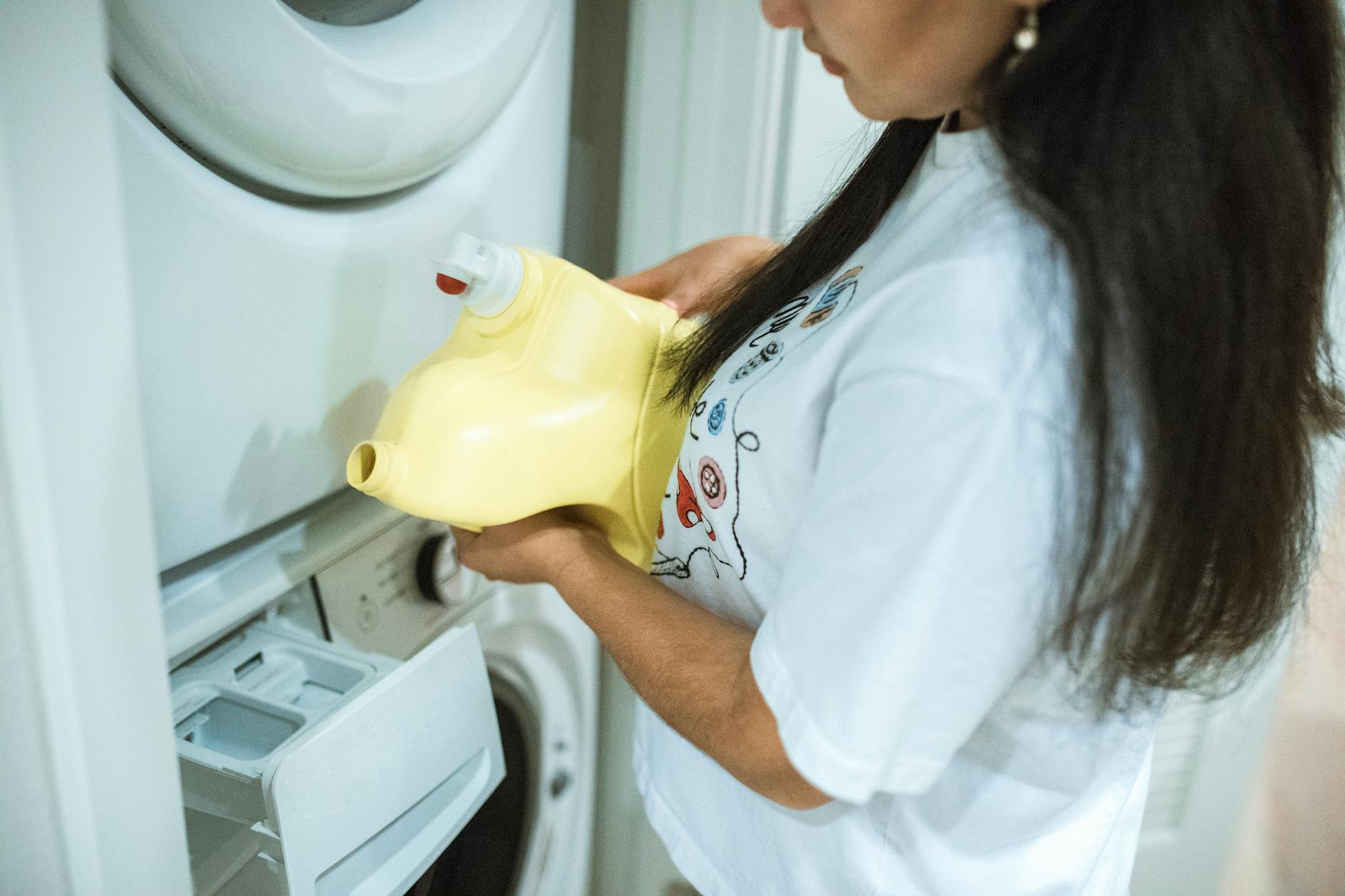
    If you’re anything like me, you’re standing at the washing machine right now staring at a pile of clothes that look like they’ve been through a war zone. Grass-stained knees from morning nature study. Mystery brown smears from collecting eggs. Red clay mud caked into the cuffs of those rain boots that were supposed to prevent this exact problem. And you’re wondering — is there actually a non-toxic laundry stain remover that works on real kid messes?

    Friend, I’ve been asking this question for years. And I’ve finally found answers that don’t involve me choosing between clean clothes and a chemical-free home.

    Why I Ditched Conventional Stain Removers

    Let me back up for a second. A few years ago, I started reading ingredient labels on everything — not just food, but cleaning products, personal care items, all of it. What I found in most mainstream stain removers made me deeply uncomfortable: synthetic fragrances, optical brighteners that don’t actually clean (they just trick your eyes), petroleum-based surfactants, and preservatives I couldn’t pronounce.

    With my kids spending hours outside every day — digging in the garden, handling chickens, running through the woods behind our house — their clothes touch their skin constantly. Whatever’s in our laundry products ends up against their bodies. That matters to me.

    But here’s the thing: I also can’t have everyone walking around looking like they rolled through a swamp. (Even if they did, in fact, roll through something swamp-adjacent. This is Northwest Florida, after all.)

    So I needed solutions that actually worked.

    The Non-Toxic Stain Removers That Actually Perform

    Castile Soap + Washing Soda Paste

    This is my go-to for most everyday stains — food, dirt, light grass stains. I mix a tablespoon of liquid castile soap with a tablespoon of washing soda and just enough water to make a paste. Rub it into the stain, let it sit for 15-30 minutes, then wash as usual.

    The washing soda boosts the cleaning power without any sketchy ingredients. And castile soap is gentle enough that I don’t worry about it irritating anyone’s skin.

    Hydrogen Peroxide for Protein Stains

    Blood, egg (chicken keeping, y’all), grass — these are protein-based stains, and they need something different. Regular 3% hydrogen peroxide from the drugstore works beautifully. I keep a small spray bottle of it in the laundry room and spritz it directly on fresh stains before washing.

    For older, set-in stains, I’ll soak the item in a basin of cool water with half a cup of hydrogen peroxide for an hour before washing. This has saved more than a few pairs of pants that I’d mentally written off.

    Enzyme Cleaners for the Tough Stuff

    Some messes need enzymes to break them down — think: mud that’s been ground in, mystery stains from outdoor adventures, or anything involving our mini labradoodle tracking who-knows-what through the house.

    I look for enzyme-based stain removers that are free from synthetic fragrances, dyes, and harsh chemicals. There are several good ones on the market now. The key is checking that “fragrance” isn’t hiding in the ingredient list — that word can cover hundreds of undisclosed chemicals.

    The Power of the Sun

    Here’s a secret weapon that costs nothing: Florida sunshine. After treating and washing stained items, I hang them outside to dry in direct sunlight. The UV rays naturally bleach and sanitize fabric without any chemicals at all.

    This works especially well on white items that have gotten dingy. A few hours of our intense Florida sun can brighten whites better than any optical brightener ever could — and it’s doing actual work, not just creating an illusion.

    My Simple Laundry Routine for a Wild-Rooted Life

    Our family generates a lot of laundry. Between nature study most mornings, chicken chores, gardening, and just general outdoor childhood, we go through clothes. Here’s how I manage it without spending my whole life at the washing machine:

    Pre-treat immediately. When the kids come inside, badly stained items go straight into a small basin in the laundry room. I give them a quick spray of hydrogen peroxide or rub in some castile soap paste right then. Stains are always easier to remove when they’re fresh.

    Designate “outside clothes.” We have play clothes that are allowed to get destroyed. These aren’t the clothes we wear to co-op or church. They’re the ones for catching bugs with the bug catcher kit, examining specimens under the pocket microscope, and generally living like it’s 1994.

    Don’t over-wash. Not every item needs washing after one wear. Jeans that got a little dusty? They’re fine. This saves time, saves water, and makes clothes last longer.

    Use a good non-toxic detergent. Your stain remover can only do so much if your base detergent isn’t pulling its weight. I’ve tried dozens, and I look for ones free of synthetic fragrances, dyes, 1,4-dioxane, and optical brighteners. Grove Collaborative has been a great resource for finding cleaner options.

    Stains That Seem Impossible (But Aren’t)

    Red Clay Mud

    If you’ve lived in the Florida Panhandle or anywhere in the South, you know this struggle. Red clay is basically nature’s permanent dye. My method: let it dry completely, brush off as much as possible, then soak in cool water with washing soda overnight. Apply hydrogen peroxide to remaining stains and sun-dry.

    Grass Stains

    These are protein stains, so hydrogen peroxide is your friend. For stubborn ones, I make a paste of cream of tartar and lemon juice, apply it, let it sit in the sun for an hour, then wash. Works like magic.

    Berry Stains

    We pick wild blackberries every summer, and the kids’ hands and clothes show it. Boiling water poured through the fabric (stretch it over a bowl) can work wonders on fresh berry stains. For set-in stains, soak in a mixture of white vinegar and cool water before washing.

    Chicken Coop Residue

    Let’s be real — if you keep backyard chickens, your shoes and clothes are going to encounter some things. I keep diatomaceous earth in the coop for pest control, and enzyme cleaners in the laundry room for the aftermath on clothes. Let items dry, brush off debris, then enzyme cleaner plus hot wash.

    Why This Matters Beyond Clean Laundry

    Here’s the thing — I didn’t switch to non-toxic cleaning products because I wanted to make my life harder. I did it because I want my kids to have a childhood full of mud pies and creek stomping and chicken wrangling without worrying about what chemicals they’re absorbing through their clothes afterward.

    I want them to remember catching bugs, pressing leaves in their nature journals, and painting what they found with their watercolors — not a childhood where they were told to “be careful” and “stay clean” all the time.

    Clean clothes shouldn’t come at the cost of a full life. And with the right non-toxic stain removers in your toolkit, they don’t have to.

    So go ahead — let them get dirty. Let them dig, explore, and discover. We’ll figure out the laundry together.

  • Florida Tide Pool Activities for Kids: A Nature Study Guide for Curious Little Explorers

    Florida Tide Pool Activities for Kids: A Nature Study Guide for Curious Little Explorers

    This post contains affiliate links. I may earn a small commission at no extra cost to you.

    There’s something magical about watching your kids crouch down at the edge of a tide pool, completely absorbed in a world that exists in just a few inches of water. No screens. No schedules. Just pure, unfiltered wonder — the kind that makes you remember why you chose this homeschool life in the first place.

    If you live in Florida like we do, you have access to some of the most incredible coastal ecosystems in the country. And tide pools? They’re basically nature’s aquariums, just waiting for little hands to explore. Whether you’re on the Gulf side near us in the Pensacola area or over on the Atlantic coast, Florida tide pool activities can become a cornerstone of your family’s nature study — Charlotte Mason style.

    Why Tide Pools Are Perfect for Nature Study

    Charlotte Mason talked about the importance of “living books” and firsthand observation. Well, friends, a tide pool is a living book. It’s biology, ecology, and marine science all wrapped up in a shallow pool that a kindergartner can safely explore.

    When we visit the beach, I try to time our trips around low tide. That’s when the magic happens — when the water recedes and leaves behind these little pockets of life. Hermit crabs scuttling around, sea anemones waving their tentacles, tiny fish darting between rocks. It’s the kind of stuff you just can’t replicate with a textbook.

    And here’s the beautiful thing: your kids don’t need to know the “right” answers. They just need to observe, ask questions, and be curious. That’s the foundation of real science.

    What to Bring for Tide Pool Exploration

    You don’t need much, but a few simple tools can turn a casual beach trip into a rich learning experience.

    The Essentials

    • A nature journal — We always bring ours. Even my youngest can sketch a shell or a crab, and it’s amazing to look back at these pages months later. A simple nature journal with blank pages works perfectly for all ages.
    • A small bucket or container — For temporary observation only! We always return everything to where we found it.
    • A pocket microscope — This is honestly one of our favorite homeschool tools. A pocket microscope lets kids see the tiny details on shells, seaweed, and even grains of sand. The wonder on their faces is worth every penny.
    • A bug catcher kit — Yes, they work for tide pools too! A bug catcher kit with a magnifying container is perfect for observing small critters up close before releasing them.
    • Waterproof shoes or rain boots — Because Florida tide pools often mean slippery rocks and mucky sand. We keep a pair of kids rain boots in the car specifically for these adventures.

    Don’t Forget Sun Protection

    I know, I know — this is Florida Mom 101. But when your kids are crouched over a tide pool for an hour, they’re getting sun exposure without even realizing it. We use a non-toxic sunscreen that I feel good about putting on their skin and that won’t harm the marine life we’re there to observe.

    Florida Tide Pool Activities Your Kids Will Love

    1. The Observation Game

    This is as simple as it sounds. Challenge your kids to sit quietly by a tide pool for five minutes and count how many different creatures they can spot. You’d be surprised how much more you see when you’re still and patient. This is a skill that serves them well beyond the beach — it’s the foundation of scientific observation.

    2. Nature Journaling

    After observing, we sketch. Even my reluctant artist will draw a quick hermit crab if I’m sitting beside him doing the same thing. I keep a set of Faber-Castell watercolor pencils in our beach bag — they’re perfect for adding color to sketches and surprisingly durable for kid use.

    We date each entry and note the location and tide conditions. Over time, these journals become incredible records of our family’s nature study journey.

    3. Creature Identification

    Bring a field guide or use a simple identification app. While we don’t have a dedicated tide pool book, our Sibley bird guide has taught my kids the joy of looking things up and making identifications. That same skill transfers beautifully to marine life.

    For younger kids, just learning the difference between a hermit crab and a true crab, or identifying different types of seaweed, is plenty.

    4. Habitat Mapping

    Older elementary kids can draw a simple map of the tide pool, marking where different creatures were found. Where do the crabs hide? Which zone has the most snails? This introduces basic concepts of habitat and ecology without any formal curriculum needed.

    5. The “What If” Questions

    We play a game where everyone asks one “what if” question about what we’re observing. What if the tide didn’t go out? What if there were no hermit crabs? What if this rock wasn’t here? It sparks incredible conversations and teaches kids to think like scientists.

    Best Florida Spots for Tide Pool Exploration

    Here in Northwest Florida, we don’t have the dramatic rocky tide pools you’d find in California, but we have our own version. The jetties at St. Andrews State Park near Panama City Beach are fantastic. Fort Pickens in our own Pensacola area has some great spots too.

    On the Atlantic side, the coquina rock formations at Washington Oaks Gardens State Park and the areas around Marineland are well-known for tide pool exploration. The Florida Keys, of course, offer incredible opportunities if you’re up for a road trip.

    Always check tide charts before you go. Low tide is when you’ll have the best access and the most to see.

    Connecting It Back to Home

    One thing I love about nature study is how it weaves through everything we do. When we get home from a tide pool trip, the learning doesn’t stop. We might read a living book about ocean life, look up a creature we couldn’t identify, or add to our nature journals.

    It reminds me of caring for our backyard chickens, honestly. There’s something about hands-on learning — whether it’s observing a hermit crab change shells or watching a hen dust-bathe — that sticks with kids in a way worksheets never could.

    This is the 1990s childhood I want for my kids. Less structured, more discovered. Less screen time, more time crouched in the sand, getting pruney fingers and sun-kissed noses.

    A Few Gentle Reminders

    Tide pools are delicate ecosystems. We follow a “look, don’t take” policy with our kids (with very few exceptions for empty shells). We teach them to step carefully, return rocks to their original position, and never take live creatures home.

    This respect for nature is part of what we’re teaching, too. It’s not just about science — it’s about stewardship.

    So the next time you’re planning a beach day, check the tide chart and pack a few simple tools. Let your kids lead the way, ask questions with them, and resist the urge to turn it into a formal lesson. The tide pool will do the teaching.

    And you? You get to watch your kids fall in love with the natural world, one hermit crab at a time. That’s the good stuff, mama.

  • Best Chicken Nesting Boxes Options Reviewed: A Backyard Mama’s Honest Guide

    Best Chicken Nesting Boxes Options Reviewed: A Backyard Mama’s Honest Guide

    This post contains affiliate links. I may earn a small commission at no extra cost to you.

    If you’ve ever found yourself standing in the coop at 7 AM, still in your pajamas, hunting for eggs in random corners while your hens give you that judgmental side-eye — you know that nesting boxes matter more than you’d think. When we first got our little backyard flock here in Northwest Florida, I figured any old box would do. The hens had other opinions.

    After three years of tweaking, replacing, and yes, occasionally bribing our girls with mealworms, I’ve learned a thing or two about what actually works when it comes to nesting boxes. Let me save you some trial and error.

    Why Your Nesting Box Choice Actually Matters

    Here’s the thing — chickens are creatures of habit and preference. Give them a nesting situation they don’t love, and they’ll lay eggs everywhere except where you want them. Behind the feed bin. Under the porch. In that one corner of the yard the dog likes to dig in. (Ask me how I know.)

    Good nesting boxes encourage your hens to lay in one predictable spot, keep eggs cleaner, reduce breakage, and make your morning egg collection actually enjoyable instead of a treasure hunt. And when you’re homeschooling and trying to get breakfast on the table before the day’s lessons begin? Efficiency matters.

    Types of Nesting Boxes: What’s Out There

    Traditional Wooden Boxes

    This is the classic option — what most of us picture when we think “chicken nesting box.” You can build them yourself or buy pre-made versions. They’re sturdy, hold bedding well, and the hens generally love the cozy, enclosed feeling.

    Pros: Durable, easy to add bedding, hens love the privacy, can be built into your coop design.

    Cons: Harder to clean (hello, Florida humidity and mites), can harbor bacteria if not maintained, takes up more space.

    We started with wooden boxes built into our coop, and they served us well for the first year. But between our hot, humid summers and the constant battle against red mites, I eventually switched things up.

    Metal Roll-Away Nesting Boxes

    These clever designs have a sloped floor so eggs gently roll into a collection tray after being laid. The hens can’t sit on them, peck at them, or dirty them up.

    Pros: Cleaner eggs, reduced breakage from pecking, easier to sanitize, discourages broody behavior.

    Cons: Pricier upfront, some hens take time to adjust, less “natural” feeling for the birds.

    This is what we use now, and honestly? Game changer. Especially in the summer when our Buff Orpington gets extra broody and would sit on eggs all day if we let her.

    Plastic Nesting Boxes

    A middle-ground option that’s becoming more popular. Molded plastic boxes are lightweight, easy to hose down, and don’t harbor mites like wood can.

    Pros: Super easy to clean, lightweight, mite-resistant, affordable.

    Cons: Can crack in extreme heat (not ideal for full-sun coops in Florida summers), may feel less cozy to hens without adequate bedding.

    DIY and Repurposed Options

    Milk crates, five-gallon buckets on their sides, old dresser drawers — the homestead internet is full of creative solutions. These can work great, especially if you’re just starting out and watching your budget.

    Pros: Cheap or free, customizable, great starter option.

    Cons: Variable results, may need more frequent replacement, aesthetics (if that matters to you).

    When we first started our flock, we used repurposed wooden crates while we figured out what we were doing. No shame in the budget-friendly game, especially when you’re learning.

    What I Actually Recommend (After Three Years of Trial and Error)

    For Most Backyard Flocks: Metal Roll-Away Boxes

    If you have the budget, I genuinely believe roll-away nesting boxes are worth the investment — especially here in Florida where heat and humidity make everything harder to keep clean. The eggs come out pristine, I’m not battling broody hens as much, and cleaning is a breeze.

    For Beginners or Tight Budgets: Quality Plastic Boxes

    Get a set of molded plastic nesting boxes and add a good layer of pine shavings or straw. Place them in a shaded area of your coop (crucial for our Florida summers), and you’ll have a perfectly functional setup that’s easy to maintain.

    For the DIY-Loving Homesteader: Build Your Own

    If you enjoy building and want boxes customized to your coop, go wooden — but plan to treat them regularly and stay on top of mite prevention. I dust ours with food-grade diatomaceous earth regularly, which helps keep pests at bay naturally.

    Key Features to Look For

    No matter which type you choose, keep these things in mind:

    • Size: About 12x12x12 inches works for most standard breeds. Bigger girls like Orpingtons appreciate a little extra room.
    • Privacy: Hens like to feel secluded when laying. A lip or slight enclosure helps.
    • Easy access for YOU: You’re the one collecting eggs daily. Make sure you can reach in easily.
    • Cleanability: Especially in our humid Florida climate, you need to be able to sanitize regularly.
    • Ventilation: Airflow matters. Stuffy boxes in summer heat aren’t good for anyone.

    A Few More Coop Upgrades Worth Mentioning

    Since we’re talking about making your chicken-keeping life easier, a few other things have made a huge difference for our family:

    An automatic chicken coop door means we don’t have to rush out at dawn or remember to close up at dusk. Worth every penny for the peace of mind — especially when the kids and I are caught up in a nature study and lose track of time.

    Switching to nipple-style chicken waterers has kept our water so much cleaner. No more algae blooms in the Florida heat, no more bedding floating in the water dish.

    And if you’re newer to chickens and want a solid reference book, Storey’s Guide to Raising Chickens has been on my shelf since day one. It’s thorough without being overwhelming. For getting the kids involved, A Kid’s Guide to Keeping Chickens is wonderful — my elementary crew has learned so much about responsibility and animal care from our flock.

    The Bigger Picture: Why We Keep Chickens Anyway

    Honestly, the nesting boxes are just one small piece of the puzzle. We got backyard chickens because we wanted our kids to understand where food comes from, to have daily chores that matter, and to spend more time outside doing real things instead of staring at screens.

    Every morning, rain or shine, we’re out there together — collecting eggs, refreshing water, tossing scratch grains, watching the hens do their funny chicken things. The dog supervises from a safe distance. The kids have learned patience, observation, and care for living creatures. It’s the kind of childhood I remember from growing up in the ’90s, and it’s exactly what I want for them.

    So yes, get good nesting boxes. Make your setup functional and easy to maintain. But remember that the real magic isn’t in the equipment — it’s in the quiet mornings, the warm eggs in little hands, and the slow, rooted life you’re building one day at a time.

    Here’s to happy hens and full egg baskets, friend. 🐔

  • How to Teach Kids to Cook on a Homestead: Simple Steps for Real Life Skills

    How to Teach Kids to Cook on a Homestead: Simple Steps for Real Life Skills

    This post contains affiliate links. I may earn a small commission at no extra cost to you.

    If you’ve ever watched your kids run in from the chicken coop with a basket of warm eggs and thought, “They should know what to do with these,” you’re not alone. Teaching kids to cook on a homestead isn’t just about future meal prep help (though, let’s be honest, that’s a nice perk). It’s about connecting them to the full circle of where food comes from—from garden to table, from hen to breakfast plate.

    And here’s what I’ve learned after years of homeschooling in our little corner of Northwest Florida: cooking is one of the most naturally Charlotte Mason activities you can do. It’s hands-on. It involves math, science, patience, and attention to living things. It requires them to be present—no screens, just real work with real results they can taste.

    Why Homestead Kids Should Learn to Cook Early

    When I was growing up in the ’90s, I remember standing on a step stool helping my grandmother make biscuits. Nobody was worried about me touching flour or cracking eggs imperfectly. Kids just… helped. And somehow, by middle school, most of us could make basic meals without supervision.

    Somewhere along the way, we started hovering more and involving kids less. But homestead life naturally pushes back against that. When you’re gathering eggs every morning and growing tomatoes on the porch, it only makes sense to close the loop and let kids transform those ingredients into something nourishing.

    Here’s what cooking teaches our kids that no worksheet ever could:

    • Practical math — measuring, doubling recipes, fractions in action
    • Science — what heat does to eggs, why bread rises, how emulsions work
    • Patience and sequencing — following steps in order, waiting for things to bake
    • Confidence — the pride of feeding your family something you made yourself

    We’ve found that the skills built in the kitchen carry over into so many other areas of our homeschool day, especially when we’re working through things like Math-U-See, where manipulatives and real-world application make all the difference.

    Start With What You Already Have

    Use Your Homestead Ingredients

    The beautiful thing about teaching kids to cook on a homestead is that you don’t need fancy ingredients or complicated recipes. Start with what’s right outside your door.

    Our chickens give us the perfect starting point. Fresh eggs are forgiving for beginners—scrambled eggs, fried eggs, simple egg salad. My kids learned early that an egg from our coop tastes different than one from the store, and that connection matters. If you’re still learning the ropes of backyard chickens yourself, Storey’s Guide to Raising Chickens has been my go-to reference for years.

    For the littles who are obsessed with our hens, A Kid’s Guide to Keeping Chickens is a wonderful way to build that egg-to-table understanding before they even pick up a spatula.

    Simple Recipes for Young Cooks

    Here in Florida, we’re blessed with a long growing season, so there’s almost always something fresh to work with. Even if you’re just growing herbs in a windowsill, kids can learn to snip basil for pasta or muddle mint for sweet tea.

    Some beginner-friendly recipes our family loves:

    • Scrambled eggs — the ultimate first recipe
    • Homemade butter — just heavy cream and a jar to shake
    • Simple salads — tearing lettuce, slicing cucumbers with a kid-safe knife
    • No-bake energy balls — measuring, mixing, rolling
    • Pancakes from scratch — perfect for weekend mornings

    The key is letting them do the work, even when it’s messy. Even when eggshells end up in the bowl. That’s how they learn.

    Age-Appropriate Kitchen Tasks

    Ages 3-5: The Little Helpers

    Toddlers and preschoolers can do more than we often give them credit for. They can:

    • Wash vegetables
    • Tear lettuce and herbs
    • Stir batters
    • Pour pre-measured ingredients
    • Push buttons on the blender (with supervision)
    • Collect eggs from the coop with help

    At this age, it’s less about the end result and more about building comfort in the kitchen. Let them stand on a sturdy stool and be part of things.

    Ages 6-8: Building Independence

    This is where it gets fun. Elementary-age kids can start handling real tools with guidance:

    • Cracking eggs (finally, without fishing out shells every time)
    • Measuring ingredients independently
    • Using a kid-safe knife for soft foods
    • Working at the stove with supervision—stirring, flipping
    • Following simple recipe cards
    • Reading recipes aloud as you work together

    We’ve made cooking part of our homeschool rhythm. Some days, making lunch together IS the math lesson. Doubling a recipe? That’s fractions. Timing how long something bakes? That’s telling time with purpose.

    Ages 9-12: Real Kitchen Confidence

    By late elementary and middle school, kids can realistically prepare simple meals with minimal oversight. They should be able to:

    • Plan a basic meal
    • Use the stove and oven safely
    • Follow a full recipe start to finish
    • Clean up after themselves (this is non-negotiable in our house)
    • Adapt recipes based on what’s available

    Making It Part of Your Homestead Rhythm

    We don’t treat cooking as a separate “lesson”—it’s woven into daily life. That’s the homestead way. Just like nature study isn’t a subject but a way of seeing the world, cooking becomes part of how our family lives.

    Some ways we keep it natural:

    • Daily involvement — Even five minutes helping with dinner counts
    • Weekly special recipes — Pizza Friday, pancake Saturday, whatever works for your family
    • Seasonal cooking — Strawberry season means jam-making; fall means soups and stews
    • Cooking from the garden — If they grew it, they’re more excited to cook it

    When we’re not in the kitchen, we’re usually outside anyway. The kids might be catching bugs with their bug catcher kit or sketching what they find in their nature journals. That same curiosity and hands-on learning translates perfectly to the kitchen.

    Keep It Safe and Non-Toxic

    Since we’re already intentional about what goes in and on our bodies, it only makes sense to extend that to how we cook. We use cast iron and stainless steel instead of non-stick coatings. We choose simple, whole ingredients over processed shortcuts.

    For cleaning up, we stick with non-toxic options. I’ve been happy with what we’ve found through Grove Collaborative for dish soap and kitchen cleaners that I don’t worry about little hands touching.

    The Bigger Picture

    Teaching kids to cook on a homestead is really about something deeper than recipes. It’s about raising capable, confident humans who understand where their food comes from and aren’t intimidated by the work of daily life.

    It’s giving them the gift of self-sufficiency. The same gift our grandparents had—knowing how to feed themselves and the people they love without depending on a drive-through or a delivery app.

    Some evenings, when the Florida sun is setting and our mini labradoodle is underfoot hoping for scraps, and the kids are actually working together to get dinner on the table… those are the moments that make all the mess worth it.

    So pull up a step stool, hand them a whisk, and let them in on the sacred, ordinary work of making a meal. They’re more ready than you think. And honestly? So are you.

    What recipes have your kids mastered? I’d love to hear what’s working in your homestead kitchen—drop a comment below or find me on Instagram!

  • Charlotte Mason Homeschool: What Subjects to Cover (A Real-Life Guide)

    Charlotte Mason Homeschool: What Subjects to Cover (A Real-Life Guide)

    If you’re new to Charlotte Mason homeschooling—or even if you’ve been at it for a while—you’ve probably wondered at some point: Am I covering enough subjects? Am I covering the right ones? I remember feeling overwhelmed when I first started reading about CM education. The sheer breadth of it all seemed beautiful but also… a lot. How was I supposed to fit in nature study, picture study, composer study, handicrafts, AND the basics like math and reading?

    Here’s what I’ve learned after a few years of doing this with my elementary-age kids here in Florida: Charlotte Mason’s approach isn’t about checking boxes. It’s about offering a generous feast of ideas. And once you understand the “why” behind her subjects, the “how” becomes so much easier.

    This post contains affiliate links. I may earn a small commission at no extra cost to you.

    The Core Subjects in a Charlotte Mason Education

    Let’s start with the foundation—the subjects you’ll want to prioritize every single day or nearly every day.

    Language Arts: Reading, Writing, and the Living Word

    Charlotte Mason believed that children should be surrounded by beautiful language from the very beginning. This means:

    • Reading aloud — lots of it, from living books (not twaddle)
    • Copywork — short passages from quality literature to develop handwriting and internalize good writing
    • Narration — the cornerstone of CM learning, where children tell back what they’ve heard or read
    • Dictation — as they get older, moving from copywork to writing from dictation

    We don’t use a formal spelling curriculum. Instead, spelling develops naturally through copywork, dictation, and reading. It sounds too simple, but it really does work.

    Mathematics: Short Lessons, Real Understanding

    Math in a Charlotte Mason home isn’t about worksheets and drill (though some practice is necessary). It’s about understanding concepts deeply before moving on. We use manipulatives, keep lessons short—usually 15-20 minutes for my elementary kids—and focus on mastery.

    We’ve had good luck with Math-U-See because of its hands-on approach with blocks. It fits well with the CM philosophy of concrete before abstract. Rainbow Resource is a great place to browse different math options if you’re still deciding what works for your family.

    The Feast: Subjects That Make Charlotte Mason Unique

    Here’s where things get rich. These subjects are what set a CM education apart from a typical curriculum-in-a-box approach.

    Nature Study

    This is probably my favorite part of our homeschool, and honestly, it’s one of the easiest subjects to implement here in Northwest Florida. We’re surrounded by live oaks, coastal dunes, backyard wildlife, and—of course—our chickens.

    Nature study isn’t about memorizing facts. It’s about paying attention. Going outside. Noticing what’s blooming, what’s buzzing, what’s different from last week. We keep nature journals and use Faber-Castell watercolor pencils for sketching what we find—feathers, leaves, the weird beetle the kids discovered on the porch.

    We also keep a pocket microscope in our nature bag for examining things up close. My kids have spent way more time looking at chicken feathers under magnification than I ever anticipated.

    For bird identification, The Sibley Guide to Birds lives on our bookshelf and comes outside with us regularly.

    History and Geography

    Charlotte Mason used living books for history—biographies, well-written narratives, primary sources—rather than dry textbooks. We follow a chronological approach, cycling through ancient, medieval, early modern, and modern history over the elementary years.

    Geography ties in naturally: as we read about a place, we find it on the map. We also do simple map drills and eventually some mapmaking.

    Science

    Beyond nature study, CM science includes more structured learning about topics like the human body, physics, and chemistry as kids get older. But in the early years? Nature study IS science. Observing, questioning, recording—that’s the scientific method in action.

    Picture Study and Composer Study

    These are two of those “extras” that seem intimidating but are actually incredibly simple. Once a week (or every other week, let’s be real), we spend about 15 minutes looking at a piece of art by one artist or listening to music by one composer. That’s it. Over time, the kids become familiar with great works of art and music without any drill or testing.

    Handicrafts

    Charlotte Mason valued working with one’s hands. For us, this means things like sewing, simple woodworking, cooking, and yes—caring for the chickens counts too. Learning to collect eggs gently, refill the chicken waterer, and check on the flock teaches responsibility and practical skills.

    Foreign Language

    Mason recommended introducing a foreign language early, while children’s ears are still attuned to new sounds. We keep it simple and consistent rather than intensive.

    Recitation and Hymn Study

    Memorizing poetry and hymns might sound old-fashioned, but there’s something grounding about it. We pick one poem per month and one hymn per term. The kids absorb them through repetition, and I love hearing them quoted back at random moments.

    What About Bible or Character Training?

    For our family, Bible is central—but I know not every homeschool includes it. Charlotte Mason herself included Scripture reading, and we follow that pattern with daily reading and discussion. Character training isn’t a separate subject; it’s woven through everything.

    How to Fit It All In (Without Losing Your Mind)

    Here’s the secret: you don’t do everything every day. Our daily subjects are math, language arts (reading, copywork, and narration), and read-alouds. Nature study happens a few times a week, often just by stepping into the backyard. Picture study and composer study rotate weekly. Handicrafts happen organically.

    We’re also part of Florida’s PEP homeschool scholarship program, which gives us flexibility in how we structure our days while still meeting requirements. If you’re in Florida and haven’t looked into it, it’s worth exploring.

    Timberdoodle has some great Charlotte Mason-friendly resources if you’re looking for curriculum ideas that align with this approach but offer a little more structure.

    A Note on Screens and Simplicity

    Charlotte Mason didn’t have to worry about tablets and YouTube, but I think she’d have something to say about them. Our approach is decidedly low-screen. We prioritize outdoor time, free play, real books, and real conversations. My kids know how to be bored—and that’s a gift.

    When they’re outside catching lizards, splashing in puddles in their rain boots, or playing made-up games in the yard, they’re learning. They’re developing creativity, problem-solving, and resilience. Charlotte Mason understood this instinctively. Children need room to grow.

    You Don’t Have to Be Perfect

    If you’re reading this and feeling overwhelmed, take a breath. You don’t need to implement everything at once. Start with the basics—reading aloud, narration, math, time outside. Add in picture study when you’re ready. Try composer study next term. Let it grow organically.

    The beauty of Charlotte Mason’s philosophy is that it trusts children. It trusts that when we offer them good things—living books, nature, music, art, meaningful work—they will learn. They will grow. They will flourish.

    And honestly? So will you. There’s something restorative about this kind of education. It’s slower. It’s richer. It reminds me of the childhood I want for my kids—the kind where the dog is at your feet, the chickens are clucking in the background, and there’s nowhere you have to rush off to.

    That’s the heart of it, really. Not a checklist. A life.

    Do you have questions about Charlotte Mason subjects? I’d love to hear what’s working in your homeschool—drop a comment below!

  • Non-Toxic Dishwasher Detergent Safe for Family: What We Actually Use

    Non-Toxic Dishwasher Detergent Safe for Family: What We Actually Use

    This post contains affiliate links. I may earn a small commission at no extra cost to you.

    If you’ve ever stood in the cleaning aisle squinting at ingredient lists and wondering why your dishwasher detergent needs a chemistry degree to decode, you’re not alone. I remember the exact moment I flipped over our old detergent pod container and realized I couldn’t pronounce half of what was listed—and that residue was coating the same plates my kids eat off of three times a day.

    That was the beginning of a deep dive into finding a non-toxic dishwasher detergent safe for family use. And let me tell you, it took some trial and error. But we got there, and I want to share what I’ve learned so you don’t have to wade through all the greenwashing and marketing nonsense.

    Why Your Dishwasher Detergent Actually Matters

    Here’s the thing most people don’t think about: dishwasher detergent leaves residue. Even after the rinse cycle, trace amounts remain on your dishes, cups, and utensils. Your family is literally eating off surfaces that have been coated in whatever chemicals you’re using.

    Conventional dishwasher detergents often contain:

    • Phosphates (restricted in many states but still found in some formulas)
    • Chlorine bleach
    • Synthetic fragrances (which can contain dozens of undisclosed chemicals)
    • 1,4-dioxane (a contaminant linked to various health concerns)
    • Formaldehyde-releasing preservatives

    For our family, switching to non-toxic options wasn’t about being trendy or performative. It was about reducing unnecessary chemical exposure where we could actually control it. We can’t control the air quality at the park or what’s sprayed on the playground, but we can absolutely control what’s in our home.

    What to Look for in a Safer Dishwasher Detergent

    Certifications That Actually Mean Something

    Not all “green” labels are created equal. Some terms like “natural” or “eco-friendly” are completely unregulated. Here’s what I actually look for:

    • EPA Safer Choice – This means the product meets EPA standards for safer ingredients
    • EWG Verified – The Environmental Working Group has strict criteria for what earns this label
    • Made Safe Certified – Another rigorous certification that screens for known toxins
    • Leaping Bunny – If cruelty-free matters to you

    Ingredients to Avoid

    I keep a mental list of red flags when I’m scanning labels:

    • Fragrance (unless specifically disclosed as essential oil-based)
    • Methylisothiazolinone
    • Sodium hypochlorite (chlorine bleach)
    • Triclosan
    • Phthalates
    • Synthetic dyes

    Ingredients That Are Generally Considered Safe

    • Sodium carbonate (washing soda)
    • Sodium citrate
    • Sodium percarbonate (oxygen bleach)
    • Plant-derived enzymes
    • Citric acid

    Brands We’ve Actually Tried

    I’m not going to pretend every non-toxic option works perfectly. Some left our glasses cloudy. Some didn’t touch the baked-on oatmeal situation. Here’s what’s actually earned a spot in our routine:

    Our Current Favorite

    We’ve been using products from Grove Collaborative for most of our household cleaning needs, including dishwasher detergent. What I love about Grove is that they’ve already done the vetting—everything on their site meets certain ingredient standards, so I’m not playing detective in the cleaning aisle. Their own brand tablets have worked well for us, and they ship right to our door, which is honestly a sanity saver during our homeschool weeks.

    Other Options Worth Considering

    • Seventh Generation Free & Clear – Widely available, no fragrance, EPA Safer Choice certified
    • ECOS Dishmate Tablets – Plant-based, no dyes or parabens
    • Blueland Dishwasher Tablets – Plastic-free packaging, which appeals to me
    • Branch Basics – Concentrate you dilute yourself; very clean ingredient list

    Tips for Making Non-Toxic Detergent Work Better

    One thing I learned the hard way: non-toxic detergents sometimes need a little help, especially if you have hard water like we do here in parts of Northwest Florida.

    Use a Rinse Aid

    I add white vinegar to the rinse aid compartment. It’s cheap, it’s effective, and it helps with water spots. Some people use citric acid for the same purpose.

    Run Hot Water First

    Before starting your dishwasher, run the hot water at your kitchen sink until it’s actually hot. This helps the detergent dissolve properly from the very first cycle.

    Scrape, Don’t Pre-Rinse

    Most modern dishwashers (and detergents) actually work better when there’s a little bit of food residue for the enzymes to work on. Just scrape the big stuff off and load it up.

    Clean Your Dishwasher Monthly

    I run an empty cycle with a cup of white vinegar once a month to keep things fresh and prevent buildup.

    Thinking Beyond the Dishwasher

    Once you start paying attention to what’s in your dishwasher detergent, it’s natural to look around at everything else. That’s kind of how it happened for us. We switched our dish soap. Then our laundry detergent. Then we tackled our bug spray situation (if you’re in Florida, you know this is non-negotiable—we use Wondercide for the yard and it actually works).

    It becomes less overwhelming when you think of it as swapping things out one at a time, as you run out. You don’t have to throw everything away and start over tomorrow.

    The Bigger Picture

    I think a lot about what kind of childhood I want for my kids. We homeschool with a Charlotte Mason approach—lots of time outside, nature journals, watching our backyard chickens, and trying to cultivate wonder in everyday moments. Part of that, for me, is creating a home environment that supports their health rather than undermining it with unnecessary chemicals.

    Our kids are barefoot in the backyard, hands in the dirt, catching lizards and checking for eggs. They’re exploring, and that exploration shouldn’t come with a side of endocrine disruptors from the plates they eat dinner off of.

    Does switching your dishwasher detergent solve everything? Of course not. But it’s one piece of the puzzle. It’s one area where we have complete control, and that feels good.

    Final Thoughts

    Finding a non-toxic dishwasher detergent safe for family use isn’t as complicated as it might seem at first. Look for trustworthy certifications, avoid the worst offenders on ingredient lists, and give a few brands a try to see what works with your water and your machine.

    For our family, it’s become just another part of how we do things—like line-drying in the Florida sunshine when we can, or choosing real books over screens, or letting the kids stay outside until their cheeks are pink and they’re asking for water.

    It’s not about perfection. It’s about intention. And honestly? That’s enough.

    If you’re just starting to make switches in your home, I’d love to hear what’s working for you. We’re all figuring this out together.

  • Best Outdoor Birthday Party Ideas for Kids in Florida (That Feel Like the Good Old Days)

    Best Outdoor Birthday Party Ideas for Kids in Florida (That Feel Like the Good Old Days)

    If you’re anything like me, you’re tired of the overstimulating, Pinterest-perfect, $500 birthday party circuit. You know the ones—bouncy house rentals, character appearances, goody bags stuffed with plastic junk that ends up in the trash by Tuesday. There’s nothing wrong with those parties, but they’re just not us.

    What I want for my kids’ birthdays is what I remember from my own childhood: running barefoot through the grass, catching lightning bugs at dusk, playing games until we were sweaty and grass-stained and absolutely happy. And living in Florida? We’ve got the weather to make outdoor birthday parties happen pretty much year-round—we just have to be smart about it.

    This post contains affiliate links. I may earn a small commission at no extra cost to you.

    So if you’re looking for outdoor birthday party ideas for kids in Florida that feel intentional, simple, and full of real childhood magic, pull up a chair. I’ve got you.

    Why Outdoor Parties Just Hit Different

    There’s something about being outside that changes the whole energy of a gathering. Kids don’t need to be entertained every second when they’ve got space to run, things to discover, and freedom to just play. I’ve noticed this with our homeschool days too—when we take learning outside, everything flows better. The same is true for parties.

    Plus, here in Northwest Florida, we’re blessed with mild winters and long springs and falls. Even our summers are doable if you time things right (more on that in a minute). An outdoor party means less mess in your house, more room for kids to spread out, and honestly? Way less stress for you, mama.

    Timing Is Everything in Florida

    Beat the Heat (and the Bugs)

    Let’s be real—a 2 PM July party in Pensacola is going to be miserable for everyone. But a 10 AM party in March? Absolute perfection.

    Here’s what works for us:

    • Spring and fall: Pretty much any time of day works. These are your golden months.
    • Summer: Morning parties (ending by noon) or late afternoon into evening (starting around 5 PM). Avoid the brutal midday heat.
    • Winter: Late morning or early afternoon when it’s warmed up a bit.

    And don’t forget the bug situation. We keep Wondercide on hand for yard spraying before any outdoor gathering—it’s plant-based and actually works, which is more than I can say for a lot of “natural” bug sprays I’ve tried.

    Also, sunscreen! I always have a basket of non-toxic kids sunscreen by the door so parents can slather up their littles before the fun begins.

    Simple, Screen-Free Party Ideas That Kids Actually Love

    The Classic Backyard Games Party

    This is my favorite because it requires almost zero planning and maximum fun. Set up stations with outdoor lawn games—think ring toss, croquet, ladder ball, and cornhole. Add a simple obstacle course using things you already have (pool noodles, hula hoops, buckets), and let the kids rotate through.

    We also love old-school games like Red Light Green Light, Mother May I, and Capture the Flag. These cost nothing and kids go absolutely wild for them. It’s like they’ve never experienced the joy of actual playing before—which, honestly, some of them haven’t.

    Nature Explorer Party

    This one is perfect for our little Charlotte Mason hearts. Give each child a bug catcher kit or a pocket microscope as their party favor (way better than candy, and they’ll actually use it). Set up a nature scavenger hunt around your yard or a local park.

    You can make simple bingo cards with things like “something that flies,” “three different leaf shapes,” “something rough,” and “something smaller than your pinky nail.” The kids get to explore, discover, and it feels like an adventure rather than a structured activity.

    If you want to take it up a notch, set up a nature journaling station with watercolor pencils and have kids sketch something they found. Even five-year-olds can do this, and they’re always so proud of their work.

    Backyard Chicken Party (Yes, Really)

    Okay, this one’s specific to us chicken-keepers, but hear me out—kids are OBSESSED with our hens. If you’ve got a backyard flock, lean into it! Let the kids help collect eggs, scatter treats for the chickens, and learn a few fun facts about them.

    We have a copy of A Kid’s Guide to Keeping Chickens that I pull out for curious kiddos, and it’s always a hit. You can do egg decorating (hard-boiled, obviously), chicken-themed snacks, and let the birthday child give a “tour” of the coop. The novelty factor alone makes it memorable.

    Adventure Party with Walkie Talkies

    For slightly older elementary kids, a walkie talkie adventure party is pure gold. Get a few sets of kids’ walkie talkies, divide into teams, and create a scavenger hunt or capture-the-flag style game across your yard (or a park, if you’ve got a bigger group).

    There’s something about that crackly “over and out” that makes kids feel like they’re on a real mission. Add some binoculars and you’ve got yourself a spy party, explorer party, or whatever theme your kiddo is into.

    Keep It Simple: Food and Setup

    Food That Works Outside

    Forget the elaborate themed cakes that melt in Florida humidity. We stick with:

    • Watermelon slices (nature’s perfect party food)
    • Cupcakes instead of a sheet cake (easier to serve, less mess)
    • Popcorn in individual cups
    • Cheese and crackers
    • Water bottles frozen halfway the night before (they stay cold for hours)

    Seriously, kids don’t care about a fancy spread. They want to get back to playing.

    Setup That Doesn’t Break the Bank

    A few simple decorations go a long way—streamers in the trees, a balloon arch if you’re feeling fancy, and a folding table with a tablecloth. Done. We focus our budget on experiences, not stuff.

    I also keep a basket of kids’ rain boots by the back door in various sizes. Florida weather is unpredictable, and muddy kids are happy kids. Being prepared means the party goes on, rain or shine.

    Party Favors That Aren’t Junk

    I’m a firm believer that party favors should be either consumable or actually useful. Some favorites:

    • Seed packets for Florida-friendly flowers
    • Small nature journals or sketchbooks
    • Magnifying glasses
    • Sidewalk chalk
    • A single special item (like those bug catchers I mentioned) instead of a bag of ten plastic things

    A Note on Expectations

    Here’s the thing I’ve learned after several years of birthday parties: the kids don’t remember the decorations. They don’t remember whether you had a DJ or a Pinterest-worthy dessert table. They remember how they felt.

    They remember chasing their friends across the yard. They remember finding a cool beetle under a log. They remember the freedom of an afternoon spent outside, being kids.

    That’s what we’re going for over here. That 1990s summer feeling, bottled up into a two-hour celebration. It doesn’t have to be complicated. It just has to be real.

    So if you’re planning an outdoor birthday party for your little one here in Florida, take a breath. Keep it simple. Trust that the sunshine and space and freedom are enough.

    Because they are. They really are.

    Happy party planning, friend. Your kiddo is going to have a blast. 🌿

  • How to Teach Kids About Weather: A Hands-On Homeschool Science Approach

    How to Teach Kids About Weather: A Hands-On Homeschool Science Approach

    This post contains affiliate links. I may earn a small commission at no extra cost to you.

    If you’ve ever had a child run inside breathless because they spotted a “really weird cloud” or spent twenty minutes trying to explain why it’s raining on one side of the street but not the other — you already know that weather is one of those topics kids are naturally curious about. And honestly? That curiosity is half the battle in homeschool science.

    Here in Northwest Florida, we get the full spectrum of weather experiences — afternoon thunderstorms that roll in like clockwork during summer, those perfectly crisp January mornings that feel like a gift, and the occasional tropical system that has us all checking the radar obsessively. It’s the perfect backdrop for teaching kids about weather in a way that actually sticks.

    Why Weather Makes the Perfect Homeschool Science Unit

    Weather is happening all around us, every single day. Unlike some science topics that feel abstract or require expensive equipment, meteorology is immediately accessible. Your kids can observe it, measure it, predict it, and (let’s be honest) complain about it — all before lunch.

    What I love most about teaching weather through a Charlotte Mason lens is that it naturally lends itself to observation and narration. You’re not drilling facts into their heads; you’re inviting them to pay attention to the world. And when kids pay attention — really pay attention — learning just happens.

    Start With Simple Daily Observations

    The foundation of any good weather unit is daily observation. This doesn’t need to be complicated. In fact, the simpler the better, especially with elementary-age kids.

    Each morning, we step outside before we crack open any books. What does the sky look like? What does the air feel like on our skin? Is there dew on the grass? Are the chickens acting any differently? (Fun fact: our hens tend to stay closer to the coop when rain is coming — kids notice these patterns pretty quickly.)

    A nature journal is perfect for recording these observations. We keep things simple: date, time, a quick sketch of cloud cover, temperature, and any notes about what we notice. Over weeks and months, patterns emerge. Your kids start predicting weather before you even check the forecast.

    Cloud Identification

    Clouds are endlessly fascinating to kids, and learning to identify them feels like unlocking a secret code. We focus on the basics first — cumulus, stratus, cirrus — and then build from there.

    Lying on a blanket in the backyard and watching clouds drift by is a perfectly legitimate science lesson, by the way. Add in some watercolor pencils and let them paint what they see. That’s nature study and art in one afternoon.

    Hands-On Weather Experiments

    Kids learn best when they can touch, build, and experiment. Here are some of our favorite weather activities that require minimal supplies and maximum engagement.

    Make a Simple Rain Gauge

    All you need is a clear plastic bottle, a ruler, and some tape. Cut the top off the bottle, invert it to create a funnel, and mark measurements on the side. Set it outside and check it after each rain. Here in Pensacola, we can get an inch of rain in an afternoon thunderstorm — makes for some exciting data collection.

    Build a Wind Vane

    A pencil, a straw, some cardstock, and a pin — that’s it. We attached ours to a fence post near the garden and the kids check it constantly. They’ve started noticing that wind direction often shifts before weather changes.

    Water Cycle in a Bag

    Draw a simple water cycle diagram on a ziplock bag with permanent marker, add a little water, seal it, and tape it to a sunny window. Within hours, kids can watch evaporation and condensation happening right before their eyes. It’s simple, but it clicks.

    The Tools That Make Weather Study Fun

    You absolutely don’t need fancy equipment to teach weather. But a few inexpensive tools can make the experience more engaging and help kids feel like “real scientists.”

    A basic outdoor thermometer is a must. We check ours multiple times a day — morning, noon, and evening — and track how temperature changes. A pocket microscope is surprisingly useful too. After a frost (yes, we get them occasionally here in the Panhandle), examining ice crystals up close is magical.

    And when those summer storms roll through? A good pair of rain boots means puddle investigation can happen the moment the lightning passes. Some of our best science conversations happen while splashing through the backyard after a downpour.

    Connecting Weather to Living Things

    One thing I always try to do is connect weather study to the living world around us. How do our backyard chickens behave before a storm? What do the birds at our feeder do when a cold front moves in? When do we see the most butterflies?

    Keeping a bird field guide nearby helps us notice patterns. We’ve observed that certain birds seem to disappear right before storms and return when things clear up. That’s real science — observation, hypothesis, pattern recognition — and it’s happening right in our backyard.

    Even the dog gets in on it. Our mini labradoodle absolutely knows when a storm is coming before we do. Asking kids “how do you think she knows?” opens up great conversations about atmospheric pressure and animal instincts.

    Florida-Specific Weather Topics

    Living in Florida gives us some unique teaching opportunities. Hurricane season (June through November) is an obvious one. We talk about how hurricanes form, why warm Gulf water matters, and what makes a storm strengthen or weaken. Tracking storms together on a map is geography and science rolled into one.

    We also discuss sea breezes — that afternoon wind shift that brings storms inland almost like clockwork during summer. Once kids understand why that happens, they start noticing it every single day.

    And humidity? We live in it. Explaining why Florida air feels so different from Arizona air is a great entry point into talking about water vapor and dew point.

    Curriculum Resources Worth Considering

    While we do a lot of living science through observation, sometimes it’s nice to have a little structure. Rainbow Resource has a great selection of weather-focused science materials for homeschoolers. I like to pick up a unit study or two to supplement our hands-on learning — something with diagrams and vocabulary we might not cover otherwise.

    Timberdoodle also curates some wonderful science kits that include weather components. If you’re a box-curriculum family or just want some fresh ideas, it’s worth browsing.

    Keep It Simple, Keep It Real

    Here’s the thing about teaching weather to kids: you don’t need to make it complicated. You don’t need expensive weather stations or elaborate lesson plans. You need a curious kid, a willingness to step outside, and the patience to observe alongside them.

    Some of our best weather lessons have happened while waiting for the school of redfish to come in at the bay, or while hanging laundry and noticing the clouds building to the east. That’s the beauty of homeschooling — the whole world is your classroom.

    So grab a notebook, step outside with your people, and just start paying attention. The weather is always teaching. We just have to slow down enough to learn.

    What’s your favorite way to teach weather at home? I’d love to hear what’s worked for your family — drop a comment or send me a message!