Composting at Home for Beginners: How to Start with Kids (and Actually Keep It Going)
This post contains affiliate links. I may earn a small commission at no extra cost to you.
Honestly, I put off composting for way longer than I should have. I figured it would be smelly, confusing, or just one more thing on my plate that I’d eventually abandon next to the sourdough starter I gave up on in 2021. But then one of my kids dragged a banana peel outside, dropped it next to a fire ant mound, and said, “Mama, is this how dirt gets made?”
And I thought — yeah, actually. Kind of.
That question turned into a whole afternoon of digging around in the backyard, talking about decomposition, watching pill bugs do their thing, and eventually pulling out a book to look it up properly. It was one of those completely unplanned Charlotte Mason moments that ended up being better than anything I could have scheduled. And it lit a fire under me to finally just start composting.
If you’ve been curious but haven’t taken the leap yet, let me make it easier. This is the beginner guide I wish someone had handed me — simple, real, and absolutely doable with kids underfoot.
Why Composting Is Worth Starting (Even If You’re Busy)
Here’s the thing: composting isn’t just good for the planet in a vague, abstract way. For families like ours — with a backyard flock, a small garden, and a real commitment to a non-toxic, intentional home — it’s genuinely practical.
- It gives your kitchen scraps somewhere to go instead of the trash
- It produces free, rich amendment for your garden and flower beds
- It feeds your chickens indirectly (healthy compost = healthy soil = healthy bugs and greens)
- It’s one of the easiest, most concrete ways to teach kids about nature’s cycles
Down here in Northwest Florida, our growing season is long and our soil is sandy and nutrient-poor. Homemade compost is honestly one of the best things we’ve added to our garden — way better than anything bagged from the hardware store.
And if you’ve already got chickens, this whole system starts to feel beautifully connected. Scraps feed the compost. Compost feeds the garden. The garden (and the bugs in it) feed the chickens. The chickens feed us. It’s the kind of closed loop that makes total sense to kids once they see it in action. If you’re just getting started with backyard hens, our post on Best Egg Laying Chickens for Florida Heat (What Actually Thrives in Our Southern Backyard) is a good place to start.
What You Actually Need to Start Composting
Not much. Truly.
A bin: You can build one from pallets, buy a basic tumbler, or even just designate a corner of your yard. We started with a simple kitchen compost bin on the counter for daily scraps, then walk them out to a larger outdoor pile every few days. That’s it.
A system for collecting scraps indoors: A small countertop bin with a lid keeps things tidy between outdoor trips. Nothing fancy required.
The right mix of stuff to put in it: This is where most beginners get tripped up, so let’s break it down.
Greens vs. Browns: The Only Rule You Really Need
Composting is basically a balancing act between two types of material:
Greens (nitrogen-rich):
- Fruit and veggie scraps
- Coffee grounds and filters
- Fresh grass clippings
- Eggshells (technically neutral but we toss ours in)
- Fresh plant trimmings
Browns (carbon-rich):
- Cardboard and paper (torn up)
- Dried leaves
- Paper bags
- Straw or hay
- Paper egg cartons
You want roughly 2-3 parts browns to 1 part greens. If your pile smells bad, add more browns. If it’s not breaking down, add more greens and a little water. That’s genuinely most of the troubleshooting you’ll ever need to do.
What NOT to compost: Meat, dairy, oils, and cooked food with seasoning. We also skip anything we’ve treated with conventional pesticides.
Getting Kids Involved (This Is the Best Part)
My kids were into this way faster than I expected, because composting is basically just sanctioned dirt science. Here’s how we made it part of our regular rhythm:
Make Them the Official Scrap Collectors
Give your kids a job with a title. “Scrap collector” or “compost keeper” sounds way more exciting than “please throw the apple core outside.” Our youngest takes this role very seriously and will remind me if I accidentally throw something in the trash that should have gone in the bin.
Connect It to Nature Study
This is where it becomes living, breathing Charlotte Mason material. Once your compost pile has been going for a few weeks, dig into it with your kids and see what you find. Pill bugs, earthworms, and all manner of tiny decomposers will be working away in there. Pull out a pocket microscope and look at the material up close. Have them sketch what they find in a nature journal. Talk about why things break down and what role each creature plays.
This is the kind of hands-on science that sticks. Way more memorable than a worksheet.
Give Them Their Own Garden Patch
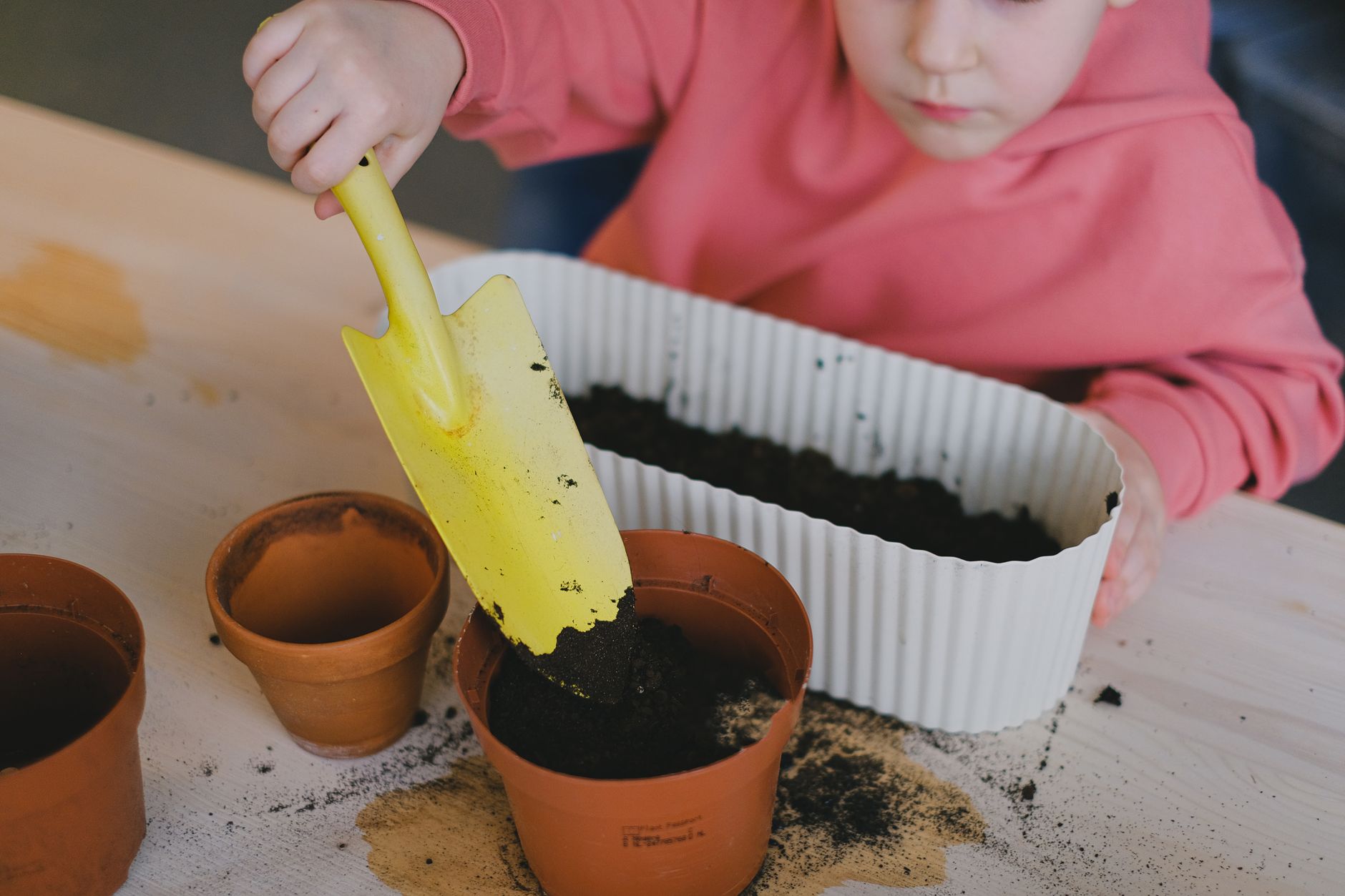
When you finally have finished compost — dark, crumbly, earthy-smelling stuff — let your kids dig it into their own little garden plot. There is something deeply satisfying about watching a child understand that the banana peel they threw in a pile six weeks ago is now helping their sunflower grow.
If you want to kick off a little planting project alongside composting, a seed starting kit is a great way to get them invested from seed to soil.
A Few Florida-Specific Composting Tips
If you’re down here in the Panhandle or anywhere in Florida, a few things work a little differently:
It heats up fast. Our summers are brutal, and that actually speeds up decomposition significantly. A pile that might take six months up north can break down in 8-10 weeks here in peak summer. This is a good thing — just make sure to keep it moist, because it can dry out quickly too.
Watch for fire ants. They love a compost pile. We’ve had luck keeping ants at bay by not adding any sugary scraps to the top layer without covering them, and by occasionally sprinkling food grade diatomaceous earth around the base of our outdoor pile. Same stuff we use in our coop — you can read more about our natural chicken coop cleaning routine if you’re curious how we use it there.
Leaves are gold. If you have live oak trees (and if you’re in Northwest Florida, you definitely do), rake those leaves and pile them up. They’re one of the best browns you can add, and we have more than we’ll ever run out of from October through March.
How This Connects to the Bigger Picture
I think about composting the same way I think about a lot of what we do around here — it’s just the old way. Kids in the 1990s watched their grandmothers throw scraps in a pile behind the garden shed. It wasn’t called “intentional living,” it was just called Tuesday.
When my kids dig in the compost pile, collect kitchen scraps, and watch a pile of banana peels and cardboard transform into something that feeds their tomatoes, they’re learning something that can’t come from a screen. They’re learning that nothing is really wasted. That small, daily actions add up. That they are part of a bigger system.
That is exactly the kind of education I’m trying to give them — and it didn’t cost me anything except a kitchen compost bin and a willingness to get a little dirty. If you’re looking for more ways to connect your daily home rhythms to your homeschool, our Morning Basket Ideas for Charlotte Mason Homeschool Families post has a lot of practical ideas for weaving that kind of thing in.
Ready to Start? Keep It Simple
You don’t need a perfect system. You don’t need the fanciest bin or a detailed spreadsheet of your green-to-brown ratio. You just need to start. Toss those veggie scraps in a pile, add some cardboard, keep it a little damp, and let your kids poke around in it. The rest figures itself out.
This is one of those things that sounds harder than it is — and once it’s part of your family’s routine, you won’t be able to imagine life without it. Promise.
📖 You Might Also Like:
- Morning Basket Ideas for Charlotte Mason Homeschool Families (What We Actually Do Each Day)
- Best Backyard Duck Breeds for Egg Production (What Actually Lays Well and Fits a Real Family)
- How to Ferment Chicken Feed (Benefits, Method, and What We Actually Do)
Frequently Asked Questions
How do I start composting at home as a complete beginner?
Start with a small countertop bin to collect kitchen scraps like fruit and veggie peels, coffee grounds, and eggshells. Every few days, transfer those scraps to an outdoor pile or bin and layer them with ‘browns’ like torn cardboard, dried leaves, or paper. Keep the pile slightly moist and turn it occasionally. That’s really all there is to it — no fancy equipment required.
What can kids do to help with composting?
Kids can collect and sort kitchen scraps, carry the compost bin outside, help layer browns and greens, stir or turn the pile, and observe the decomposition process over time. Giving them a dedicated role — like ‘compost keeper’ — makes it feel special and builds real responsibility and science skills at the same time.
Does composting smell bad?
A well-balanced compost pile should smell earthy, not offensive. If yours smells bad, it usually means there are too many greens (nitrogen-rich materials) and not enough browns (carbon-rich materials) like cardboard or dried leaves. Add more browns and turn the pile to introduce airflow, and the smell should improve quickly.
Can I compost if I have backyard chickens?
Absolutely — chickens and composting go hand in hand. You can give certain kitchen scraps directly to your chickens before the rest goes to the pile. Finished compost enriches your garden soil, which supports healthier plants and bugs that chickens love to forage. Just avoid adding chicken manure from your coop directly to a pile that’s still actively breaking down near food gardens without letting it fully cure first.
How long does it take for compost to be ready to use?
It depends on your climate and how actively you manage the pile, but most backyard compost is ready in 2-6 months. In Florida’s hot summers, it can break down even faster — sometimes in 8-10 weeks if the pile is moist and turned regularly. Finished compost looks dark, crumbly, and smells like fresh earth, not like rotting food.
Leave a Reply