How to Teach Kids to Cook Basic Skills by Age (A Real Kitchen Guide for Homeschool Families)
This post contains affiliate links. I may earn a small commission at no extra cost to you.
Here’s something I think about a lot: my grandmother never once sat down and formally “taught” anyone to cook. She just cooked, and her kids were there. They stirred, they tasted, they peeled, they watched. And somehow — by the time they were teenagers — they knew how to feed themselves and a crowd.
We’ve made this so much harder than it has to be.
I’m not saying throw a four-year-old at a hot stove and call it a lesson. But I am saying that if we’re waiting until kids are old enough to “really help,” we’re waiting too long. The kitchen is one of the most natural places to live out that whole 1990s-childhood philosophy — real work, real life, real skills. No worksheet required.
Our homeschool days weave right through the kitchen. Math lives in measuring cups. Reading lives in recipe cards. Science lives in what happens when you mix baking soda and vinegar, or why bread rises, or what exactly our backyard chickens give us every single morning. Cooking is living curriculum, and I want my kids soaking it up for years before they ever leave this house.
So here’s what’s actually working for us — broken down by age, no fluff.
Ages 2–4: The “I Do Too” Stage
This age is less about skills and more about belonging. They want to be where you are. Use that.
What they can genuinely do:
- Wash fruits and vegetables (they love this)
- Tear salad greens or fresh herbs
- Stir cold ingredients in a bowl
- Pour pre-measured ingredients
- Mash soft things like bananas or cooked sweet potatoes
- Help set the table
Get a sturdy learning tower or pull a chair up to the counter. Keep your expectations low and your patience high. The goal here is presence, not perfection. Let them be part of it.
This is also a great age to introduce the idea that food comes from somewhere — our garden, our chickens, our farmers market. Even little ones can connect eggs in the carton to the hens outside.
Ages 5–7: Building Real Skills
This is where things get genuinely exciting. Kindergarten and first grade kids are ready to do more than stir — they can start learning actual techniques with the right supervision.
Skills to introduce:
- Cracking eggs (yes, there will be shells — that’s fine)
- Spreading butter or nut butter with a butter knife
- Peeling soft vegetables like cucumbers or cooked potatoes
- Measuring and leveling dry ingredients
- Simple salad assembly
- Making sandwiches and simple snacks independently
- Helping read recipes aloud (hello, reading practice)
We started cracking eggs around age five, and honestly it became a morning ritual. Our kids check on the hens, collect eggs, and then help make scrambled eggs for breakfast. That loop — from coop to kitchen to table — is worth more than any lesson I could plan.
If you’re using a Charlotte Mason approach, recipes are wonderful for copywork and narration, too. Have them dictate what they made and how, then illustrate it in their nature journal. Food journaling is an underrated homeschool gem.
Ages 8–10: Real Responsibility in the Kitchen
This is the sweet spot. Third through fifth grade kids can handle a lot more than we usually give them credit for — and they genuinely want to feel capable.
Skills to build here:
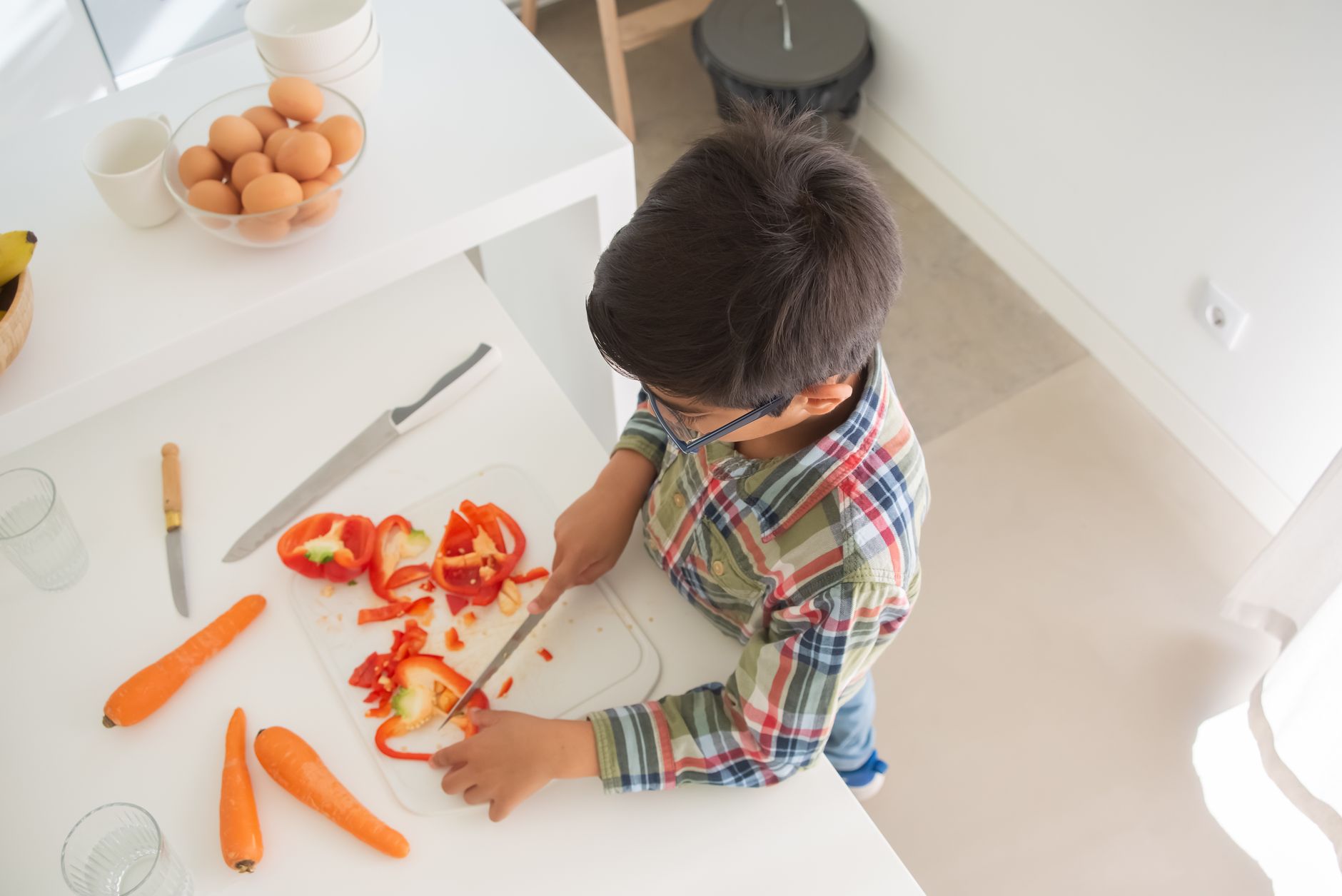
- Using a sharp knife with supervision (start with a chef’s knife on soft vegetables, proper grip, curled fingers)
- Operating the stovetop with an adult nearby
- Following a recipe mostly independently
- Making scrambled eggs, pasta, rice, and simple soups
- Baking from scratch — muffins, cookies, quick breads
- Learning basic food safety (handwashing, cross-contamination, temperatures)
- Cleaning up as they go
The knife skill thing feels scary, but a sharp knife with proper technique is actually safer than a dull one. Teach the “claw grip,” stay nearby, and let them practice on bananas or mushrooms first. My kids were so proud the first time they chopped onions for soup. Like, genuinely beaming.
This is also the age to connect math to cooking more intentionally. Doubling a recipe, converting measurements, fractions in the measuring cups — it’s all right there. We use Math-U-See for our formal math, but honestly some days the kitchen does it better.
A Few Things That Make This Actually Work
Lower the bar on “clean”
I’ll just say it — teaching kids to cook is messier than doing it yourself. The flour goes on the floor. The eggs have shells in them. The sauce gets a little scorched. That’s the tuition cost of raising a kid who can feed themselves at eighteen, and it is absolutely worth it. Take a breath, hand them the spoon.
Cook together, not just side by side
There’s a difference between having a kid stand next to you while you cook and actually handing over a task. Let them own something in the meal — the salad dressing, the garlic bread, the dessert. When it comes to the table, make sure everyone knows that they made that part. Watch their face.
Tie it to your homestead rhythm
In Florida, we’ve got a long growing season and chickens producing eggs most of the year. Our kids are involved in homestead chores from early on, and the kitchen is just a natural extension of that. What grows in the garden this week? What did the hens lay? What can we make from it? That question alone drives more meaningful cooking than any curriculum could.
If you have backyard chickens and want to lean into the educational side, Storey’s Guide to Raising Chickens and the Kid’s Guide to Keeping Chickens are both wonderful for older elementary kids to read alongside the real-life experience.
Keep the kitchen non-toxic
This is one area where our intentional home philosophy really shows up. We cook in cast iron and stainless, keep the cleaning products simple (I order ours through Grove Collaborative), and use real ingredients. When kids are in the kitchen constantly, it matters what they’re touching and breathing. It doesn’t have to be complicated — just thoughtful.
Simple First Recipes by Age
Ages 4–5: Banana pancakes (2 ingredients), yogurt parfaits, trail mix
Ages 6–7: Scrambled eggs, toast with toppings, simple green salad with dressing
Ages 8–10: Pasta with marinara, homemade muffins, fried rice with veggies and eggs, simple soups
Start simple, repeat often, and let them request their favorites. When a kid asks to make their muffins on Saturday morning, you’ve won.
The Long Game
We’re not teaching cooking for fun (well, it is fun). We’re teaching it because we believe kids who grow up in the kitchen grow up capable. They know how to nourish themselves and the people they love. They’re not afraid of a recipe or a knife or a hot pan. They understand where food comes from — from the soil, from the hens, from their own two hands.
That’s the whole thing, really. This is part of raising kids the slow way, the rooted way. Less convenience, more competence. And honestly? The food is better, too.
If you’re looking for ways to build more of this kind of real-life learning into your days, you might also love our post on how to involve kids in homestead chores by age and what intentional parenting actually looks like day to day. We’re all just figuring this out together, one cracked egg at a time.
📖 You Might Also Like:
- How to Involve Kids in Homestead Chores by Age (Without the Meltdowns or Doing It All Yourself)
- Intentional Parenting: What It Actually Looks Like Day to Day
- How to Slow Down and Simplify Family Life (Without Feeling Like You’re Falling Behind)
Frequently Asked Questions
What age should kids start learning to cook?
Kids can start participating in the kitchen as young as 2–3 years old with simple tasks like washing vegetables or stirring cold ingredients. Real skill-building — measuring, cracking eggs, using a knife with supervision — typically starts around ages 5–7 and grows from there.
What cooking skills should a 10-year-old have?
By age 10, kids can reasonably follow a simple recipe independently, use a sharp knife with supervision, operate the stovetop with an adult nearby, make basic meals like scrambled eggs, pasta, and muffins, and understand basic food safety practices like handwashing and proper temperatures.
How do I get my kid interested in cooking?
Let them own a piece of the meal rather than just helping you. Give them a dish that’s ‘theirs’ to make and make sure the family knows it at the table. Kids are also much more interested in cooking food they’ve helped grow or raise — connecting the garden or backyard chickens to the kitchen makes a huge difference.
Is teaching kids to cook part of a Charlotte Mason education?
Absolutely. Charlotte Mason emphasized practical life skills, real work alongside real people, and learning through living. Cooking fits naturally into a Charlotte Mason homeschool — it covers math, reading, science, and life skills all at once in a meaningful, hands-on way.
What are good first recipes for kids to learn?
Great starter recipes by age: ages 4–5 can make banana pancakes (just banana and egg), yogurt parfaits, and trail mix. Ages 6–7 can tackle scrambled eggs, toast with toppings, and simple salads. By ages 8–10, kids are ready for pasta with marinara, homemade muffins, fried rice, and simple soups.
Leave a Reply