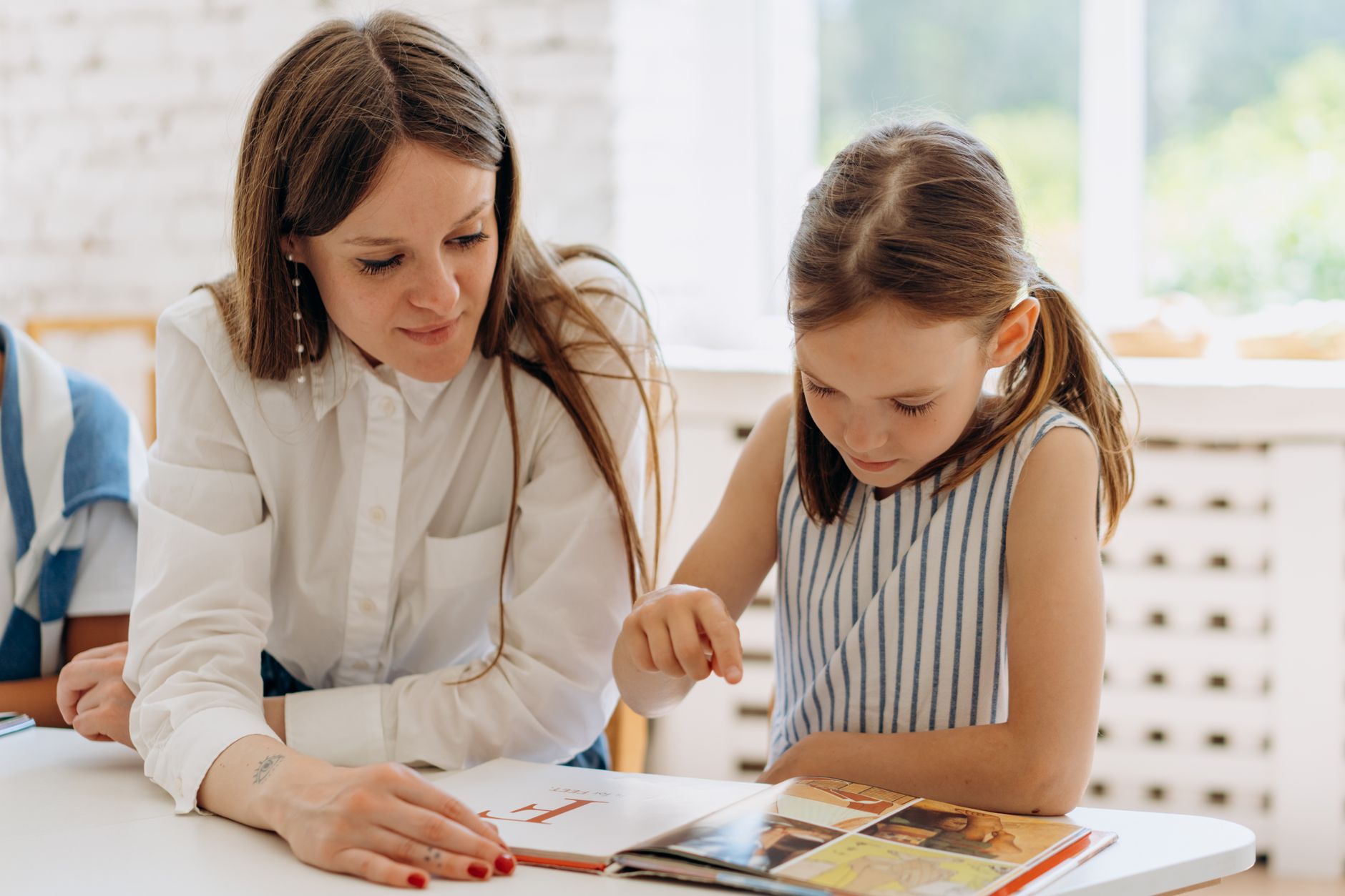
How to Teach Reading Naturally Without a Formal Curriculum (What Actually Works)
This post contains affiliate links. I may earn a small commission at no extra cost to you.
When my oldest was five, I bought a highly recommended reading curriculum, sat her down at the kitchen table, and watched her eyes glaze over by lesson three. She wasn’t uninterested in reading — she’d been begging me to read to her every single night since she could talk. She just wasn’t interested in that. The flashcards. The scripted lessons. The sitting still.
So I backed off. We kept reading together. We played with letters in the sandbox. We made words out of fridge magnets while we waited for dinner. And slowly, beautifully, she started reading on her own.
I’m not saying structured curriculum is wrong — we’ve used All About Reading for a season and it genuinely helped one of my kids click with phonics. But I’ve also learned that reading can happen naturally, especially when you build the right environment around it. And that’s what I want to talk about today.
First, Let’s Talk About What “Naturally” Actually Means
Teaching reading naturally doesn’t mean you just hope it happens. It means you set up the conditions that make reading want to happen — the same way you don’t teach a kid to love the outdoors by handing them a worksheet about trees. You take them outside. You let them turn over logs. You let them get muddy.
Natural reading instruction is about:
- A print-rich environment where words are everywhere
- Read-aloud as a daily practice, not just a bedtime thing
- Low-pressure exposure to phonics concepts through play
- Letting the child lead the pace without abandoning your gentle guidance
Charlotte Mason believed deeply in this — that children are born curious and capable, and our job is to create the feast, not force-feed the meal. If you’re new to that approach, our Morning Basket Ideas for Charlotte Mason Homeschool post shows you what our daily rhythm actually looks like.
Build a Home Where Reading Lives
Before a single lesson happens, look around your home. Is it a place where reading feels natural and inviting?
Some things that have made a huge difference for us:
Books everywhere. Not just on a shelf. Baskets in the living room. A stack on the kitchen table. A few beside the chicken coop, even. (Okay, those end up with feed dust on them, but still.) When books are part of the landscape, kids reach for them without being asked.
Read aloud every single day. This is the single most powerful thing you can do. Not because it directly teaches decoding, but because it builds vocabulary, comprehension, a love of story, and an understanding of how written language sounds. We read before breakfast, after lunch, and almost always before bed. Some days that’s three different books. It’s the heartbeat of our homeschool.
Let them see you reading. I know, I know — when do we have time? But even ten minutes with a book in hand while they play nearby sends a message: reading is what grown-ups do for pleasure. Not just screens.
The Phonics Piece — Without the Pressure
Here’s the thing: kids do need to learn phonics. That’s not up for debate. The sounds letters make, how they blend together, how patterns work — that’s the mechanical foundation of reading. But there’s a big difference between drilling it and playing with it.
Some of our favorite low-key ways to work on phonics:
Letter Sound Play
Start with the sounds, not the letter names. “B says /b/” before “this is the letter B.” We’d do this at the art table, in the garden, while we were doing anything really. “Hey, what starts with /s/? Sand! Sun! Snake!”
Magnetic Letters on the Fridge
This is so old-school-1990s and it works. Kids manipulate letters physically, build words, sound them out while they’re doing it with their hands. Way more engaging than a workbook page.
Simple Word Families in Nature Journals
We’d sometimes dedicate a page in their nature journal to a word family — all the “-at” words, illustrated with little drawings. Cat, bat, mat, rat. My nature-obsessed kid drew a rat by the chicken coop and a bat flying over the yard. She remembered every single word.
Labeling Their World
We went through a phase of labeling everything in the house — door, chair, window, sink. Totally normal thing to do with a preschooler or kindergartner and it builds print awareness without any kind of formal sit-down lesson.
Real Books Over Readers (Mostly)
Those little decodable readers have their place — truly. But the magic happens with real books. Picture books with rich language. Stories that make kids laugh or cry or beg you to read one more chapter. When a child is emotionally invested in a story, they want to get into that book on their own. That desire is your biggest teaching tool.
We have a soft rule: for every decodable or phonics-focused book, there are five real ones. Read to them constantly, even after they start reading themselves. Especially after.
Also? Let them re-read books they already know. My daughter read Frog and Toad approximately 400 times one summer. Every single time, she was practicing fluency, building confidence, and falling more in love with reading. That’s not a waste of time. That’s the whole point.
Nature Study as a Reading Accelerator
This might sound unexpected, but our outdoor time has genuinely supported reading development. Here’s how:
When kids are deeply curious about something — fireflies, the osprey nesting down by the bay, why the Spanish moss grows the way it does — they want to look it up. They want to read about it. We keep a Sibley Birds guide on the back porch and our kids have sounded out bird names just to figure out what they spotted.
Curiosity is rocket fuel for reading. Feed the curiosity, the reading follows.
This is also part of why I love Charlotte Mason so much — she understood that children learn through living, not just through sitting at a desk. Check out our Charlotte Mason Nature Journal Ideas for Kids post if you want to see how we tie nature observation into our literacy work.
What About When They’re Struggling?
I want to be honest here: natural doesn’t always mean easy or fast. Some kids need more structured phonics support, and there’s zero shame in that. If you’ve been doing all the right things and your child is genuinely struggling at 6, 7, or 8, a more structured approach like All About Reading can be exactly the bridge they need — and it’s gentle enough to still feel low-pressure.
Also worth knowing: if you’re using the Florida PEP scholarship, literacy curriculum is absolutely an eligible expense. Check out our Florida Unschooling Laws post for more on how homeschool options work here in the state.
Don’t let “teaching naturally” become a reason to avoid getting your kid real help if they need it. Natural and intentional can absolutely coexist.
A Simple Daily Rhythm That Supports Natural Reading
You don’t need a lesson plan. You need a rhythm. Here’s roughly what ours has looked like during early reading years:
- Morning: Read aloud together at the table or on the porch (15–20 min)
- Mid-morning: Some kind of phonics play — magnetic letters, word family game, labeling something new
- Outside time: Nature observation that naturally invites curiosity and conversation (and sometimes leads to looking things up)
- Afternoon: Independent book time — even if they’re just looking at pictures, they’re building a relationship with books
- Evening: Read aloud again before bed — this one is non-negotiable in our house
That’s it. No worksheets. No timed reading. Just a life built around language and story.
You’ve Got This, Mama
I know it can feel scary to step back from a structured curriculum and trust the process. We’re so conditioned to believe that learning has to look a certain way — sit down, open the book, complete the lesson. But the kids who grew up in the 80s and 90s learned to read in messy, imperfect, beautiful ways. Many of them became lifelong readers not because of a program, but because someone read to them every night and kept books around the house.
You’re already doing more than you think. Keep reading to them. Keep the books everywhere. Follow their curiosity. And give yourself some grace for the days when it all falls apart and everyone ends up outside chasing lizards instead.
Honestly? Those days count too.
📖 You Might Also Like:
- Morning Basket Ideas for Charlotte Mason Homeschool (What Ours Actually Looks Like)
- Charlotte Mason Nature Journal Ideas for Kids (That Actually Get Used)
- Homeschool Co-op Ideas: How to Start One (Without Losing Your Mind)
Frequently Asked Questions
Can you really teach a child to read without a formal curriculum?
Yes — many children learn to read naturally through consistent read-alouds, phonics play, a print-rich home environment, and following their own curiosity. That said, some kids benefit from more structured phonics support, and there’s no shame in adding that if your child needs it. Natural instruction and structured tools can work together.
At what age should my child start reading?
Reading readiness varies widely. Some children begin reading fluently at 4 or 5, others closer to 7 or 8 — and both are completely normal. Rather than focusing on age, look for signs of readiness: interest in letters and words, ability to hear rhymes and sound patterns, and a desire to follow along with text. Pressure before readiness often backfires.
What does Charlotte Mason say about teaching reading?
Charlotte Mason emphasized a gentle, literature-rich approach to reading instruction. She favored real books over dry readers, narration over testing, and believed children should come to reading through a love of story rather than drill and repetition. She did include phonics as part of early instruction but in a playful, low-pressure way.
What are the best tools for teaching reading naturally at home?
Some of the most effective low-tech tools include magnetic letters, picture books, nature journals for word play, library visits, labeling items around the house, and daily read-alouds. If you want a structured-but-gentle phonics supplement, All About Reading is a popular choice among Charlotte Mason families.
Is a reading curriculum required for Florida homeschoolers using the PEP scholarship?
No, a specific curriculum is not required. Florida’s PEP scholarship gives families flexibility in how they use funds for educational purposes, and you can use a very literature-based, natural approach to reading. However, Florida homeschool law does require a portfolio or evaluation of educational progress annually. Check out our post on Florida homeschool laws for more details.
Leave a Reply