Best Essential Oils for Your Family Home That Are Actually Safe for Kids
This post contains affiliate links. I may earn a small commission at no extra cost to you.
Okay, so here’s how I got into essential oils: it wasn’t through a MLM party or a fancy Instagram reel. It was a sweaty Florida summer afternoon, my kids were outside catching bugs with their bug collection kit, and I was desperately trying to figure out a non-toxic way to deal with the mosquitoes, the funky coop smell drifting over from the backyard, and whatever mystery thing my youngest had tracked across the kitchen floor. I wanted something that smelled good, worked, and wasn’t going to wreck my kids’ health.
What I found was… a lot of conflicting information. Some people act like essential oils are a cure-all miracle. Others act like they’re basically poison. The truth, as usual, is somewhere in the middle — and it really comes down to which oils, how you use them, and how old your kids are.
So let me share what I’ve learned after a few years of using essential oils in our intentional, nature-based home here in Northwest Florida. This isn’t medical advice — just one mama talking to another.
Why I’m Particular About What Goes in Our Home
If you’ve followed along here for a while, you know we try hard to keep our home low-tox. We use Grove Collaborative for a lot of our cleaning products, we skip synthetic fragrances, and we’re pretty intentional about what our kids are breathing in and touching all day. Essential oils fit naturally into that philosophy — when used correctly.
But here’s the thing: essential oils are potent. They’re not benign just because they come from plants. Some oils that are totally fine for adults can be genuinely problematic for young children, especially babies and toddlers. So let’s break this down practically.
The Golden Rules for Using Essential Oils Around Kids
Before we get into the specific oils, here are the basics I follow:
- Always dilute. Never apply essential oils directly to a child’s skin without a carrier oil (like fractionated coconut oil or jojoba). For kids, I dilute much more than I would for myself.
- Age matters a lot. Some oils are fine for school-age kids but not for babies or toddlers.
- Diffuse with fresh air. I never run a diffuser in a closed room for hours. We live in Florida — windows and ceiling fans are our friends.
- When in doubt, leave it out. Especially with the little ones.
Essential Oils We Actually Use in Our Home
Lavender — Our Most-Reached-For Oil
Lavender is gentle, widely studied, and genuinely calming. We use it in our bedtime diffuser blend, diluted in a rollerball for skin irritations (hello, Florida fire ant encounters), and occasionally in a warm bath. It’s generally considered safe for kids over 2 when properly diluted. If you’re looking for a starting place, lavender is it.
Lemon and Other Citrus Oils
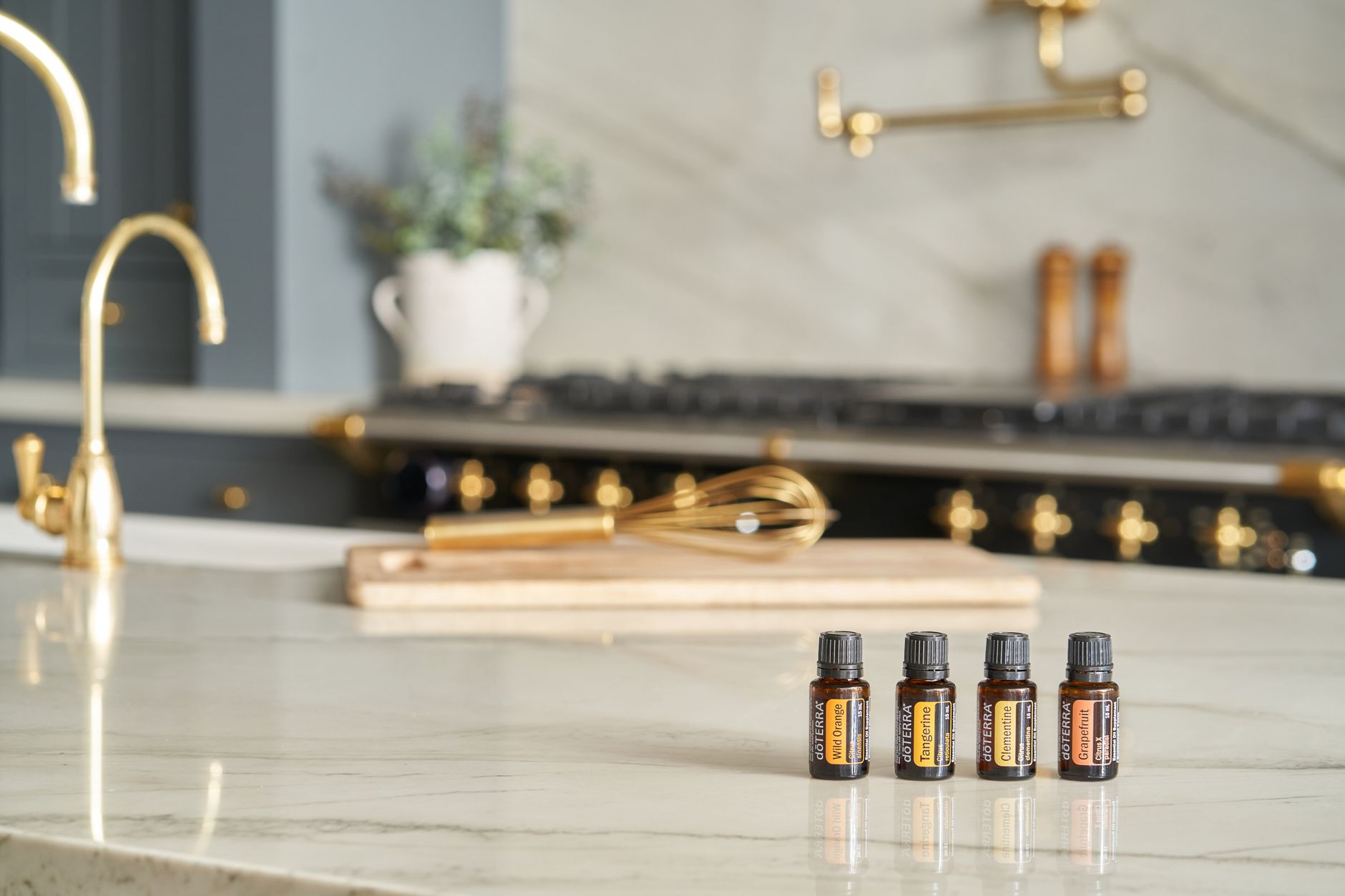
We love diffusing lemon oil in the morning — it smells clean and bright, which is helpful when you’re trying to get four kids motivated for a nature journaling session. Citrus oils are generally mild and great for freshening up the home. Just know they’re photosensitive, so don’t put them on skin before heading out into that Florida sun.
Frankincense
This one’s in our diffuser pretty regularly during our quiet morning time. It has a grounding, almost meditative quality — great for a Charlotte Mason-style slow morning. It’s also one of the more gentle oils and is considered safe for kids when diffused or properly diluted.
Tea Tree (Melaleuca)
Tea tree is our cleaning powerhouse. I add it to DIY cleaning sprays, use it in the laundry occasionally, and diffuse it during cold season. Important caveat: tea tree should never be ingested, and while it’s fine diffused or on skin when diluted for kids over 2, keep it away from babies and never apply it to their faces. If you want to read more about what we reach for during sick season, I talk about it over in Natural Remedies for Kids’ Cough and Cold: What Our Florida Family Actually Uses This Winter.
Cedarwood
Oh, this one is underrated. Cedarwood is earthy, calming, and we diffuse it in the kids’ room at night. It’s also a mild natural insect deterrent — handy when you’re a family that spends a lot of time outside and in the garden. We pair it with lavender in the evening diffuser blend pretty regularly.
Eucalyptus — Use with Caution
This is where I want to slow down and be really clear: eucalyptus (especially eucalyptus globulus) is NOT safe for children under 10. This one surprises a lot of people because it smells like something you’d find in a kids’ vapor rub, but the 1,8-cineole content can cause serious respiratory issues in young children. If you want a similar effect in a diffuser blend, try a small amount of spearmint instead — it’s much gentler. Save the eucalyptus for your own personal diffuser in your bedroom.
Peppermint — Also Needs a Warning
Same goes for peppermint. It’s often listed as a natural bug repellent and headache remedy, and I do use it — but only for myself. Peppermint is not recommended for children under 6 (some sources say under 10), because menthol can cause breathing issues in little ones. We use Wondercide for kid-safe bug spray instead — it’s plant-based, it actually works in the Florida humidity, and I don’t have to second-guess it.
How We Actually Use Oils Day-to-Day
We’re not fancy about this. Our essential oil setup is pretty simple:
- A quality diffuser in the main living area and one in the kids’ room
- Rollerballs pre-diluted with a carrier oil for easy application
- A few drops in cleaning sprays (lemon + tea tree + water in a glass spray bottle is our go-to)
- Added to wool dryer balls instead of dryer sheets — a couple drops of lavender and our laundry smells amazing without any synthetic fragrance
We also sometimes use a drop of lavender or cedarwood on a cotton ball tucked into a corner of the chicken coop area — helps with the flies a little. If you’re managing backyard chickens and looking for more low-tox coop strategies, I’ve got a lot more on that in Raising Meat Chickens at Home: A Beginner’s Guide for Real Families.
Oils to Skip When You Have Young Kids
Just a quick list of oils I personally avoid using around my elementary-age kids (and definitely would not use around babies or toddlers):
- Eucalyptus globulus
- Peppermint (in any topical or direct application for under 6)
- Clove and cinnamon bark (very hot oils, can cause skin reactions)
- Wintergreen (contains methyl salicylate — genuinely dangerous for kids)
- Rosemary (not recommended for children with seizure history or under 4)
The marketing around essential oils doesn’t always make these warnings obvious. Do your own research and cross-reference with sources like the National Association for Holistic Aromatherapy (NAHA) — they have solid safety guidelines.
Quality Matters More Than You Think
Not all essential oils are created equal. The industry is poorly regulated, and a lot of bottles on store shelves are adulterated with synthetics or fillers. I look for companies that provide GC/MS testing results, clearly state their country of origin, and don’t make outrageous medical claims. You don’t have to spend a fortune, but you do want to know what’s actually in the bottle.
The Bottom Line
Essential oils can absolutely be part of a safe, intentional family home — but they need a little more respect than the wellness industry sometimes gives them. Start simple. Lavender, lemon, frankincense, and cedarwood will get you really far. Dilute everything, keep the room ventilated, and know your kids’ ages and sensitivities.
We’ve been using oils in our home for years now, alongside our low-tox cleaning routine and time outside in the dirt and sunshine — which, honestly, does more for my kids’ wellbeing than any oil ever could. But for freshening up our home, supporting sleep, and keeping things smelling like something other than eau de labradoodle, essential oils earn their spot in our routine.
If you’re working on building a more intentional home environment overall, I also really love what Grove Collaborative offers for non-toxic household products — it’s where I stock up on a lot of our basics.
Hope this helps you sort through the noise. You don’t need 40 oils. You need maybe five good ones and the knowledge to use them safely. That’s it.
📖 You Might Also Like:
- Natural Remedies for Kids’ Cough and Cold: What Our Florida Family Actually Uses This Winter
- Raising Kids Without Constant Screens: Practical Tips That Actually Work for Real Families
- How to Raise Free-Range Kids in the Modern World (A Real Family’s Guide)
Frequently Asked Questions
What essential oils are safe to diffuse around young children?
Lavender, cedarwood, frankincense, and diluted citrus oils like lemon are generally considered safe to diffuse around children over 2 when the room is well-ventilated and diffusion time is limited. Always avoid eucalyptus and peppermint around young kids — both can cause respiratory issues in children under 6-10 years old.
Can I use essential oils around my baby?
You should be very cautious with essential oils around babies under 3 months — most aromatherapists recommend avoiding them entirely in that window. For infants and toddlers, always consult your pediatrician first, keep any diffusion very brief in a large, ventilated space, and never apply oils topically to a baby’s skin without medical guidance.
What essential oils should I never use around kids?
The most important ones to avoid with young children are eucalyptus globulus, peppermint (topically for under 6), wintergreen, clove, cinnamon bark, and rosemary (especially for children with seizure disorders or under age 4). These oils are potent and can cause serious reactions in little ones even in small amounts.
How do I dilute essential oils for kids?
For children ages 2-12, a general guideline is a 0.5% to 1% dilution — that’s about 1-2 drops of essential oil per teaspoon of carrier oil (like fractionated coconut oil or sweet almond oil). This is much more diluted than adult use. Always do a small patch test first and avoid applying near the face, especially nose and mouth.
Are essential oil diffusers safe for kids’ bedrooms?
Yes, with some precautions. Use a kid-safe oil (like lavender or cedarwood), run the diffuser for 30-60 minutes rather than all night, make sure the room has some airflow, and keep the diffuser out of reach of children. Never diffuse eucalyptus or peppermint in a child’s room, and if your child has asthma or respiratory sensitivities, check with your doctor first.
Leave a Reply