Backyard Chicken Coop Ventilation in a Hot Climate: What Actually Works (From a Florida Mama Who Learned the Hard Way)
This post contains affiliate links. I may earn a small commission at no extra cost to you.
Y’all, I almost lost a hen our first Florida summer. She wasn’t sick. She wasn’t injured. She was just… hot. And I had no idea our coop was basically a sauna with nesting boxes.
We moved to the Pensacola area with big homesteading dreams and a flock of five hens who had survived perfectly fine in a mild climate. But Northwest Florida in July is a different animal entirely. The heat index regularly hits 105°F, the humidity wraps around you like a wet blanket the second you step outside, and if your coop doesn’t have serious airflow? Your chickens are in real danger.
I spent a whole afternoon that summer reading everything I could find, talking to other local chicken keepers, and basically rebuilding our ventilation setup from scratch. What I learned is pretty simple once you understand it — but nobody really explains it well for hot, humid climates specifically. So let me save you the panic and the scramble.
Why Ventilation Matters More Than Almost Anything Else
Here’s the thing most beginner chicken resources get wrong: they treat ventilation like it’s about temperature. It’s not just about temperature. In a humid climate like ours, ventilation is about moisture management just as much as heat.
Chickens release moisture through their breath and droppings constantly. In a closed or poorly ventilated coop, that moisture builds up fast — and in a hot climate, you end up with a hot, wet, ammonia-filled box. That combination is genuinely dangerous. Respiratory illness spreads quickly in those conditions, and heat stress can become fatal before you even realize what’s happening.
The goal is cross-ventilation: fresh air moving through the coop, not just a hole in the wall somewhere.
The Basic Rule: Way More Ventilation Than You Think You Need
Most general chicken-keeping guides say to allow 1 square foot of ventilation per 4 birds. In Florida? Triple that. At minimum.
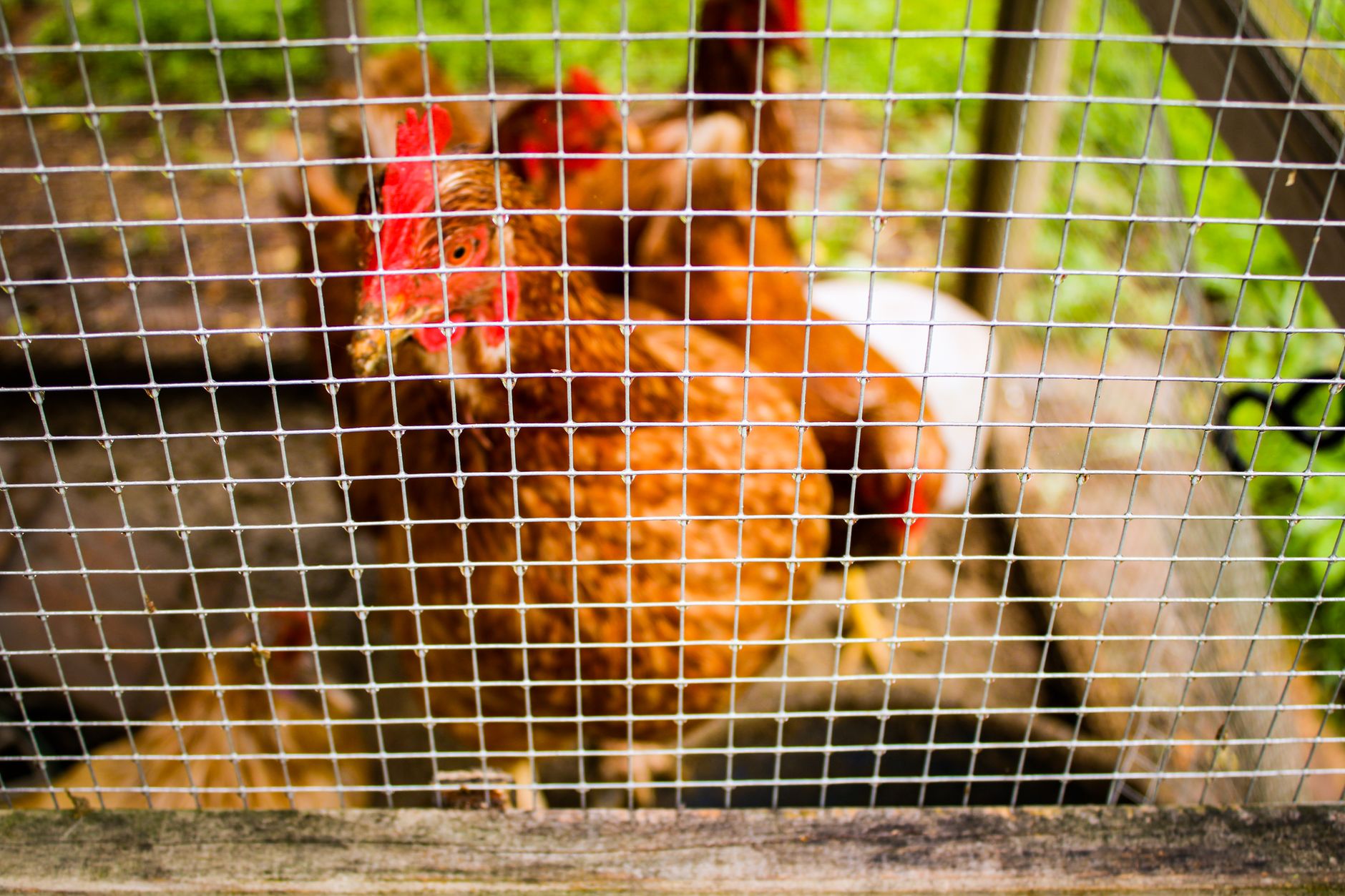
Our coop has open hardware cloth (not chicken wire — hardware cloth is sturdier and predator-resistant) along the entire upper third of two opposite walls. In the summer, we also open the pop door and leave it open through the night using an automatic coop door so we don’t have to be out there at 5am. That door has been genuinely life-changing — for the chickens and for me.
If you’re in a cold climate, you’d worry about drafts. In Florida, we’re basically chasing airflow wherever we can get it.
What Good Coop Ventilation Actually Looks Like
High Vents, Not Low Ones
Heat rises. Hot air and ammonia both accumulate near the ceiling of your coop, so that’s where your primary venting needs to be. Vents low on the wall will let in drafts near your birds’ bodies at night — not ideal — but vents up high let the worst of the heat and moisture escape.
We have hardware cloth windows on opposite walls (cross-ventilation!) and a vented roof ridge. The ridge vent alone made a noticeable difference.
North and South Facing Openings
In Northwest Florida, our prevailing breeze tends to come from the south in summer. Positioning your main open vents to catch that breeze means you’re working with the Gulf Coast climate instead of against it. Pay attention to where the wind usually comes from on your property — it matters.
Shade the Coop Itself
Ventilation works a lot harder when the coop itself isn’t absorbing full sun all day. We have our coop positioned under a big oak tree and we’ve also added a shade cloth over the run. A shaded coop stays meaningfully cooler, which means your ventilation doesn’t have to do as much heavy lifting. If you want to go deeper on this, I wrote a whole post about how to keep chickens cool in Florida summer heat — it covers shade, water, and a few other tricks that actually move the needle.
What We Changed in Our Coop (Real Stuff, Not Just Theory)
Okay here’s what we actually did, step by step, after that scary summer.
1. Replaced solid wall sections with hardware cloth.
We basically made the top half of two opposing walls open-air. We used 1/2 inch hardware cloth stapled in and framed out with wood. Total game changer.
2. Added a gable vent at the peak of the roof.
This cost almost nothing and lets that hot, rising air actually escape instead of just sitting up there baking everything below it.
3. Switched to nipple waterers.
This sounds unrelated to ventilation but hear me out — traditional open waterers contribute to interior humidity. A good chicken waterer with nipples keeps the water contained, reduces the moisture in the air, and also keeps the water cleaner in the heat. Win all around.
4. Deep litter with diatomaceous earth.
We use the deep litter method in our coop and sprinkle food grade diatomaceous earth into the bedding regularly. It helps control moisture, absorbs ammonia, and keeps the pest load down — all of which reduce the burden on your ventilation system.
5. Installed the automatic door.
Seriously. If you don’t have one and you live somewhere hot, this is worth every penny. Our hens can get fresh air all night instead of being shut in from dusk to dawn.
Bringing the Kids Into It
I’ll be honest — coop maintenance is one of my favorite parts of homeschooling, and not just because someone else is doing the scooping (though that’s a perk). My kids genuinely love caring for the chickens, and something like rethinking the coop’s airflow turned into a whole little unit on weather, biology, and building.
We talked about why hot air rises (hello, science!), drew diagrams of how cross-ventilation works, and the kids helped me measure and cut the new hardware cloth sections. It’s the kind of hands-on learning that a Charlotte Mason approach is all about — real problems, real solutions, real work.
If your kids are getting into chickens too, Storey’s Guide to Raising Chickens is the reference book I reach for constantly, and there’s also a great kid-friendly chicken guide that my older one has basically memorized.
For choosing breeds that handle Florida heat well in the first place — which absolutely affects how much they struggle with a warm coop — check out my post on best chicken breeds for Florida heat and humidity. Starting with the right birds makes everything easier.
A Few Things That Don’t Actually Help (So You Can Skip Them)
- Box fans blowing into a closed coop: Moving hot, moist air around doesn’t help. You need fresh air exchange, not recirculation.
- Misters inside the coop: Great in the run, not in the coop. You’ll spike the humidity and make things worse.
- Tiny windows that look “ventilated”: If the air can’t move through, it doesn’t count. Two small windows on the same wall does almost nothing compared to two openings on opposite walls.
You’ve Got This
Keeping chickens in Florida is absolutely doable — and so rewarding — but you have to build and think for this climate, not the one the generic coop kit was designed for. Once we got our ventilation right, our flock transformed. They’re happier, healthier, and way more fun to watch scratch around in the yard on a hot August morning.
If you’re just getting started or troubleshooting a struggling flock, start with airflow. Everything else comes after. Your chickens will thank you — probably by leaving you a pile of eggs on the nesting box, which is basically a standing ovation in chicken.
📖 You Might Also Like:
- How to Keep Chickens Cool in Florida Summer Heat (What Actually Works)
- Best Chicken Breeds for Florida Heat and Humidity (What Actually Thrives Down Here)
- How to Start Nature Journaling with Kids: A Beginner’s Guide for Families Who Love the Outdoors
Frequently Asked Questions
How much ventilation does a chicken coop need in a hot climate?
In a hot, humid climate like Florida, you need far more ventilation than standard guides suggest. Aim for at least 1 square foot of ventilation per bird — and honestly, in Gulf Coast heat, more is better. The key is cross-ventilation: open vents on opposite walls so fresh air actually flows through, not just a hole in one wall.
Should a chicken coop be open or closed in hot weather?
In hot climates, your coop should be as open as safely possible during summer. The upper portions of walls are ideal candidates for hardware cloth panels that allow maximum airflow while keeping predators out. Many Florida chicken keepers leave the pop door open overnight (using an automatic door for safety) so birds can access fresh air all night long.
What is the best coop design for Florida heat?
The best coop design for Florida heat prioritizes shade, cross-ventilation, and elevated positioning. Replace solid upper wall sections with hardware cloth on two opposing walls, add a ridge or gable vent at the roof peak, and position the coop under tree shade or use shade cloth. Avoid enclosed designs made for cold northern climates.
Does coop humidity matter as much as temperature for chickens?
Yes — humidity is actually a huge factor, especially in the Southeast. High humidity combined with heat stresses chickens faster than dry heat alone. Moisture from droppings and breath builds up quickly in a poorly ventilated coop, leading to respiratory illness and ammonia buildup. Good airflow manages both heat and humidity simultaneously.
Can I use a fan to ventilate a chicken coop in summer?
A fan can help move air, but only if the coop has actual openings for fresh air to enter and stale air to exit. A fan blowing inside a closed coop just recirculates hot, humid air. For best results, use a fan to enhance cross-ventilation you’ve already set up — not as a substitute for proper ventilation design.
Leave a Reply